Hugh Hurd: Artist and Civil Rights Hero for the Village and Beyond
Hugh Hurd was a longtime village resident who worked across the arts, labor, and civil rights movements to influence major shifts in how African Americans are treated in America.
Our historic image archive is full of thousands of images that give us unique insights into New York City life. Recent additions show drag performances in the 1990s, the HighLine before it became a world-famous park and tourist attraction, and changes to our surrounding architecture over the years. The Robert Fisch collection is our most […]
By Sarah Eccles
Throughout the 20th century, the area south of Union Square attracted painters, writers, publishers, and radical social organizations, many of whom were challenging accepted American social and cultural ideals. The release on February 8, 1915 of The Birth of a Nation — a silent white supremacist propaganda film credited with both resurrecting the Ku Klux […]
As we continue to research the area south of Union Square, we uncover more incredibly important history along these streets. One example is the longtime presence of the National Negro Congress and the Southern Negro Youth Congress at 35 East 12th Streetreet. This nine-story brick loft building was erected in 1896 by builder P. Gallagher […]
The Hudson Park Library, which opened on January 24, 1906, is one of Manhattan’s twenty remaining Carnegie libraries. This red brick structure was designed by the renowned architectural firm of Carrere & Hastings (who just a few years later would design and build the main branch of the New York Public Library at 42nd Street), […]
As we continue to research the historically and architecturally significant area South of Union Square, we uncover more important history that unfolded in the area every day. Recently, we discovered the presence of philanthropist, businessman, and Irish immigrant Andrew Carrigan, who helped transform the lives of Irish immigrants in New York in the 19th century, […]
Greenwich Village and surrounding neighborhoods have played host to some of the most significant artists and art movements of the 20th century. One of the most well-known artists of the 20th century, Edward Hopper, lived and worked at 3 Washington Square North. His iconic painting Nighthawks, 1942, was likely based on a diner at 7th […]
“South of Union Square, the Birthplace of American Modernism” is a series that explores how the area south of Union Square shaped some of the most influential American artists of the 20th century. Throughout the 20th century, the area south of Union Square attracted painters, writers, publishers, and radical social organizations, many of whom were challenging […]
As we close the chapter on yet another wild and successful of year of public programs at Village Preservation, we wanted to take the time to reflect and highlight some of 2021’s best moments. Despite the twists and turns of this year’s ongoing COVID-19 Pandemic, we’ve hosted 80 different educational lectures, book talks, and walking […]
Often times we don’t know the source of holiday traditions, we just do them, like how we hang mistletoe, or hide a pickle on a Christmas tree. But the Christmas lighting of Renwick Row is one tradition that we know who and when it was started. In 1976, an interior designer decided to decorate his […]
By Sarah Eccles
“South of Union Square, the Birthplace of American Modernism” is a series that explores how the area south of Union Square shaped some of the most influential American artists of the 20th century. Throughout the 20th century, the area south of Union Square attracted painters, writers, publishers, and radical social organizations, many of whom were […]
Day Without Art was Visual AIDS’ first major event. It launched on December 1, 1989 as “a day of action and mourning.” Thousands of arts institutions and organizations around the world organized to illustrate the true loss of art and artists created by AIDS epidemic, and demonstrate the power of art to raise awareness of the ongoing AIDS pandemic.
The Federal Housing Administration (FHA) was created by the National Housing Act of 1934. Its purpose was to, among other things, help support investment and homeownership as a means of counteracting the devastation of the Great Depression. While it did that, it did so in such a way that reinforced, concretized, and extended patterns of […]
The story of Curious George is so much more than that of one of the most popular children’s books since the 1940s. It’s also the story of a couple who endured and escaped the Nazi occupation of Paris, and found their way to Greenwich Village. Hans Augusto Reyersbach and Margarete Reyersbach were both Jews of […]
“South of Union Square, the Birthplace of American Modernism” is a series that explores how the area south of Union Square shaped some of the most influential American artists of the 20th century. In the 20th century, the area south of Union Square attracted painters, writers, publishers, and radical social organizations, many of whom were […]
We recently added a new collection to our historic image archive, Noah Greenberg’s “Manhattan Promenade” Proposal. This collection dates from 1979, and includes shots of what we now know as the High Line, at a unique moment in its history. Scroll down to see a sample of the collection, or click here to see all […]
Minetta Creek, which ran through what is today Greenwich Village, drew the Native American Lenape to its fertile lands. The Lenape cared for this land, and their myths and legends tell the story of how the land — eventually taken by Dutch and English, and later given to freed African-American slaves — came to be. […]
“South of Union Square, the Birthplace of American Modernism” is a series that explores how the area south of Union Square shaped some of the most influential American artists of the 20th century. In the 20th century, the area south of Union Square attracted painters, writers, publishers, and radical social organizations, many of whom were […]
Our research on the area south of Union Square has revealed treasure troves of rich architecture and history connected to the film, the labor movement, and the arts, among many other subject areas. Yet the neighborhood remains without landmarks protections. This is especially vexing given its concentration of buildings from the earliest stages of our […]
Two centuries ago, a war began in Europe that would shape boundaries and alliances on the continent for years to come. Greece, which for centuries had been under Ottoman rule, began a war for independence in 1821, and with help from the United Kingdom, France, and Russia, achieved victory and became its own nation by […]
For decades, the Northern Dispensary on Grove Street and Waverly Place has sat vacant. A deed restriction requires the building to serve the poor and infirm, limiting possible uses and occupants. Plans to revive it over the years have failed, until now, as it was recently announced that God’s Love We Deliver has leased the […]
On the northeastern edge of the Greenwich Village Historic District, at 21 East 11th Street, just west of University Place, sits an 1848 late Greek Revival townhouse with a wide stoop topped with a transitional Italianate door. The beautifully preserved townhouse bears a red Historic Landmarks Preservation Center Cultural Medallion in honor of trailblazing landscape […]
What was Greenwich Village like in the 1930s? Well, it might surprise you that not that much has changed in some regards, at least in relation to neighborhood landmarks, except for the El train of course no longer running up 6th Avenue. Thanks to the map below of Greenwich Village from the 1930s, we can […]
“South of Union Square, the Birthplace of American Modernism” is a series that explores how the area south of Union Square shaped some of the most influential American artists of the 20th century. At the beginning of the 20th century, American art was still struggling to be seen as legitimate among artists of the Western […]
Hispanic Heritage Month, which is celebrated to recognize the achievements and contributions of Hispanic Americans, runs from September 15th through October 15th. There is a reason for this oddly scheduled “month.” On September 15th, 1821, Costa Rica, El Salvador, Guatemala, Honduras, and Nicaragua declared their independence from Spain. Mexico and Chile celebrate their 1810 declarations […]
In honor of the 20th Anniversary of 9/11, Village Preservation has assembled nearly 1,000 donated images documenting the World Trade Center, the terrorist attacks of 9/11, and the days and weeks following September 11, 2001. We have released the collections in our historic image archive. One of the many special collections we received was from […]
By Sarah Eccles
To mark the 20th Anniversary of 9/11, Village Preservation has assembled about 900 donated images documenting the World Trade Center, the terrorist attacks of 9/11, and the days and weeks following September 11, 2001. See all the images here. Many of the 9/11 image donors provided us with dozens or hundreds of images. A few, […]
To mark the 20th Anniversary of 9/11, Village Preservation has assembled about 900 donated images documenting the World Trade Center, the terrorist attacks of 9/11, and the days and weeks following September 11, 2001. See all the images here. Village actor, artist, and writer Beverly Wallace donated over 500 9/11-related images to the archive. These photos were […]
Groundbreaking artist, intellectual, and activist Romare Bearden (September 2, 1911 – March 12, 1988) was born in Mecklenberg County, North Carolina. When Bearden was about 3 years old, his parents Bessye Johnson Banks Bearden and Richard Howard Bearden moved the family to Harlem in search of a better life as so many other southern African Americans […]
The area of Greenwich Village and the East Village south of Union Square, for which Village Preservation has been advocating landmark protections, is the center of an amazing and dynamic collection of histories. Village Preservation’s South of Union Square Map+Tours is an online interactive tool that allows users to journey back in time to explore and […]
On August 31, 1893, a trio of 5-story Queen Anne Old Law tenement buildings located at 52, 54, and 56 East 7th Street near the corner of 2nd Avenue were completed. The three buildings are nearly identical: all designed by Ernst E. W. Schneider and Henry Herter for roughly $22,000 each, 5-stories high with a […]
By Anna Marcum
“South of Union Square, the Birthplace of American Modernism” is a series that explores how the built environment south of Union Square shaped some of the most influential American artists of the 20th century. At the beginning of the 20th century, American art was still struggling to be seen as legitimate among western artists. The […]
Village Preservation shares our oral history collection with the public, highlighting some of the people and stories that make Greenwich Village, the East Village, and NoHo such unique and vibrant neighborhoods. Each includes the experiences and insights of leaders or long-time participants in the arts, culture, preservation, business, or civic life. Beverly Moss Spatt has […]
Typically our “What’s in a Name?” series looks into the name of a building or a place and what’s behind the name as we know it. But today we are going to look into the history that has been lost when streets have been named to represent their colonial past. We will look into the […]
By Sarah Eccles
Our “What’s In A Name?” series looks at the names behind buildings, streets, parks, or other locations in our neighborhoods which hold more meaning than we may realize. Many assume that Wanamaker Place, which covers the block of 9th Street between Broadway and Lafayette Street, derives its name from the Wanamaker’s Department Store and Warehouse […]
By Sarah Eccles
Near the corner of Avenue A and East 11th Street is a townhouse with P E A C E written in abstracted geometric black lettering across the entablature of the bright white garden level façade of the home. The townhouse is graphic and playful in its facade, inviting anyone who walks by to stop, look […]
The 1892 McKim, Mead & White Italianate Eclectic style Baptist church on Washington Square set the scene for some of feminist artist Carolee Schneemann’s most notorious works of kinetic theater – including 1964’s groundbreaking “Meat Joy.
Our “What’s In A Name?” series looks at the names behind buildings, streets, parks, or other locations in our neighborhoods which hold more meaning than we may realize. In the last “What’s In A Name?” we looked at 113-119 Fourth Avenue, named after Peter Stuyvesant on the land of the old Stuyvesant Bouwerie (farm). This […]
In the village of Hastings-on-Hudson, a short train ride away from Manhattan’s Grand Central Terminal, lies a nationally landmarked building known as Observatory Cottage. The charming two-floor cottage was once a residential home, passed down through family generations. In the 1990s, it was bequeathed to a group of local residents interested in preserving the history […]
By Lena Rubin
Today, the film industry brings one city to mind: Hollywood. But prior to 1915, when films were just gaining possibility and popularity in the United States, New York City was the center of the film industry. That stranglehold over the film industry, as well as its eventual move west, were thanks to Thomas Edison and […]
The roots of LGBTQ+ life in our neighborhoods are deeper than we even know. In the documentary PS. Burn This Letter Please, which premiered at the 2021 Tribeca Film Festival and was presented at one of Village Preservation’s Pride programs, gay historian George Chauncey spoke about using police records and newspaper articles because personal papers […]
During the Summer of Love, on June 3, 1967, The New York Times reported “Hippies Heighten East Side Tensions” following a confrontation the day before in Tompkins Square Park between a group of hippies and some 200 police officers along with residents who protested the hippies’ presence. The police descended on the park following complaints […]
Bob Dylan (born May 24, 1941) began his legendary career in Greenwich Village. The storied clubs and coffee houses in the neighborhood were the incubators for his formidable talent and work. You’ll find some surprises about him and his connections to the Village in our list of 80 Things We Love About Bob Dylan. We […]
Federal Hall at 26 Wall Street is one of New York City’s — and the nation’s — most historic locations. Known as the “Birthplace of American Government,” it’s the site where George Washington took the oath of office as our first President. It was also the site of the first Congress, Supreme Court, and Executive Branch offices.
The Asian-American and Pacific Islander community has a more than 150-year-long history in the United States, dating back to the first wave of Chinese and Japanese immigrants settling on the West Coast. And while nearby neighborhoods like Chinatown or the Lower East Side may have been much more prominent hubs for Asian-Americans, Greenwich Village and […]
Samuel Finley Breese Morse was an artist, inventor, and would-be-politician. While there was much to admire about his legacy and accomplishments, there was also much to condemn and deplore. Reading his biography, one might think (or even wish) that there were actually several different Morses. One was an inventor who helped bring telegraph technology and […]
One year before the landmark Ninth Street Exhibition, considered the public’s introduction to the work of the New York School Painters, a series of fascinating conversations entitled the Artists’ Sessions at Studio 35 laid the groundwork for the bold artistic explorations to follow. The idea of the Sessions originated in 1948, when the artists William […]
Richmond Hill was a Colonial estate built on a 26-acre parcel of the “King’s Farm” in 1767 by Major Abraham Mortier, paymaster of the British army in the colony. Located southeast of the modern intersection of Varick and Charlton Streets, it served as George Washington’s headquarters in April-May and June-August of 1776, a period of […]
The Greenwich Village Historic District, which was designated (landmarked) on April 29, 1969, holds some of the loveliest bits of Greenwich Village within its bounds — from Washington Square to Abingdon Square, from the New School to the New York Studio School. Historic houses of worship and historic houses, key sites of immigrant, LGBTQ, African-American […]
There are many important takeaways from Village Preservation’s 19th Amendment Centennial StoryMap; there are a remarkable number of people and places in Greenwich Village, the East Village, and NoHo who played key roles in the women’s suffrage movement. That these neighborhoods were long centers of political ferment and progressive social change, and people here played […]
In 2018 as part of a collaborative project with Loisaida Inc. and La Plaza Cultural de Armando Perez, Matthew Mottel built two geodesic domes at La Plaza and in the Loisaida Inc. Center courtyard, which served as an interactive art exhibition available to the public. The project invoked the historical legacy of CHARAS, a community […]
Village Preservation’s Greek Revival Bicentennial Storymap celebrates the 200th anniversary of the Greek War of Independence.
On March 23, 1857 the first Otis commercial passenger elevator was installed at 488 Broadway at Broome Street at the E.V. Haughwout Building. This technological breakthrough, along with developments in steel-frame construction, allowed buildings to grow ever taller. The modern era elevator traces its roots to Louis XV’s Versailles palace in 1743. An elevator system […]
On March 18, 1871, the Paris Commune began — a three-month-long worker-led insurrection in Paris and experiment in self-governance. On that day, workers, anarchists, communists, and artisans took over the city, and began to re-organize it according to the principles of association, self-determination, and justice for all oppressed members of society. Notably, among the so-called Communards who participated in the uprising, many were […]
Irish American figures defined the blocks where Greenwich Village meets the East Village.
175 MacDougal Street holds far more history than is visible upon first glance.
Selma Hortense Burke lived and worked at 88 East 10th Street from 1944 until at least 1949.
In 1909, the activist, scholar, educator, writer, editor W.E.B. Du Bois co-founded the NAACP.
On December 14, 1911, four artists assembled to discuss the world of new possibilities open to their field. They resolved to “[organize] a society for the purpose of exhibiting the work of progressive painters,” with the goal of highlighting “both American and foreign [artists]… favoring such work usually neglected by current shows & especially interesting […]
In our new African American History curriculum for middle school students, we explore how Jean-Michel Basquiat’s art also served as a platform for advocacy, addressing some of the most pressing issues of race and discrimination of his (and our) day. Basquiat was already a successful studio artist when, on September 15th, 1983, events transpired in […]
For over 100 years, the NAACP has been fighting to ensure the political, educational, social, and economic equality of rights of all persons, and to eliminate race-based discrimination. Though their headquarters is now located in Baltimore, Maryland, the organization called our neighborhood home for decades, and held its first public meeting here as well. Founded […]
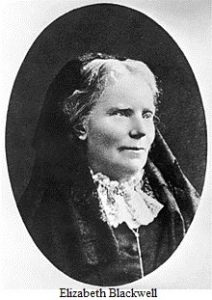
Elizabeth Blackwell was the first woman in the United States to receive a medical degree, which she put to great use when she opened in NoHo the first infirmary run by women for women. Born on February 3, 1821, in Bristol England, Blackwell and her family moved to the United States in 1832. Following the […]
Village Preservation’s curriculum on Black history for middle school students focuses on local, citywide, national, and global themes and movements from pre-European settlement through the 21st century. One of the themes we explore is how voting rights and other civil rights evolved and were won by and for African Americans in our city and elsewhere […]
Leontyn Price, the groundbreaking, world-renowned soprano and longtime Greenwich Village resident, made her debut at the Metropolitan Opera on January 27, 1961. Ms. Price was one of the first internationally recognized African-American opera stars. Her career broke through racial barriers at another time in our history when the United States was experiencing intense racial strife […]
The anti-war and civil rights activist Igal Roodenko was a leader in a number of the most significant social movements of the twentieth century.
Continuing our Cemeteries of the Village series, today we look at the blocks surrounding 2nd Street and Second Avenue. Two landmarked cemeteries still exist here, and four other 19th-century cemeteries once called these blocks home, but little trace of them remains. New York and New York City Marble Cemeteries The New York Marble Cemetery, a […]
On December 22, 1894, Captain Alfred Dreyfus, a young French artillery officer of Alsatian and Jewish descent, was court-martialed, convicted of treason, and sentenced to life in prison at the notorious Devil’s Island prison for allegedly sharing military secrets with the German Embassy in Paris. Two years later, an investigation into the already closed case […]
Despite all the challenges of the year, Village Preservation proudly hosted 76 programs (most of which were virtual), reaching over 9,000 people in 2020. How does one choose favorites? It’s nearly impossible, especially given that each program represents, at minimum, someone’s research, passion, skill, life’s work, book, or all of the above. So, in wrap-up […]
From the late nineteenth century until the mid-twentieth century, four elevated rail lines crossed over the streets of our neighborhoods.
Village Preservation is celebrating its 40th Anniversary this year, and in honor of this momentous milestone, we have created an interactive storymap that charts the historic journey of our organization. During that span, we have worked tirelessly to preserve our neighborhoods — no easy feat — and despite being a “child” of the 1980s, our […]
In 1754, there was no library in New York. Can you believe it? Today we are taking a wonderful journey through our neighborhoods to trace the beginnings of the New York Public Library which came to light through several important institutions, philanthropists, and buildings. With the help of our new Virtual Village map and its […]
The East Village is home to a dynamic group of historic LGBT+ sites — overshadowed as they may be by the many such landmarks of the West Village, including Stonewall. But LGBTQ+ artists, writers, musicians, and activists have long called the East Village home, or spent significant time there. Among them are Allen Ginsberg, Emma […]
Over 2.4 million New Yorkers, or nearly one-third of its population, identify as Hispanic or Latino, including myself. National Hispanic Heritage Month (September 15-October 15) is one of many occasions that allows us to reflect on the impact that Hispanic and Latino residents and revolutionaries have had on our neighborhoods for over 400 years. Juan […]
It’s no secret that we are big fans of the New York City Municipal Archives digital collection of all 720,000 of its tax photos of most building in New York City, taken 1939-1941. An intrepid NYer has created a website that mapped each photo to its location, making finding the location of interest exponentially easier […]
One of New York’s most historic but least known landmarks is the Bowne House, built ca. 1661 at 37-01 Bowne Street in Flushing, Queens. The two-and-a-half story wood house is the oldest building in the Borough of Queens and one of the oldest in New York City.
Continuing our Cemeteries of the Village series, today we look at two historic cemeteries that predate the modern street grid: The St. Mark’s Church-in-the-Bowery Vaults and the nearby but long gone St. Mark’s Cemetery. These two cemeteries both belonged to St. Mark’s Church in-the-Bowery. The vaults beneath the Church still exist and remain the final […]
A two-story firehouse stands in the middle of the rich historic neighborhood south of Union Square.
Quiet, reserved Perry Street has been home to some very not-quiet and reserved types over the years, including Frank Serpico, Margaret Mead, James Agee, Margaret Sanger, and Dawn Powell. Appropriately enough, the street’s namesake was also someone who was not afraid to make a little noise and shake things up either. And he did a […]
80 Fifth Avenue at 14th Street is a building with an incredibly rich civil rights and social justice history, about which we have done a great deal of research as part of our effort to preserve and landmark the unprotected area of Greenwich Village and the East Village south of Union Square. Apparently we’re not […]
A remarkable number of people and places in Greenwich Village, the East Village, and NoHo played important roles in the move towards women’s suffrage. These neighborhoods were long centers of political ferment and progressive social change, and women and men here played a prominent part in removing barriers to women voting in New York State […]
August 18th is the hundredth anniversary of the adoption of the 19th Amendment, which prohibited discrimination in voting in the United States based upon sex. It was the culmination of generations of effort by dedicated women and men, many of whom lived, worked, wrote, organized, protested, marched, and lobbied in Greenwich Village, the East Village, […]
The 19th Amendment to the Constitution was adopted on August 18, 1920, affirming that “The right of citizens of the United States to vote shall not be denied or abridged by the United States or by any State on account of sex.” The adoption was the culmination of decades of work by suffragists to eliminate […]
On May 4, 1912, ten thousand people marched for women’s suffrage along Fifth Avenue.
These days, with cameras on our phones always at the ready, we give little consideration to a time when picture-taking technology was in its infancy. In the late 1830s, methods were first being developed to capture light and shadows on film — the earliest version of photography. As the technology developed, however, one subject proved […]
In 1626, Paulo d’Angola arrived to New Amsterdam on the first ship bringing enslaved people to this region.
On July 10, 1925, what would come to be known as the “Scopes Monkey Trial” began in Dayton, Tennessee.
726-730 Broadway (aka 418-426 Lafayette Street) is a through-block loft building located in the NoHo Historic District. Not much to look at, what used to be here is infinitely more interesting and surprising than what is, and has been, for over a hundred years. In this case what used to be here was perhaps New […]
Civil War Major General Daniel E. Sickles had one of history’s most contentious, strange, and multifarious biographies.
Village Preservation has developed online resources for students from our acclaimed children’s education program, History and Historic Preservation. These videos and activities are designed for children ages 5-7. During this time of remote learning, these are a great resource and a way to keep children engaged and expand their horizons from home. Today we introduce Part […]
An Instagram follower recently asked us for clarification about an image we posted from our historic image archive of the long-demolished former home Our Lady of Pompeii Church. She wanted to know exactly where the church was located, and which streets could be seen in the image. Sounds like a simple enough request, right? But […]
In 2007 the Chrysler Building was ranked ninth on the list of America’s Favorite Architecture by the American Institute of Architects. Built in 1928-30 and designed by William Van Allen, it is a beacon in our rapidly changing New York City skyline, and in many ways the embodiment of the Art Deco style and the Roaring 20s’ exuberant building boom before the Depression.
Village Preservation has now developed online resources for students from our acclaimed children’s education program, History and Historic Preservation. These videos and activities are designed for children ages 5-7. During this time of remote learning these are a great resource and a way to keep children engaged and expand their horizons from home. Watch the videos […]
The streets, parks, and squares of the Greenwich Village Historic District (GVHD) are named for a unique collection of historical figures. Beginning with our 2019 celebration of the 50th anniversary of the GVHD, we have developed a guide to how these locations got their names. Click here to read other posts about the origins of GVHD […]
We’ve been spending a lot of time thinking about things we used to do before the coronavirus outbreak, that we’re looking forward to hopefully doing again once things return to ‘normal.’ We’ve also been spending a lot of time going through our historic image archive, remembering some of those once-common activities, and just exploring the history of […]
Located on the north shore of Staten Island not far from the Staten Island Ferry Terminal lies an oasis like none other in New York, recognized by local, state, and federal government for its extraordinary architectural and cultural significance.
Part of our blog series Why Isn’t This Landmarked?, where we look at buildings in our area we’re fighting to protect that are worthy of landmark designation, but somehow aren’t landmarked. The area south of Union Square is full of buildings rich in architectural and social history which need and deserve historic district (landmark) protections. We […]
It times of great uncertainty or need, special people emerge to address challenges that face us all. Often it starts with the plight of the most vulnerable among us, which if not attended, can spread to the larger society. This Women’s History Month we take a look at once such special figure — a woman who […]
For many, celebrating Irish American heritage in March brings one to Fifth Avenue for the annual St. Patrick’s Day Parade, or perhaps a visit to St. Patrick’s Cathedral. But for those willing to venture beyond Midtown, there’s a rich Irish American history to be found in Greenwich Village and the East Village. While both neighborhoods […]
Jerry Fujikawa was a Japanese-American actor who had a long career in films, television, and Broadway. Jerry debuted on Broadway in the five-time Tony Award winning play The Teahouse of the August Moon. He was very a familiar face to film and television audiences whose career spanned over 30 years, including a wide variety of […]
When we think of great African American historic sites in New York, we typically think of Harlem’s Apollo Theater, Lower Manhattan’s African Burial Ground, or Brooklyn’s Weeksville Houses. But one building that should perhaps join the list is 70 Fifth Avenue in Greenwich Village, which housed the headquarters of the NAACP, the nation’s oldest and largest civil rights […]