
Alvin Ailey + the Collaborators Who Brought His Legacy Downtown
Alvin Ailey is one of the most influential figures in the history of Modern Dance. A virtuosic dancer, innovative choreographer, and cultural leader, he used his artistic voice to celebrate, contemplate, and comment on the African American experience.
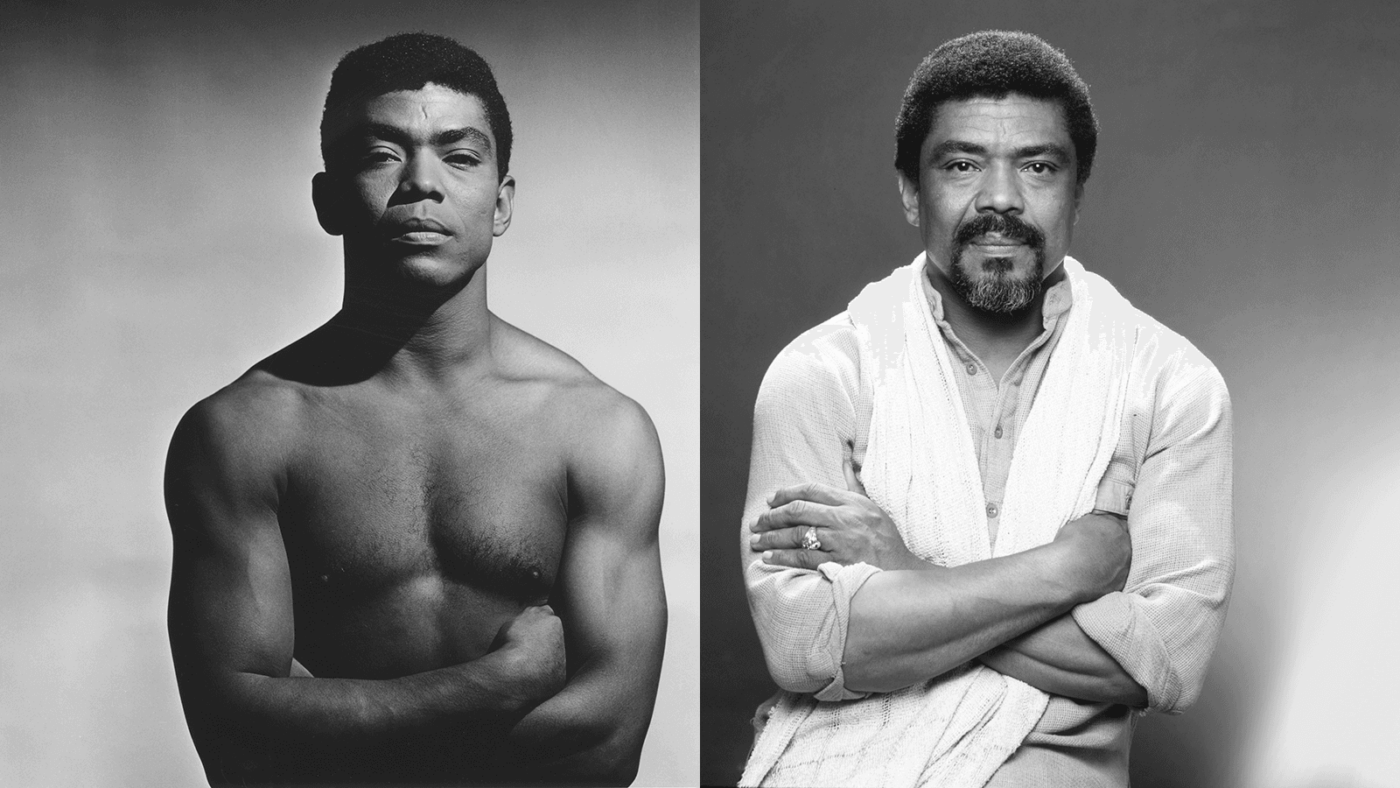
Ailey spent a large part of his career cultivating his New York-based company, the Alvin Ailey American Dance Theater. His choreography fused theater, modern dance, jazz, and ballet, with Black vernacular movement, creating an iconic and identifiable movement vocabulary.
Of his many well-known works, Revelations is globally recognized as one of the most influential and popular ballets ever to be created. It has been performed countless times, including at the 1968 Olympics and at the White House, and has been broadcast on film and television.
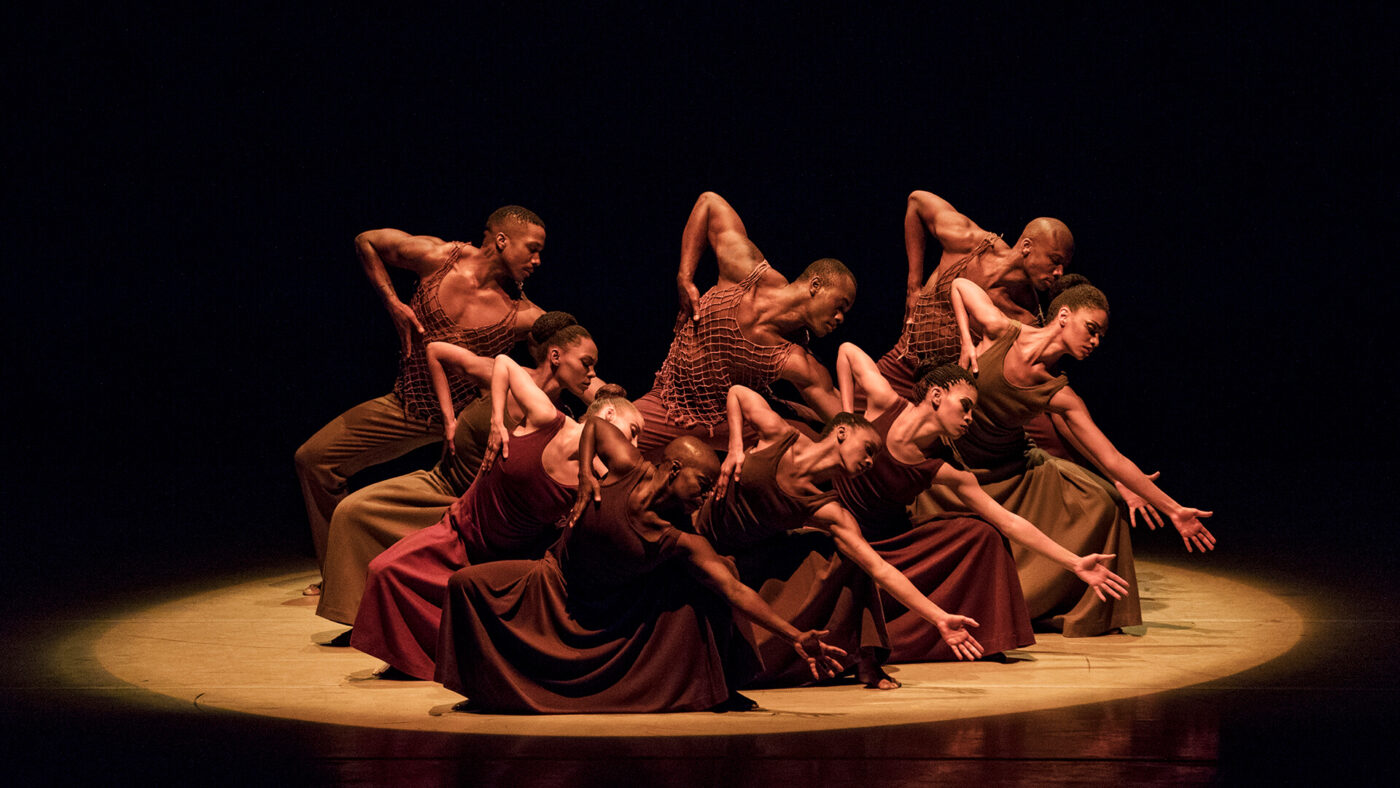
While Ailey was more active in Harlem and the mainstages in Midtown, his impact has been felt deeply in our neighborhoods.
Today, we will see how Ailey’s legacy has touched the downtown scene by looking at a few of his close collaborators who lived and worked in Greenwich Village, the East Village, and Noho.
Romare Bearden
Visual artist who created many costumes and sets for Alvin Ailey American Dance Theater.
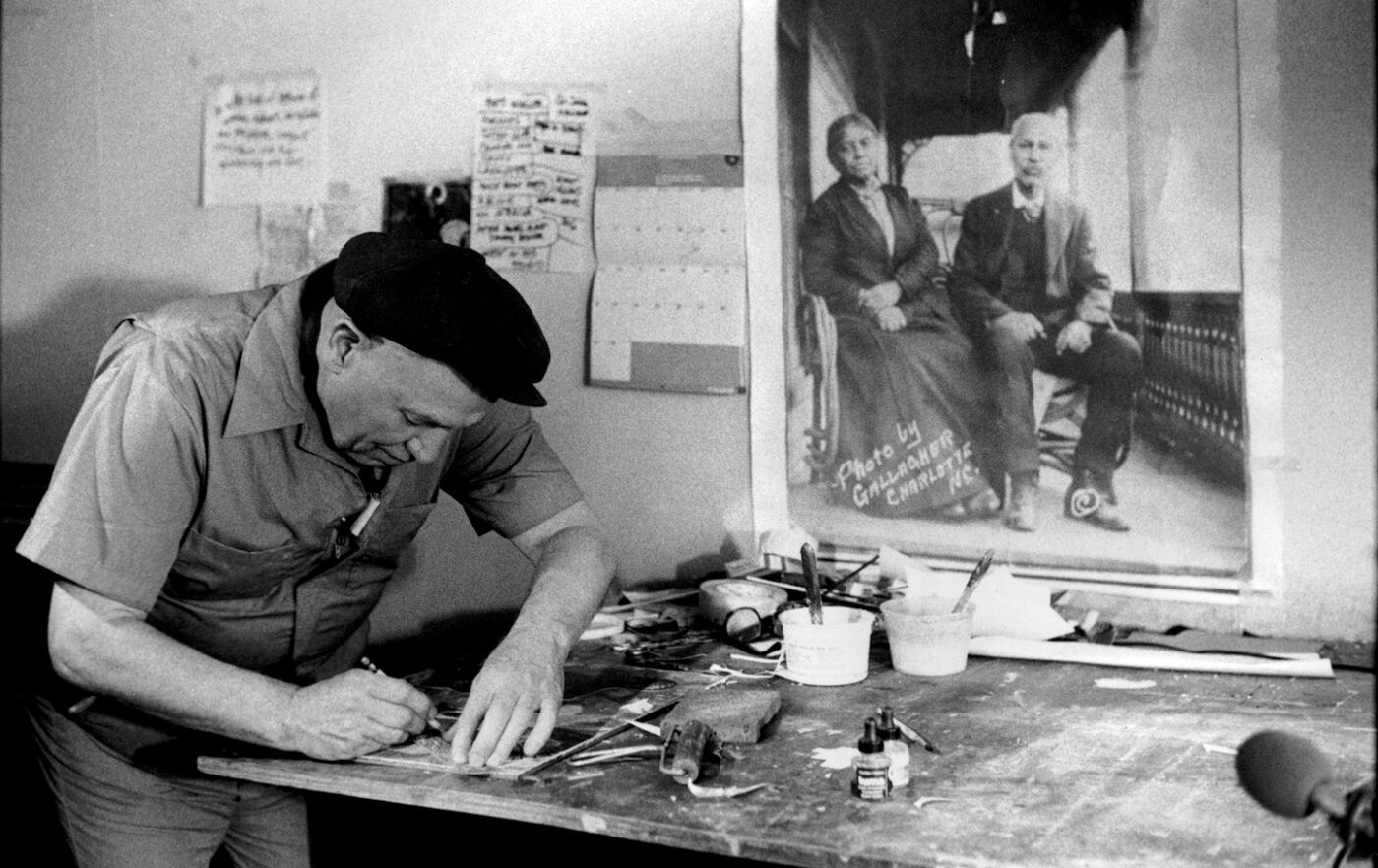
Romare Bearden was a groundbreaking artist, intellectual, and activist who had deep ties to our neighborhood. His work was an important part of the larger Harlem Renaissance, and was deeply influenced by other Black creatives, including the poetry of Langston Huges and the jazz rhythms that surrounded him in Manhattan in the mid 20th century.
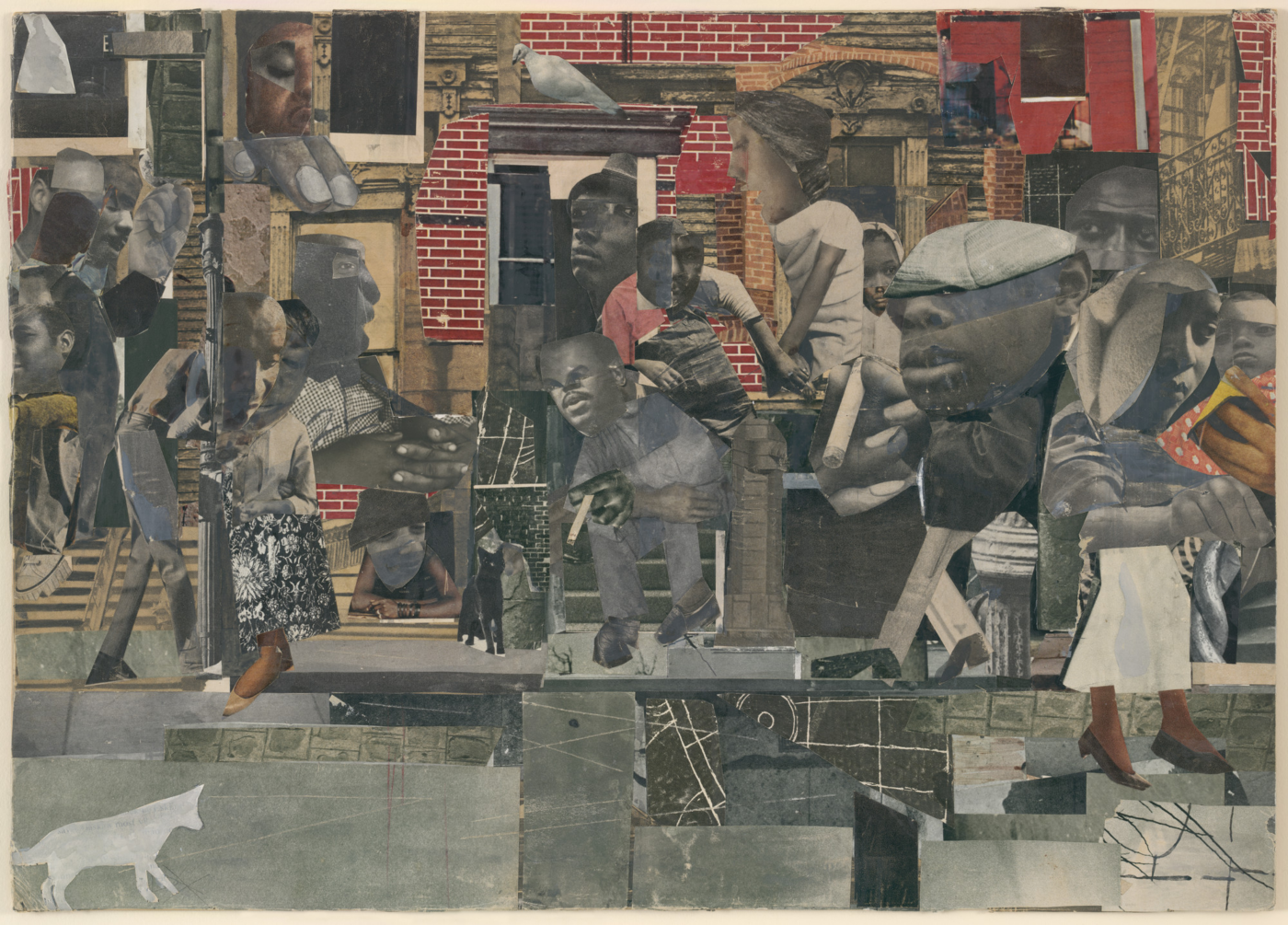
Bearden brought the ethos of the Harlem Renaissance downtown. In his first studio on Canal Street, Bearden along with Hale Woodruff, Charles Alston, Norman Lewis, Felrath Hines, and Richard Mayhew formed Spiral, a group of New York-based African American artists, in July 1963 to explore the question “What is Black art?” They soon found a permanent home for Spiral on Christopher Street. Later in his career, Bearden began Cinque Gallery with Ernest Crichlow and Norman Lewis to foster up and coming talent in the visual arts.
Alvin Ailey’s respect for and interest in Bearden’s work was well illustrated when he said the following, “There’s so much music in Romie’s work,” Ailey said. “There’s so much blues, spirituals; there’s so much gospel. There’s so much Mobile, Alabama, so much New Orleans, so much Mahalia Jackson”.
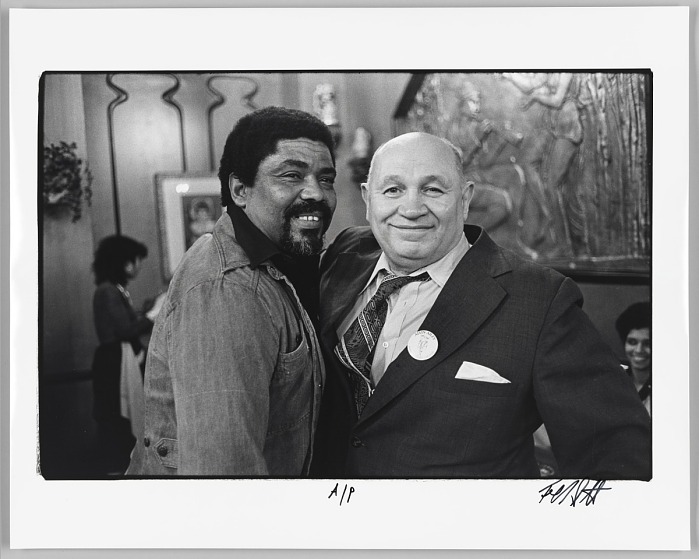
In 1977, Bearden began officially collaborating with Ailey and his company. He created sets and costumes for Ancestral Voices, a contemporary take on African Ritual Dances choreographed by Dianne McIntyre.
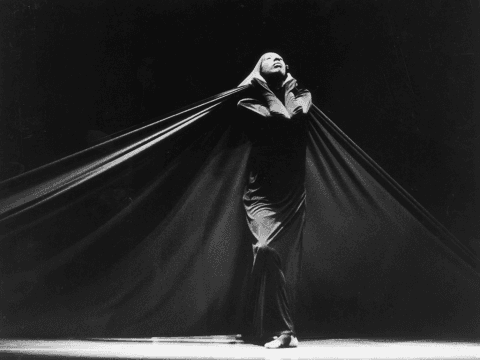
From this initial successful collaboration, Bearden continued to design both sets and costumes for the company. Among the works he created pieces for was Passage, a solo by Ailey himself choreographed for dancer Judith Jamison. The costume he designed can be seen below. Somewhat of a departure from Bearden’s brightly colored works, he dressed Jamison in swaths of dramatic purple fabric.
In the late 70’s, Bearden and Ailey began dreaming up a new ballet called Bayou Fever. Initially proposed to Ailey by Bearden through a series of 63 gouache and watercolor paintings, the epic collaboration would feature sets by Bearden and movement by Ailey. Sadly, the ballet never came to fruition, but its initial scheming showcases how truly excited the two artists were about creating together.
Dudley Williams
Dancer and teacher with the longest tenure in the Alvin Ailey American Dance Theater
Dudley Williams was a key member of the Alvin Ailey American Dance Theater for decades, working closely with Ailey to develop the company’s voice and legacy.
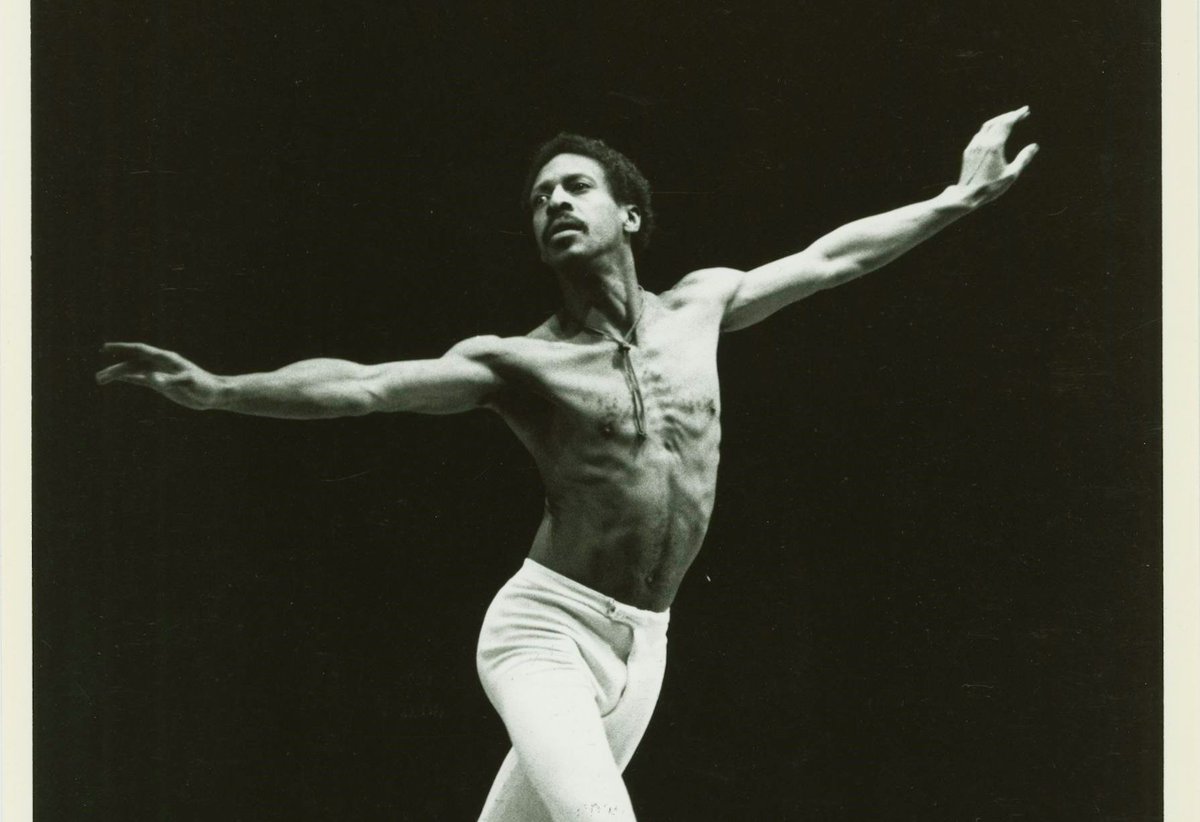
Williams began his career with the Martha Graham dance company before a last minute request to fill in as a replacement for an Alvin Ailey performer in 1963 lead him to join the Ailey company full time. An iconic solo titled “I Want to be Ready” was choreographed specifically for Williams, and was a part of Ailey’s most well-known piece, Revelations.
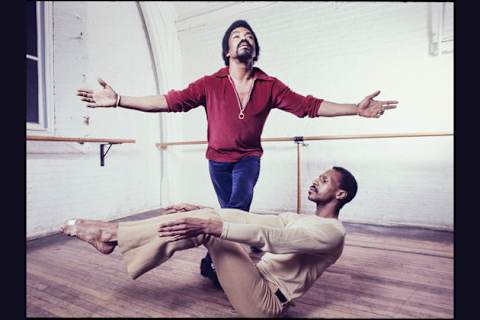
Williams was a Greenwich Village local, living in Westbeth Artist Housing for many years. He continued performing with Alvin Ailey until 2005, and kept on as a teacher with the Ailey school following his retirement. He would also often teach for the Martha Graham school in his later years.
Following his professional retirement, Williams continued to dance with with a group he formed called Paradigm, a trio of older dancers including Carmen de Lavallade and Gus Solomons Jr. In 2004, when Mr. Williams was preparing to retire after four decades in dance, an interviewer asked about the unique longevity that characterized his remarkable career. He simply replied, “Good Lord. I love it. I absolutely love it. I think God gave me a talent, and if I don’t use it, shame on me. That’s the way I look at it. I love dancing. I love performing, and I can still do it. Why not? Why not?”
Duke Ellington
Jazz musician and composer for many pieces at Alvin Ailey American Dance Theater
Duke Ellington was a prolific jazz pianist, composer, and bandleader of the Duke Ellington Orchestra. In a career that spanned over half a century, Ellington composed thousands of songs for the stage, screen, and songbook. Ellington began his career in the 1920s performing in Broadway nightclubs as a bandleader of a six-piece band.
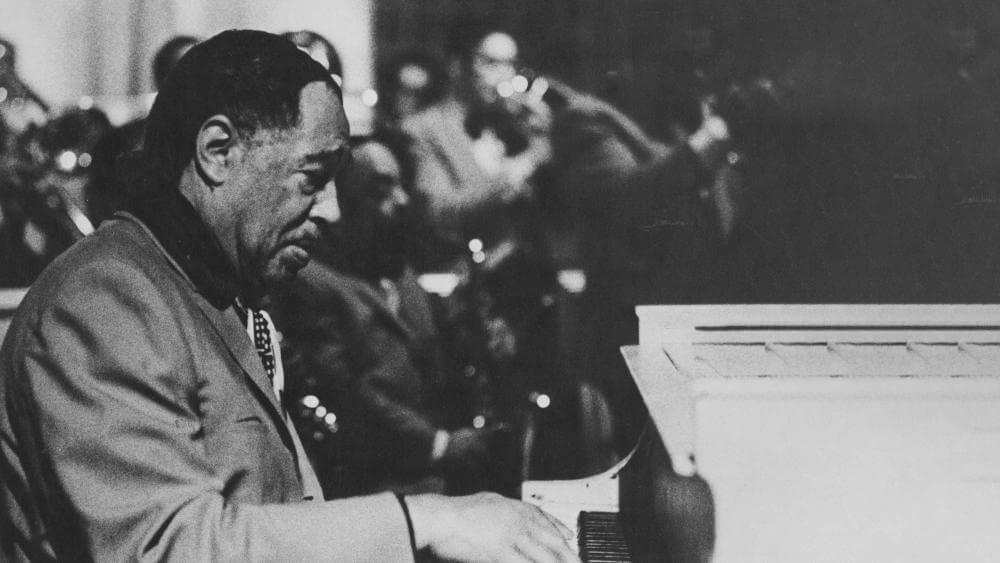
His career began to take flight in the 1940s, when he created masterworks “Concerto for Cootie,” “Cotton Tail” and “Ko-Ko.” Some of his most popular songs included “It Don’t Mean a Thing if It Ain’t Got That Swing,” “Sophisticated Lady,” “Prelude to a Kiss,” “Solitude” and “Satin Doll.”
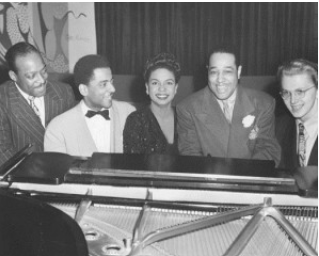
As the downtown Jazz scene flourished, Ellington often ventured out of his uptown scene to perform at iconic venues such as Cafe Society and Village Gate. He also was on the board of the illustrious “Institute of Jazz,” a comprehensive jazz archive created in the Greenwich Village home of Marshall Sterns and now owned by Rutgers University.
Alvin Ailey was a life-long admirer of Ellington’s work. He first saw the Jazz greate perform with his band in Los Angeles, and upon moving to New York, Ailey would watch the band perform at venues including the Orpheum, Lincoln Center, and Hotel Dunbar. Ailey said of his admiration: “I used to see this amazing-looking man in a white suit with slicked-back hair sitting at a white piano. That was when I began to worship him from afar.”
When Ailey’s company presented their second concert on December 21, 1958, Ellington was in the audience. He was so enamored with Ailey’s choreography that he soon began visiting company rehearsals. In 1963, Ellington invited Ailey and his company to contribute to his work My People. When Ailey saw Ellington becoming overwhelmed with the task of directing, he stepped in to assist. Thus began a long and fruitful partnership between the two greats.
Ailey often used Ellington’s music for his ballets, including for First Negro Centennial (1963) and Reflections In D (1963). The first time Ellington created a new composition for one of Ailey’s works was in 1970 for The River. The process to creating The River was deeply collaborative, with Ellington creating small sections of music at a time, and Ailey working from that.
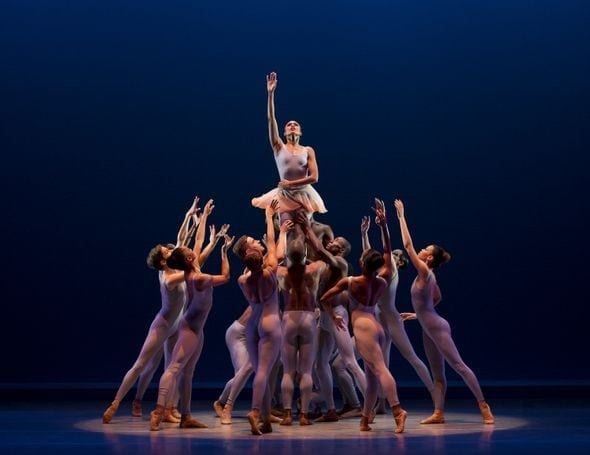
One of Ailey’s life missions became to celebrate and thank his idol. Ailey created two large-scale tributes in honor of Ellington, the first being a CBS special called “Ailey Celebrates Ellington,” hosted by Gladys Knight, and the second was at Lincoln Center for which he commissioned choreographers to make new works to Mr. Ellington’s music.