
Art Deco’s Anniversary
On April 28, 1925, the Exposition Internationale des Arts Décoratifs et Industriels Modernes, or “International Exhibition of Modern Decorative and Industrial Art,” opened in Paris, France. This was the official launch of an architectural and artistic style that had already been percolating, defined by molded masses and geometric forms, bold colors, sharp kinetic lines and edges, bas-relief, and the utilization of industrial elements, and which, in reference to the exhibition, eventually came to be known as Art Deco. To celebrate this anniversary, Village Preservation created a StoryMap highlighting Art Deco buildings within Greenwich Village, the East Village, and NoHo.
Art Deco is one of New York City’s defining architectural styles. In fact, some of our most famous buildings are prominent examples of the style — from the Empire State Building and the Chrysler Building (which has an interesting connection to the Village), to other icons like Rockefeller Center, the Waldorf Astoria, and so many more.
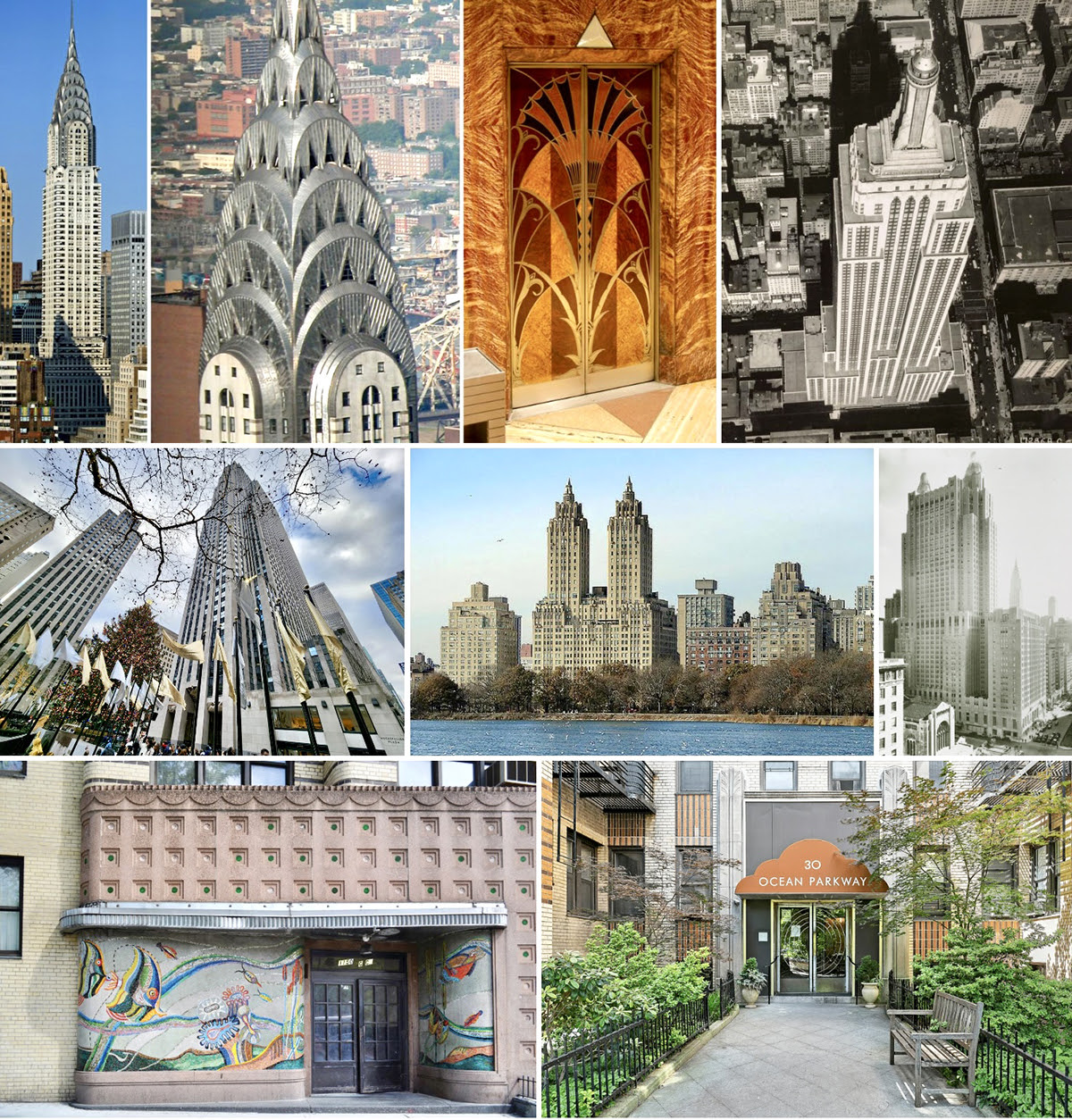
Despite the style’s prominence in our city, Art Deco is probably not the first style that comes to mind when one thinks of the architecture of Greenwich Village. The area is perhaps most commonly associated with its Federal and Greek Revival style row houses, and, heading further west and north, with the industrial architecture that shaped the Hudson River waterfront. But throughout the neighborhood, there are hints — and sometimes much more obvious displays — of the Art Deco aesthetic.
A prime example is One Fifth Avenue, a towering apartment building that has defined Greenwich Village’s skyline since 1926. (This building is also prominently featured in another of our recent map resources, Fifth Avenue: 1824 to Today.)
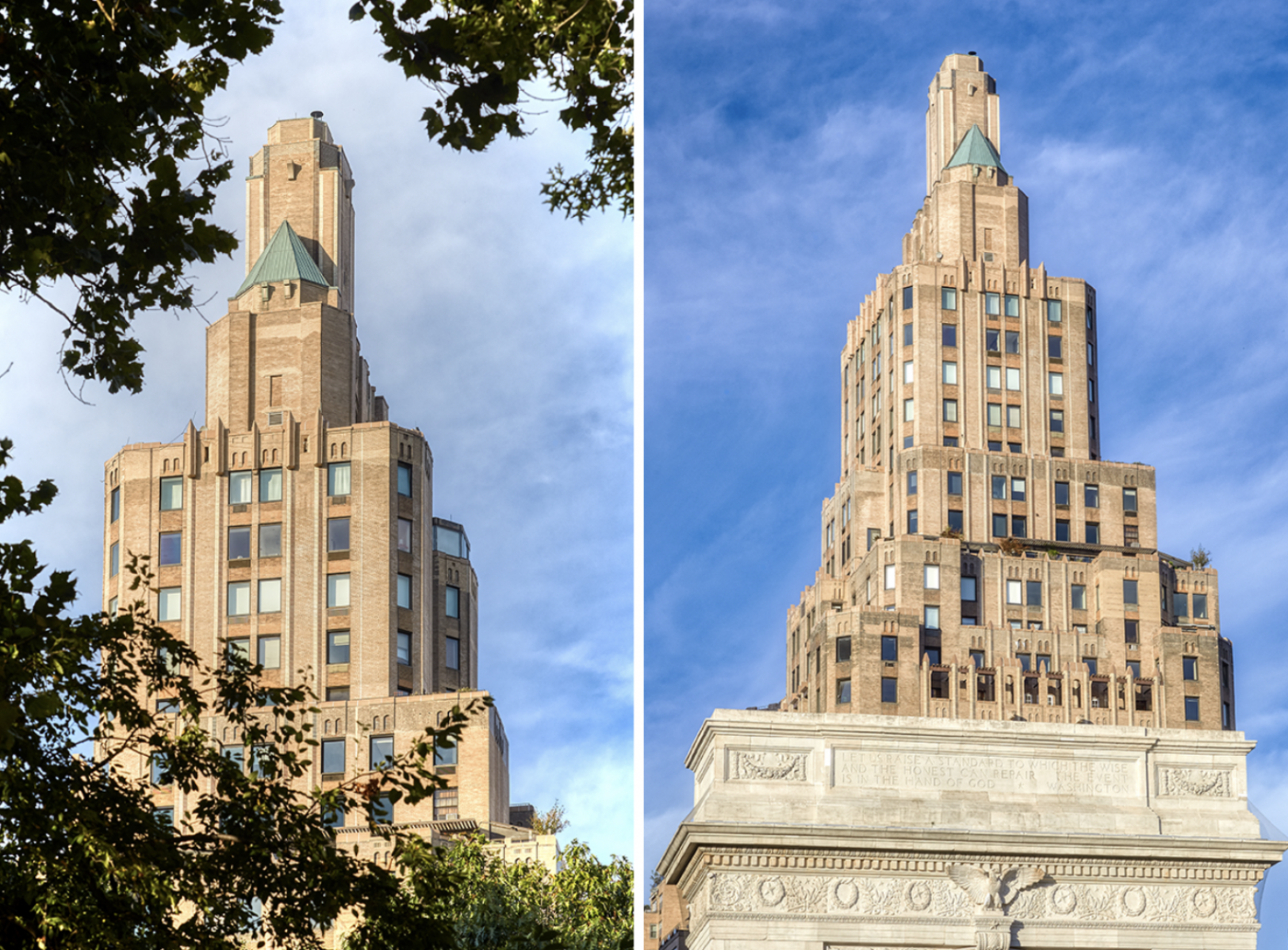
Chamfered corners, vertical streamlined accents, and staggered setbacks make this former residential hotel (now apartments) one of the most iconic Art Deco landmarks in Greenwich Village, and in New York City.
Upper floor setbacks for tall apartment buildings such as this were a defining feature of the era, creating intricate geometric masses above us. Precipitated by zoning regulations, they also often went hand-in-hand with other Art Deco features.
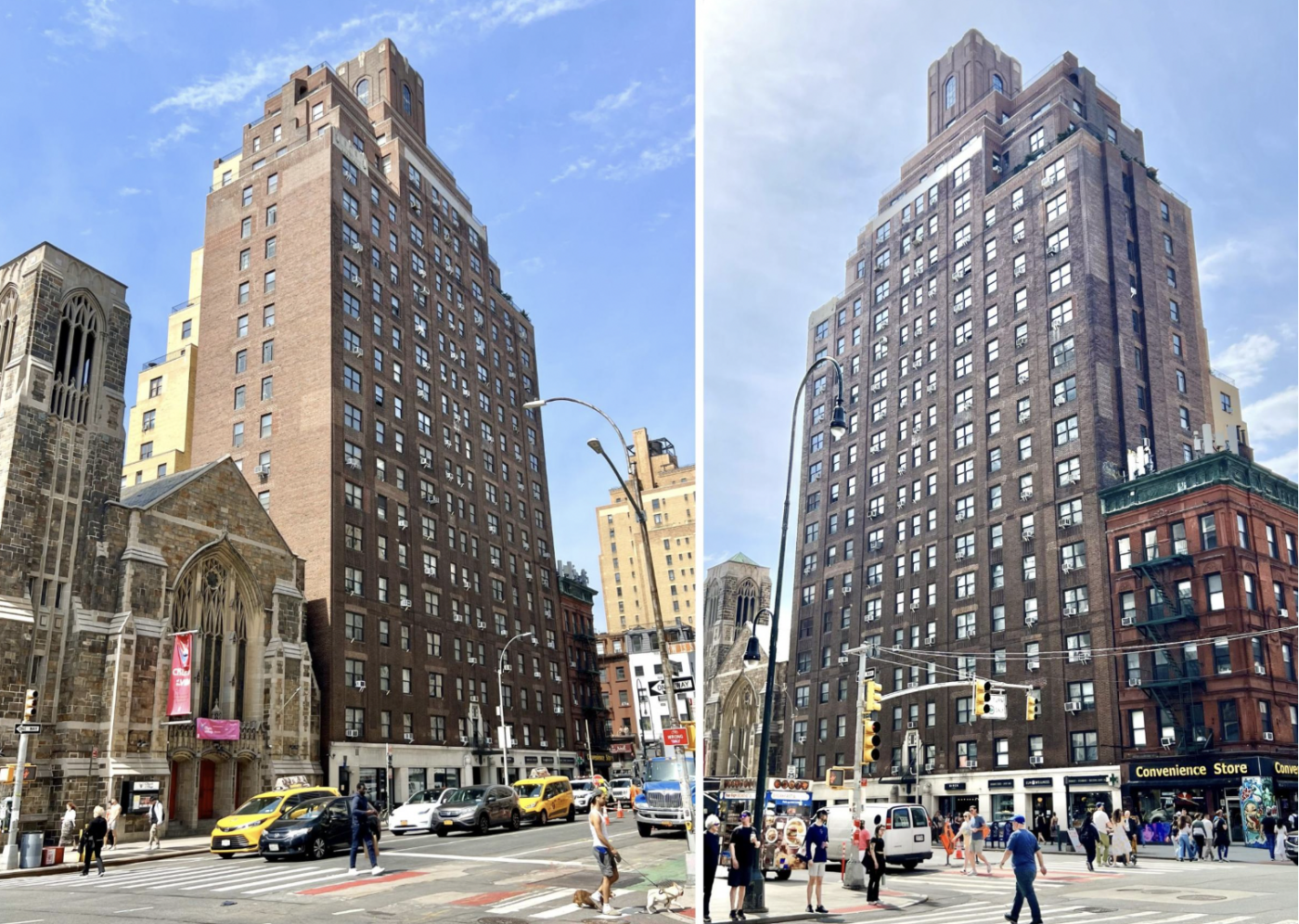
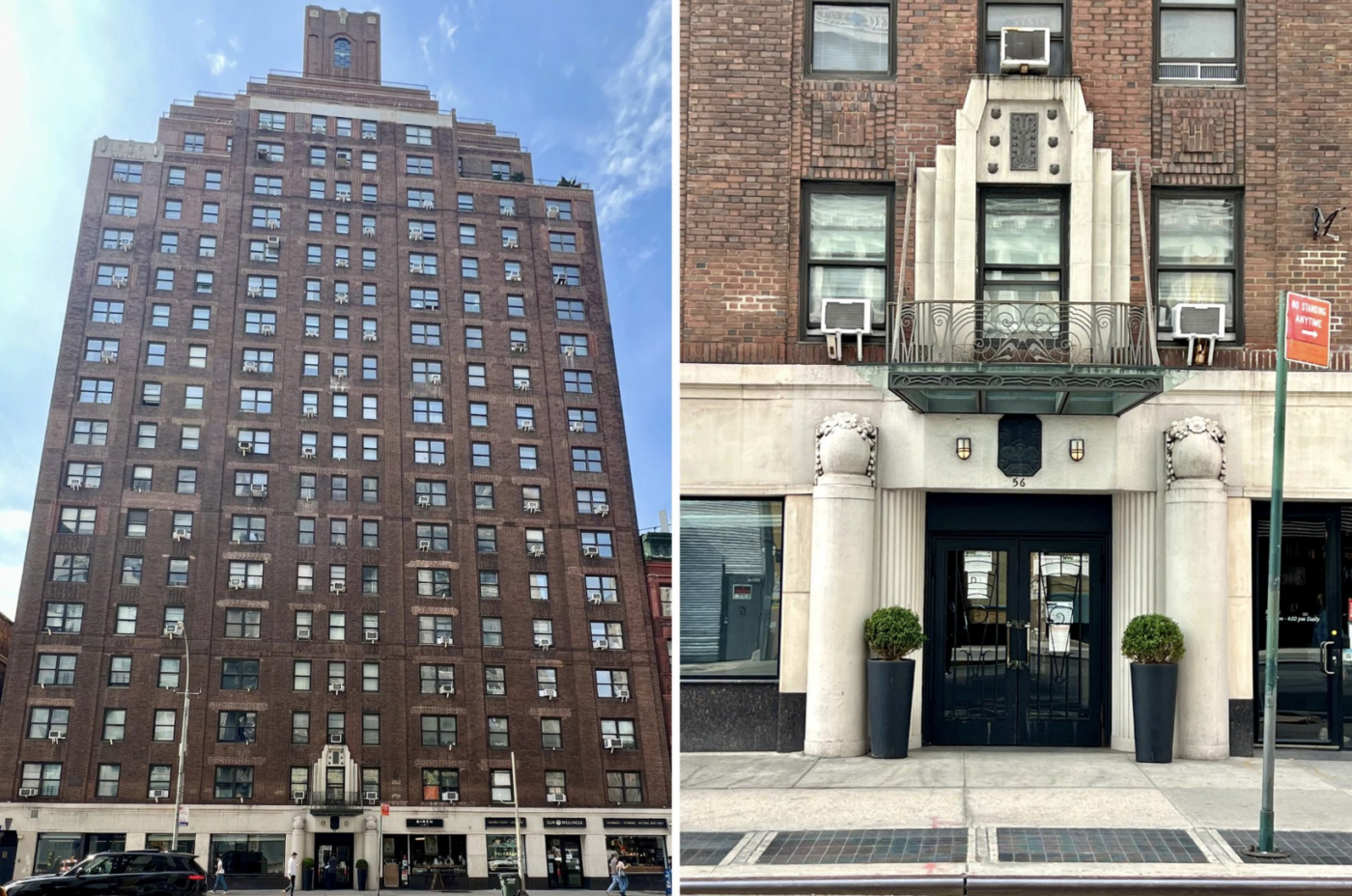
Another striking example is 56 Seventh Avenue, which includes the characteristic staggered rooftop terrace setbacks typical of designs by its architect, Rosario Candela. These draw the eye up to an enclosed water tower sitting prominently at the center of the structure, elegantly capping off the symmetrical primary facade, which is grounded by a one-story limestone storefront base and a central, recessed residential entrance.
Above the entrance is a small metal canopy with Art Deco metal detailing. The central second-floor window features an Art Deco terracotta surround, and a Juliet balcony with elaborate metalwork.
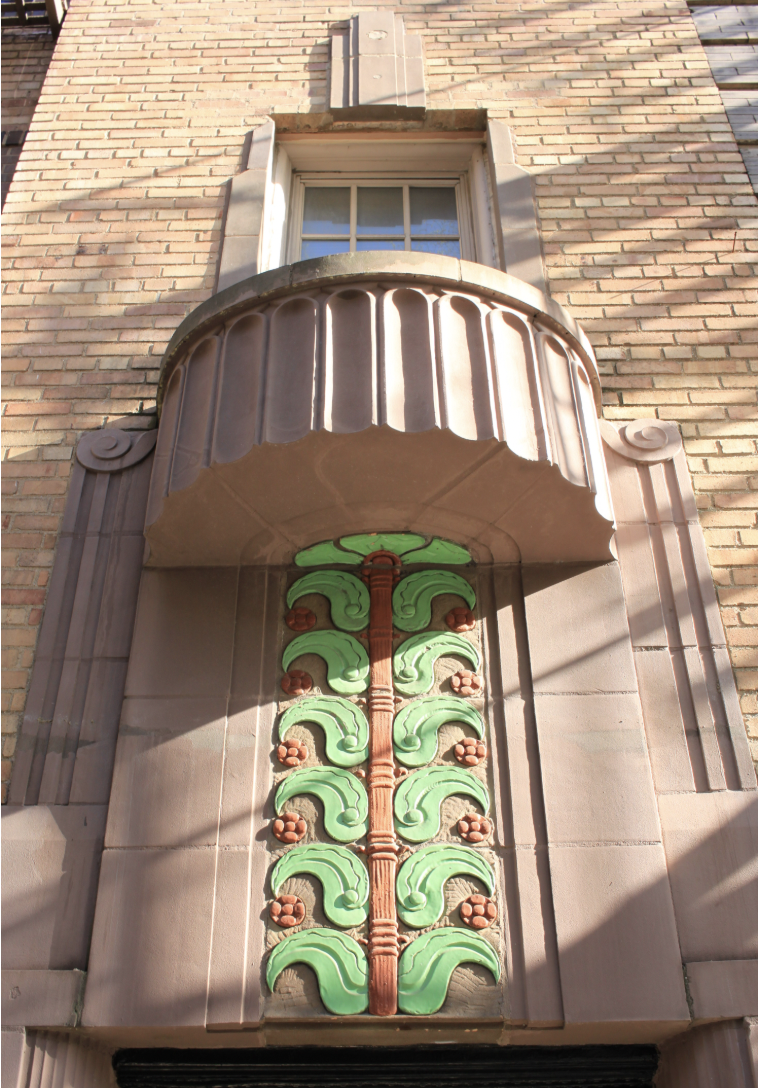
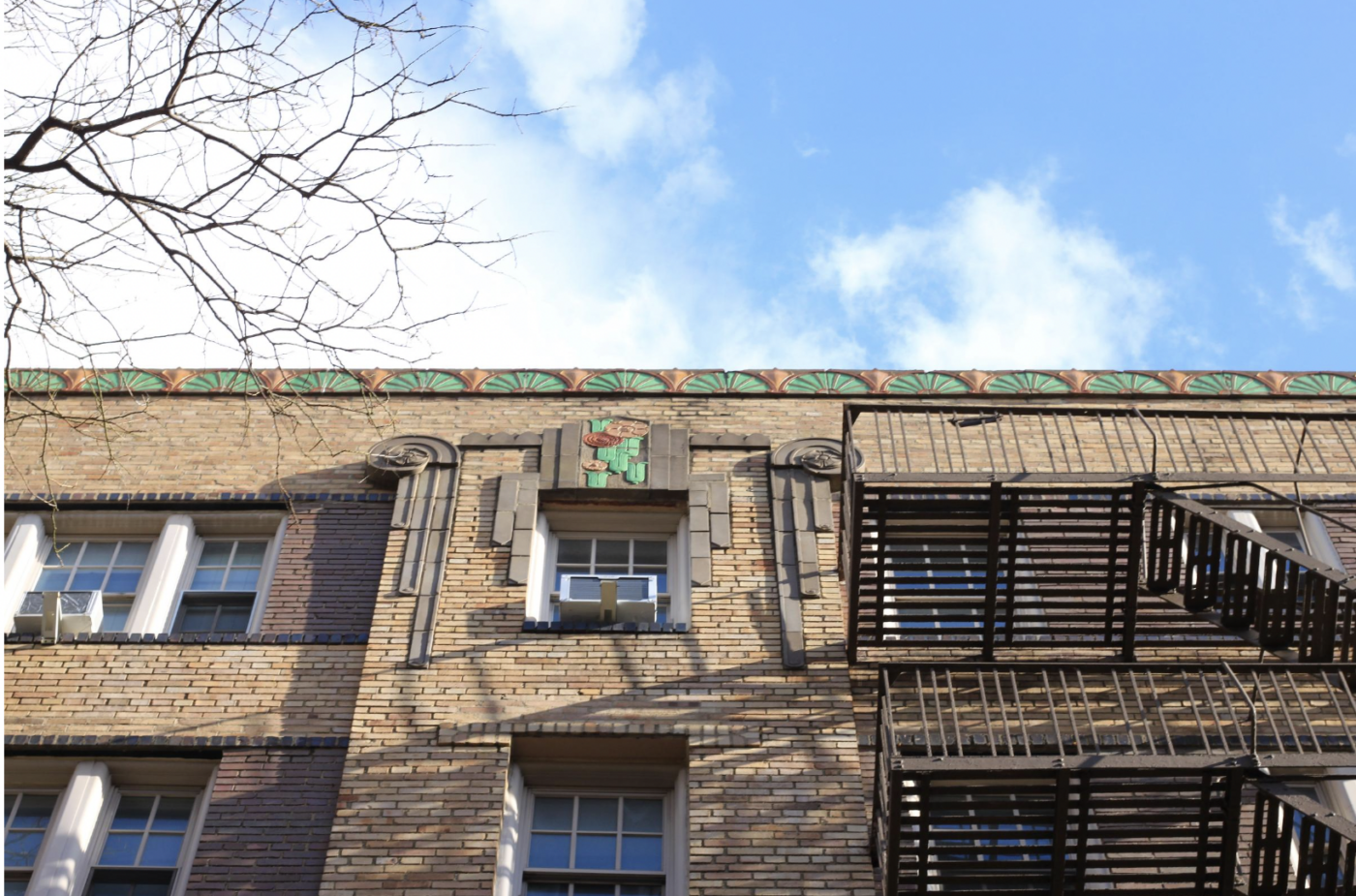
Some of the neighborhood’s more intricate Art Deco details are found in doorways and along rooflines. No. 22 Grove Street, for example, is a six-story apartment building with a number of Art Deco elements: tan, light brown, and dark brown bands of brick alternate to add kinetic energy to the facade, while also implying shadows and depth on a mostly two-dimensional surface. But the real show occurs around the entryway, where flattened stone scrolled forms contrast with a curving projecting balcony and boldly colored polychromy over the doorway; similar motifs of contrasting color, materials, and forms can be found near the building’s top.
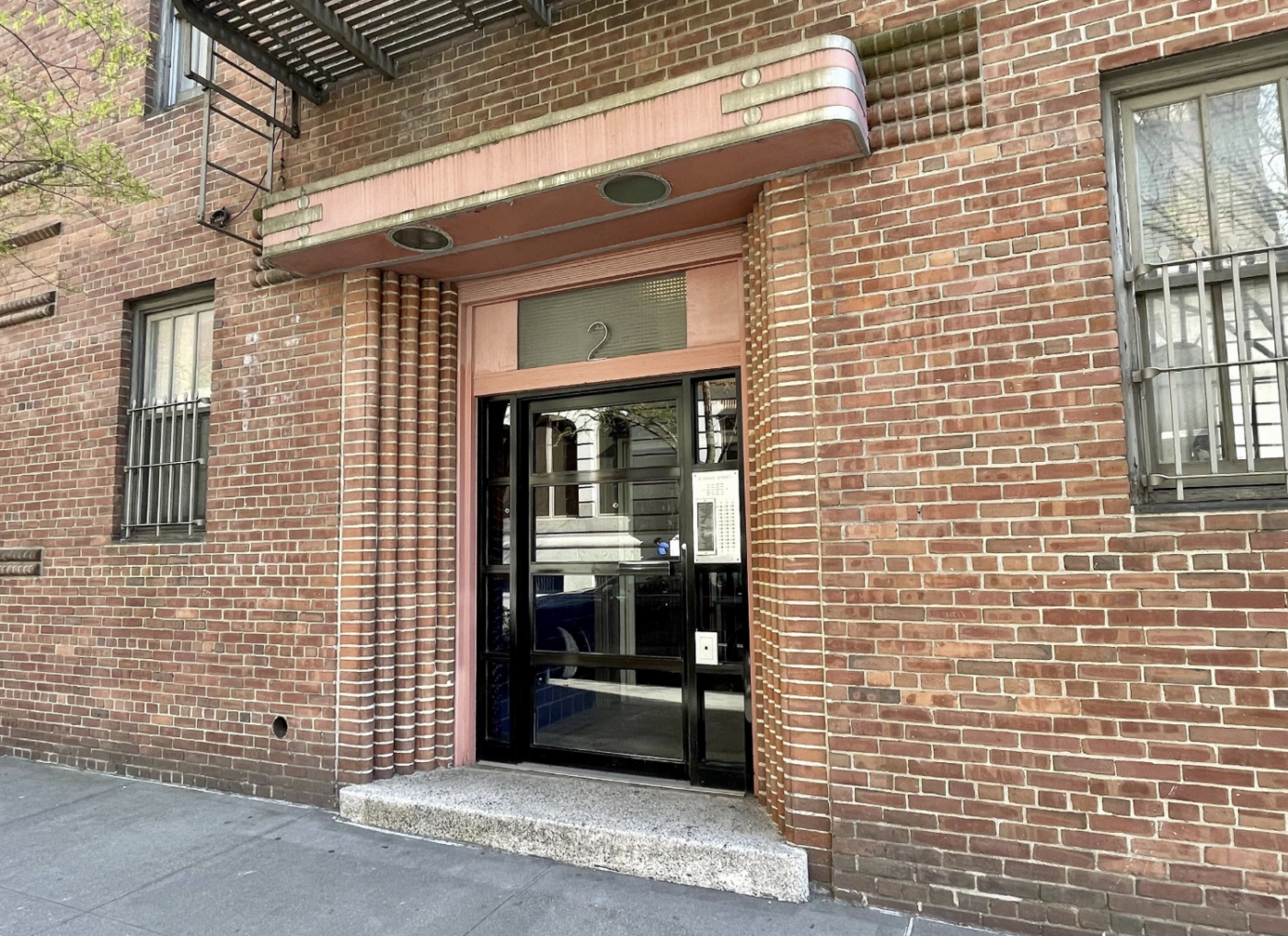
A few buildings over, No. 2 Grove Street contains a bevy of classic Art Deco features, perhaps most prominently the corner casement windows, highlighting the lack of need for structural supports at the building’s edges. Horizontal brick accents further call attention to this feature, as they also do for the recessed doorway.
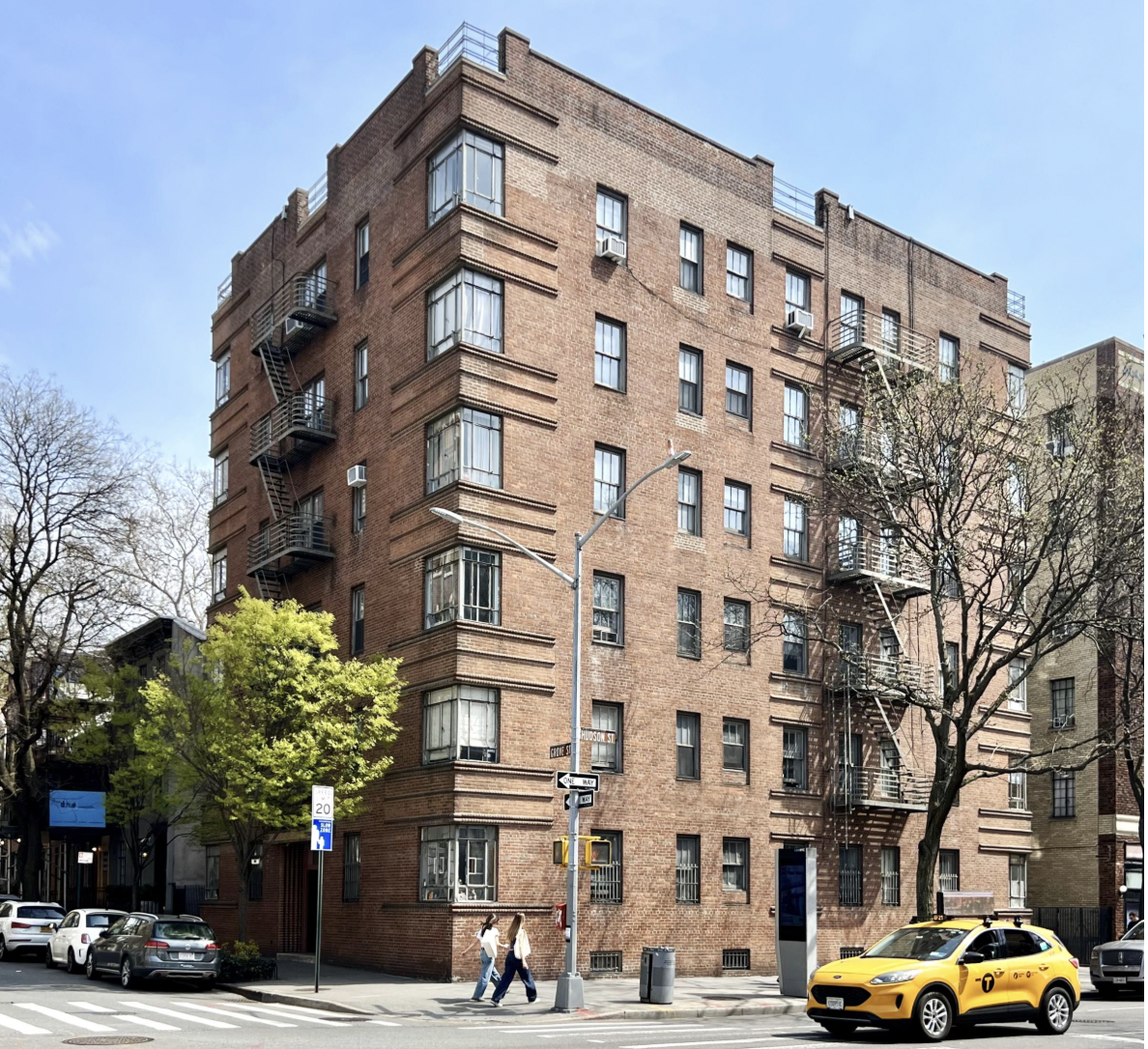
Elements in the “Moderne” style, which succeeded and built upon Deco, can be seen in the rounded corners of the fire escape balconies and the projecting marquee over the doorway.
These are just some examples of how Art Deco has manifested in buildings in Greenwich Village, the East Village, and NoHo. Check out Village Preservation’s Art Deco map to see these and many more wonderful examples of the Jazz Age style in our neighborhoods.