Rock the Village: the Clash in Our Communities
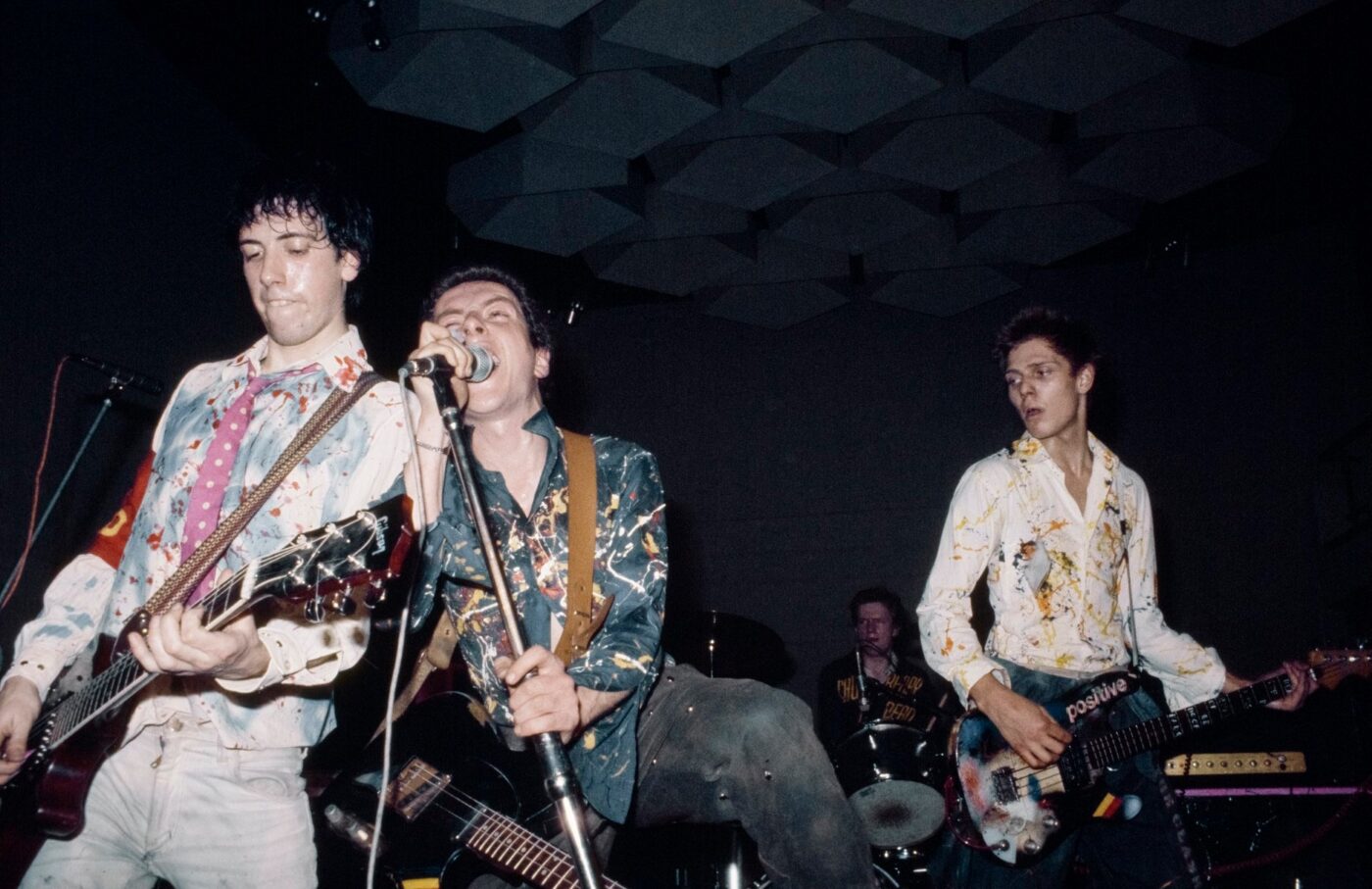
The Clash was one of the first bands to merge rock with elements of reggae, dub, funk, ska, rockabilly, and more, becoming perhaps the best-known and most essential elements of the first wave of British punk rock in the 1970s and ’80s. The band emerged from London’s underground scene — their first live performance coming on the date of our nation’s bicentennial, July 4, 1976 — but soon enough they developed a strong relationship with Greenwich Village and East Village.
The result of those bonds was one of rock’s most famous album covers and the group’s most successful disc.
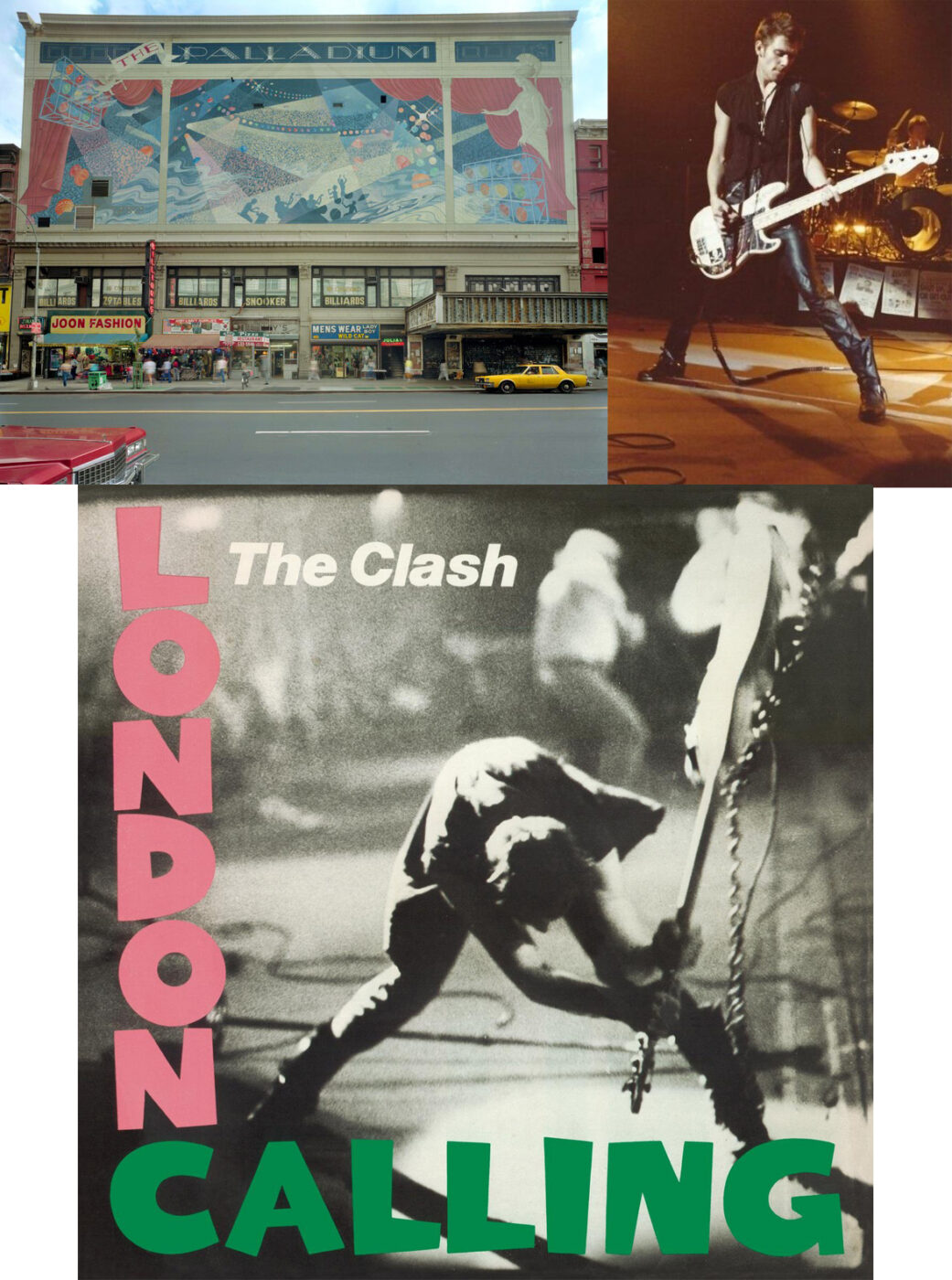
Three years after their first show, the Clash embarked on their first major North American tour, culminating in September 1979 with performances at the iconic Palladium music hall on East 14th Street. It was during these shows, on September 21, 1979, that bassist Paul Simonon smashed his guitar on the concert stage. It was a rare move for him, but one that was luckily captured by photographer Pennie Smith, a classic shot that became the cover of the group’s first successful album in the United States, London Calling.
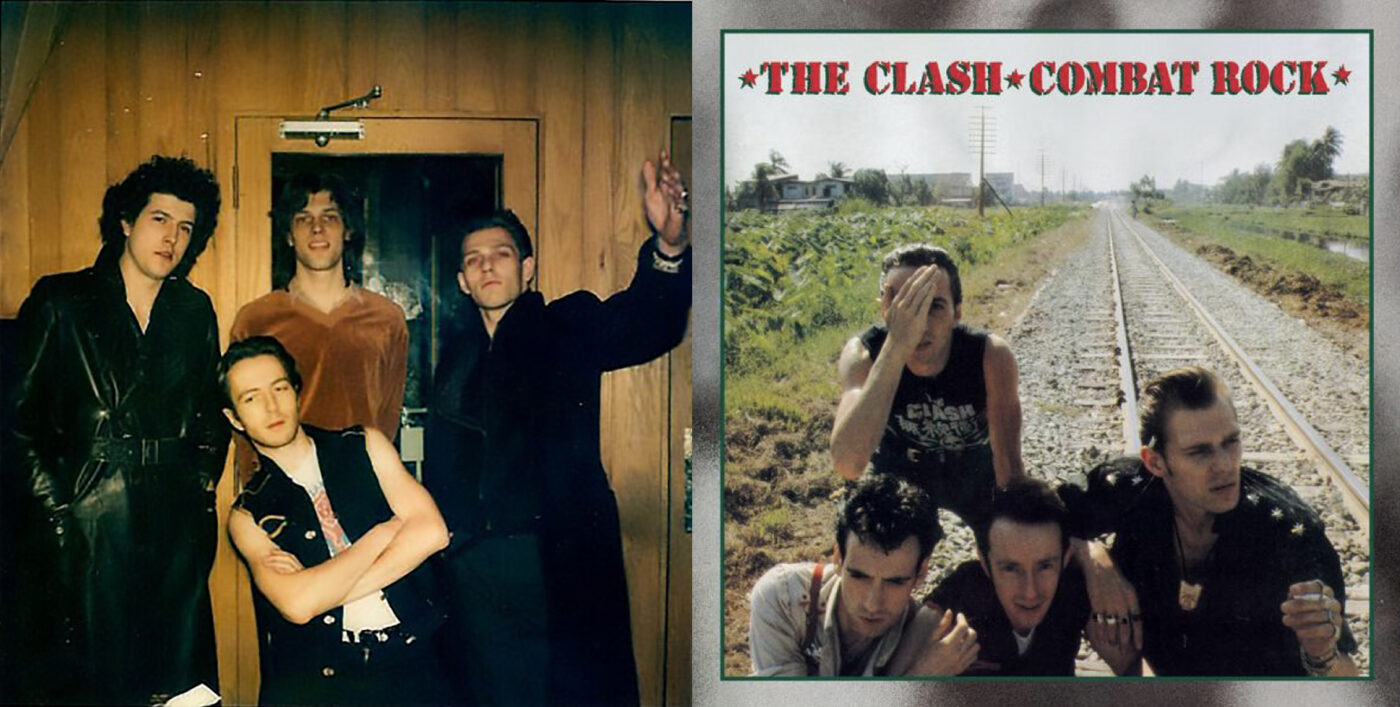
Nearly three years later, on May 14, 1982, the Clash released Combat Rock, the legendary group’s most popular album that also featured two signature songs, “Rock the Casbah” and “Should I Stay or Should I Go.” Much of Combat Rock was recorded at the Electric Lady Studios on West 8th Street in Greenwich Village. Built by Jimi Hendrix in 1970, Electric Lady had long attracted musicians eager to experiment across genres and disciplines, and it proved an ideal setting for an album that pushed punk into new territory. New York’s influence can be heard throughout the record, in both its musical explorations and in its lyrics.
One key member of the East Village’s literary scene made a direct imprint on the album. Poet Allen Ginsberg appears on the track “Ghetto Defendant,” reciting lyrics alongside Joe Strummer over a hypnotic groove. Ginsberg embodied a long tradition of political and artistic rebellion for his generation just as the Clash did for theirs. The poet Ginsberg even joined them onstage, further cementing the connection between the downtown music and poetry scenes. Another track, “Red Angel Dragnet,” quoted from the Martin Scorsese movie Taxi Driver (shot largely in the East Village) and focused on the death of one of the Guardian Angels, a fixture in the Village and elsewhere in the city in the early 1980s.
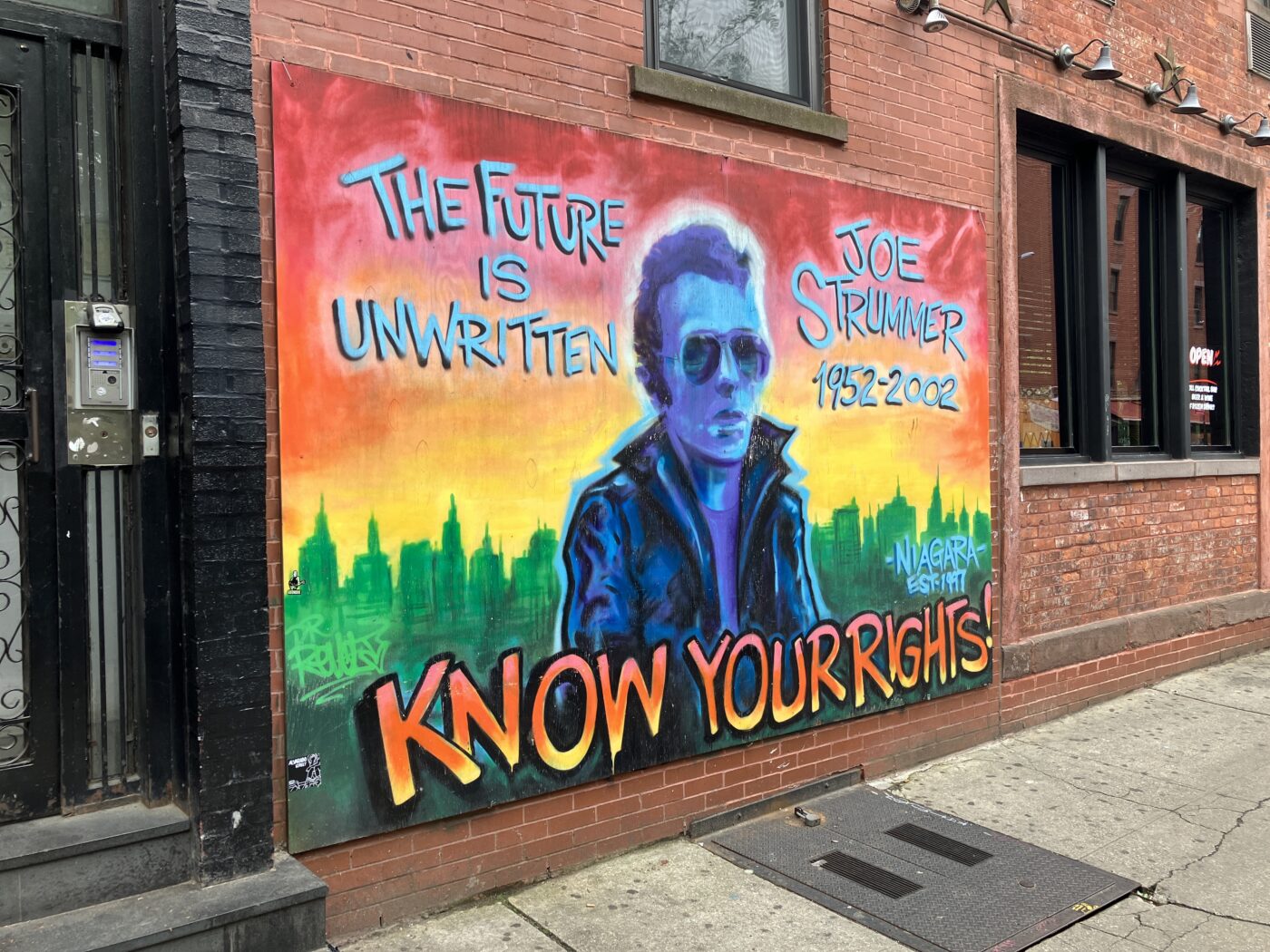
Decades later, Clash lead vocalist and rhythm guitarist Joe Strummer was immortalized in an East Village mural in 2003, the year after his death. While the original mural was destroyed in 2013, a new version has since been installed at the same corner of East 7th Street and Avenue A.