
2026 Village Award Winner: Carlos “Chino” Garcia
Village Preservation is proud to honor Carlos “Chino” Garcia as a 2026 Village Awardee! Join us in Celebrating Garcia and five other remarkable awardees at Village Preservation’s Annual Meeting and Village Awards on Wednesday, June 10th, with emcee Penny Arcade, at the historic Great Hall at Cooper Union. Registration is free and open to all. Click here to register.
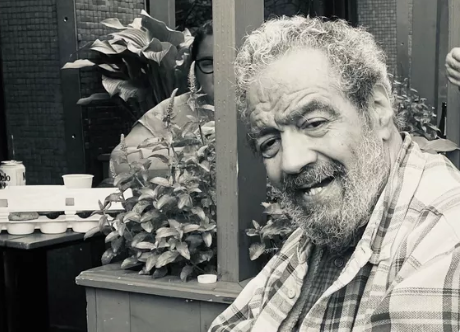
Carlos “Chino” Garcia is legendary Lower East Side based community organizer, known for co-founding CHARAS/ El Bohio community center. CHARAS occupied for the former P.S. 64 at 605 East 9th Street (east of Avenue B) for many years, and addressed issues as wide-ranging as housing, environmentalism, education, job training, and the arts. In 2015 Village Preservation was honored to sit down with Garcia for an oral history, and we are excited to be presenting him with a village award this year.
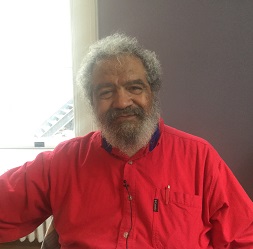
Garcia was born in 1947 in Puerto Rico. Garcia and his family moved to New York City, first living in East Harlem before moving to the Lower East Side when he was 11 or 12 years old. Facing difficulty as an English language learner and systematic racism he and his family dealt with, his childhood was somewhat fraught. After getting into legal trouble as a teen, Chino temporarily moved to Puerto Rico where he was exposed to socialist politics and Puerto Rican nationalism. Upon returning to New York, Chino was inspired to bring these principles with him to help combat the discrimination being faced by Puerto Ricans in New York City.
In 1964, Garcia helped form the “Real Great Society” a community group with a focus on education. According to Garcia, the group would eventually claim a membership of a thousand young people throughout New York City and northern New Jersey. In the early 1970s, Garcia would co-found CHARAS, the name of which comes from the initials of its co-founders — Chino Garcia, Humberto Crespo, Angelo Gonzáles, Roy Battiste, Moses Figueroa, and Sal Becker. Formed as a division of the Real Great Society, CHARAS addressed issues that were beyond the larger organization’s primary focus. These included housing, the arts, and environmentalism, among others.
Initially located at the the Christodora House, in 1979 CHARAS moved to P.S. 64. Located at 605 East 9th Street, P.S. 64 was a dilapidated building originally designed by school architect C.B.J. Snyder. Here they founded the “El Bohio” Community Center, which served as an invaluable community center, serving thousands of people a year at its peak.

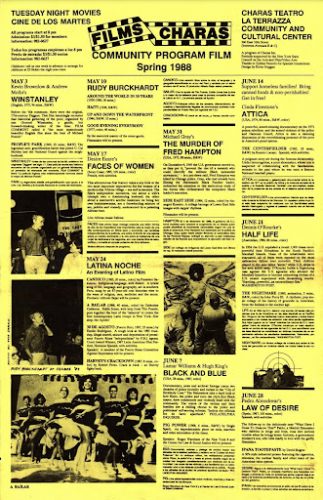
Here they hosted a wide array of activities: community meetings, children’s programming, art exhibits, music concerts, film screenings, plays, dance recitals, bicycle recycling, construction training, a substance abuse treatment, and political organizing.
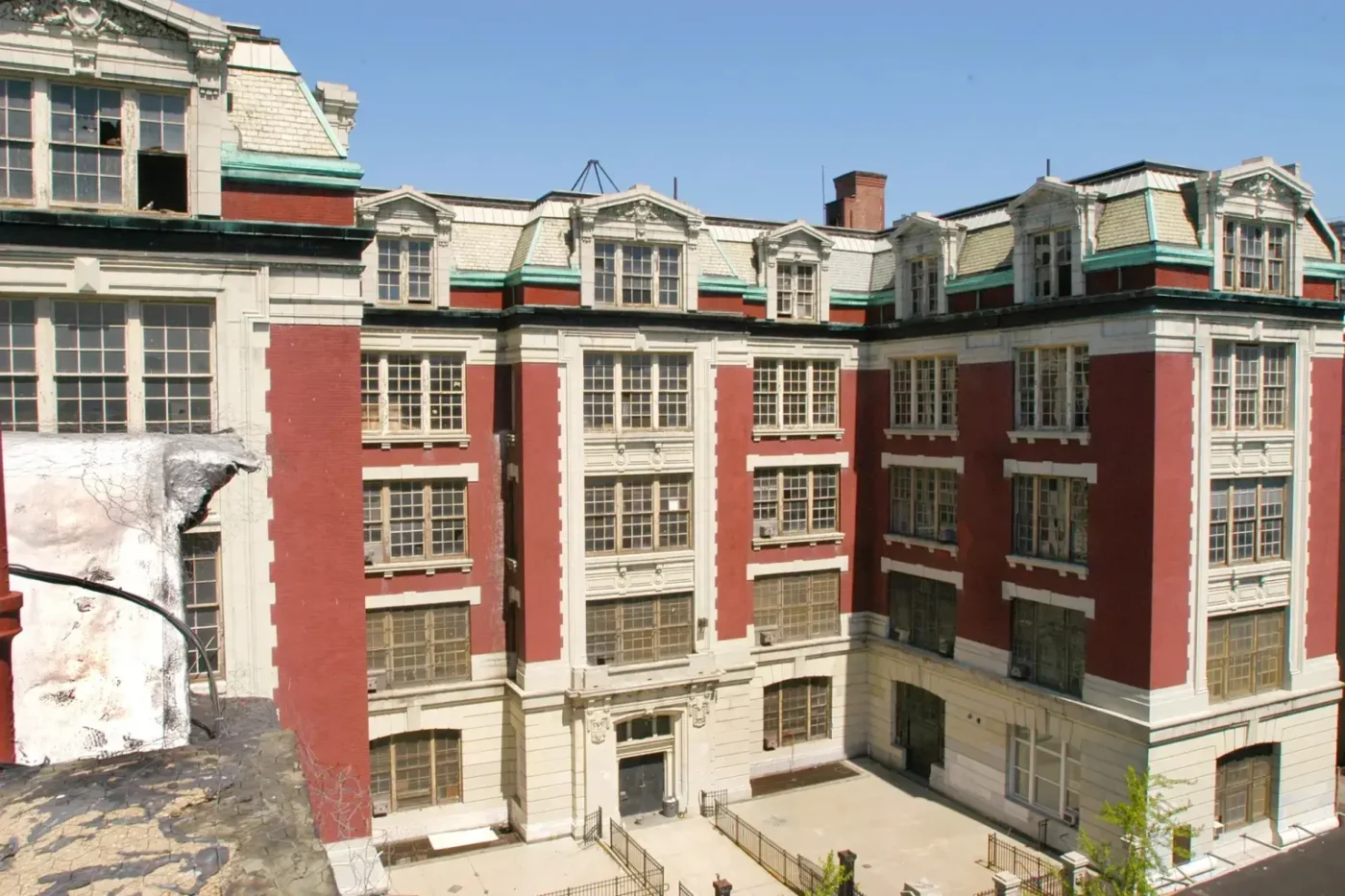
A few years into their tenure, the city approved the local community board’s recommendation that CHARAS be granted a lease for the building. However, during the Giuliani Administration, the City set out to dispose of numerous city properties, and the P.S. 64 building was among them. CHARAS’ efforts to purchase the property were rebuffed by Giuliani’s Deputy Mayor Randy Mastro, and the City listed the building for auction in 1998. Despite community protest, the property was sold to Gregg Singer, a contributor to Guiliani’s campaign. Singer served the group with an eviction order, enforced in 2001. The building was landmarked in 2006 but still remains empty. Singer tried numerous times to destroy the historic structure, but he finally lost ownership via foreclosure in 2023. Learn more about this by checking out Village Preservation’s CHARAS/ El Bohio campaign webpage.
Learn more about Carlos “Chino” Garcia by checking out his oral history, and Join us in celebrating Carlos “Chino” Garcia, alongside five other amazing awardees, at the Village Awards on Wednesday, June 10, at 6 PM at Cooper Union’s historic Great Hall. Register and learn more about all the awardees here!
Congratulations to Chino. Here’s an excerpt from a poem I wrote in 2020, “My East Village,” published in It Wasn’t Supposed to Be Like This (Crony Books, 2020):
2. CHARAS
Chino Garcia was born an
advocate for unheralded
concerns and has for decades been
a tireless community
organizer, working for the
benefit of the nonaligned,
organizing rent strikes against
landlords failing to deliver
decreed services to tenants,
assembling a street theater troupe
with the poet Bimbo Rivas,
El Teatro Ambulante,
to bring tales of Don Quixote
to the folks of Loisada.
In the early 70s, when
a number of city-controlled
properties were shuttered on the
Lower East Side, Chino and his
team convinced Mayor John Lindsay
to hand over keys to one of
the unwanted buildings for their
care (519 East 11th),
the first sweat equity deal in
any urban part of the States.2
The housing activists tried to
heat water for the tenants by
installing solar panels on
the roof – decades before such green
initiatives would begin
to catch on in America.
CHARAS began as a crew to
work on housing issues for the
Spanish-speaking residents of
the Lower East Side, evolving
from another group Chino had
formed, the Real Great Society.
The name was an acronym formed
from the first letter of those at
the first organizing meeting:
Chino, Humberto, Angelo,
Roy, Anthony and Salvador
(Armando Perez, later an
essential member of the squad,
was not present for that first meet).
In the early 70s, the
troop wished to rehabilitate
a public school abandoned by
the city a few years before,
but stonewalled by officials in
lower Manhattan headquarters,
took the initiative and
began squatting the building,
605 East 9th Street, between
Avenues B and C, starting
major structural repairs with
a posse of volunteers while
seeking a lease from the city
for the late P.S. 64
to transform it into a hub
for community enrichment.
Former classrooms – with natural
light streaming in through enormous
windows – were reconfigured as
coveted sanctums for artists
and dancers, locals could attend
workshops in massage or voter
registration or addiction
counseling, after-school programs
offered more positive options
than the garbage-strewn streets outside.
The 130,000-
square-foot sanctuary supplied
neighborhood-enhancing pursuits.
Homeless advocacy groups were
started, teenagers were trained in
construction, hundreds of
theater performances and art
shows enlightened the populace.
Films CHARAS, for example, each
week presented programs screening
primarily independent,
non-Hollywood films for a cheap
admission price, on occasion
with the filmmaker attendant.
Doris Kornish, trained in ballet,
dancing at the time for “modern”
troupes, co-founded the program with
Matthew Seig, who’d later assist
Robert Altman on a number
of the master’s movie projects.
Rob Mazze, later a yoga
instructor and film producer,
manned the door; Sheila Keenan, who’d
become an author/editor
at major publishers, served beer;
Kevin Duggan, who’d blossom as
botanical illustrator,
operated the projector;
Sheila McManus, who’d have her
first gallery exhibition
in 2019, designed the
attractive monthly calendar.
Through regular attendance at
these screenings for 15 years,
I became friends with this crew, just
one example of the bonding
CHARAS enabled in the East
Village through the final quarter
of the 20th century –
until Mayor Giuliani,
three days before his term ended
in December 2001,
in what seemed an act of vengeance,
evicted the activists and
community benefactors
and the city sold the parcel
at auction for three million bucks
to a developer because
hizzoner had a feud with the
group’s policies and strategies.
The mecca for alternative everything,3
as Chino once depicted it,
was eliminated, a loss
in the fight between capital
and community, but still a
lodestar in the hope of many.
–Greg Masters