
An Unfinished Story: Loisaida and the Puerto Rican East Village

Few neighborhoods in New York City carry as deeply rooted a Hispanic cultural identity as the East Village. The very name by which Avenue C has been officially known since 1987, “Loisaida” (a phonetic rendering in Spanish of “Lower East Side”), signals how thoroughly Puerto Rican life has shaped this part of the city.
The Puerto Rican presence in the East Village took hold in the 1940s, fueled by the economic dislocations of the Great Depression’s aftermath, wartime labor demand, the increasing accessibility of commercial air travel, and the migratory flexibility afforded to Puerto Ricans by their American citizenship. At the peak of this movement, tens of thousands were arriving in the city each year and putting down roots in neighborhoods like this one.
What grew from that migration was more than a demographic shift, it was a cultural transformation. In the face of the political and economic crises that battered neighborhoods like the East Village through the latter half of the twentieth century, the recently-arrived Puerto Rican residents forged a distinctive sense of local identity, inextricably interwoven with their collective struggle and grassroots activism. That crucible produced writers, musicians, artists, and community leaders whose influence is legible across the neighborhood today, in spaces that mark the chapters of this unfinished story. Today, we look at some of the many resources on our website through which you can explore this fascinating story.
East Village Building Blocks

East Village Building Blocks is a comprehensive interactive map covering each of the 2,200 properties in the neighborhood and offering information about each building, including construction date, architect, notable tenants, and associations to notable events. But this map is more than a property-by-property reference. It also offers a series of guided tours that organize the neighborhood’s sites around many of the histories that converge here. Among those tours is one dedicated to Loisaida, tracing the many places where Puerto Rican and Hispanic community life have left its mark in the East Village. The tour will take you through the groundbreaking community center CHARAS, the iconic Puerto Rican restaurant Casa Adela, and several still thriving community gardens.
Programs

Our programs cover a vast range of topics dealing with the history, architecture, and development of our neighborhoods. With some regularity, these focus on aspects of the story of Loisaida. If you’re interested in this topic, you should sign up for announcements of upcoming programs. But if you wish you had caught some of the past ones, don’t fret. You can relive many of them on video. On the subject of community gardens, you can check out a book talk on Power at the Roots: Community Gardens, Gentrification and the Puerto Ricans of the Lower East Side. In it, author Miranda Martinez discusses her findings about the cultural significance of these sites, based on direct engagement with local gardeners, activists, and residents, and she discusses how Puerto Ricans in the neighborhood have interacted with the trends surrounding the gentrification of the area. You can also relive a celebration in honor of the 50th anniversary of the publication of the Bimbo Rivas’ poem that popularized the term Loisaida. It featured a live performance of the poem by one of Bimbo’s daughters, accompanied by music from his mentee Daso and a photo montage by East Village photographer Marlis Momber. The discussion that followed covered neighborhood life at the time of the poem’s publication, Bimbo’s artistic legacy, and his influence on the Nuyorican Movement.
Oral Histories
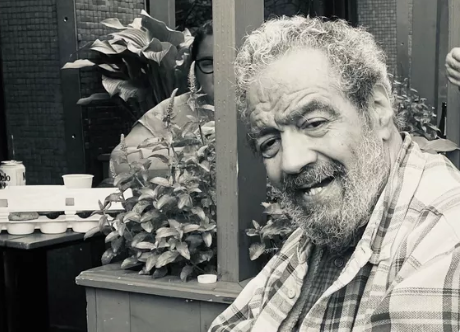
Our Oral History Collection includes interviews with some of the great artists, activists, business owners, community leaders, and preservation pioneers of Greenwich Village, the East Village, and NoHo. It captures and preserves their first-person perspective on the important histories they witnessed or of which they were a part. One of these histories comes from one of the foremost protagonists of the Loisaida story, and another from one of its great documentarians. Chino Garcia is not just a co-founder of CHARAS, but also one of the most accomplished community organizers in the history of the City. His oral history describes his association with local gangs, his turn toward activism, his association with Buckmister Fuller, and the rich artistic, social, and political legacy of CHARAS. Marlis Momber has been one of the great photographers of Puerto Rican life in the neighborhood since 1975. Her oral history touches on topics such as gentrification, slumlords, arson for profit, squatting, homesteading, cultural identity, education, the arts, drugs, and urban crime.
The above resources merely scratch the surface of the Loisaida story. We hope they also offer an invitation to explore our other resources, including image archives and blogs, covering this fascinating history.