
Remembering The Electric Circus
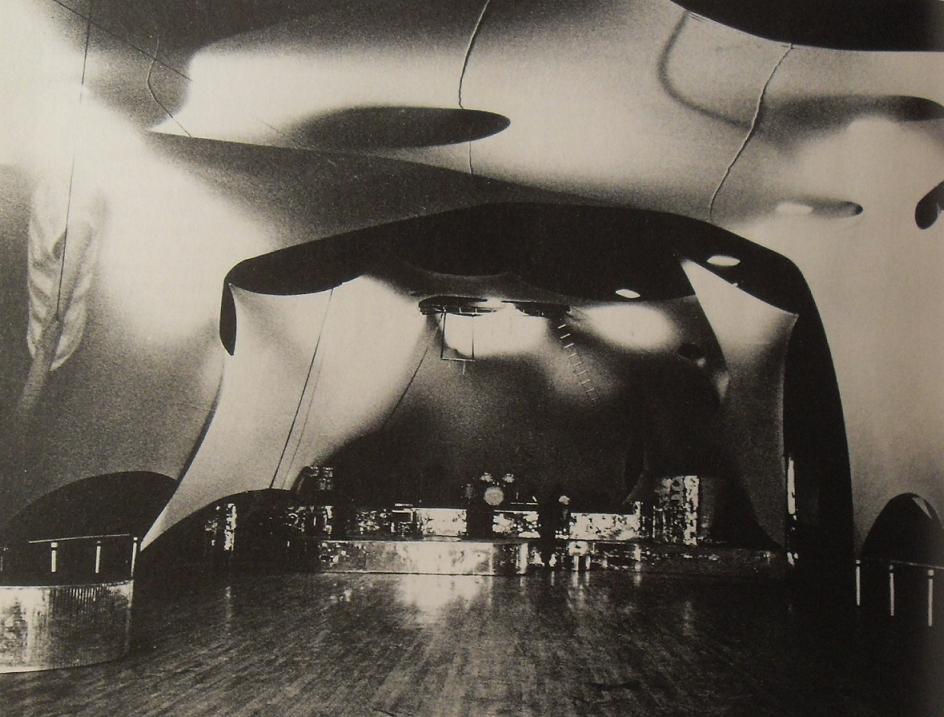
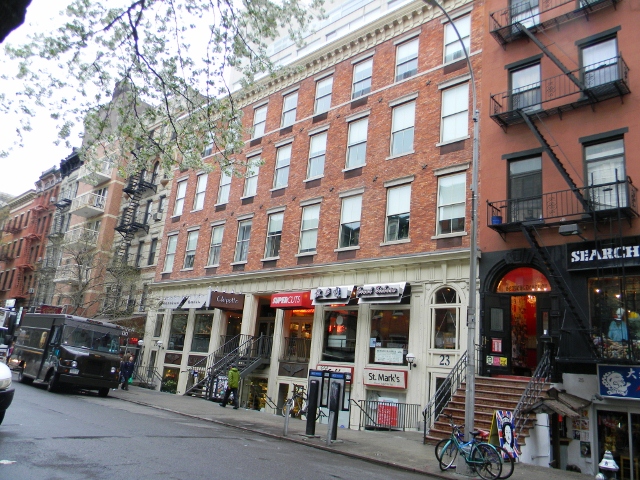
Few places better captured the East Village’s transformation from residential neighborhood to countercultural epicenter than 19–25 St. Marks Place. Across nearly two centuries, the address has been many things: elegant row houses, a German social club, a grand ballroom, a Polish community center, an experimental performance space, and most famously, the home of the Electric Circus, one of the most extraordinary nightclubs of the 1960s.
Today, little in the building’s appearance hints at the kaleidoscopic world that once existed inside. Yet, for a brief moment, the Electric Circus embodied the creativity and experimentation of the East Village at the height of the psychedelic era.
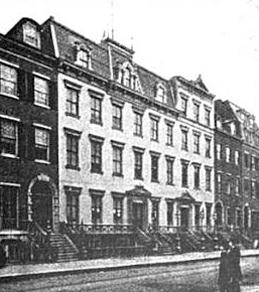
The buildings that became the Electric Circus were constructed in the early 1830s as row houses. As the neighborhood evolved into Kleindeutschland, or “Little Germany,” the properties were acquired by the Arion Society, a German musical organization. Later, they were consolidated into Arlington Hall, a ballroom and meeting space that hosted political gatherings and social events. By the 1920s, the complex had become the Polish National Home, serving the neighborhood’s growing Polish community.
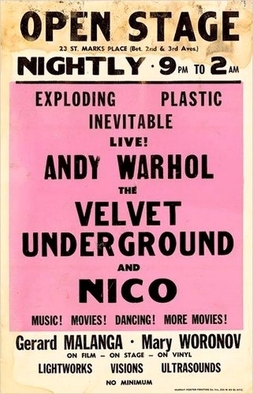
By the 1960s, the East Village was once again reinventing itself. The area had become a magnet for artists, musicians, poets, and radicals. In the ballroom that was once Arlington Hall, artists Jackie Cassen and Rudi Stern created their immersive “Theater of Light,” an early multimedia environment that blurred the boundaries between performance, art, and audience participation. Soon afterward, the space attracted the attention of Andy Warhol and Paul Morrissey, who transformed it into a venue for the Exploding Plastic Inevitable, Warhol’s groundbreaking multimedia happening featuring the Velvet Underground as house band.
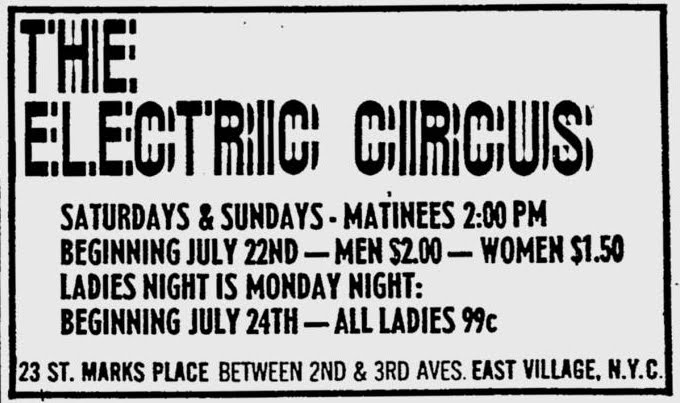
The Electric Circus emerged directly from this atmosphere of experimentation. Opening in June 1967 under the leadership of Jerry Brandt, Stan Freeman, and their partners, the club promised something that was beyond just a nightclub or music venue. Marketed as a “total environment,” visitors were invited to “play games, dress as you like, dance, sit, think, tune in, and turn on.”
The Electric Circus’s opening night drew thousands. Village Voice writer Jack Newfield described the scene as something between a carnival and a cultural revolution. The club’s owners had spent lavishly on strobe lights, projections, circus performers, artificial turf, and sensory experiences designed to immerse patrons in a constantly shifting world of sound and image. Day-glo colors covered the walls, films and light shows flickered across the space, and trapeze artists swung overhead while jugglers, clowns, and performers moved through the crowd.
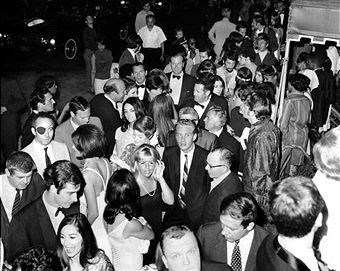
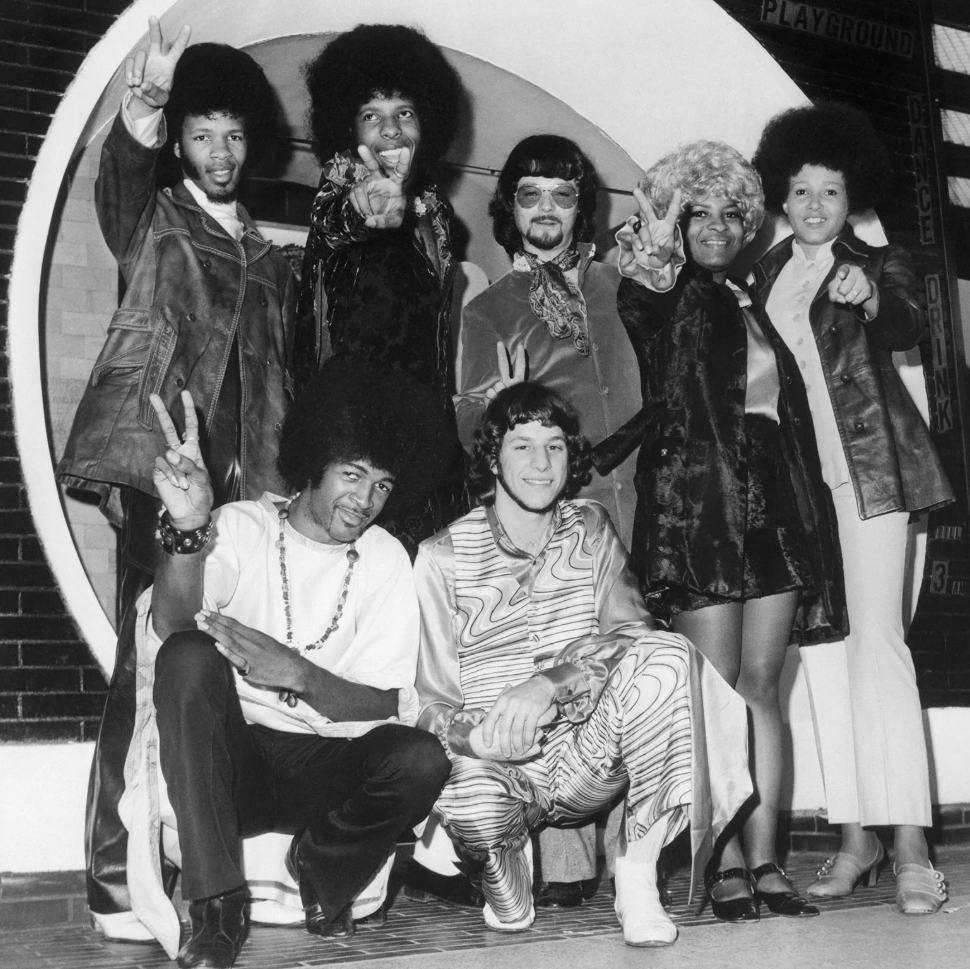
The Electric Circus also quickly became one of New York’s most important music venues. Future stars such as Sly and the Family Stone, Dr. John, Deep Purple, and the Allman Brothers Band performed there early in their careers, while the club attracted a diverse mix of patrons.
As the 1960s gave way to a more turbulent political climate, the atmosphere surrounding the club changed. In March 1970, a bomb exploded on the dance floor, injuring patrons and shocking the downtown community. Though responsibility was never definitively established, the incident permanently damaged the club’s reputation. Attendance declined, and the Electric Circus closed the following year, ending a remarkable four-year run. In the years following, the building itself continued to evolve. Subsequent decades brought new uses and extensive alterations that transformed both the exterior and interior. Today, it hosts a smattering of small shops and restaurants, with residences above.
That legacy of the Electric Circus has recently been revisited in Psychedelicized: The Electric Circus Story, a documentary by filmmaker Larry Confino. Through interviews, archival footage, and recollections from founders and participants, the film reconstructs the club’s extraordinary rise and fall, while capturing the spirit of a moment when the boundaries between art, performance, and social life seemed limitless.

Village Preservation recently hosted a screening of this film, complete with a Q&A with director Larry Confino and several of the people who appear in the film. This event is one of the many incredible offerings exclusively available to Village Preservation members. To become a member and gain access to members-only programming, click here.
Does anyone remember that there was also a disco in the basement space in ’64-’65 playing mostly Motown hits?
Remember Day Glo stairway entrance and rubber room. Only 16 but loaded on smooth acid listening to Chambers Brothers upstairs in the projection room and balcony. No alcohol. Coffee flavored drinks available Went a few times