
100 Years of Allen Ginsberg: His Homes in the East Village
A writer, a poet, and an early advocate for sexual freedom and gay rights, Allen Ginsberg has been a prominent voice for over 100 years in New York. Born June 3, 1926, Ginsberg grew up in a New Jersey suburb just west of New York City. His father, Louis, was a traditional academic type, working as a poet and schoolteacher, while his mother, Naomi, immigrated from Russia as a young girl and remained a fervent Marxist throughout her life.
Much of Ginsberg’s childhood and adolescence was clouded by his mother’s mental health struggles, as she was intermittently institutionalized for paranoia, schizophrenia, and several suicide attempts. As an ardent communist, Naomi’s bedtime stories were fantasy tales in which the working class found liberation. Ginsberg spent his teenage years developing his own political and social ideologies, and began writing about World War II and the tribulations of the working class.
After graduating high school, Ginsberg briefly took classes at Montclair State College before crossing the Hudson River to study literature at Columbia University on the Upper West Side. While there, Ginsberg met Jack Kerouac, William S. Burroughs, Neal Cassady, and John Clellon Holmes. At the time, they were like-minded, creative students with an affinity for questioning the status quo. Over the next several years, however, they became the voices of the Beat Movement.
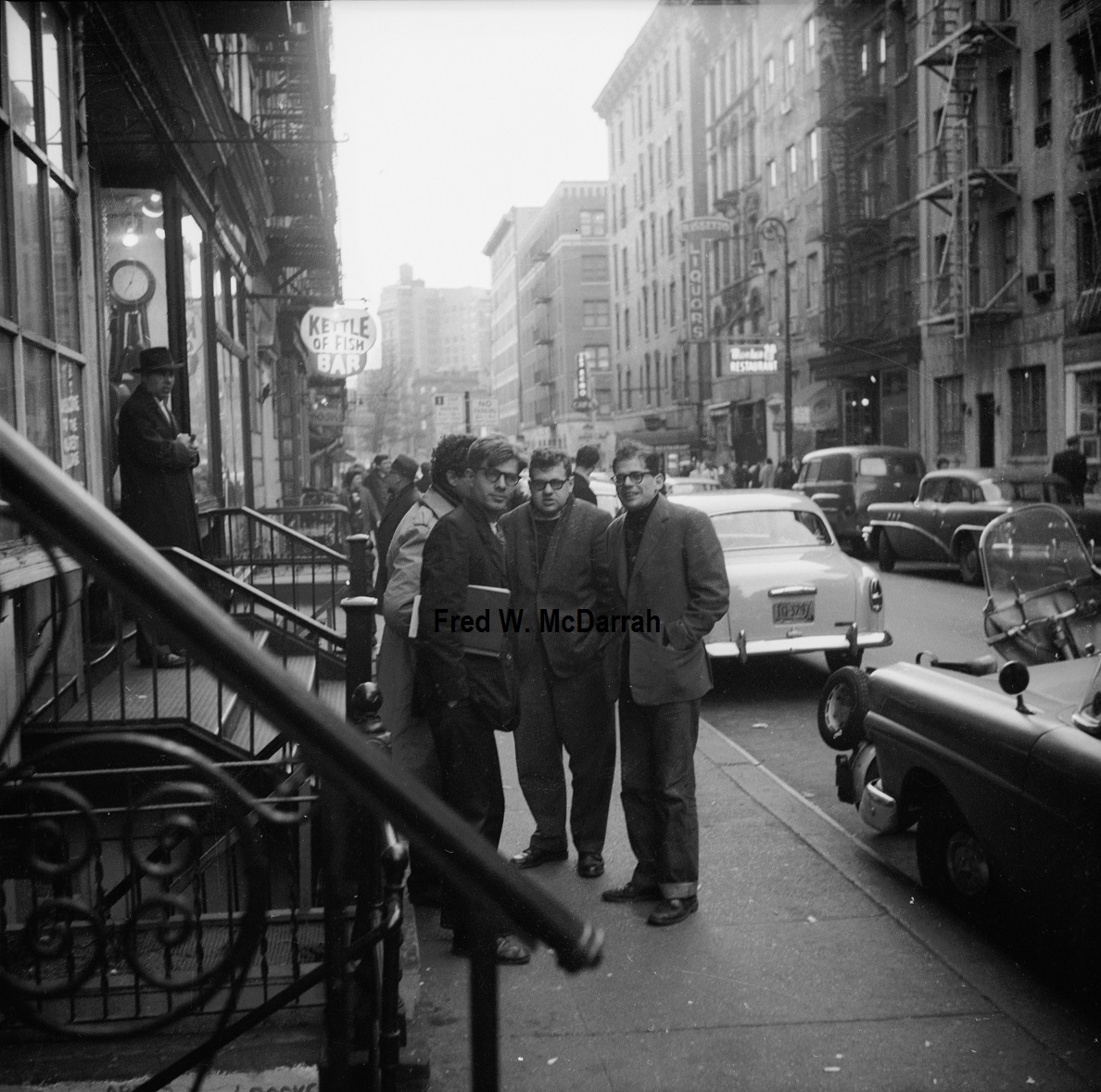
The Beat movement arose in the post-World War II years as a rejection of mainstream values like consumerism and conformity. Disillusioned young people sought meaning and purpose through art, spirituality, and rebellion. The term “Beat” was first used by writer Jack Kerouac to describe his own circle of fellow creatives (like Allen Ginsberg). For the Beats, the emptiness and lack of meaning in modern society were reason enough to reject it, through both retreat and rebellion.
After Columbia, the Beats continued to question convention and explore countercultural ways. Like many of his peers, Ginsberg moved downtown and found many homes in the East Village. With the help of the East Village Building Blocks, today we are taking a deeper look at the places Allen Ginsberg once called home.
206 East 7th Street
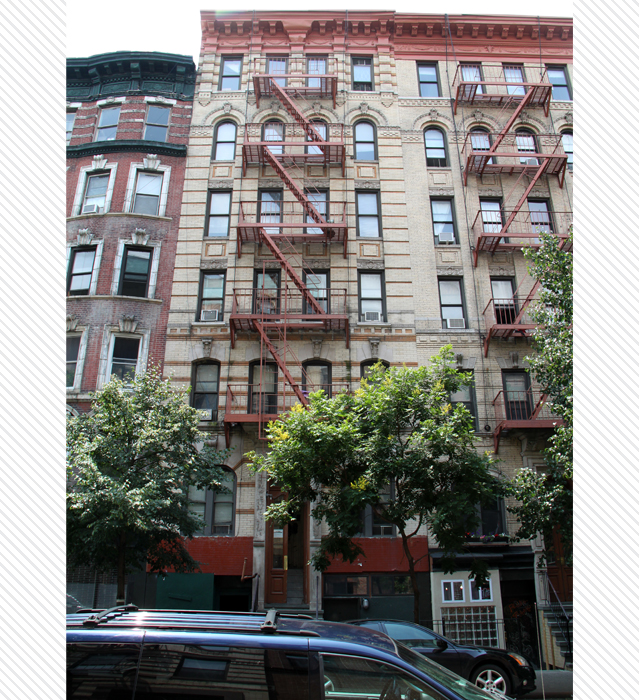
Constructed in 1900 and designed by architect Michael Bernstein, 206 East 7th Street is a classic example of an Old Law Tenement apartment, where buildings were designed with “air shafts” in mind. Moreover, architects planned shallow indentations, or miniature courtyards, to get a tiny modicum of sunlight and air into rooms within. The outcome was a configuration that mimicked dumbbells when viewed from above.
Architecturally, this is a six-story building, four bays wide and clad in buff brick. The windows on the first, second, and fifth floors are arched with decorative keystones, while the windows on the third and fourth floors are capped by ornate lintels. The entire facade features recessed bands of contrasting red brick. The architectural features of the building’s upper stories remain intact; however, the above-ground basement appears to have undergone some changes since its construction.
Nonetheless, from 1952 to 1953, Ginsberg lived at 206 East 7th Street with his then-lover, and fellow Beat, William Burroughs. The two shared a third-floor apartment in the wake of Ginsberg’s brief institutionalization and Burroughs’s accidental killing of his wife in Mexico. Today, a Village Preservation plaque commemorates Ginsberg and Burroughs’ legacy.
170 East Second Street
In 1954, Ginsberg left New York for San Francisco, where the Beat Movement was flourishing. While there, he met the person who would become his life partner, Peter Orloskvy. And between 1954 and 1955, he wrote Howl, a long-lined poem that is an outcry of rage and despair against a destructive, abusive society.
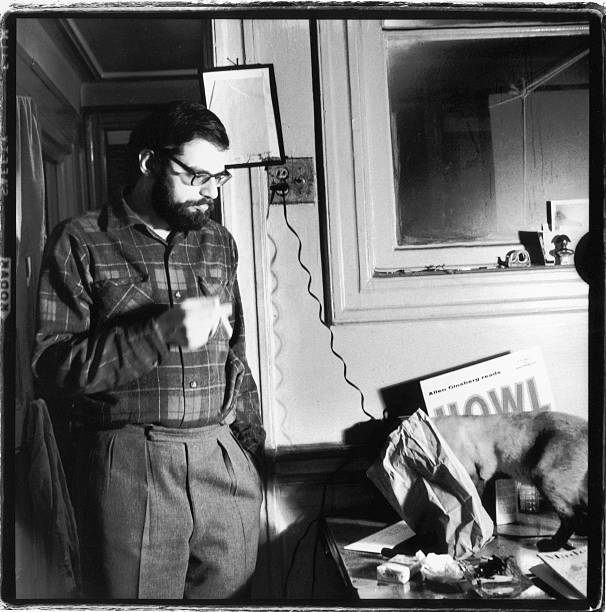
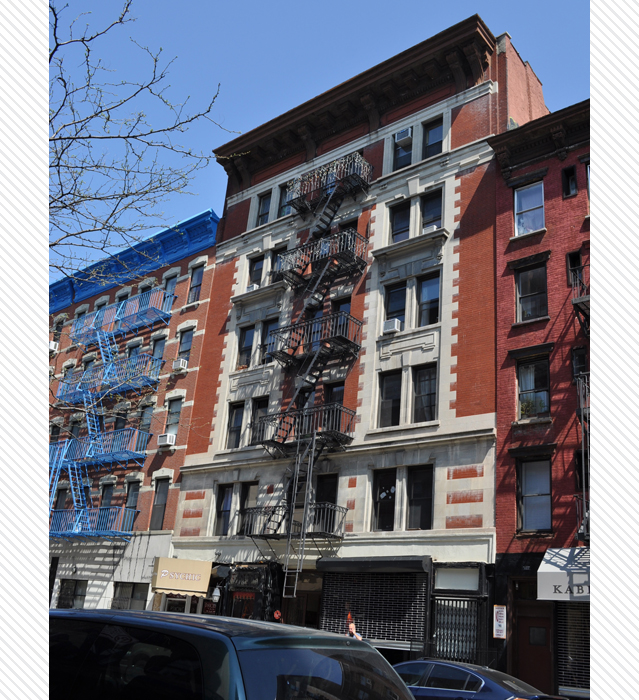
After California, Ginsberg and Orlosky traveled a fair deal—to Morocco, Paris, and India. But from 1958 to 1961, they maintained a home base in New York, specifically at 170 East Second Street. While here, Ginsberg wrote and published Kaddish. Similar in structure to Howl, in Kaddish Ginsberg mourns the loss of his mother, Naomi, discusses his own mental struggles, and his conflicted relationship with Judaism.
Originally built in 1909, 170 East Second Street is a six-story, brick, terra cotta building designed in the Renaissance Revival style by architect Charles B. Meyers. Unlike his home on East 7th Street, this is a New Law Tenement Building. In 1901, the city passed the Tenement Law Act, thereby outlawing the “old law” dumbbell tenement model. Under this new law, apartment buildings were now required to have running water, lighting, ventilation, and indoor bathrooms. This act became a model for housing regulation across the United States.
437 East 12th Street

After East Second Street, the couple continued to bop around the neighborhood, but found a long-term home at 437 East 12th Street, where they lived for 21 years. Similar to 170 East Second Street, 437 East 12th Street is also a New Law tenement building. Designed by Sass & Smallheiser for owner Henry Lippmann, this six-story brick-and-terra cotta building was built in 1904 and includes space for both commercial and residential tenants.

Allen Ginsberg lived in the East Village until his death in 1997. He continued to write, create, and share his radical and at times avant-garde ideas with the world. Few figures are more closely tied to the neighborhood’s legacy of experimentation, political activism, and countercultural expression than Ginsberg. His many East Village homes offer a window into both his life and the neighborhood that helped shape it. To learn more about the buildings Ginsberg once called home, explore Village Preservation’s East Village Building Blocks website.