
My Favorite Things: Greenwich Village, the East Village & NoHo
For the past several years I have had the privilege of learning about sites across Greenwich Village, the East Village and NoHo, as I worked on research, archives, and mapping projects for Village Preservation. I have written about many of these locations for Village Preservation’s blog, Off the Grid, and for my final contribution, I wanted to look at few of my favorite sites around these neighborhoods.
First Houses, 29-41 Avenue A and 112-138 East 3rd Street
On December 3rd, 1935, the first houses opened as the first publicly funded low-income housing project in the United States, and the first project undertaken by the then-recently developed New York City Housing Authority (NYCHA).
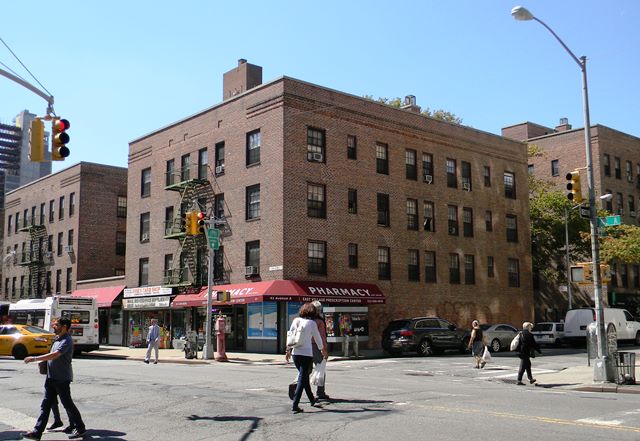
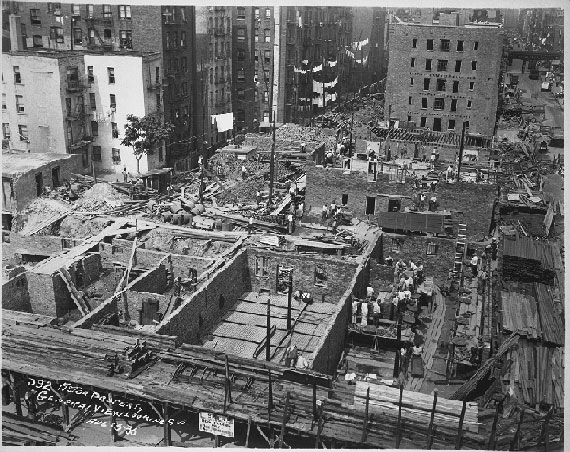
To comply with terms of Federal financing, the development had to function as a slum renovation project and began as an experiment in the partial demolition of existing tenements on the site. To add light and air to the block, they planned to raze every third building and remodel remaining tenements, a practice that had been successful in England. Demolition of the existing tenements began on March 1, 1935; however, the mid-19th century buildings were not structurally sound enough to stand alone. Five of the buildings were rebuilt and three were almost entirely new and had to be reinforced with structural steel. Brick was reused from this and other sites, saving construction costs and providing income for the Authority for several years.
The First Houses were landmarked on November 12th, 1974, and remain an important piece of New York City housing history. You can read more about the unique history of this building by checking out this blog or reading the Landmarks Preservation Commission’s designation report.
The Cable Building, 611 Broadway
As a public transit enthusiast, another one of my favorite sites is the Cable Building. In the early 1890s a new form of public transportation, cable cars, were built across New York City. These steam-powered cable cars required a space to house mechanical equipment, and so in 1892 the Broadway and Seventh Avenue Railroad company began construction of a new headquarters and powerhouse at 611 Broadway the corner of Houston Street and Broadway.

Prominent architectural firm McKim, Meade & White were hired to design what would become the Cable Building. The Beaux-arts masterpiece stands at eight-stories tall with an additional attic level. The upper floors of this building held offices while the basement houses four 32-foot wheels that powered the Broadway Cable Car line.
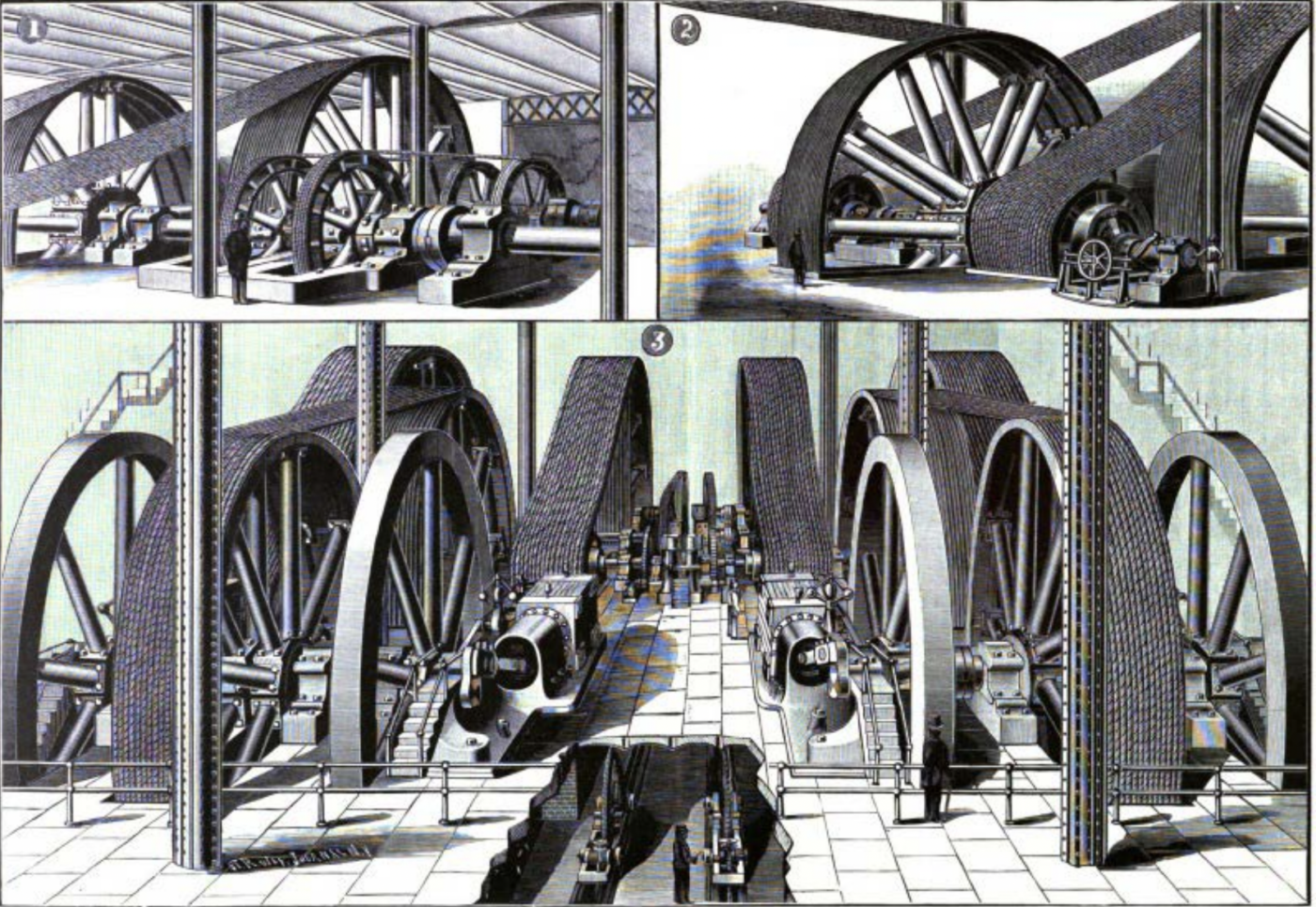
The building was completed in 1894, and the following year the Broadway and Seventh Avenue Railway company became the Metropolitan Traction Co. They continued to use the basement as a powerhouse until 1901, when the Broadway line switched to electric power. Since 1989, the basement has been a multiplex cinema for the Angelica Film Center. It was landmarked as part of the NoHo historic district in 1999, and you can read more about the building’s unique history here.
143-145 Avenue D
Several years ago, while working on the publication of our Susan De Vries — Federal Rowhouses in Lower Manhattan and Architecture Collection Part II for our historic image archive I became aware of the unique history of 143-145 Avenue D.
Originally constructed in 1827 a four-story federal style rowhouse for the Dry Dock Company as a Banking House, it is the oldest extant building within Alphabet City. By 1848, the Dry Dock Company had vacated the building, and it was a facility for Manhattan Steam Laundry. In 1870, it was a Strangers Hospital, funded by well-known Philanthropist and Tammany Hall leader John H. Keyser. In 1879, a fifth story was added by wholesale clothing dealers the Levy Brothers. In 1885, the building served as a cigar factory, and in 1888 a cast-iron storefront was added.
By the beginning of the 20th century, the building was part of the F. H. Bennett Biscuit Company Complex, who also occupied the adjacent building. The company was purchased by Nabisco in 1931 and continued to operate out of 143 Avenue D until 1957.

By the time Susan DeVries photographed this building in 1995 as part of Village Preservation’s survey of Federal Era architecture in Lower Manhattan, the building was seemingly abandoned. Building records indicate that it was converted to residential use in 1999 by a not-for-profit and is presently owned by the Lower East Side Housing Development Fund Corporation, which operates the building as affordable housing.

143-145 Avenue D’s long history is both unexpected and complex. It stands as a representation of the multi-faceted history of the East Village itself. You can read more about the site by checking our previously blogs on the site.
46 & 48 Commerce Street
Few places in the world have as much whimsy as these two-corner buildings on Commerce Street. Built in 1844, 46 and 48 Commerce Street are joined at a right angle. The houses were built by Alexander T. Stewart, the dry goods magnate who owned a large store at the corner of Broadway between Chambers and Reade Streets.
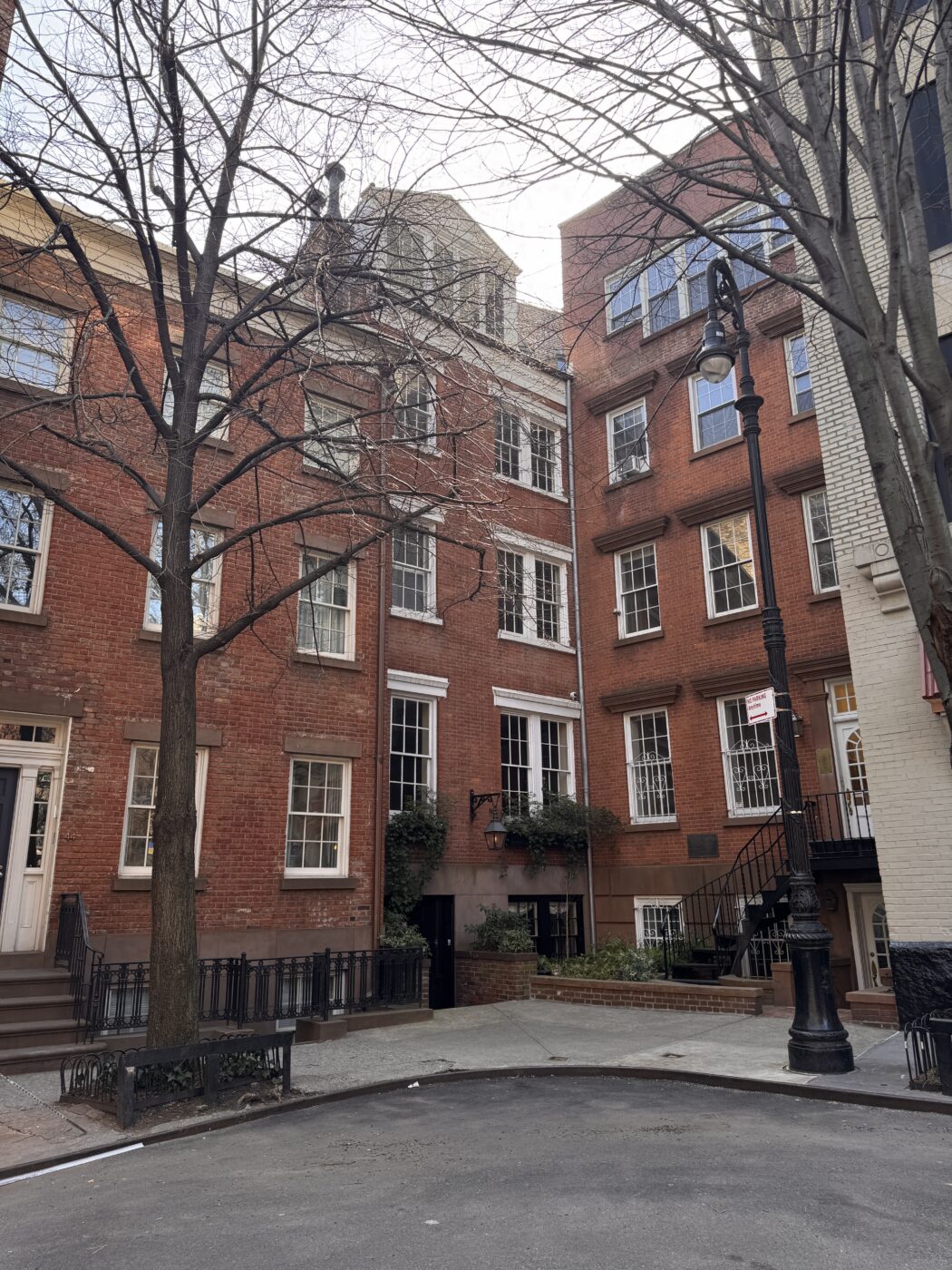
The locations of 46 and 48 Commerce echo the curve of Commerce Street. Commerce Street is a prime example of the meandering streets for which Greenwich Village is famous — streets that remain permanently off the grid from most of Manhattan.