
Why Preservation Matters, Even When It Doesn’t Preserve Use
Village Preservation has fought to preserve many a building through landmark designation, often based at least in part upon some significant use connected to the building, current or past. For example, we’re fighting right now to secure landmark protection for Our Lady of Guadalupe Church, the city’s first Spanish-language church, and the New York Eye and Ear Infirmary, the oldest specialized hospital in the country and a place of profound innovations for and service to people with disabilities. Landmark designation would help ensure that both these buildings, the future of each of which is currently in doubt, would survive for posterity. But it wouldn’t require that they continue to function as a Spanish-language church or a hospital. Which raises the question sometimes asked in cases like these: “Why does preserving a building matter if it doesn’t preserve the use connected to the building?”
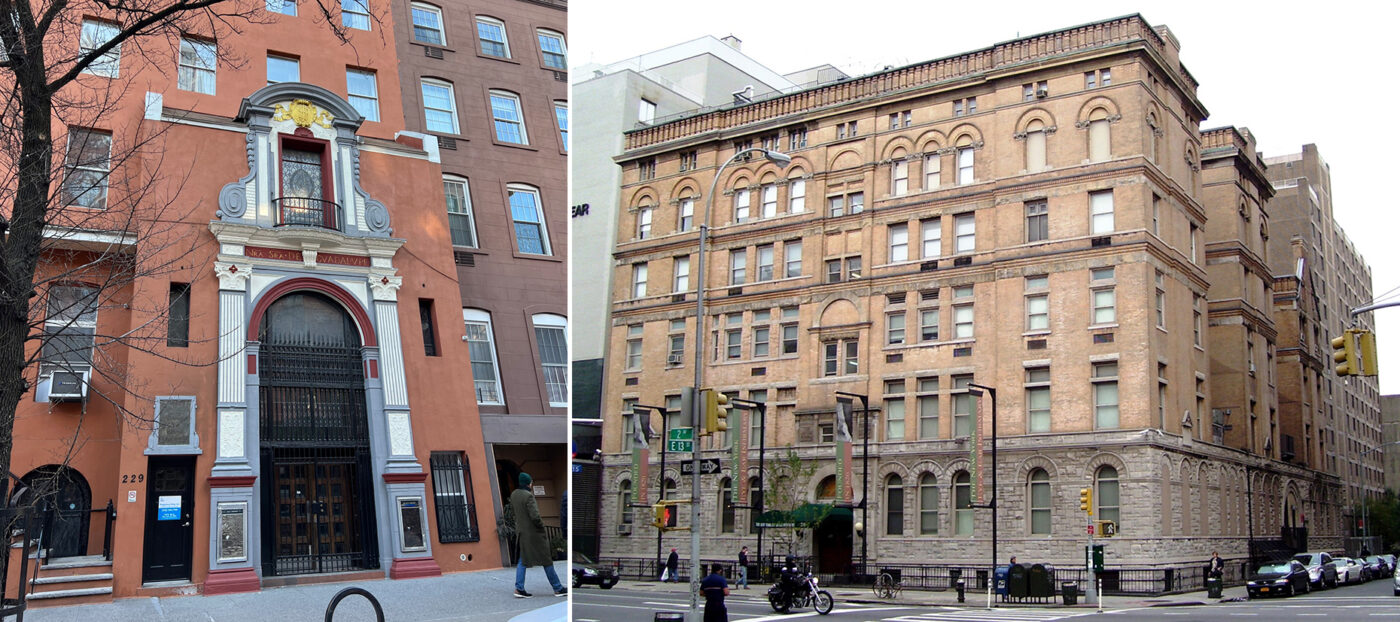
It’s a good question. Set aside for a moment that often these buildings also are either of great architectural significance or have unique and irreplaceable historic features, and that tearing down and replacing a building rather than preserving or adapting it is dramatically worse for the environment, producing vastly greater amounts of carbon pollution. There are also still good reasons to preserve a significant building related to this question of use.
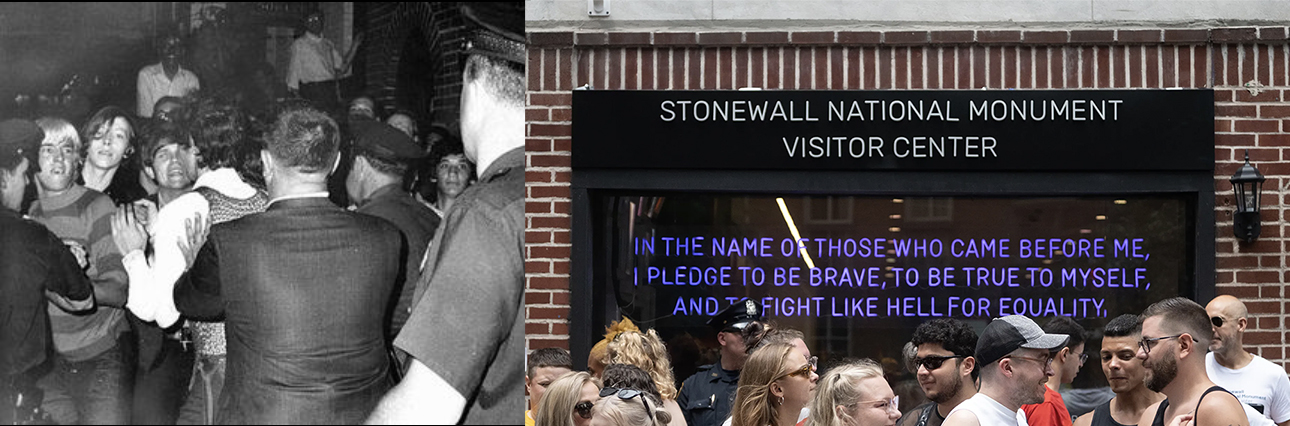
For starters, even if preservation doesn’t require that the historically significant use continue on in the building, it allows for the possibility that it may, or that it may return. A perfect example is the Stonewall Inn, now not only a New York City landmark, but a National Historic Monument — the highest honor that can be bestowed upon a site by the U.S. government for its historic significance. The riots and protests which took place in connection to the raid on the gay bar located in this building in June of 1969 are now commemorated throughout the world as the spark that helped ignite a dramatically transformative civil rights movement.
But some may forget that just a few weeks after those protests, the gay bar located here closed. The space the original Stonewall Inn occupied, two conjoined buildings at 51 and 53 Christopher Street, was then home to a series of entirely unrelated uses, including a bagel store and a nail salon. But due to landmark designation of much of Greenwich Village, including this site, which took effect just two months after the riots, these buildings were preserved. And over the decades that followed, they became symbols of an ever-growing social and political movement, and the focus of an annual march and festival that would come to draw hundreds of thousands of spectators and participants. It wasn’t until two decades later that a gay bar, called “New Jimmy’s,” would finally reoccupy half the original Stonewall space, at 53 Christopher Street. Years after that, the bar would rebrand itself the Stonewall Inn, in homage to the long-gone, iconic bar that had once occupied the space. And it wasn’t until a full fifty six years after the riots that the other half of the original space came to be used again for a purpose connected to the Stonewall Riots, when the Stonewall National Monument Visitors Center opened in 51 Christopher Street. Without landmark designation and the preservation it required, none of this might have been possible, and the buildings which were the site of these incredibly historically significant events might have been lost.
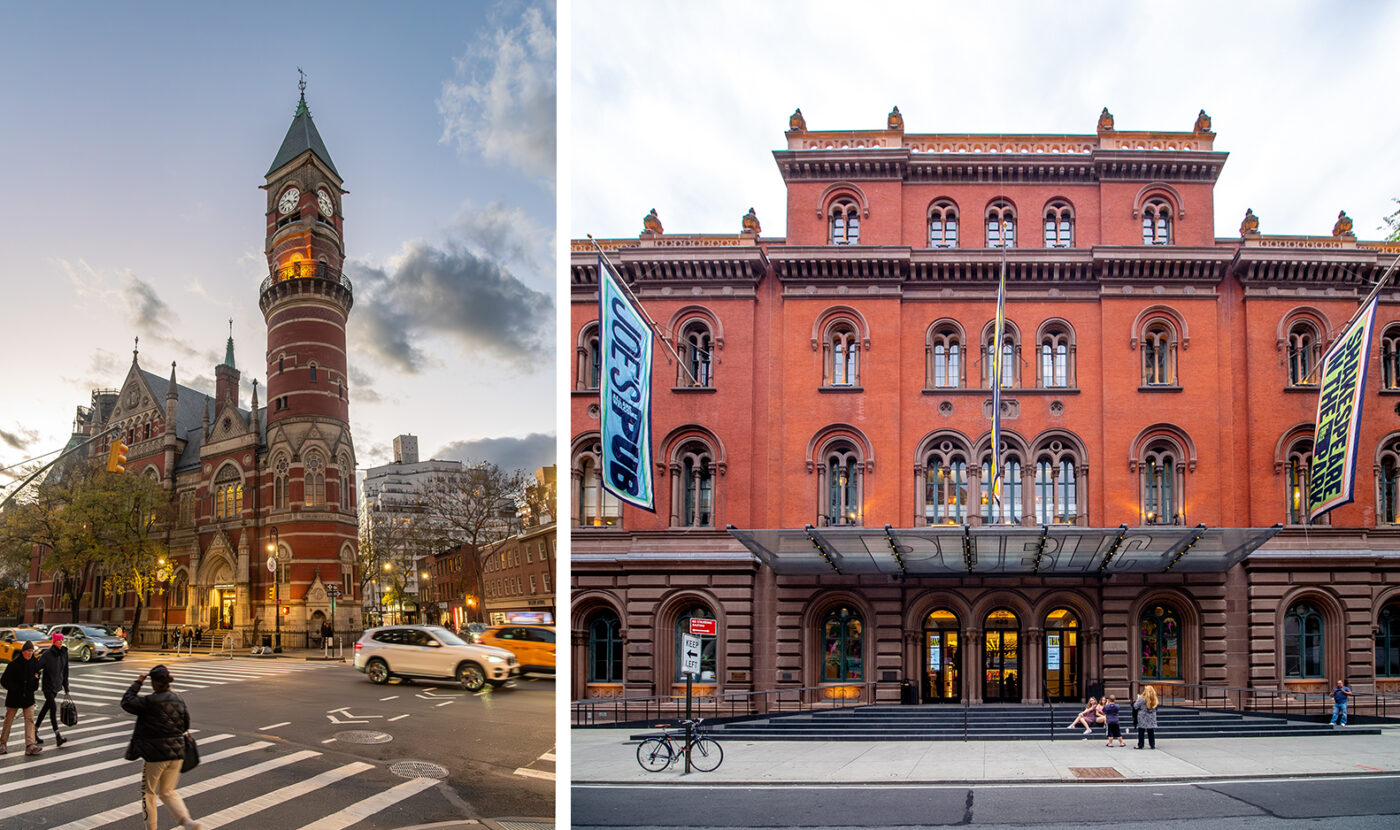
But that’s just one example of how a historically significant site can be preserved in ways that matter, even when preservation doesn’t require the historically significant use to remain. Another is the Jefferson Market Library. It serves a profoundly important public purpose, both for preserving its uniquely whimsical Victorian Gothic architecture, and by providing an invaluable and much-needed public amenity as the neighborhood branch library and an unofficial community center of sorts. But this defining landmark of Greenwich Village wasn’t ever intended to be a Library, as it was actually built as a courthouse, which it served as for three quarters of a century, during which time it saw an incredible amount of New York City history, and was the site a remarkable number of significant figures being arraigned or put on trial. But when that courthouse use came to an end, the building’s future became murky, and local residents began to organize to ensure its preservation. In the ensuing years, its was used by the Police and Fire departments before it was finally abandoned, but neighbors and preservationists were determined to see the building survive. Landmark designation ensured it would be preserved, and a plan to turn it into a much-needed expanded local branch of the New York Public Library gave it an enduring purpose that continues to this day. The building’s history as a courthouse is honored, and given new life, by the library that now occupies the space.
In another example, the historic building to be saved started out as a library, rather than ending up as one. The former Astor Library at 425 Lafayette Street was one of the city’s earliest great civic landmarks; it served as the city’s first real public library, and when the Astor Library merged with the Lenox Library and the Tilden Foundation to form the New York Public Library, it became the NYPL’s first main building. When the new, more modern main branch library was built at 42nd Street and Fifth Avenue in 1911, the former Astor Library was taken over by the Hebrew Immigrant Aid Society (HIAS), serving as a processing and service center for thousands of refugees and immigrants for a half century. When the structure no longer served HIAS’ purposes, they moved on, and the abandoned, outdated building looked likely to succumb to the wrecking ball. But a young theater pioneer named Joseph Papp, who thought Shakespeare and all theater should be readily available to the masses, saw a historic building that could once again serve a new but great public purpose, not the white elephant no longer suited for prior uses that some saw. For the last sixty years, that building — one of our city’s very first designated landmarks — has housed The Public Theatre, one of New York’s and the world’s great cultural institutions, fulfilling its mission of bringing theater to everyone from every walk of life.
The number of other great examples in our neighborhoods are almost boundless. The former Bell Telephone Laboratories at West and Bethune Streets, where great innovations in sound technology took place, became unprecedented affordable housing and workspace for artists, now known as Westbeth. Nearby in the West Village, an abandoned school became the city’s Lesbian, Gay, Bisexual, and Transgender Community Center, while a former maritime union building next door has become a valued health center. In the East Village, abandoned schools have become performing arts spaces and cultural institutions, and in NoHo a former orphanage serves as the home of the foundation dedicated to the life of great 20th century artist Robert Rauschenberg. Examples of this virtuous cycle continue almost endlessly.
There typically is no governmental regulation that can require a private building continue to be used for its original purpose (and sometimes that original use just can’t survive), though there is such a mechanism — landmarking — that can require that the building survive. Landmark designation and other forms of preservation may not guarantee that the purpose to which a building was originally put may continue in perpetuity. But it does create the conditions which can allow that to happen, and when it doesn’t, it can open the door to wonderful new uses taking its place and adding a great new chapter to the already rich history of the building. And that’s why preservation matters, even when it doesn’t preserve use.