
The Revolutionary War in Our Midst
George Washington slept here. So did John Adams and Aaron Burr, in the same 18th-century mansion, just not at the same time. One site and three key figures in the fight for independence and beyond form one of many historic highlights revealed in our new map covering the American Revolution in our communities.
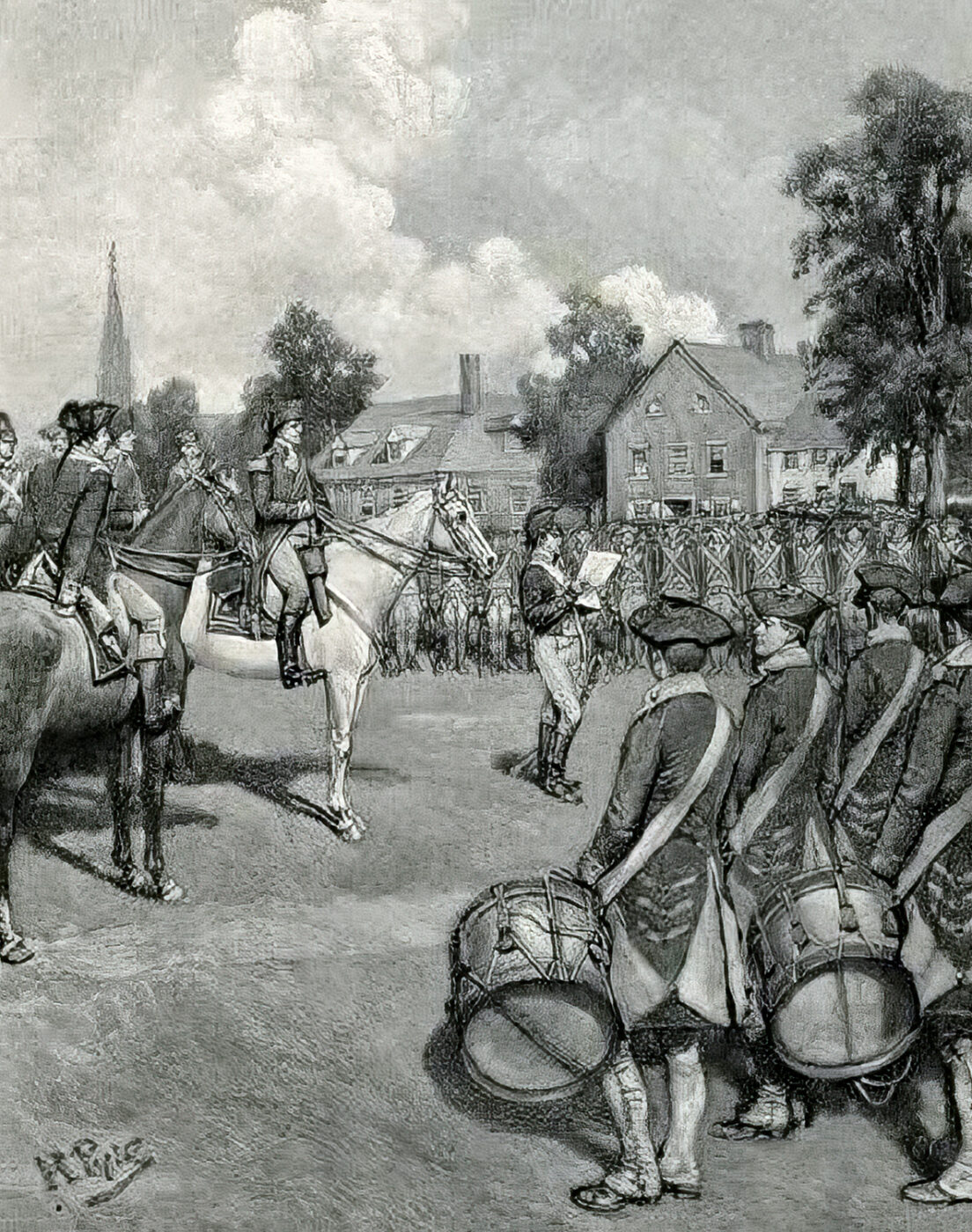
“The Revolutionary War in Greenwich Village, the East Village, and NoHo” is the latest addition to the 24 cartographic resources now available on our website. Starting with General George Washington reading the five-day-old Declaration of Independence to his troops near present-day City Hall Park on July 9, 1776, the map branches off into three main categories: The Neighborhood in 1776, looking at the estates and farms that stood here in the late 18th century; Founding Fathers, not just Washington, Adams, and Burr but Thomas Jefferson, Tom Paine, and more; and Revolutionary War Figures, who were connected to or are memorialized in our neighborhoods.
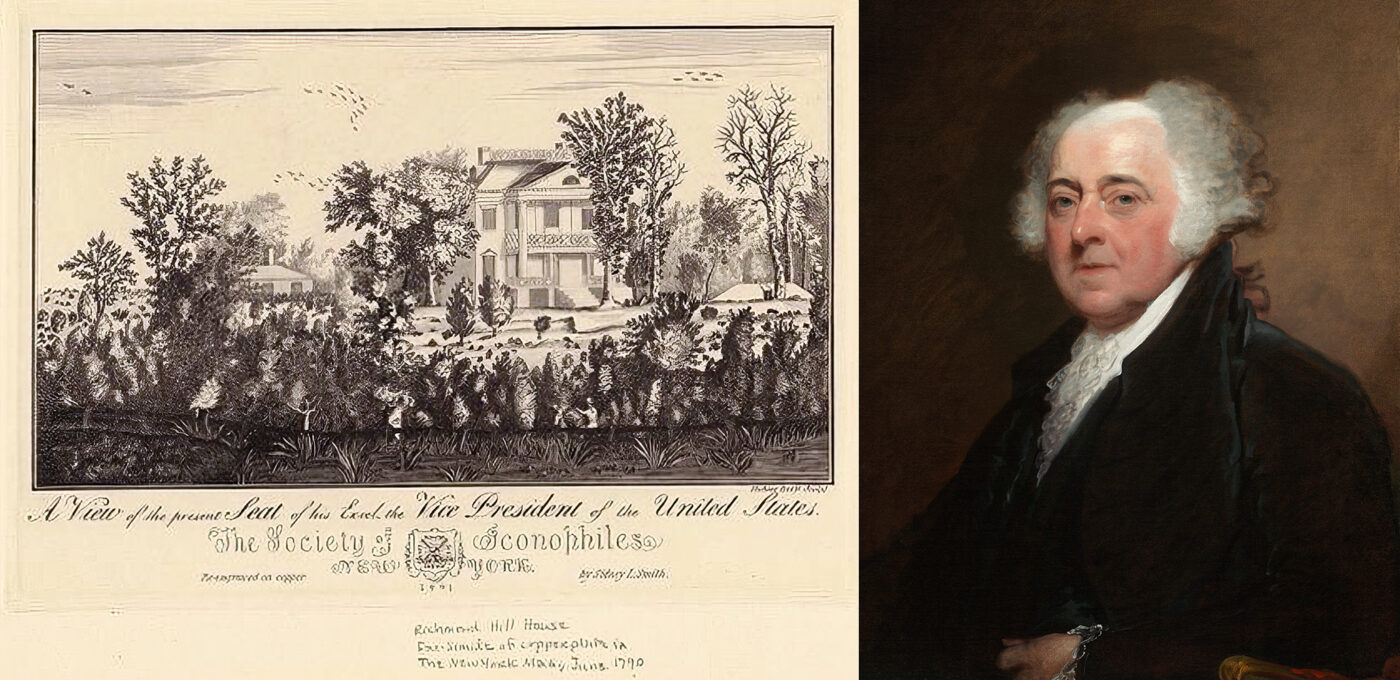
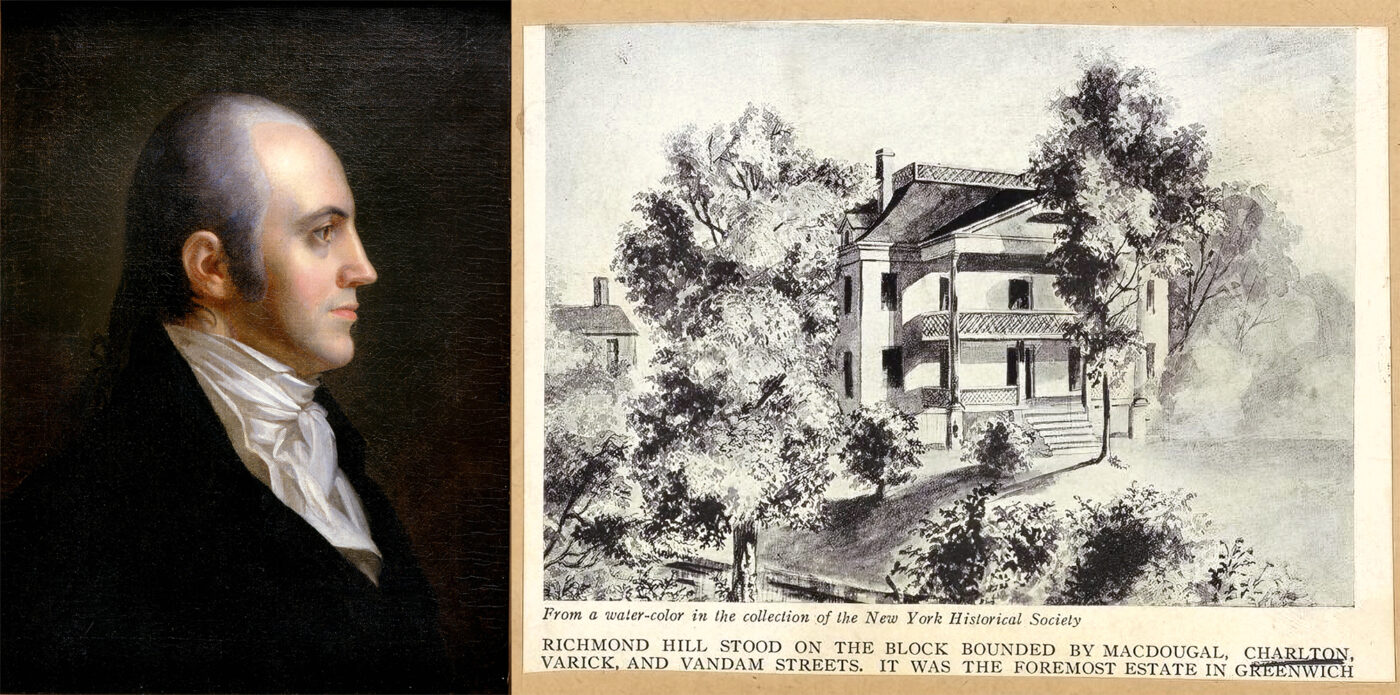
The aforementioned mansion, called Richmond Hill, falls neatly into two of those categories. Built for British Major Abraham Mortier in 1767 in the Palladian style, the house was located near the present intersection of Varick and Charlton Streets at the border of today’s Hudson Square and the Charlton-King-VanDam Historic District. The mansion sat on 26 acres of land in the countryside, with outstanding views of the Hudson River to its west. Early in its history, Richmond Hill served as military headquarters for the British in the waning days of the French and Indian War.
“Its entrance was broad and imposing, with balconies fronting the rooms on the second floor. Inside were spacious, high rooms, with a broad staircase distinguished by fine mahogany woodwork,” according to a 1945 article in The Villager. “The whole place [reflected] an atmosphere of richness, restfulness, and refinement. It was truly a colonial mansion built in the grand manner, with nothing spared for the comfort of its tenants.”
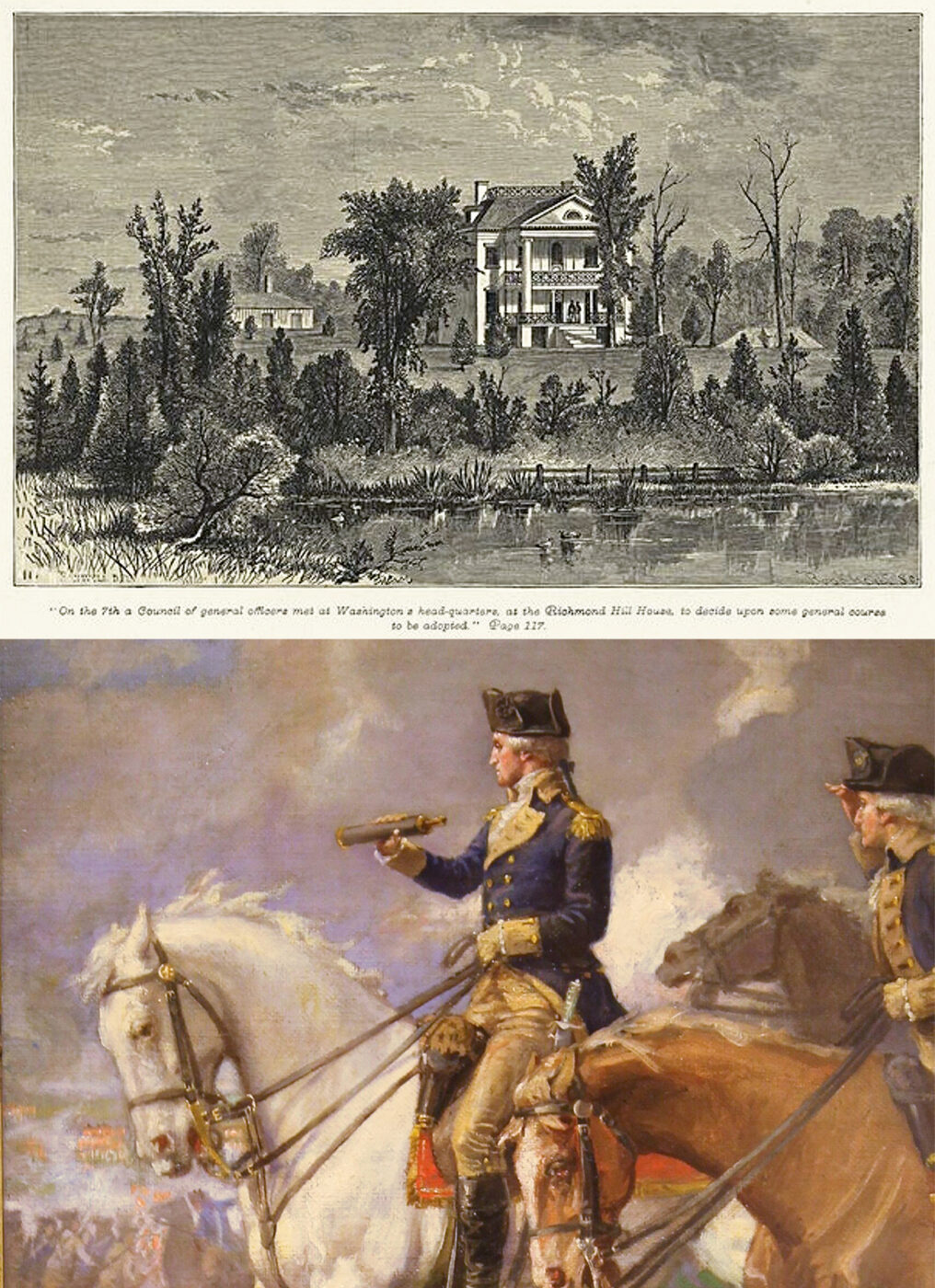
Washington arrived in Manhattan on April 13, 1776, to mount a defense of the island and surrounding communities, and ensure the British would not establish control of the Hudson River and sever the colonies. His wife Martha arrived a few days later, and they set up their country residence and headquarters at Richmond Hill. They remained in the mansion until after the general’s defeat in the Battle of Brooklyn in late August, forcing American troops to leave the island entirely some two months later. British officers then occupied the site through Evacuation Day in 1783, after which Richmond Hill briefly became home for the first British ambassador to the United States.
Richmond Hill returned to serve the American cause in 1789, when New York was the young nation’s first capital, as the residence for the vice president, John Adams. “In natural beauty it might vie with the most delicious spot I ever saw,” wrote Adams’ wife Abigail. “It is a mile and a half from the city of New York. The house stands upon an eminence: at an agreeable distance flows the noble Hudson, bearing upon its bosom innumerable small vessels laden with the fruitful productions of the adjacent country. Upon my right hand are fields beautifully variegated with grass and grain, to a great extent like the valley of the Honiton in Devonshire.”
The mansion’s next historic occupant was Aaron Burr. Burr gained renown for his heroic actions during the Revolutionary War, becoming an aide to Washington at Richmond Hill and later a lieutenant colonel. “It is believed that it was during this period of his association with it that Burr became attached to the place,” noted The Villager in 1945, “deciding perhaps then and there, that some day he would make it his home.”
Burr did indeed purchase the house in 1794, and maintained it even as he drew an Electoral College tie with Thomas Jefferson (also featured in our Revolutionary Map) in the 1800 presidential election; the House of Representatives selected Jefferson as president and Burr as the country’s third vice president. On the morning of July 11, 1804, Burr left Richmond Hill to cross the Hudson River for his famous duel with Alexander Hamilton, who after being shot was brought to the Bayard House in today’s West Village. The nation’s first treasury secretary ultimately succumbed to his wounds there and died. (The Bayard estate is also featured on our map, as are several noteworthy sites for Hamilton.)
After Burr fled New York following the duel, the property was acquired by John Jacob Astor. Astor developed the land, which today forms much of the Charlton-King-VanDam Historic District plus the southernmost block of MacDougal Street.
These are just a few of the highlights among more than 40 entries on our Revolutionary Map. Explore it and more mapping resources here.