
The Stuyvesant Family’s Revolutionary Legacy
Stuyvesant is a familiar name in the history of New York City, and today many streets, schools, and buildings bear that surname. The origins of the Stuyvesant family, an influential clan of leaders, philanthropists, and landowners, predate the founding of New York as a city and America as a country. Their story is centered in our neighborhoods, where the family owned land and built their legacy.
The Stuyvesant Family’s prominence east of the Atlantic began with Peter Stuyvesant, Director-General of New Netherland. During the Revolutionary War period, the family was led by a descendant of Stuyvesant also named Peter, who had married into another prominent New York family, the Livingstons.
Village Preservation’s newest StoryMap, “The Revolutionary War in Greenwich Village, the East Village, and NoHo”, highlights the prominence of the Stuyvesant family during the 18th and 19th centuries. The family’s deep connections are present in each of the map’s three sections: “The neighborhood in 1776”, “Founding Fathers”, and “Revolutionary War Figures”.
Beyond the Stuyvesants, this incredible resource details the many connections our neighborhoods have to the Revolution. You can explore the entire map here.
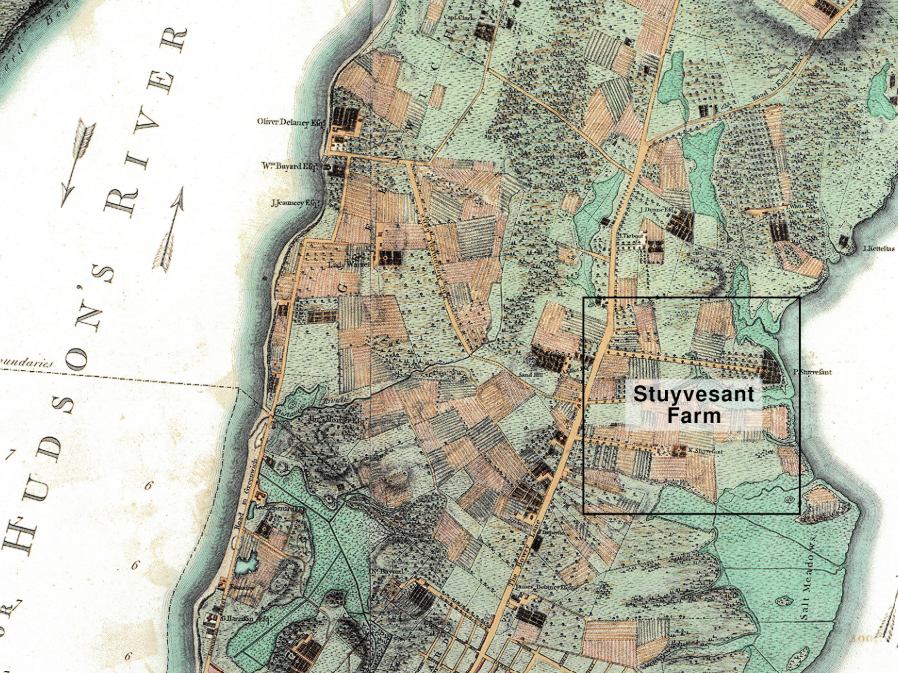
The neighborhood in 1776: Stuyvesant Farm
The original Stuyvesant farm (or Bouwerie, as the farms were called in Dutch) was purchased by Director-General Peter Stuyvesant from the Dutch West India Company in 1651. The land purchased encompassed a large tract between Fourth Avenue and the East River, and between East 5th Street and East 20th Street.
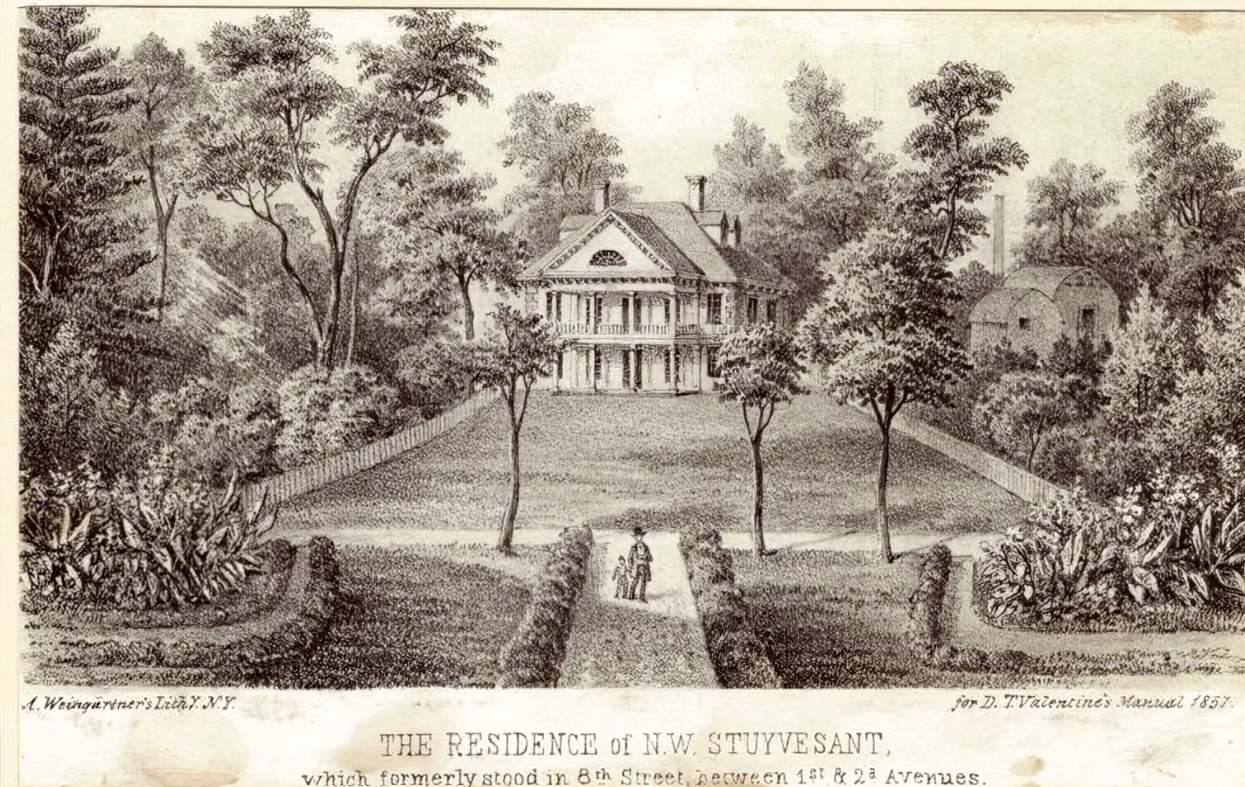
The Stuyvesant family house, built on the farm, was similar to most of the homes of affluent residents of the time. It sat on an elevated site with surrounding views, in this case of the East River, and consisted of a two-story gambrel roof design with a covered front porch, all set within the large landscaped area.
The Stuyvesant Family managed to maintain an uneasy balance during the Revolutionary War period. At a time when allegiances dictated who could keep their land, the Stuyvesants appeased the British occupation while staying generally neutral about the possibility of a new nation. This resulted in the family’s ability to retain their large estate in the East Village and continue to climb in social prominence.
Founding Fathers: St. Marks Church-in-the-Bowery
Located on East 10th Street, St. Marks Church in-the-Bowery is notable for being the oldest site of continuous religious practice in New York. Founding father Alexander Hamilton assisted with the incorporation of the independent parish, the first in the United States from Trinity Church.

This Episcopal church was constructed in 1799 on land owned by the Stuyvesant family. It replaced a Dutch Reformed chapel, which had been constructed by the Stuyvesant family in 1660.
The church was designed by the noted architect John McComb Jr, who had a profound impact on the built environment of New York in the later part of the 18th and first part of the 19th centuries, including the design of such notable buildings as City Hall in Lower Manhattan.
St. Mark’s was designed in the Georgian style, and consists of mass stone masonry walls, punched openings with arched multi-light windows and stucco surrounds, and a front gable slate roof. Notable later additions include the Greek Revival–style tower that was added in 1807, with the steeple completed in 1828, and the cast iron portion on the front elevation designed in the Italianate style.
Revolutionary War Figures: Stuyvesant Fish House
Nicholas Fish served as a Lieutenant Colonel in the Continental Army during the Revolutionary War and saw action at several notable engagements, including at Saratoga. During the war, he served with Alexander Hamilton, and following the war, he had several government appointments, including as the Adjutant General of New York.
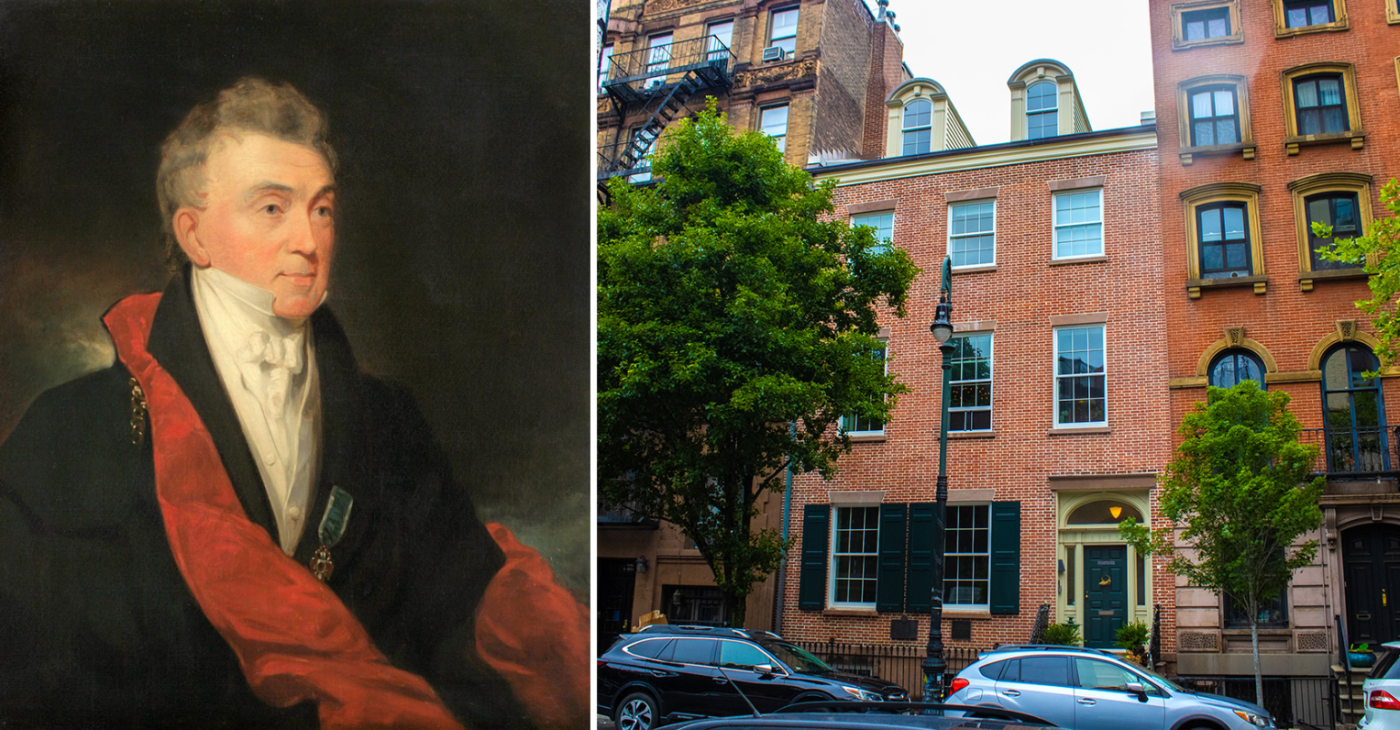
Fish married into the Stuyvesant Family. He and his wife Elizabeth (née Stuyvesant) built a house at 21 Stuyvesant Street in 1804. Their son Hamilton Fish (named after Alexander Hamilton) was raised in the house, and would go on to serve as both the Governor and as a Senator for New York State.
The house was designed in the Federal style and consists of a high stone foundation, Flemish Bond brick, punched openings with six-over-six windows, and eight-panel wood entrance door with fanlight and sidelights.
These entries highlighting the Stuyvesant family are just a few of the among more than 40 entries on our Revolutionary War Map. Explore it and more mapping resources here.