
Beyond the Village and Back: Downtown Public Art Tour
In our series Beyond the Village and Back, we take a look at some great landmarks throughout New York City outside of Greenwich Village, the East Village, and NoHo, celebrate their special histories, and reveal their (sometimes hidden) connections to our neighborhoods.
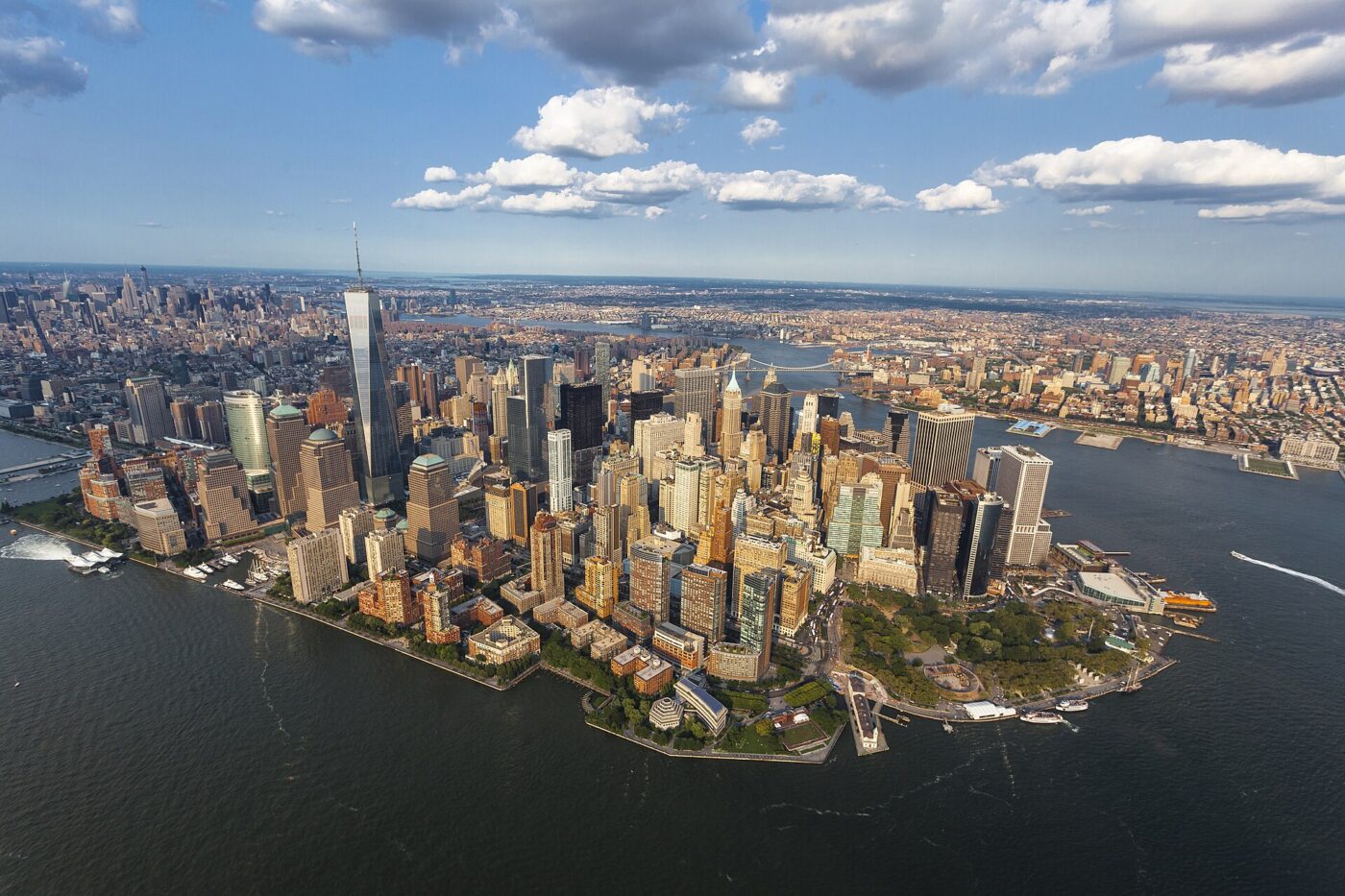
Manhattan’s southernmost tip is known for many things: it’s the oldest part of the city, where colonial settlement first began; it’s the center of the Financial industry, not only for New York City and the United States, but the world; it’s the center of city government and the complex machinery that oversees five boroughs and 8.5 million people on a daily basis. But it’s also become, over the last fifty or so years, the place in New York City with the greatest concentration of public sculpture and outdoor art, transforming its streets into a living museum. Perhaps unsurprisingly, many of those artworks, their creators, their patrons, and their locations have some deep connections to Greenwich Village. We’ll explore a few.
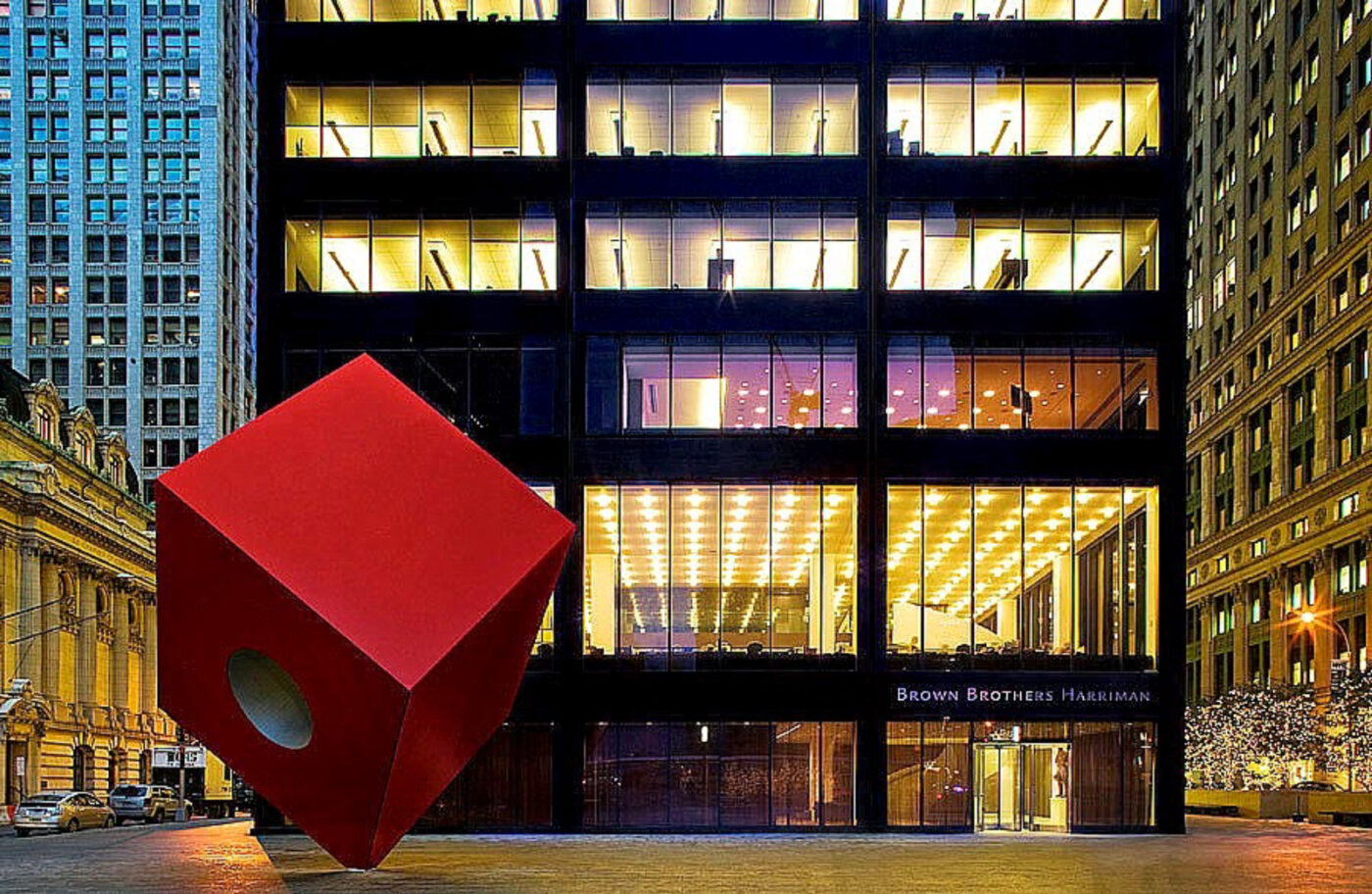
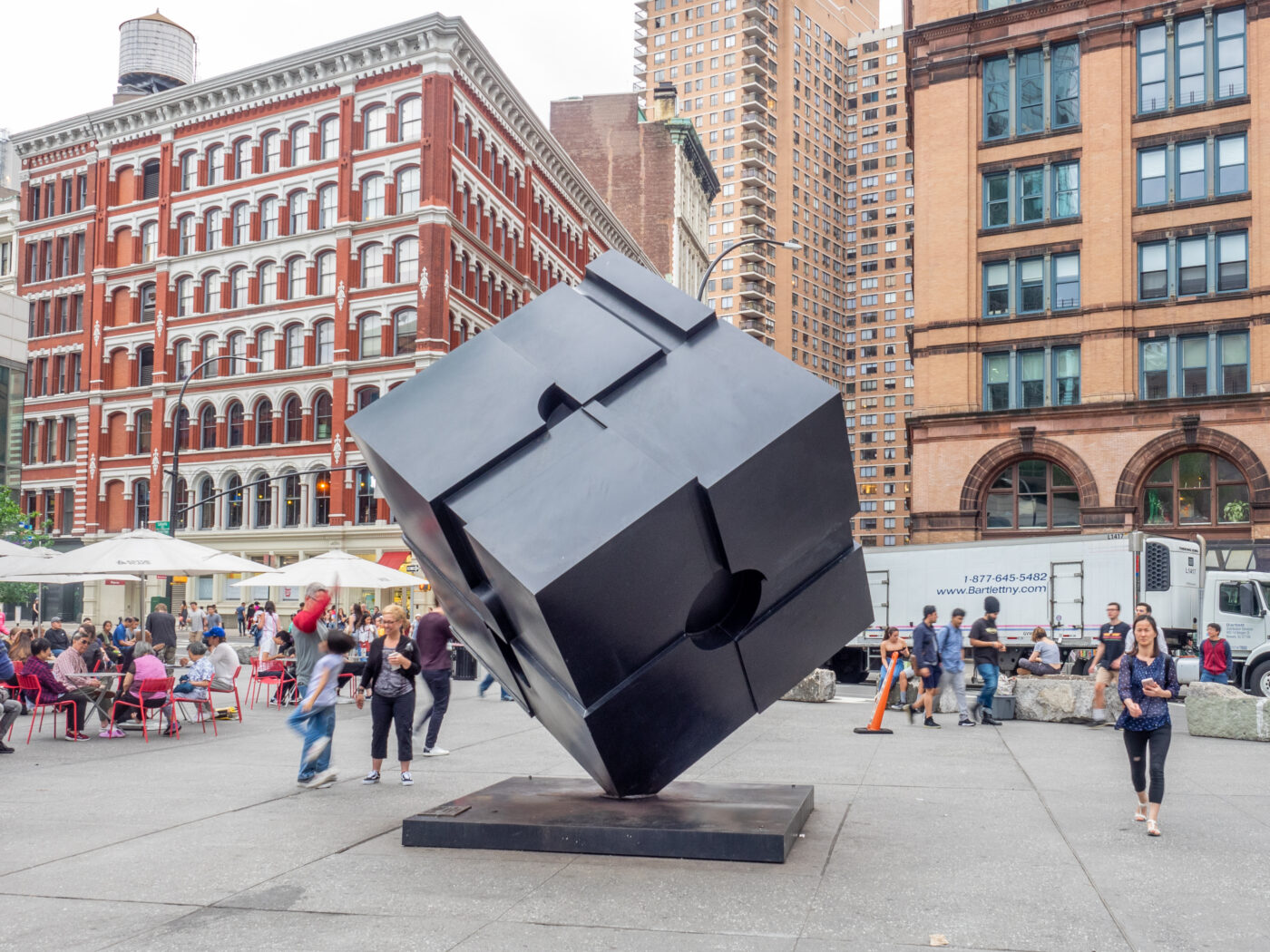
Red Cube, Isamu Noguchi (1968), 140 Broadway (formerly Marine Midland Bank Plaza) — This minimalist sculpture is not actually a cube at all, but a rhomboid (an elongated cube) balanced on one corner with a circular tube cut out through the center. It was built in conjunction with the 51-story headquarters of the Marine Midland Bank (1964-68) designed by Gordon Bunshaft of the firm of Skidmore, Owings, and Merrill, in front of which it sits on the building’s eponymous plaza. The sculpture is however indeed red, at least on its exterior (the punched hole is grey), which plays off against the dark glass and black steel of the skyscraper behind it. No. 140 Broadway was designated an individual NYC landmark in 2013, including the plaza and sculpture. Red Cube bears more than a passing similarity to the slightly earlier Alamo (1967), commonly referred to as simply “The Cube,” by Tony Rosenthal at Astor Place, which was the city’s very first piece of public minimalist sculpture, followed soon thereafter by Noguchi’s.
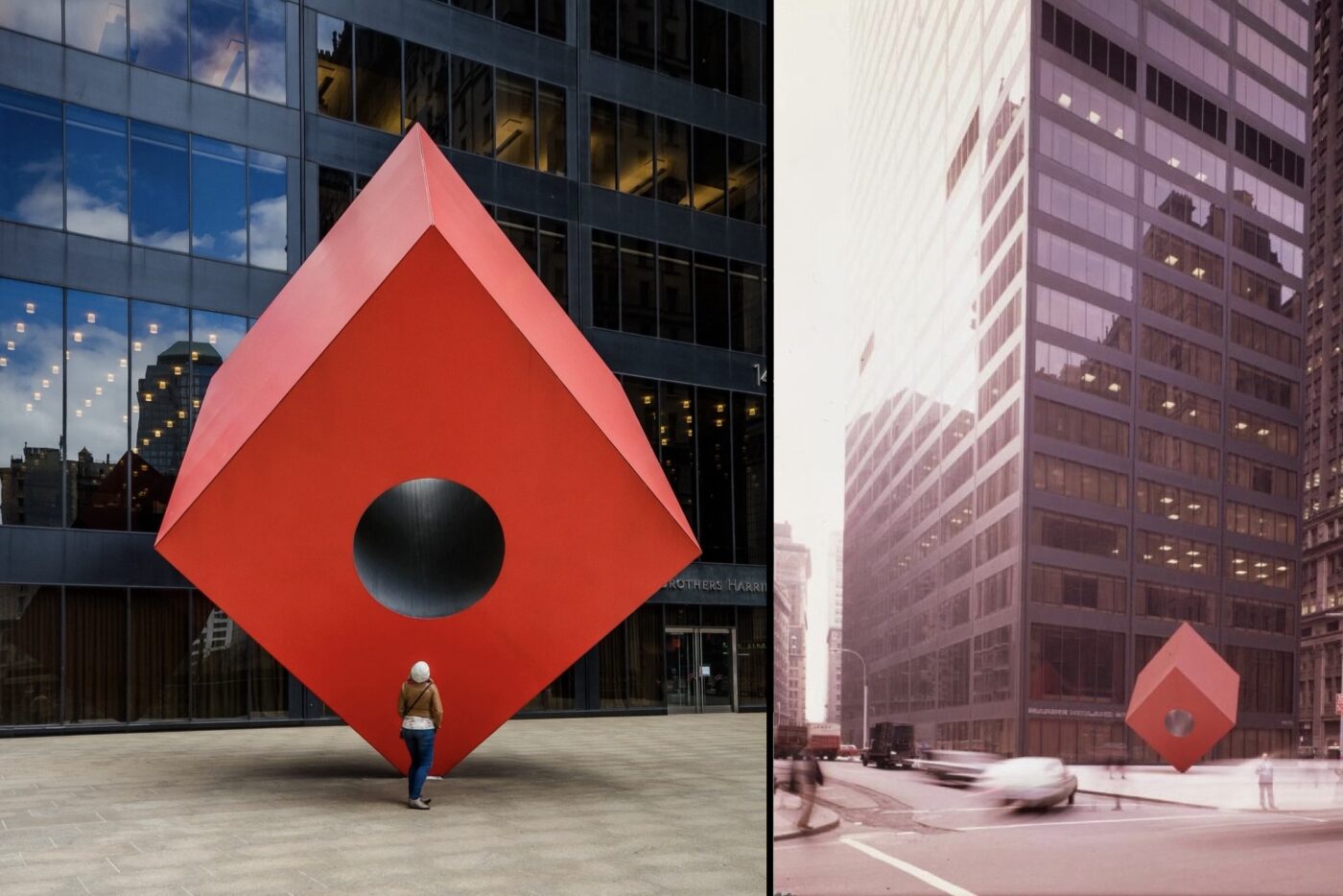
The frequently-photographed public artwork is an integral part of the architectural composition, with its strong warm primary colors playing off the cool steel and glass of the corporate headquarters as well as the limestone and masonry buildings surrounding it. Red Cube’s design implies movement, as the rhomboid appears as though it could spin (it can’t) and the elongated shape seems to imply its being stretched upward even as a round hole has been sliced seamlessly through its center. Much as the color play off against the dark skyscraper behind it, Red Cube’s sharp, crisp corners contrast with the slightly obtusely angled corners of the trapezoidal building it faces. The sculpture’s solid primary colors and form contrast with the semi-transparent and reflective qualities of the building, which though massively larger, seems in many ways less solid and dense than the sculpture. The plaza both sit upon was once laid with long blocks of white travertine which further accentuated the contrast and dialogue between tower and sculpture, but which was was removed ca. 2000 and replaced with dusky colored stone slabs.
The interplay of elements in space is typical of the sculptural work of Isamu Noguchi, who lived and worked for decades in Greenwich Village, where he first gained renown. Gordon Bunshaft, the architect of the Marine Midland Bank Building which maintains the ongoing dialogue with Noguchi’s minimalist sculpture, also lived and began his career in Greenwich Village, just a few blocks from Noguchi. In fact, the two had a decades-long partnership and series of collaborations.
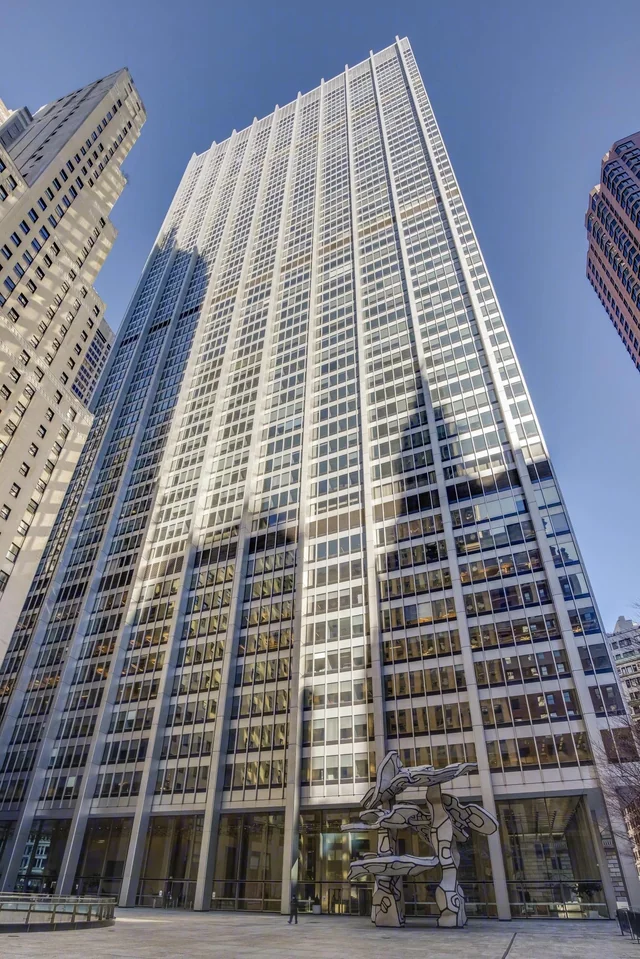
Sunken Garden, Isamu Noguchi (1961-64) and Groups of Four Trees, Jean Dubuffet (1972), both One Chase Manhattan Plaza —
Located directly east of red cube is the former headquarters of Chase Manhattan Bank and Chase Manhattan Plaza, which serves as home to two more great public artworks with Village connections, and another collaboration between architect Gordon Bunshaft and sculptor Isamu Noguchi.
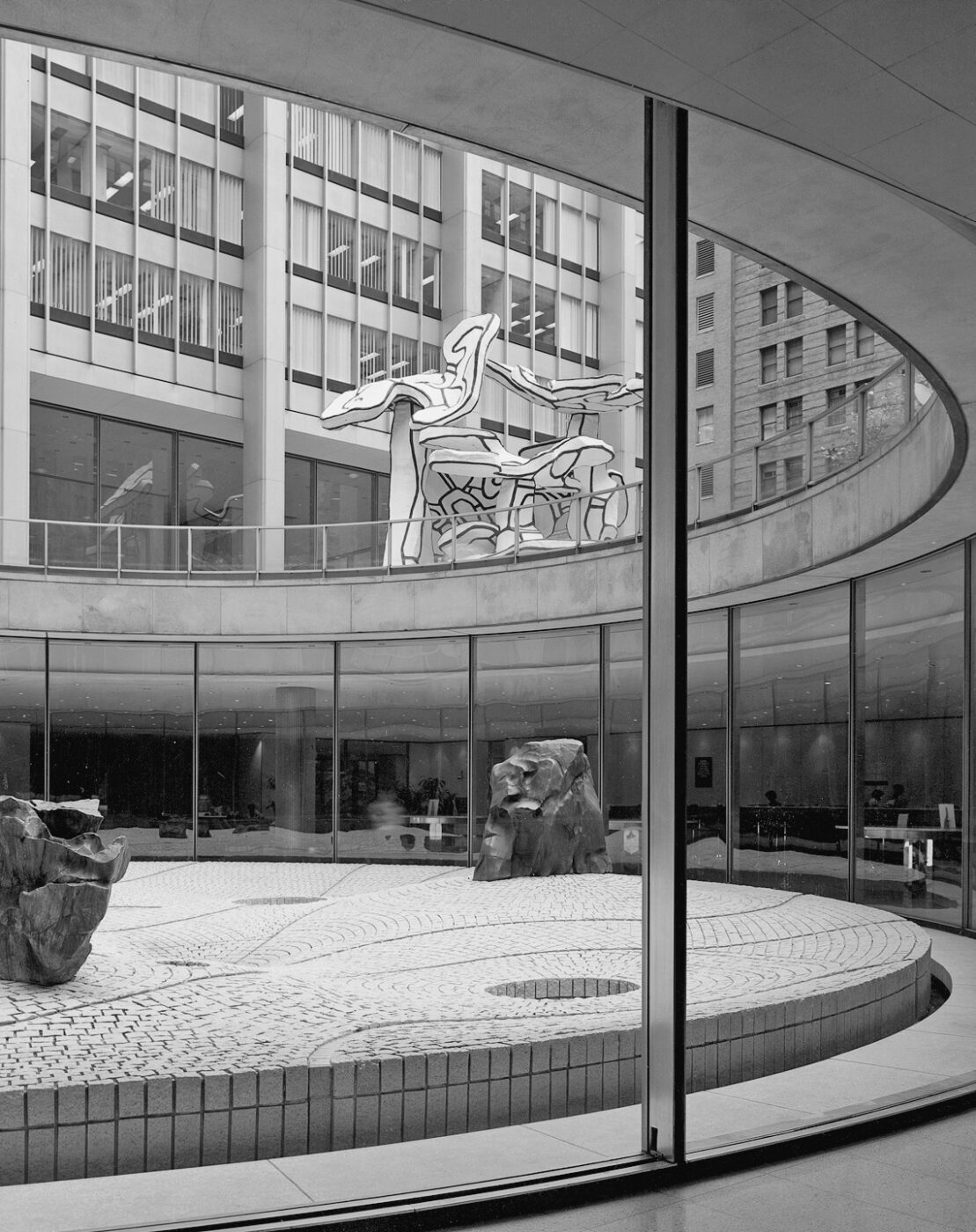
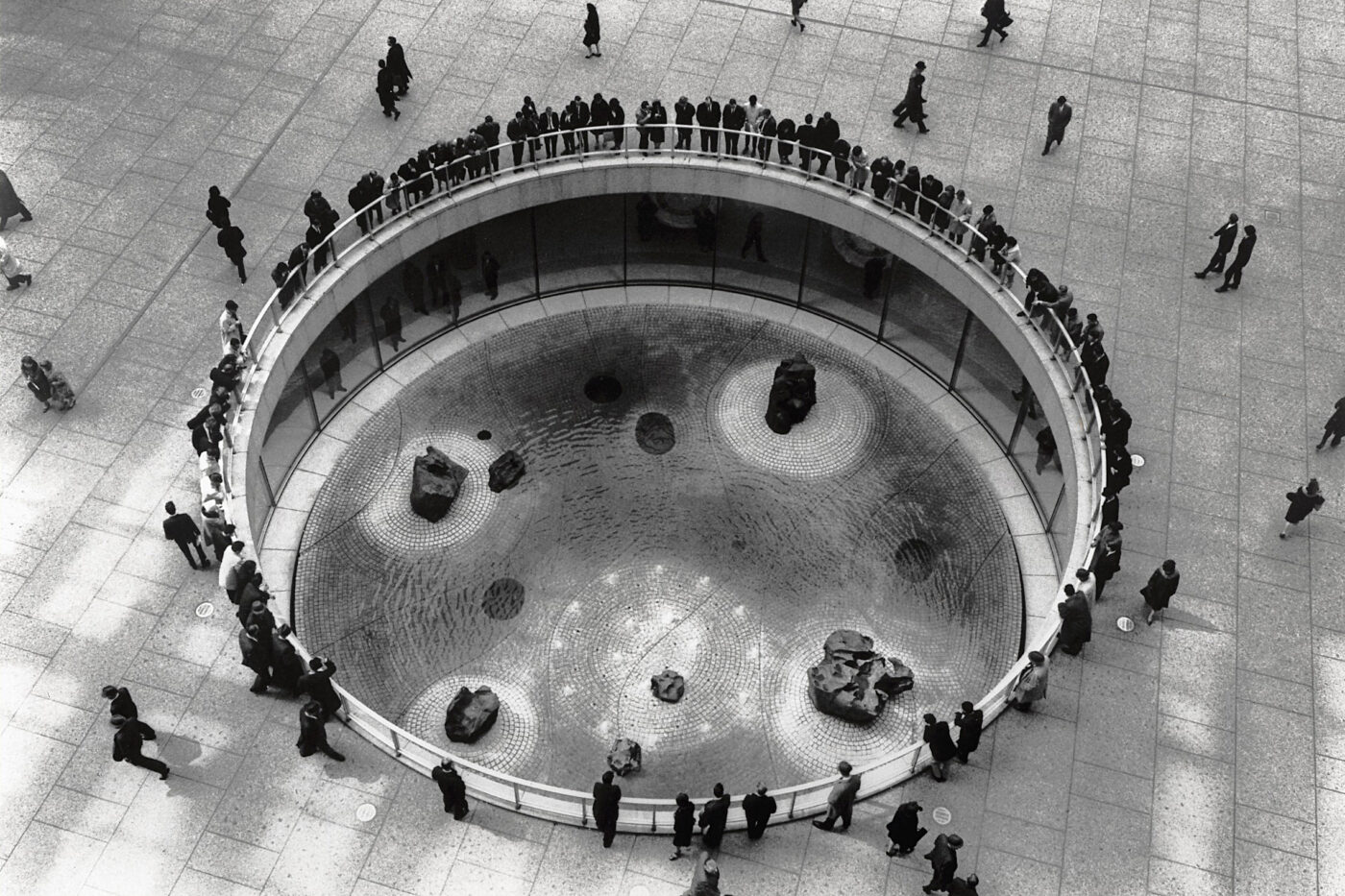
One Chase Manhattan Plaza was built between 1957 and 1964 to the designs of one-time Greenwich Village resident Gordon Bunshaft of Skidmore, Owings, and Merrill. The development, the first major one in the financial district since the Great Depression, consisted of an 813 ft. tall 2.3 million sq. ft. aluminum and glass skyscraper set within an open elevated plaza, on a 2 1/2 acre site that previously consisted of two city blocks. An original part of the design collaboration was the inclusion of a sunken garden designed by Noguchi on the south plaza, containing rocks and water elements that linked the building and the plaza to banking spaces located below (the complex actually continues about six levels down below the street). The circular garden with its clear glass perimeter, white stone surfaces and black stone objects, and gently gurgling water play off against the soaring and geometric grid of the headquarters building that rises 60 stories above and behind it.
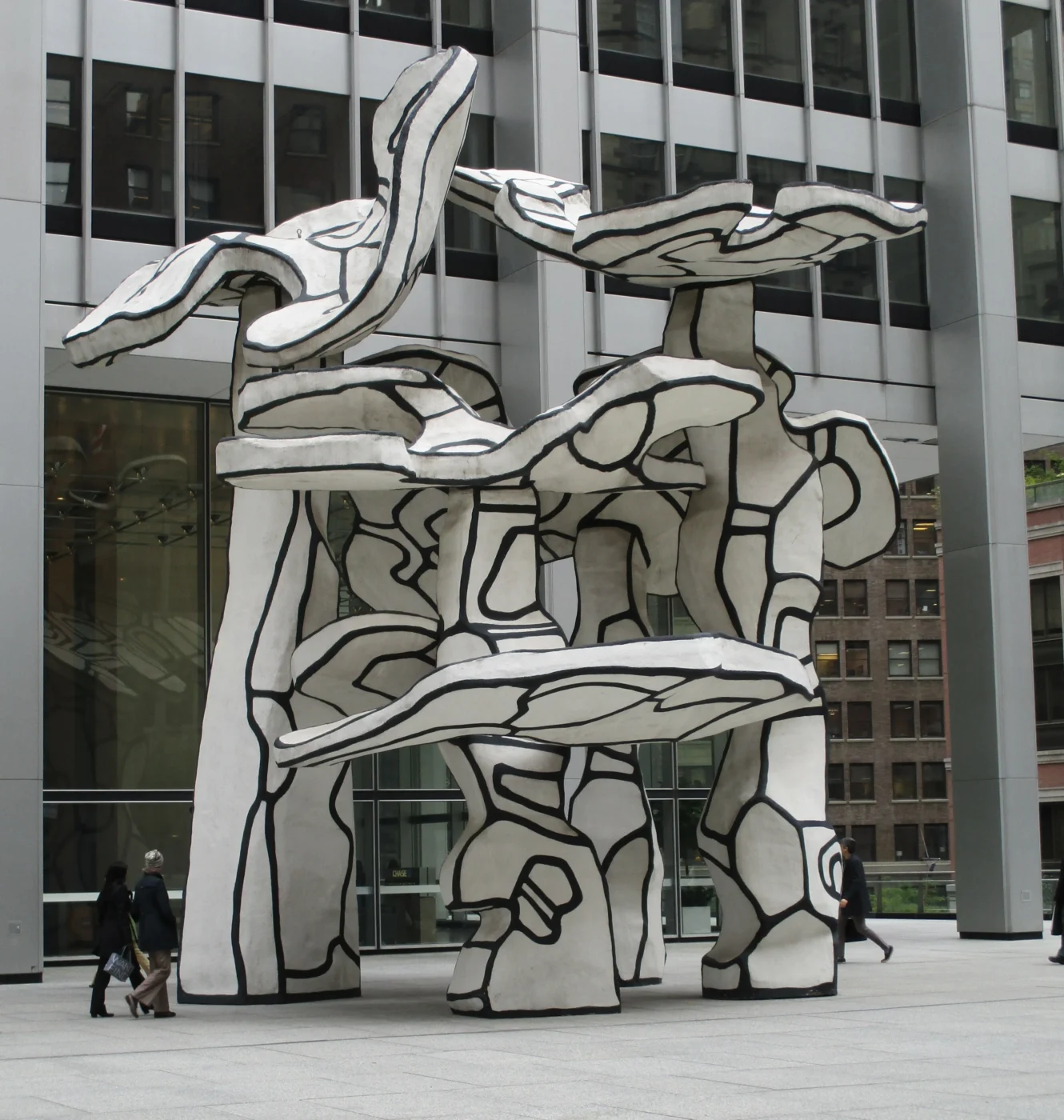
Jean Dubuffet’s Four Trees was not commissioned or installed until several years later, and while approved by Bunshaft, was not part of the original design concept as Sunken Garden was. That said, the four-story tall irregularly shaped white and black sculpture based upon ballpoint pen doodles made during a phone call in 1962 plays off against the rigid geometric lines on One Chase Manhattan Plaza in both color and configuration. Dubuffet’s first public outdoor sculpture in the United States, its organic forms received broad critical acclaim for its playful contrast to the regularized machine aesthetic of the tower.
The tower, plaza, and its artworks were landmarked in 2009. Dubuffet lived in Greenwich Village, at the home of his patron Alfonso Ossorio, on his frequent trips to New York. Chase Manhattan Bank was a descendant of the Bank of Manhattan, founded by longtime Greenwich Village resident and property owner Aaron Burr, which was once located in Greenwich Village itself. The site of One Chase Manhattan Plaza and its sculptures was in the 18th century the home of Middle Collegiate Church, a historic congregation which since 1892 has been located at Second Avenue and 7th Street in the East Village, though its landmarked home was partly destroyed in a devastating fire in 2020.
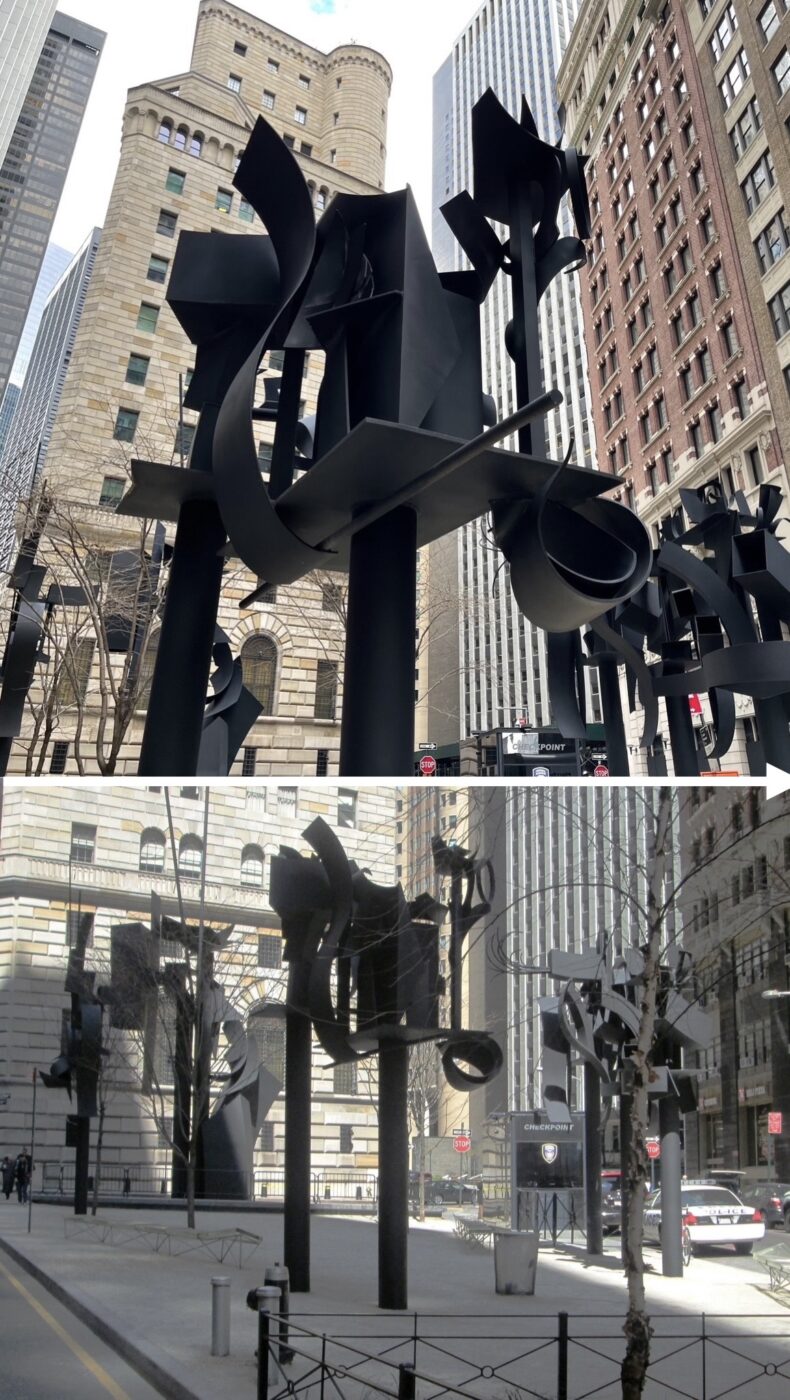
Louise Nevelson Plaza (1978), bounded by Maiden Lane, Liberty Street, and William Street — This triangular plaza catty-corner to One Chase Manhattan Plaza and adjacent to the fortress-like Federal Reserve Bank is the only in New York named for an artist, one of the very first and few public spaces in New York named for a woman, and the only public space in New York permanently dedicated to multiple works of a single artist. Consisting of seven large scale black steel sculptures by artist Louise Nevelson (September 23, 1899 – April 17, 1988) in a space originally designed by the artist as well (that design was highly altered in a 2007-2010 renovation), the artwork and public space were commissioned by the City of New York. The abstract sculptures, described by some as an early example of urban environmental art, were among many prominent commissions for Nevelson in New York City and around the world.
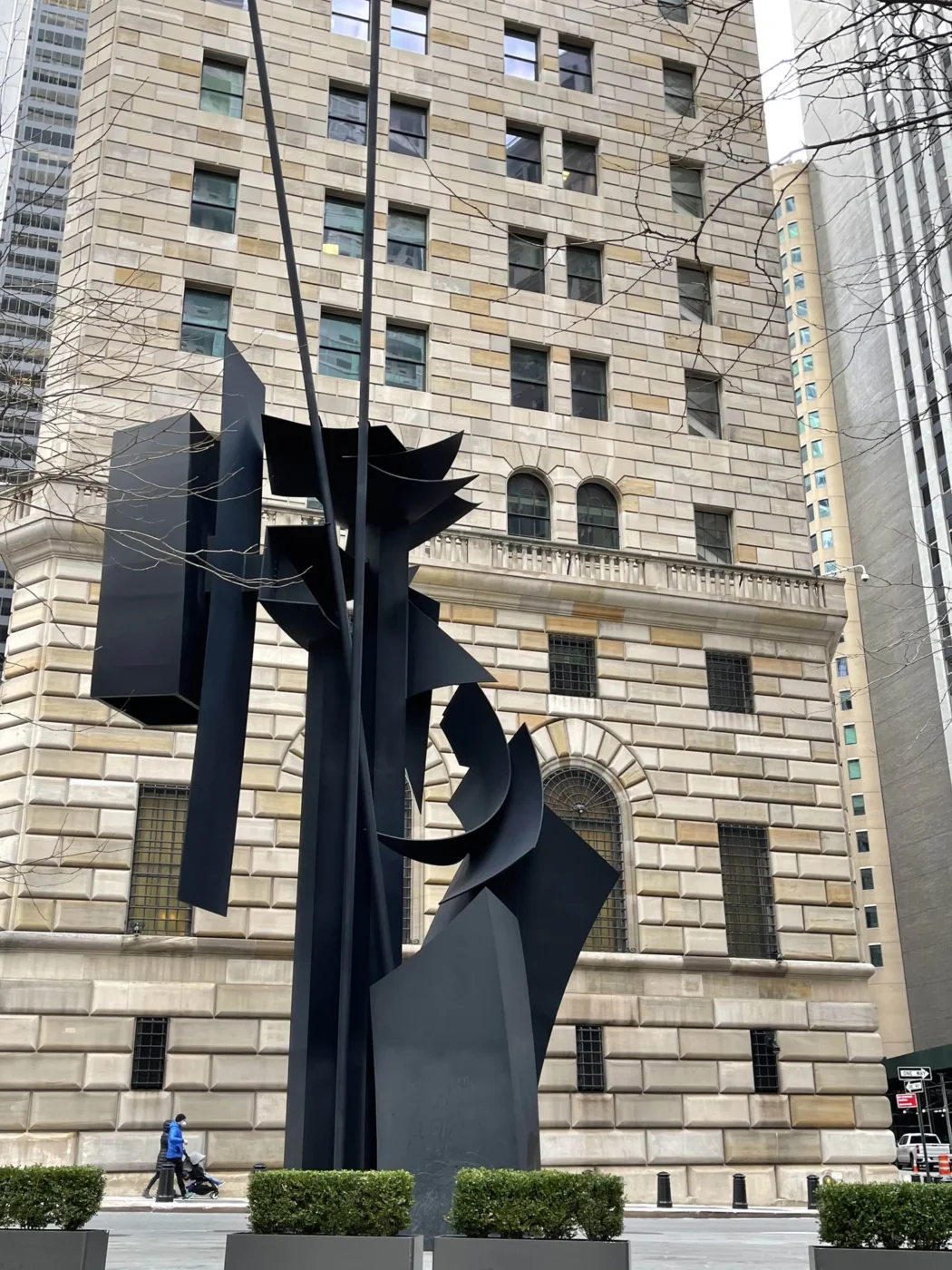
In the 1970s when she was creating these works, Nevelson owned and housed members of her family at 222 East 7th Street, between Avenues B and C in the East Village.
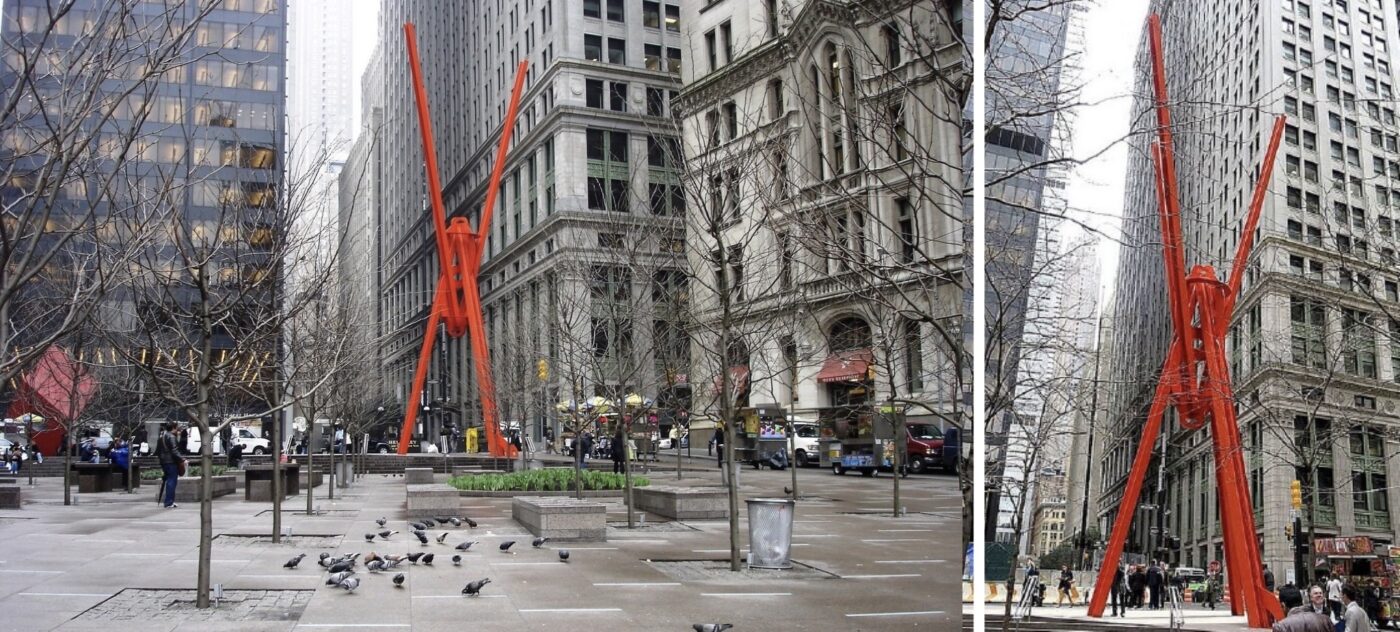
Joie de Vivre, Mark di Suvero (1998), Zuccotti Park — This 70 foot tall installation continues the almost unbroken chain of outdoor abstract art installations along Liberty Street in Lower Manhattan. The twisted knot of bright red painted Cor-Ten steel towers over the full block public space, but appears modest in scale compared to the massive nearly 2.5 million square foot former United States Steel Building (now One Liberty Plaza) which covers the full block directly to its north. It was in fact the construction of this behemoth in 1973 which lead to Joie de Vivre’s location here. The massive structure was only allowed by city zoning rules by also providing the full block public open space directly to its south, which is now called Zuccotti Park.
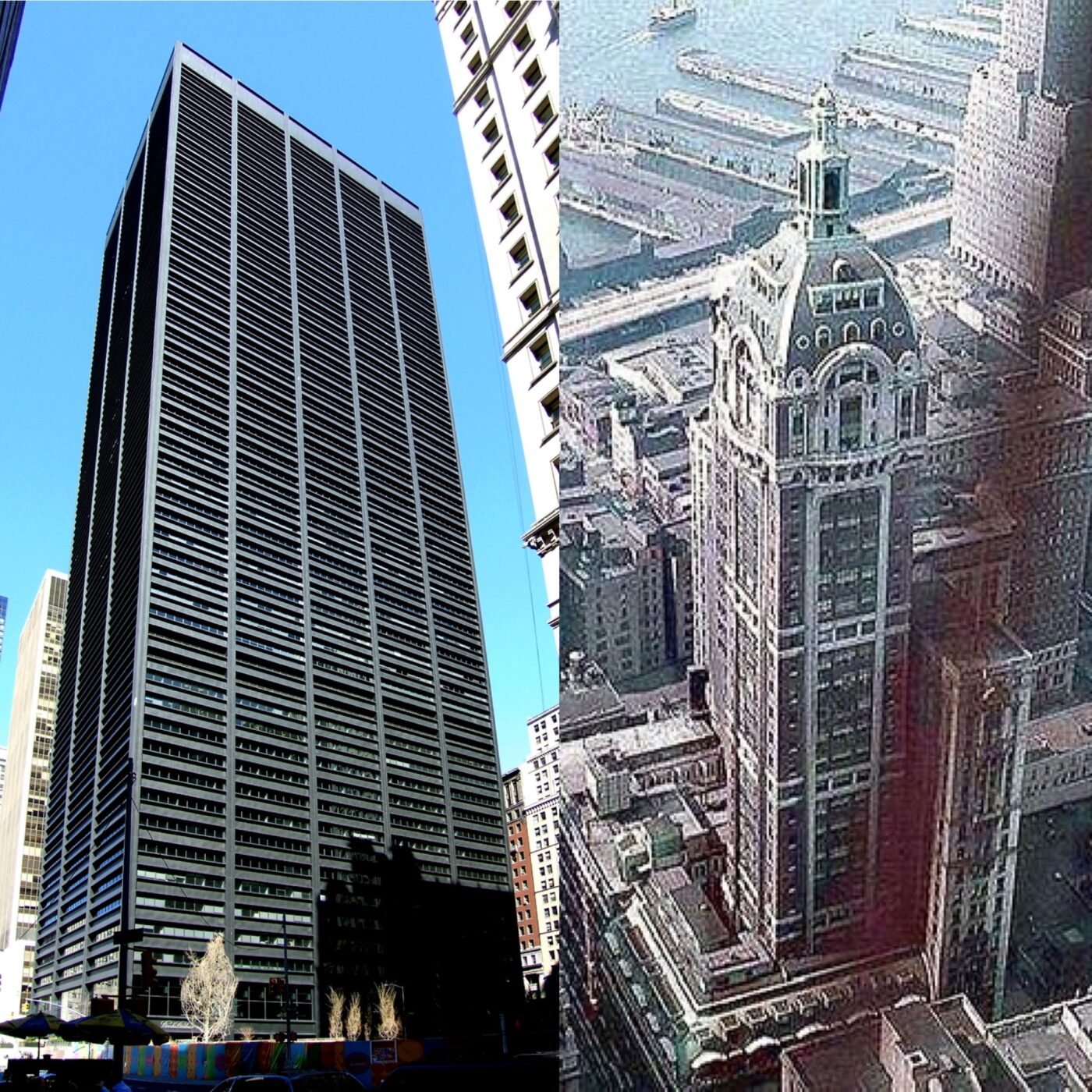
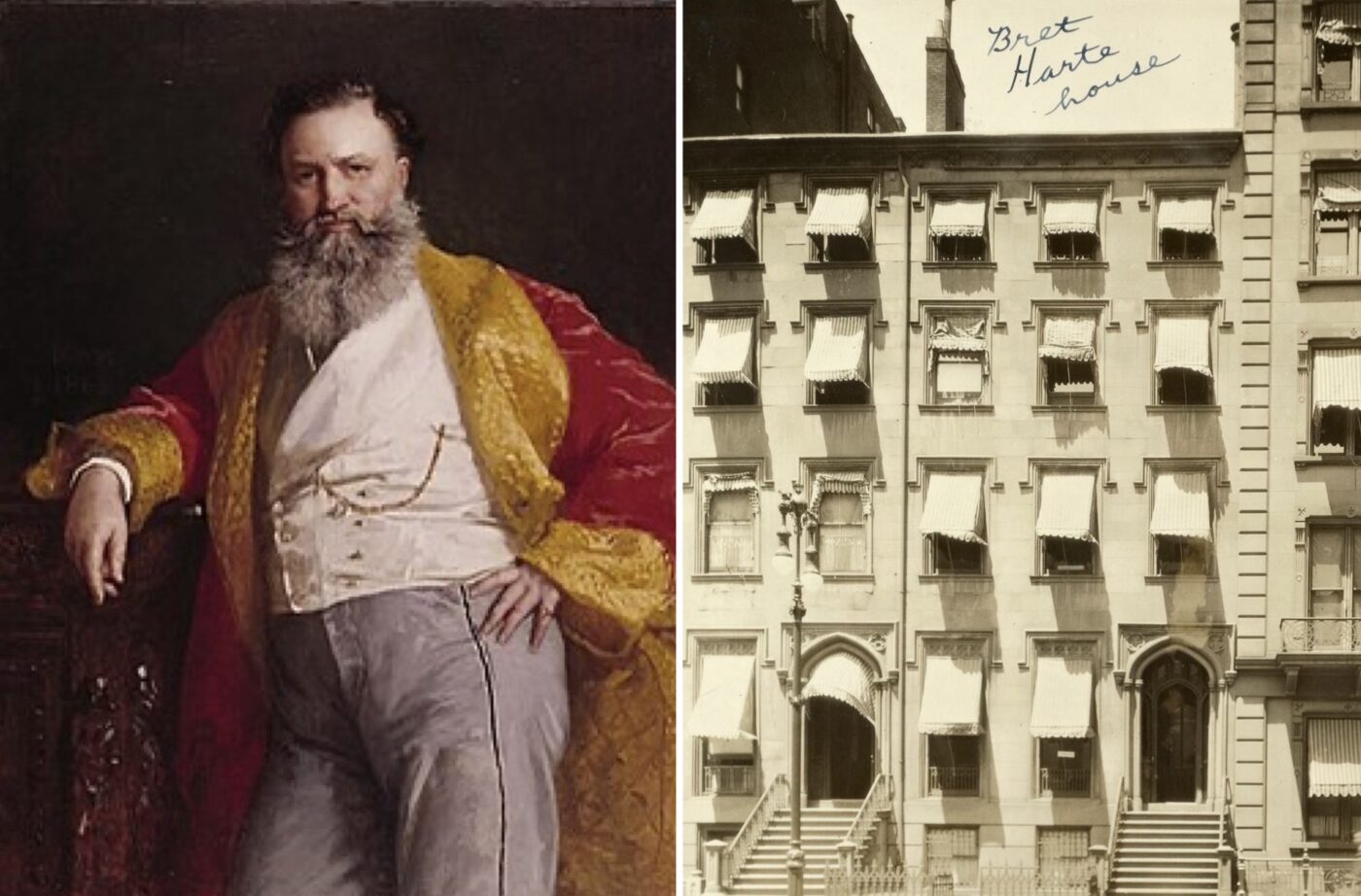
The Greenwich Village connections? Artist Mark di Suvero was a co-founder of the Park Place gallery, a legendary 1960s artists’ cooperative located at 542 LaGuardia Place (then 542 West Broadway) which showcased large-scale abstract sculpture and hard-edge painting, paving the way for the contemporary SoHo gallery scene. Zuccotti Park was named in 2006 (38 years after its creation) for John Zuccotti, an urban planner born and raised in Greenwich Village, who was a Jane Jacobs acolyte who eventually went on to chair the City Planning Commission and serve as a Deputy Mayor. The U.S. Steel Building, the construction of which necessitated the creation of Zuccotti Park, required the demolition of the Singer Building, a 1908 skyscraper that was the tallest building in the world from 1908 to 1909, and the tallest building ever intentionally demolished from 1968 until 2019. It was built as the headquarters of the Singer Sewing Corporation, founded by Greenwich Village resident Issac Merritt Singer, who lived at 14 Fifth Avenue.
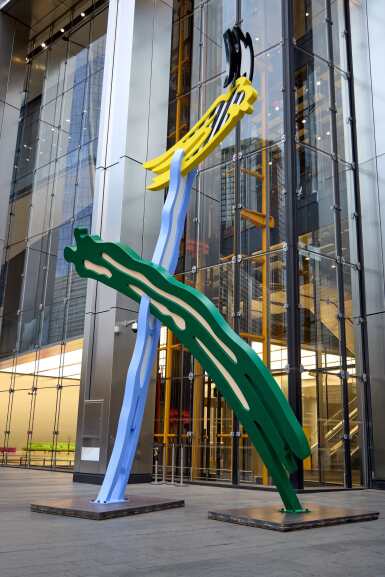
Brushstrokes, Roy Lichtenstein (1996), 3 World Trade Center — This monumental 30 foot tall sculpture was installed here in late 2025, just west of Joie de Vivre and only slightly north of the public art corridor of Liberty Street, in late 2025. It translated into three dimensions and aluminum the pop artist’s renderings of the painted form. Lichtenstein lived and worked for much of his career on Washington Street in the West Village.
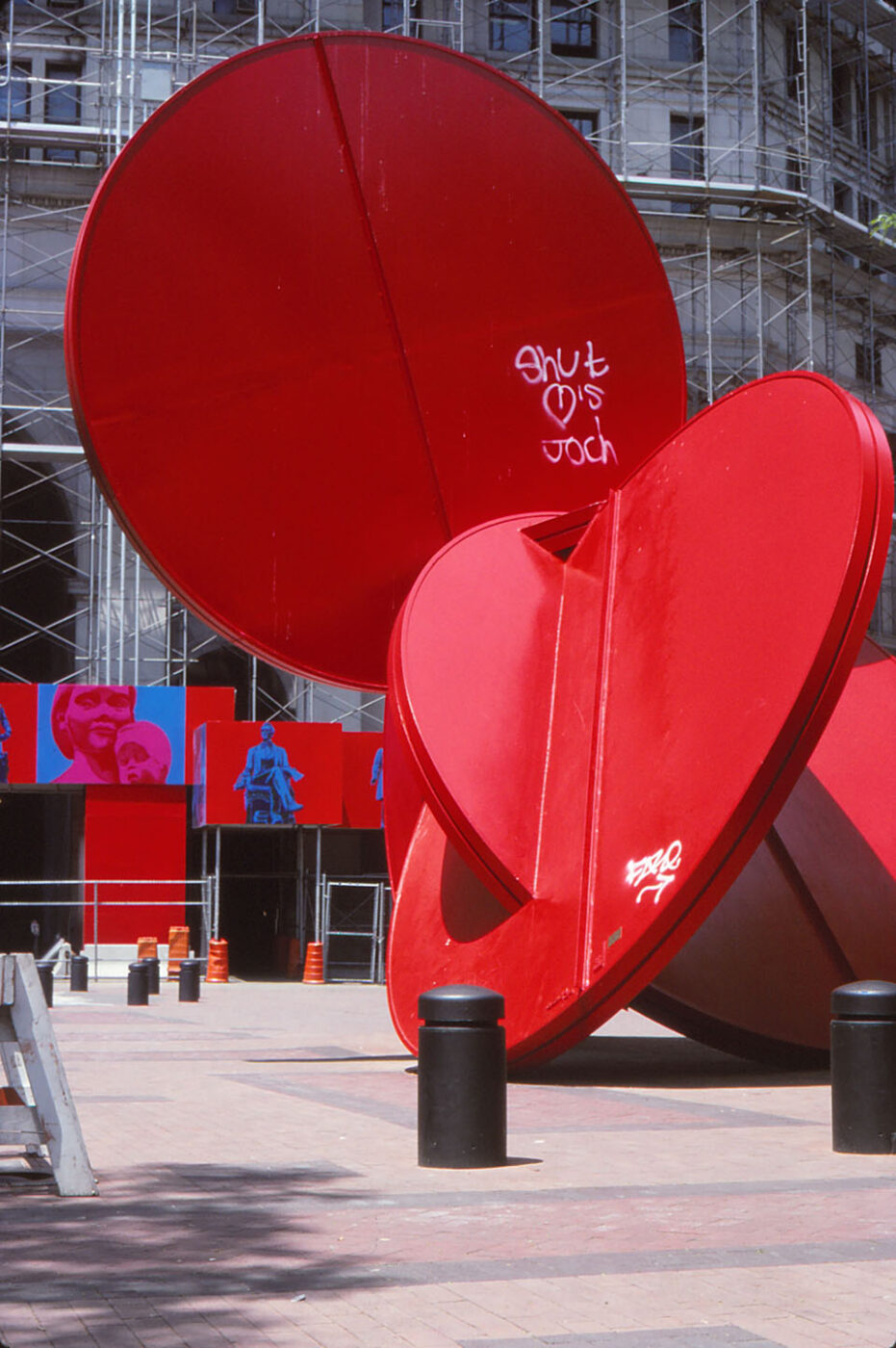
5 in 1, Tony Rosenthal (1974), One Police Plaza — This 35-foot-tall, 75,000-pound red-painted CorTen steel sculpture was commissioned by the City of New York City in 1971 and installed on the brick paved pedestrian mall of 1 Police Plaza behind the New York City Municipal Building three years later. The five interlocking discs are meant to represent the five boroughs that make up New York City, greeting pedestrians as they proceed through the great arch of the Municipal Building up the elevated public pedestrian walkway to the headquarters of the city’s Police Department, the largest in the country and one of the largest in the world. At the time of its installation, “5-in-1” was the largest metal public art sculpture in New York City.
Rosenthal’s highest profile commission, his first in New York City, and the one for which he is probably best known throughout the world, is “Alamo,” commonly referred to as “the Cube,” on Astor Place. This was the city’s first public abstract artwork, arguably from which all the others listed here sprung.
To explore more New York City landmarks with crucial connections to the Village, check out our Beyond the Village and Back StoryMaps: Manhattan Below 72nd Street and Upper Manhattan and the Outer Boroughs.
I’m always pleased to see my Grandmother’s “Louise Nevelson Plaza” included in Public Art Tours but for the record her home and studio was at 29 Spring Street in Little Italy. My sister Neith Nevelson lived at 222 E 7th Street and the deed was in my Grandmother’s name. – Maria Nevelson, Founder + Director, Louise Nevelson Foundation, Philadelphia, PA