
A Legacy of Contradictions: Marcel Duchamp and Greenwich Village
While many artists strive to find a clear, identifiable aesthetic, one artist’s departure from this pursuit defined his legacy. Marcel Duchamp, often referred to as the “father of conceptual art,” created deliberately inconsistent pieces during his impressive career, ranging from cubist paintings to Dadaist sculptures.
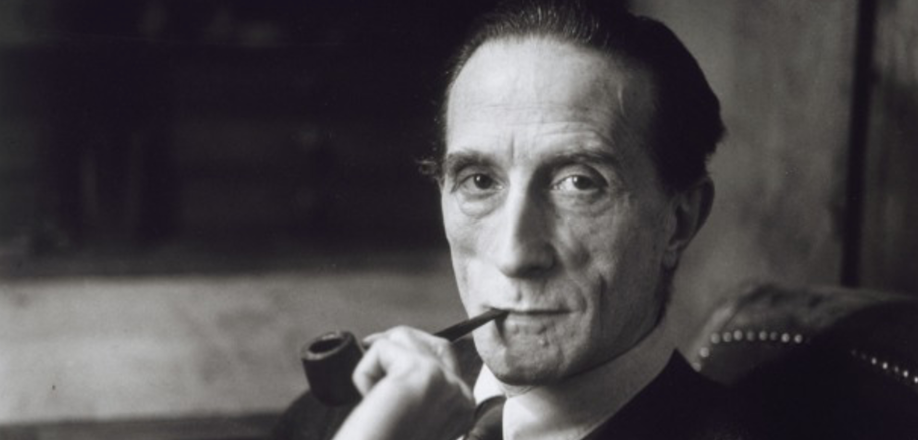
Born in France on July 28, 1887, Duchamp’s early adult years were spent training as a painter in Paris. He then began splitting his time between Paris and New York, and this period coincided with his work’s departure from the canvas. Greenwich Village was a perfect match for Duchamp’s anti-authority stance and eclectic persona, and had a notable impact on the rest of his career.
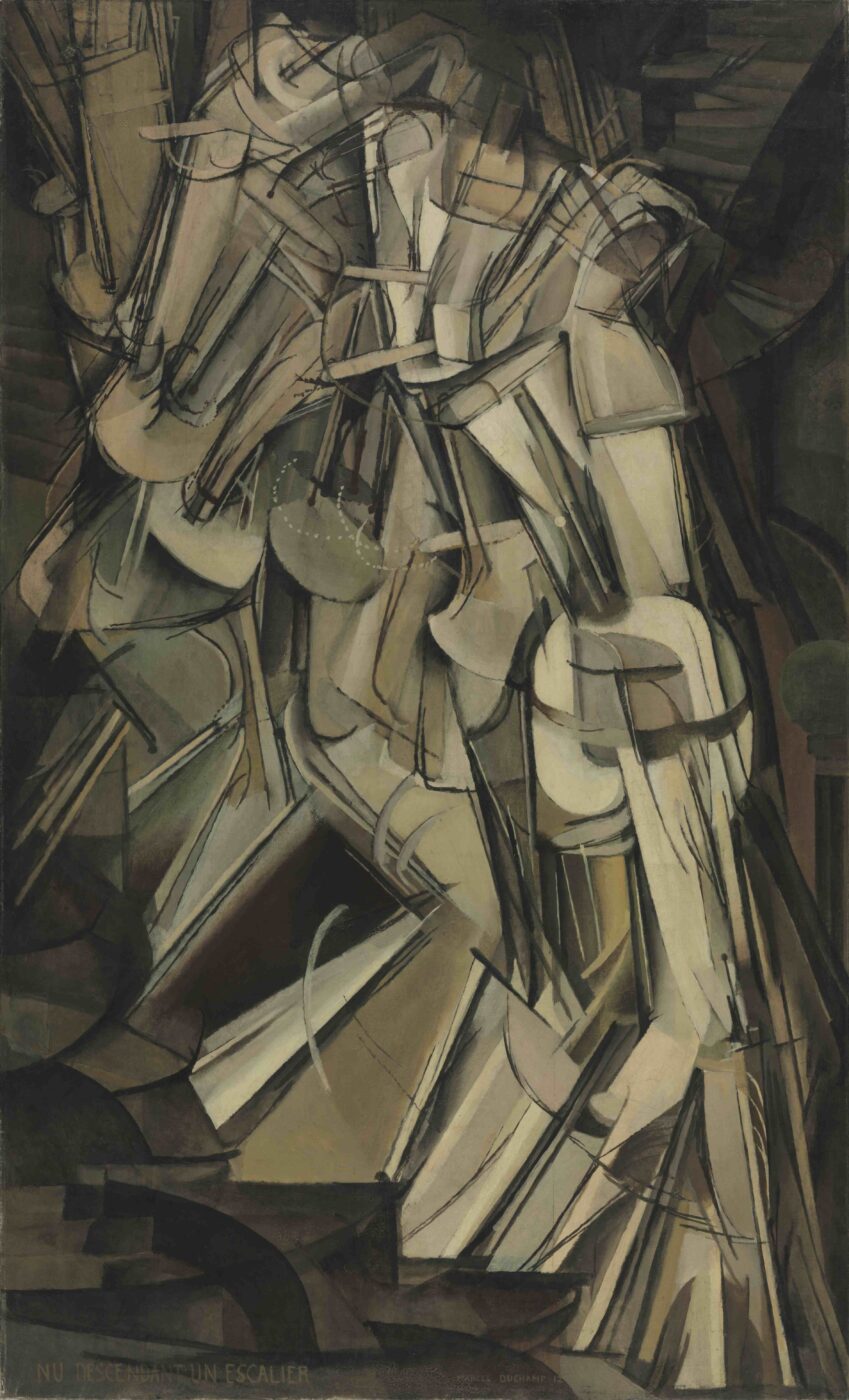
Duchamp’s artistic arrival in New York was marked by his presentation of a painting titled Nude Descending a Staircase (No. 2) in the 1913 Armory Show. Its departure from other modern art of the time provoked New York audiences, and critical reception was mixed. Today, the work is considered to be one of the greatest of its time. From the beginning, Duchamp’s presence in New York was boundary breaking and ahead of its time.
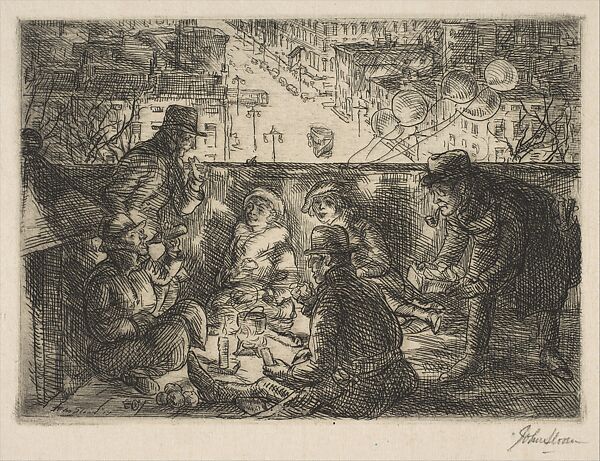
Duchamp’s evasion of convention is reflected in his involvement with the “Arch Conspirators.” In January of 1917, Duchamp and a group of fellow artists (including poet Gertrude Drick; painter John Sloan; and Provincetown Playhouse actors Russell Mann, Betty Turner, and Charles Ellis) entered Washington Square Arch’s staircase through an unlocked door, climbed to the top of the arch, and declared liberation for the “Free and Independent Republic of Washington Square” with the intent of having a neighborhood free from mainstream convention. The Daily Plant, the paper of the City’s Parks Department, wrote: “These six so-called ‘Arch Conspirators’ then spread out blankets, hung Chinese lanterns, tied red balloons to the arch’s parapet, sipped tea, shot off cap pistols, and conversed until dawn.” (Read more about the Arch Conspiracy here).
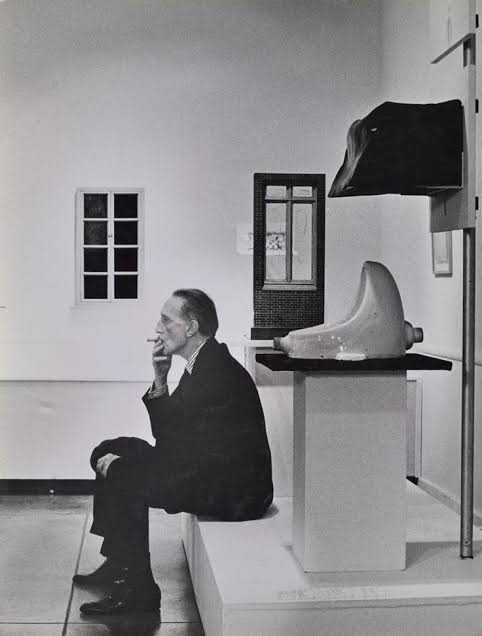
That same year in New York, Duchamp unveiled his famous Dadaist sculpture, titled “Fountain,” at the Society of Independent Artists’ salon. “Fountain” is a pre-fabricated (or “readymade”) urinal, which Duchamp presented as is, placed upside down with the signature “R. Mutt 1917”. Decades later, “Fountain” is consistently at the forefront of discussions about what makes art art. Is art about the skill? The concept? The notoriety? Duchamp brought these evergreen questions to light with this one sculpture.
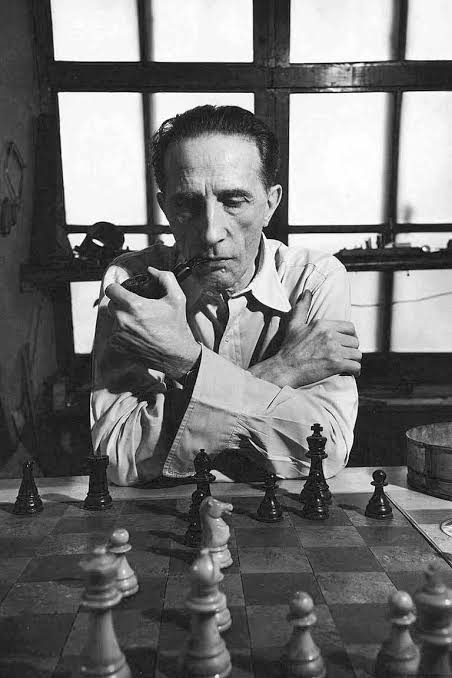
Duchamp moved to Greenwich Village in 1942, to 210 West 14th Street. He later moved to 28 West 10th Street to be near the famed Marshall Chess Club, located at 23 West 10th Street. Duchamp had a lifelong passion for chess, even giving up his art career from 1926 to 1934 to play competitively, and traveling to places like Buenos Aires throughout his life to devote time to his other passion.
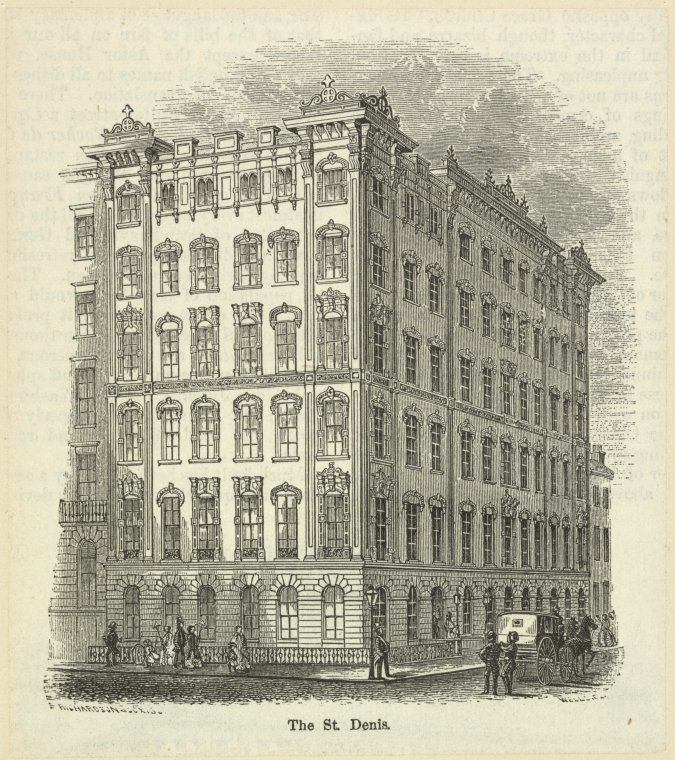
Later, Duchamp lived and maintained a studio at the former St. Denis Hotel at 799 Broadway, one of many buildings in the architecturally and culturally rich area south of Union Square, which in the mid-20th century became the center of the art world. It was here that he worked until he died in 1968 on his final artwork, Etant Donnés, a room-filling tableau which the viewer was meant to see through two peepholes at either end. Village Preservation fought unsuccessfully to save the St. Denis Hotel from demolition in 2018.
With a diverse career that constantly pushed boundaries, Duchamp’s legacy remains forever relevant in the narratives of New York’s and global art scenes. His playful and inquisitive perspective paired well with the eclectic community of Greenwich Village that he called home for many years. To learn more about this fascinating figure, watch our recent program about Duchamp with author John Strausbaugh.