
Westbeth: A Landmark Home for Artists in Greenwich Village
On August 7th, 1967, the J.M. Kaplan Fund and the newly constituted National Endowment for the Arts announced Westbeth Artists Housing: the first large-scale adaptive reuse of an industrial building for residential purposes. Westbeth provided affordable housing for Greenwich Village artists and their families to live and work. Located along the then-gritty and largely abandoned Greenwich Village waterfront, Westbeth occupies a full block, bounded by West, Bethune, Bank, and Washington Streets, taking its name from the first two of those streets.
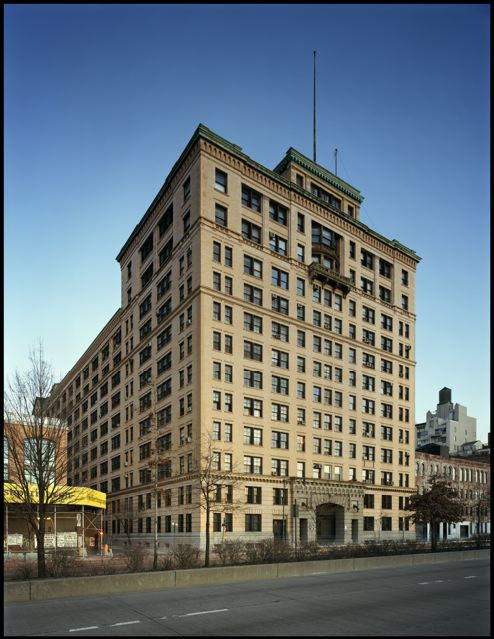
Westbeth was carved out of the former Bell Telephone Labs (which holds a rich pedigree of innovation of its own, as the place where the radio tube, the “talkie,” the vacuum tube, and the transatlantic telephone, among other inventions, were birthed). The complex took about five years to be convert into what it is today, and the Bell Telephone Labs left the city for New Jersey in 1965. It was then that the massive industrial complex became the unlikely site for an ambitious experiment in adaptive reuse.

Its conversion was ambitious, calling for rezoning of the block and significant reconstruction. It was a partnership between the virtually unknown architect Richard Meier and the National Endowment for the Arts and the J.M. Kaplan Fund, which led to the creation of 383 apartments, each unique and different from the next. Duplex apartments and long corridors were built across three floors, such that all the doors to the apartments were on the same floor – meant to bring people closer to one another as neighbors by seeing more people.
While the project was announced in the late 1960s, it did not open until May of 1970, and for over 50 years it has remained an affordable home and cultural institution for artists, musicians, actors, and creatives alike.

Its genius was far more than an apartment building or a workspace. Rather, Westbeth was intended to be a thriving artistic community, where neighbors shared not only a building but also ideas, inspiration, and creative pursuits.
Westbeth’s legacy is perhaps best understood through the artists who passed through its doors. Some, like jazz composer Gil Evans, made it their home for years, while others, like John Lennon, left with only a memorable story. Together, their experiences capture the unique creative community Westbeth has fostered since its founding.
Gil Evans
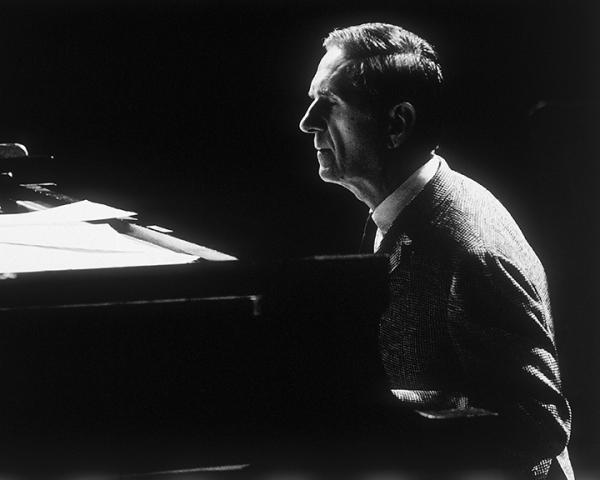
Born in 1912 in Toronto, Canada, Gil Evans was one of the most distinctive voices in the history of jazz orchestration and a major force in shaping the development of cool jazz, modal jazz, fusion, and third stream (the fusion of jazz and classical music), starting in the 1950s. Evans and his family moved around a lot throughout his childhood, relocating to wherever his stepfather found work. The family eventually landed in California in Evans’ teen years, and that was when his music career truly began.
Evans grew up listening to the jazz greats like Duke Ellington and Louis Armstrong. In 1933, while enrolled at the College of the Pacific in Stockton, he started his own first big jazz band, Gil Evans & His Orchestra. The group toured the Pacific Northwest before settling in Hollywood in 1937, where they regularly performed on Bob Hope’s radio show. Claude Thornhill joined Hope’s show in 1939 and left a major impression on Evans.
Playing with Thornhill’s orchestra boosted Evans’ career, gaining him attention for an unorthodox instrumentation and classical music elements—drawing the interest of folks like Charlie Parker, John Lewis, and Miles Davis. In 1947, Evans left California for New York.
Evans’ small Midtown apartment atop a Chinese laundromat became the hangout spot for Jazz legends to discuss new directions in contemporary music. Those conversations led to a collaboration among Evans, Davis, Mulligan, and others on a set of recordings that were ultimately released as Davis’ groundbreaking 1957 album, “Birth of the Cool.” Evans’ influence on jazz is vast, fusing novel (at the time) instruments and sounds with more classical rhythms.
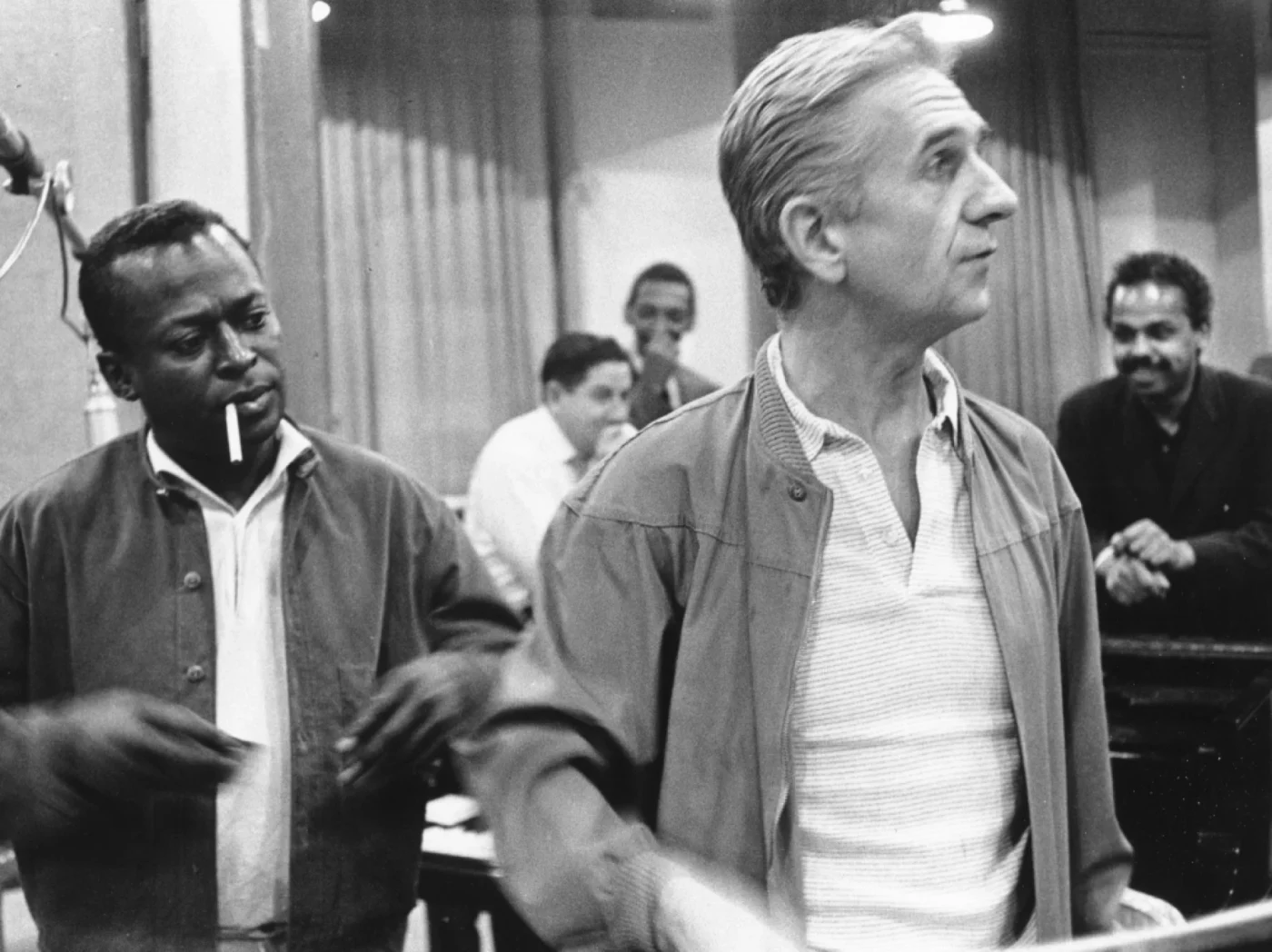
Evans moved to Westbeth in 1971, just a year after the complex opened, finding a home in the very type of artistic community it had been created to foster. While living there, he remained an active presence in the Village’s jazz scene, performing regularly at the Village Vanguard and Sweet Basil Jazz Club. He maintained a weekly engagement with his orchestra for five years until his death in 1988.
John Lennon
Out of all the fab four Beatles, John Lennon has the deepest connection to our neighborhoods. After the band broke up, Lennon and wife Yoko Ono moved to 105 Bank Street, where they rented a floor from Joe Butler of the Lovin’ Spoonful. He attended lavish parties with Village icon Norman Mailer at Grove Press founder Barney Rosset’s house at 196 West Houston Street; he recorded at Jimi Hendrix’s Electric Lady Studios in collaboration with David Bowie; and one afternoon, he found himself lost in the halls of Westbeth Artists Housing.
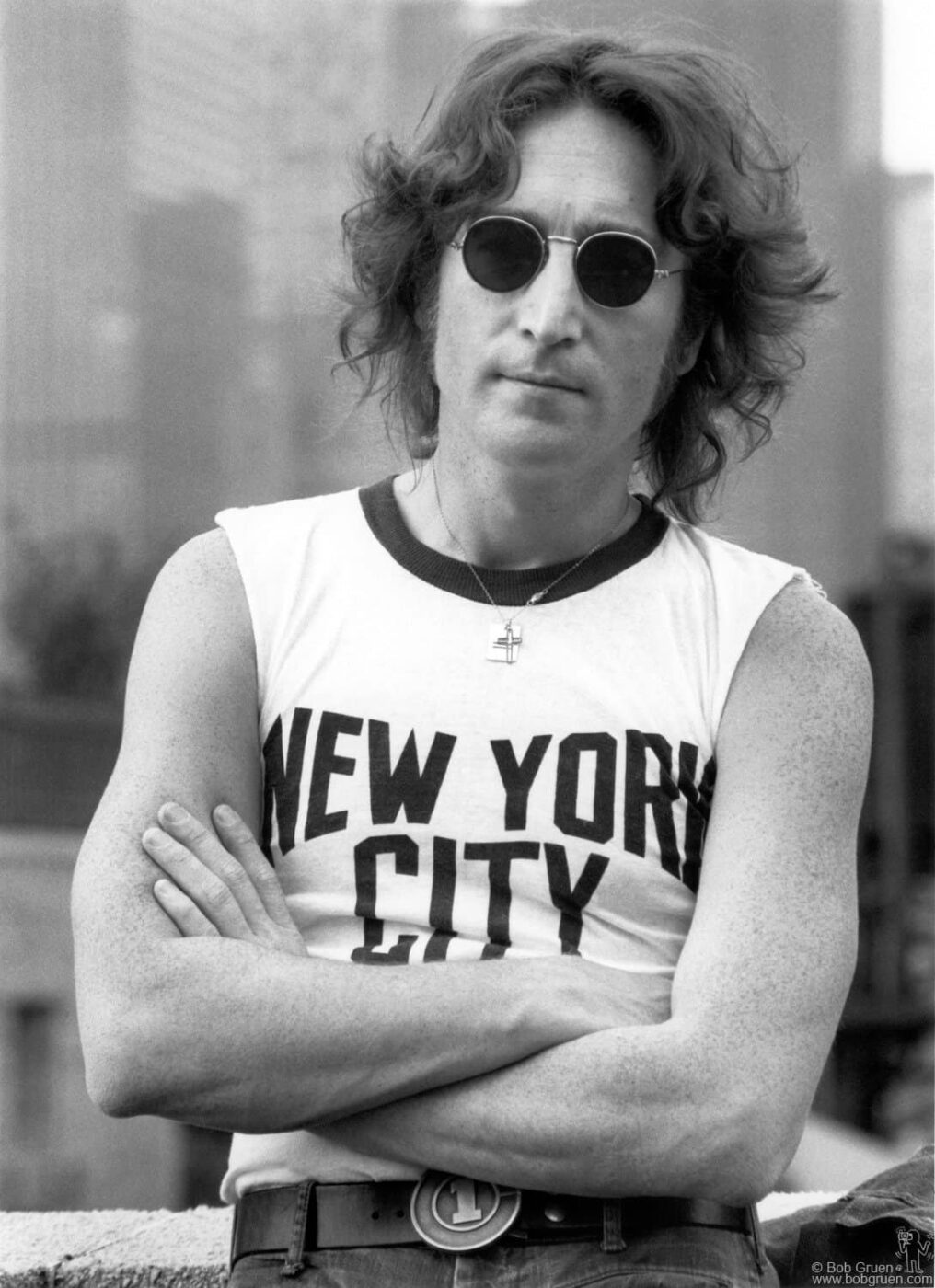
It was a Sunday afternoon in July 1975, and Lennon was living uptown at the luxurious (and seemingly more secure) Dakota, located at 72nd Street and Central Park West. But after spending the weekend downtown partying with singer-songwriter Harry Nilsson, he decided to stop by Westbeth to say hello to photographer and Westbeth resident Bob Gruen.
Perhaps still in a post-party haze, Lennon got lost in the maze of Westbeth’s long, stripped-down concrete hallways, ringing the doorbells of all Gruen’s creative neighbors. As Gruen remembers, Lennon “was ringing doorbells…Four o’clock on a Sunday Afternoon. Everyone in the building is an artist, so they were opening the door saying Oh, my God, John Lennon! Let me show you my painting. Let me read you my poem.” When Lennon finally found Gruen’s door, he acknowledged Westbeth’s eclectic residents by saying Man, you’ve got some weird neighbors.
Gruen and Lennon’s artistic partnership is best memorialized through their 1974 photoshoot where Lennon is seen in his iconic New York City T-shirt.
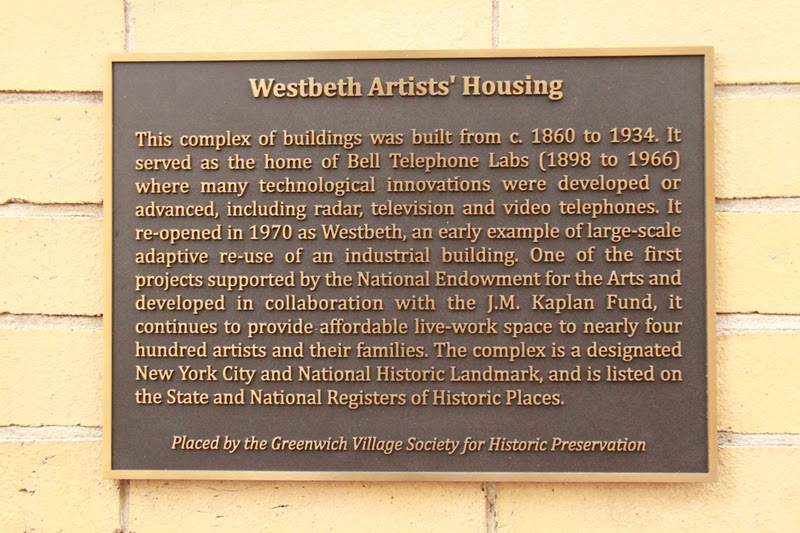
Westbeth’s legacy was formally recognized on October 25, 2011, when the New York City Landmarks Preservation Commission unanimously designated Westbeth a New York City landmark, after a seven year campaign by Village Preservation (two years earlier, Village Preservation got Westbeth listed on the State and National Registers of Historic Places; we also maintain a collection of oral histories with Westbeth residents and key figures in its creation like Richard Meier, and placed a historic marker on the building in 2018). The stories of Gil Evans and John Lennon are just two of the countless artistic legacies wrapped up in the Bell Telephone Lab halls. Their stories, while amusing and interesting anecdotally, reflect the vibrant artistic community that has defined the building for well over half a century and counting.