
Business of the Month: The End of History, 548 Hudson Street
Your input is needed! Today we feature our latest Business of the Month — help us to select the next. Tell us which independent store you love in Greenwich Village, the East Village, or NoHo: click here to nominate your favorite. Want to help support small businesses? Share this post with friends.
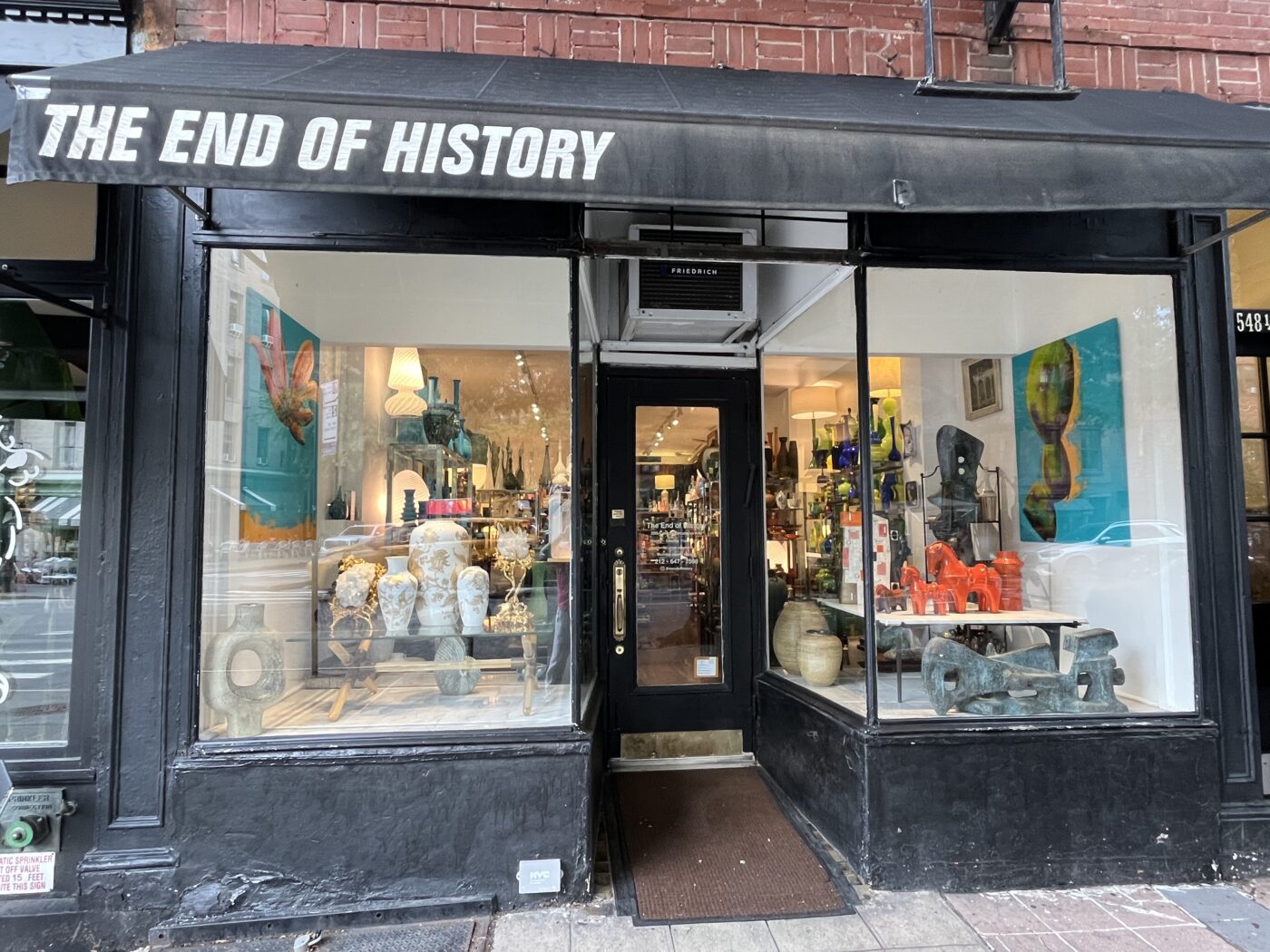
The saying “luck is what happens when preparation meets opportunity” is misattributed to Seneca. “The harder I work, the luckier I get” is misattributed to Thomas Jefferson. The impulse to find an authoritative source behind these aphorisms reflects their self-evident wisdom. By some accounts, our August Business of the Month, The End of History, changed the course of interior decoration from its small Greenwich Village storefront at 548 Hudson Street (btw. Perry and Charles Streets), thanks to a confluence of fortuitous circumstances. And the business has remained in operation, featuring the largest collection of mid-20th century Italian and Scandinavian glass- and ceramic-ware in the world, for almost three decades, due to its tremendously good luck. To attribute the business’ impact and longevity to good fortune, however, would be to gloss over a tale of tenacity, singularity of vision, and foresight that has also helped explain the store’s sustained success.
The origin story of the End of History begins in the Isle of Wight, England during the post-War years, when a 10-year old Stephen Saunders, while learning the ropes of the family business in antiques dealing, tagged along with his uncle to an auction. He pointed out a spectacular Chinese porcelain vase, and was told to ignore ornamental pieces, because the American market — the only import market at the time — only cared about furniture. Disappointed, Stephen thought to himself: “One day, I want to have a store full of vases just like that.” Though he did not realize it at the time, he soon started taking small steps toward the realization of a version of that vision.
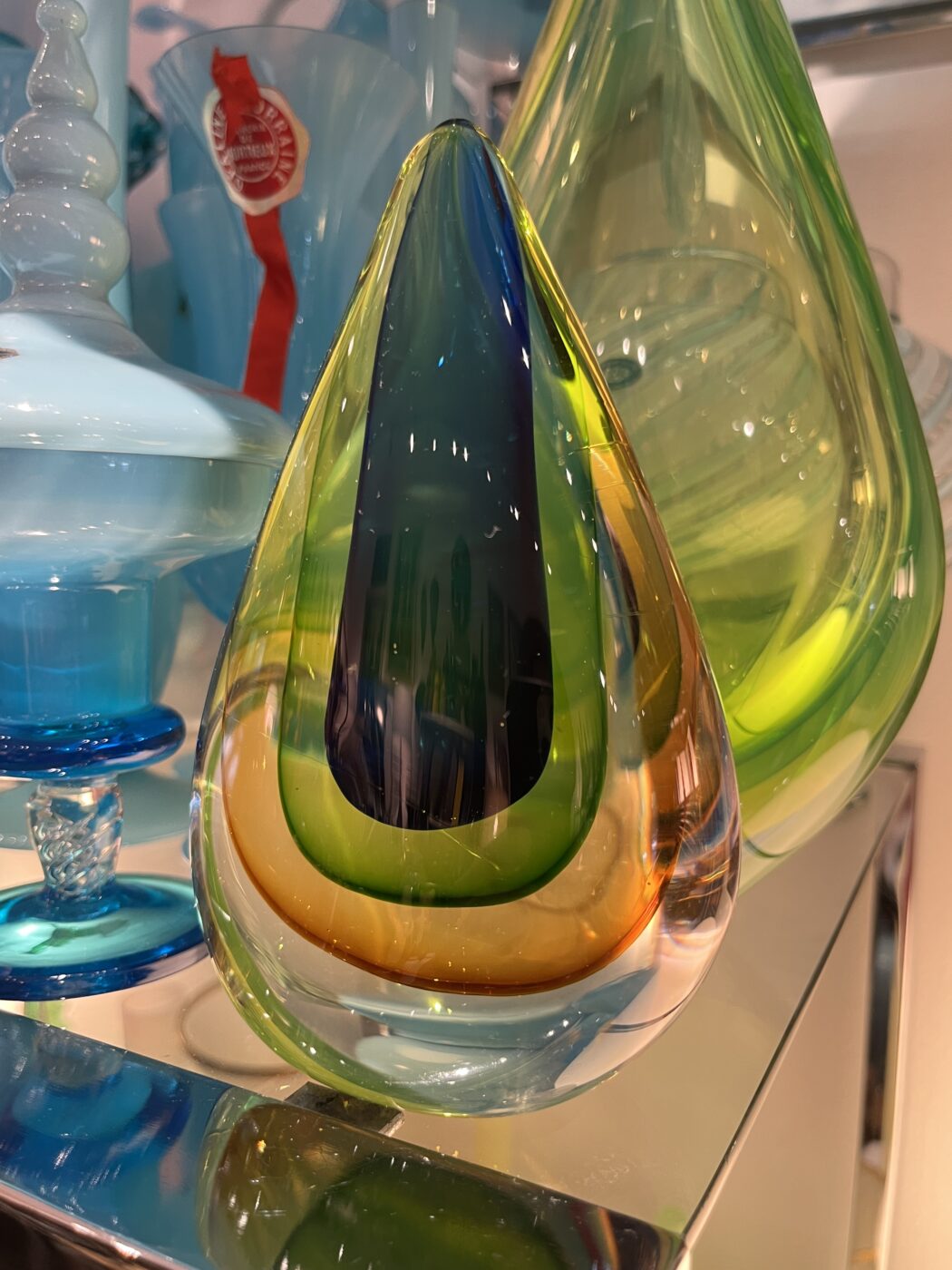
Stephen held a number of jobs in a variety of unrelated fields and countries after he left the Isle of Wight as a young man. But wherever he was and whatever he was otherwise doing, he was always on the prowl for vintage decorative glass and ceramics that he would either make part of his collection or sell to dealers. And when he moved to New York City in the early 80s, he continued this practice, focusing especially on ornamental glass and ceramic Italian, Danish, and Swedish pieces from the 1950s and 1960s. At the time, few paid attention to this work, and it could be purchased for a song. Stephen, who recognized these pieces as one-time luxury items, started acquiring as many of them as he could find, spending up to 50% of his income on these purchases, and accumulating far more merchandise than he could sell to dealers. Instead, he put them into storage, with an eye toward eventually opening his own store. Eventually came just a few years later.
Stephen knew that he wanted to open a store downtown, where other antique stores were. And he knew that he wanted to rent directly from an independent landlord, not from a real estate company. It also needed to be cheap. These criteria landed him at his current location on Hudson Street. Launching the store he envisioned there or anywhere entailed a risk. At that point, minimalism was in, and the interior design industry had no interest in the ornamental items that lent his businesses its singular focus. But Stephen believed in the enduring value of the merchandise he had assembled. And gradually, the design world came around to his point of view. Barney’s then-Creative Director, Simon Doonan, who would shop in the area, started swinging by and became an early champion, eventually even arranging for Stephen to have a small outpost at Barney’s. But there were others, and not just designers — locals, and visitors to the neighborhood. Soon, even mid-century furniture stores, which had looked down on Stephen’s approach, started carrying mid-century vases. By then, however, little they could offer on that count could match the breadth and depth of The End of History’s merchandise.
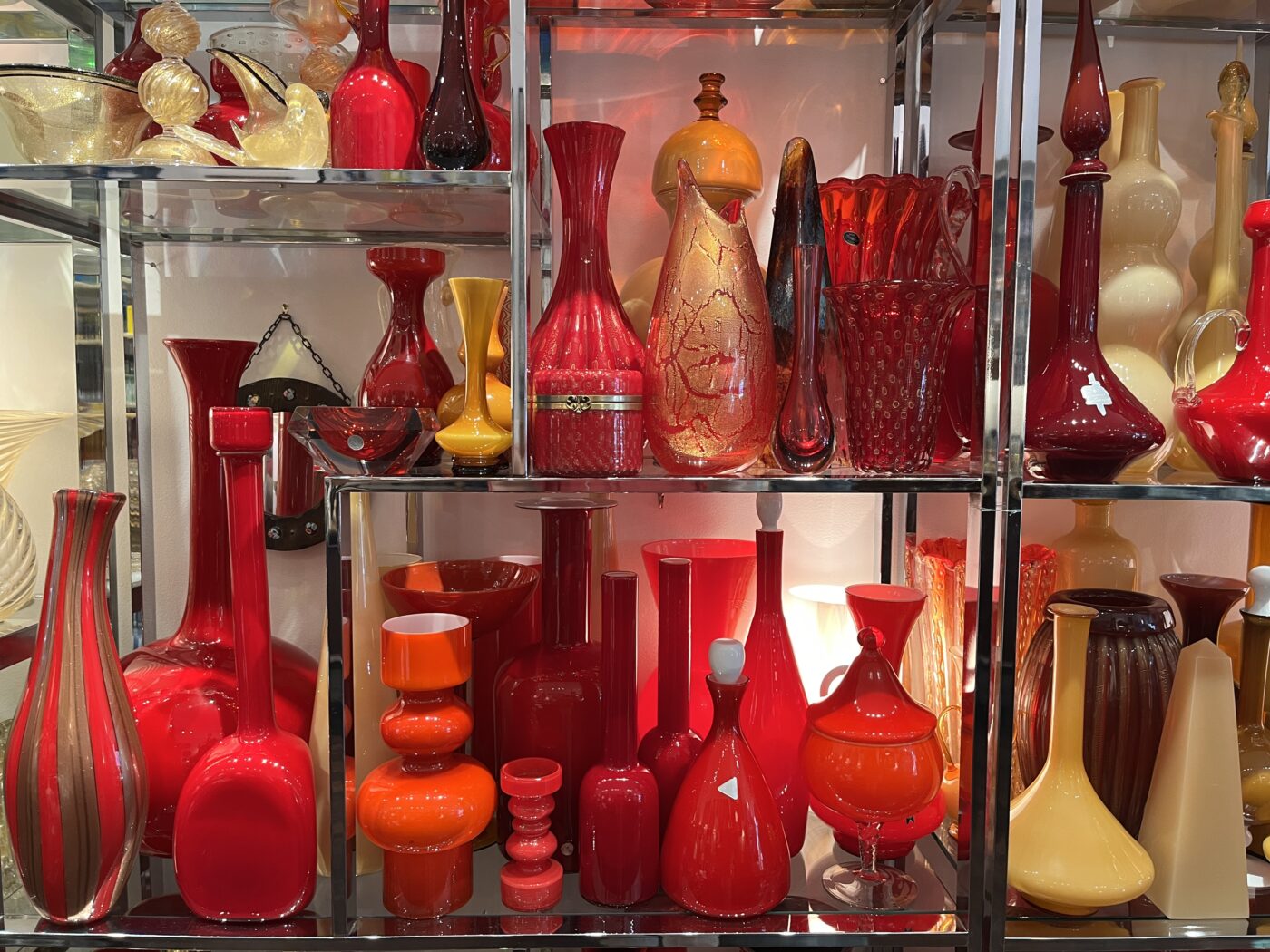
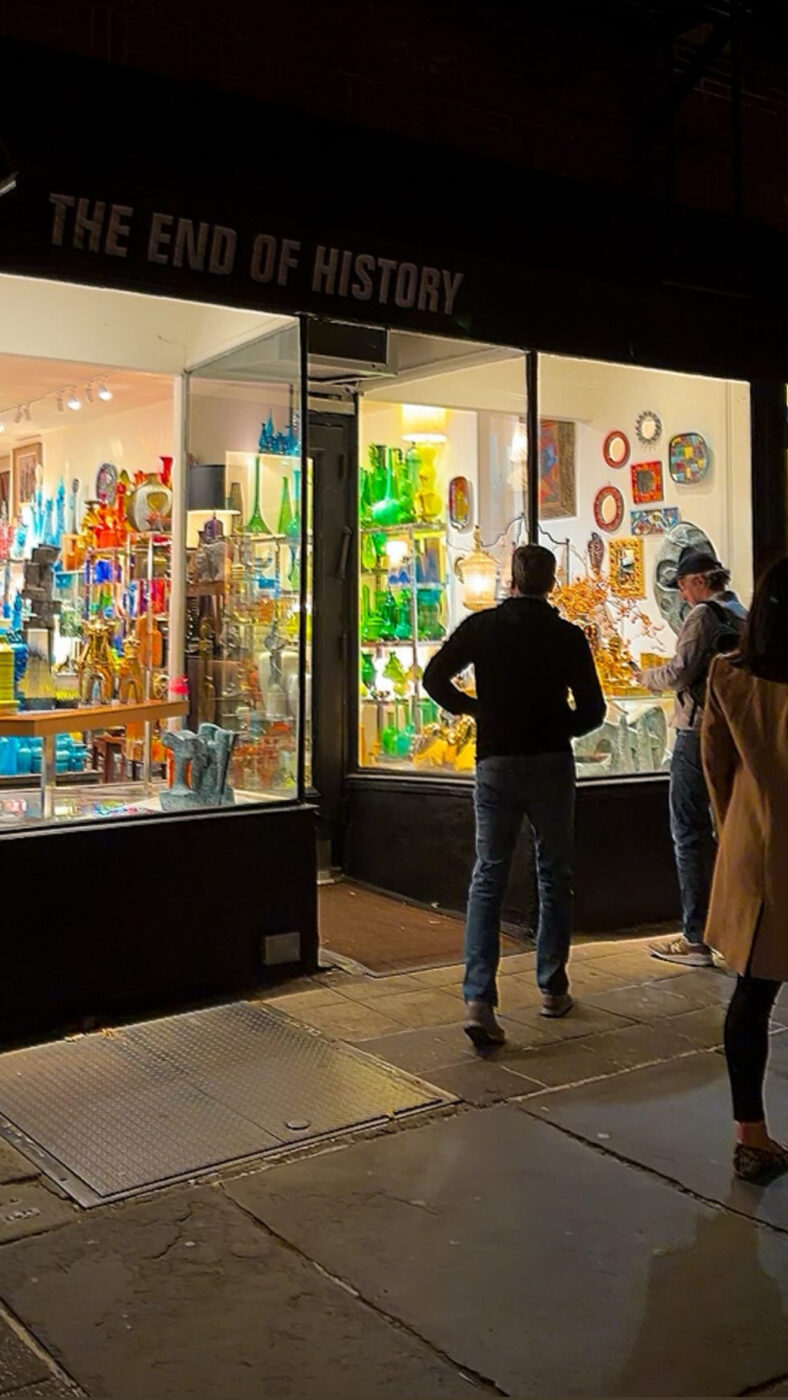
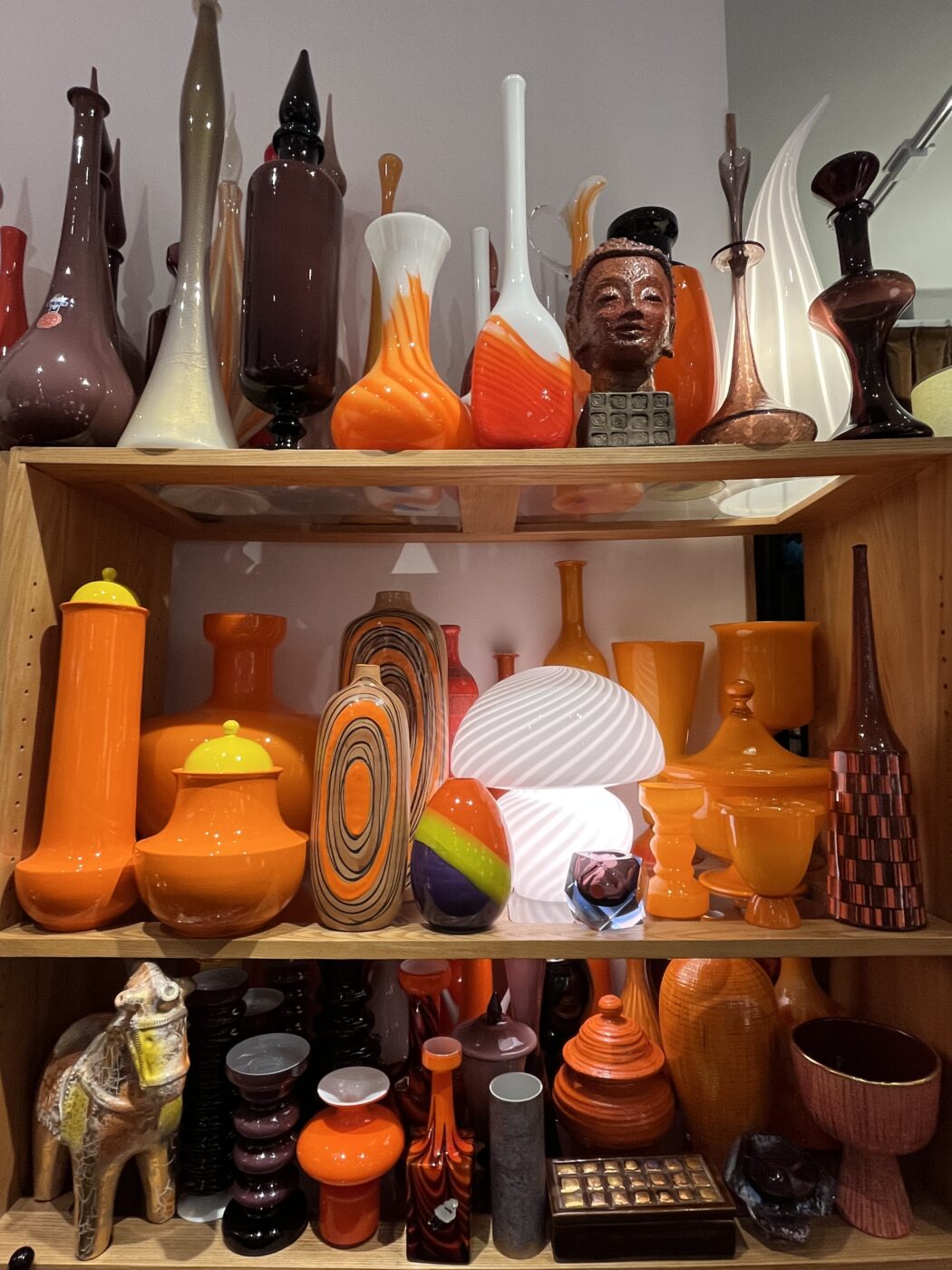
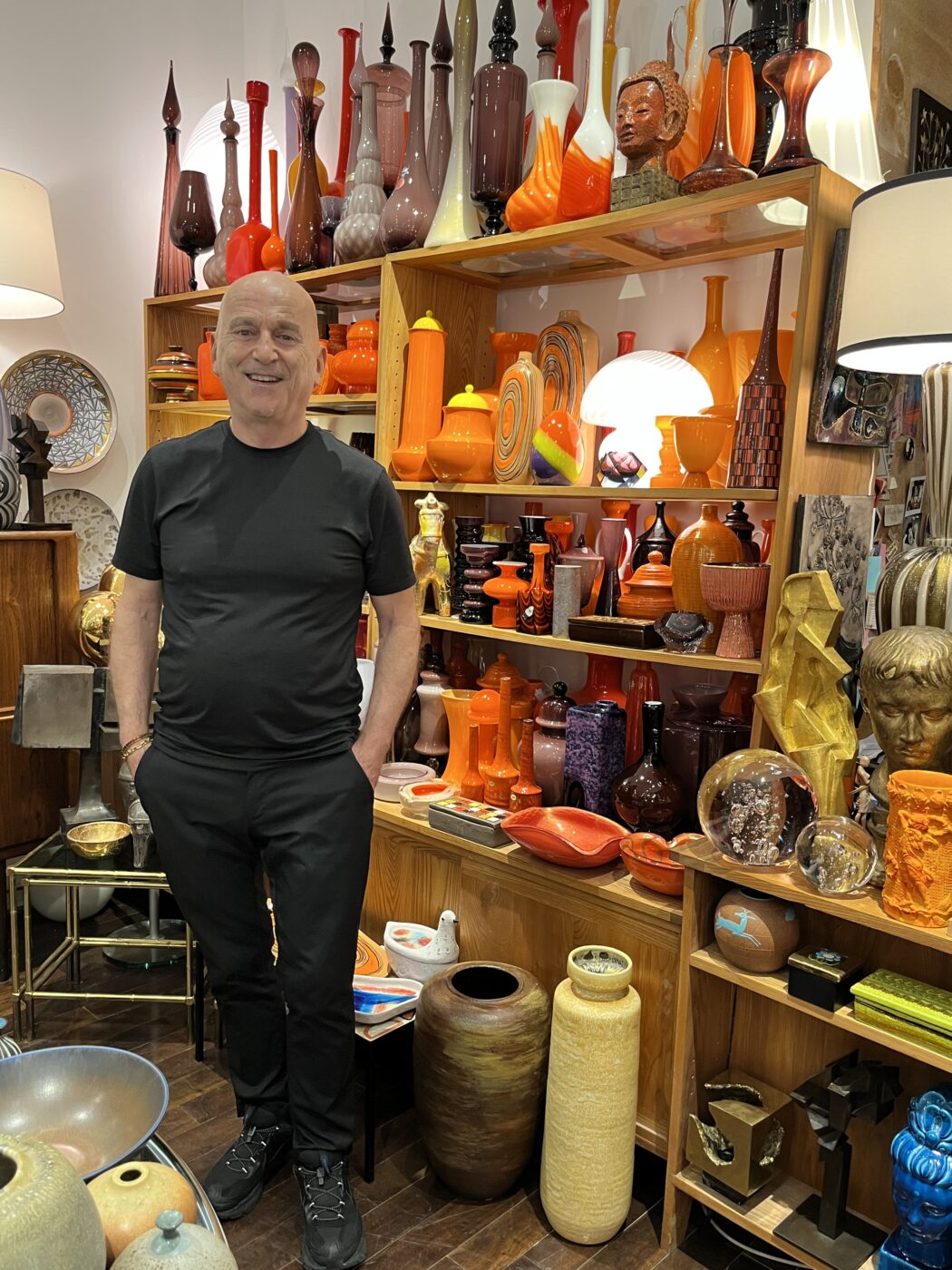
The End of History looks remarkably similar to how it did when it opened almost thirty years ago — a rarity, given the fickleness of the design world and the NYC retail environment. The store is crammed full of merchandise arranged by color, with each section a jumble of glasswork and ceramics of different shapes and sizes. At night, the place sparkles through the window like a polychromatic wonderland.
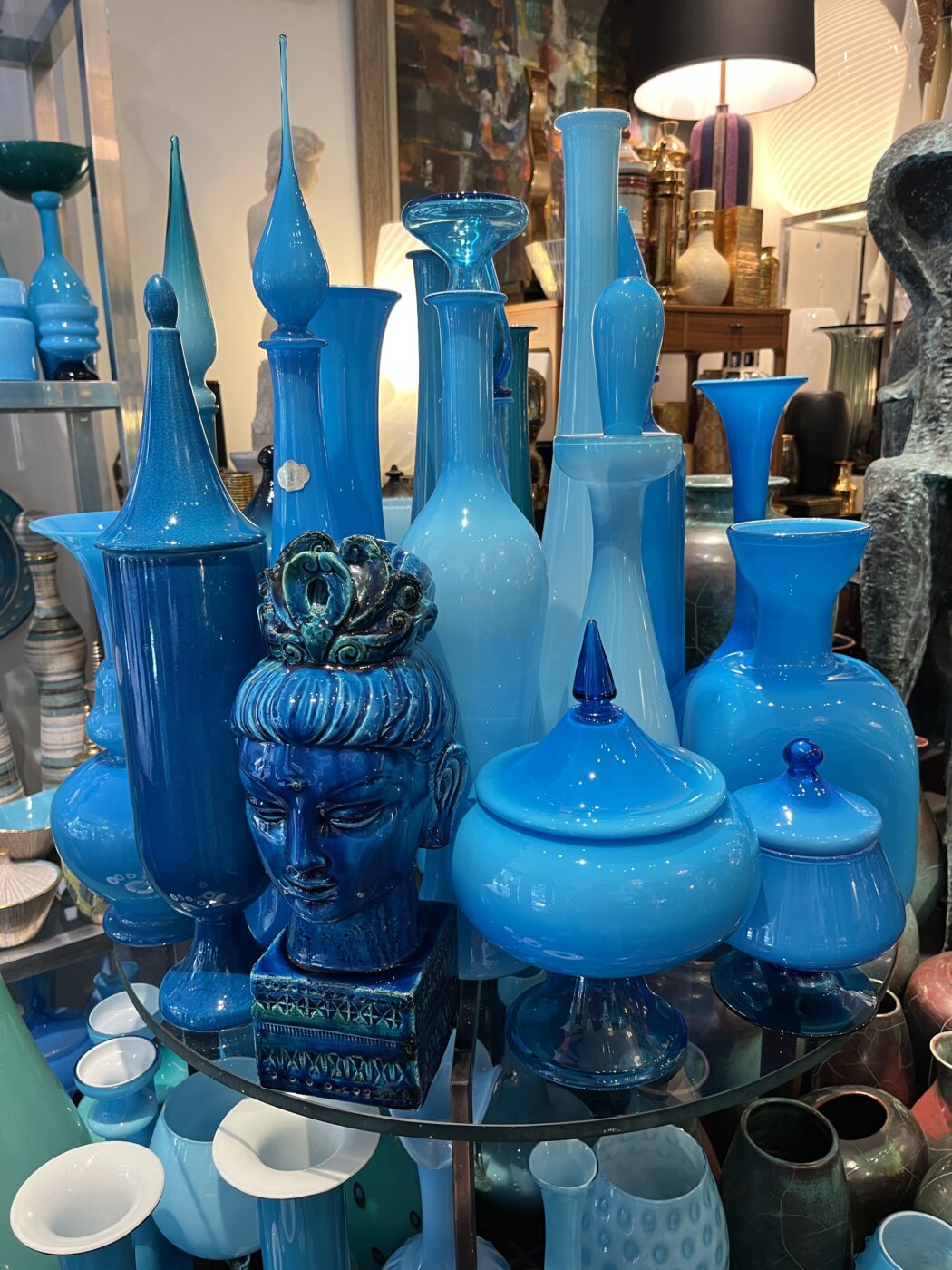
Highlights include glass items from Empoli, the Tuscan town that created the signature, abstract, colorful glassware famously associated with Mid-Century Modern design.
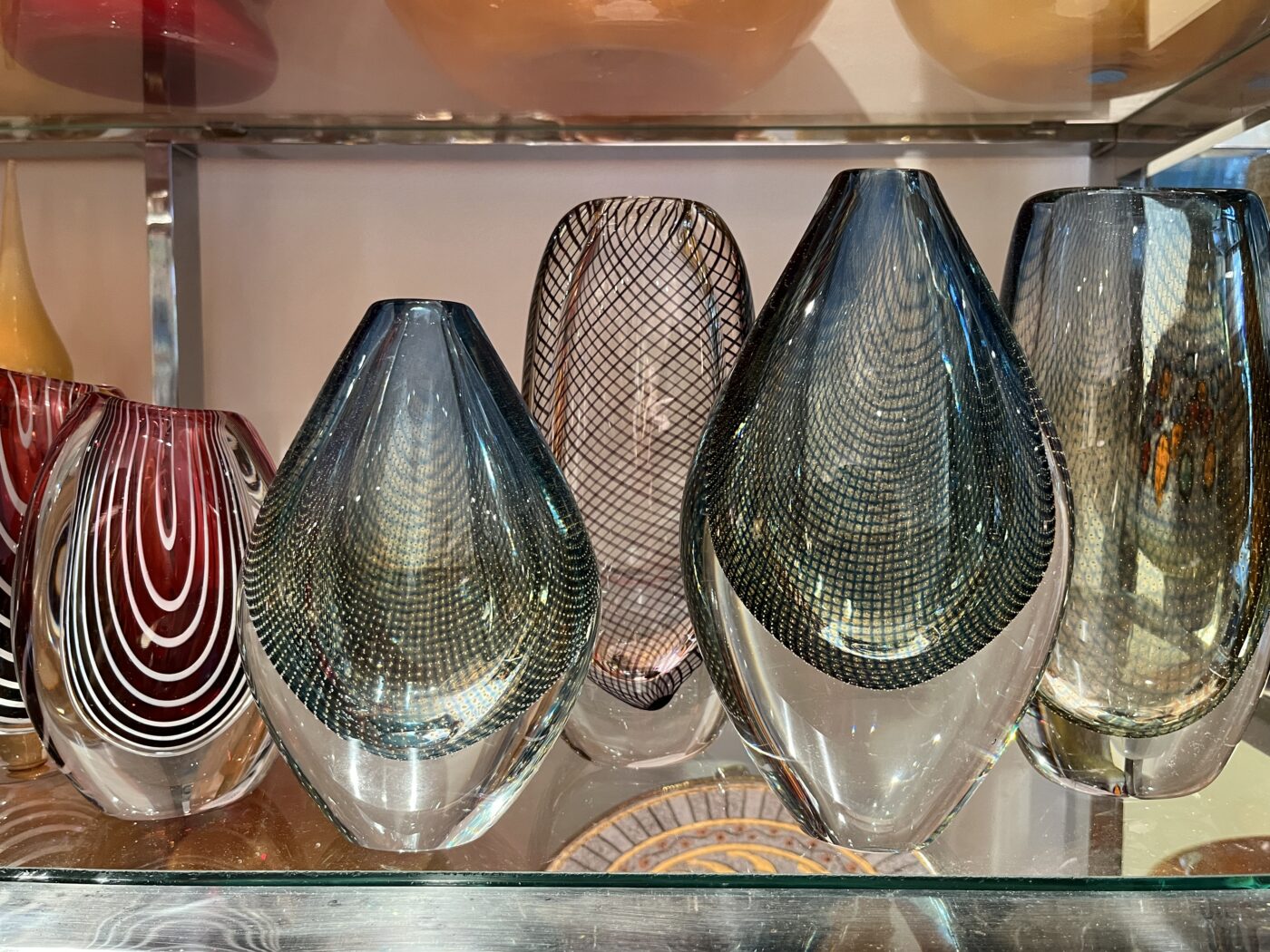
Another is glass objects from Murano, a Venetian island that, since the 13th century, has been developing techniques to create ever more intricate glasswork effects.
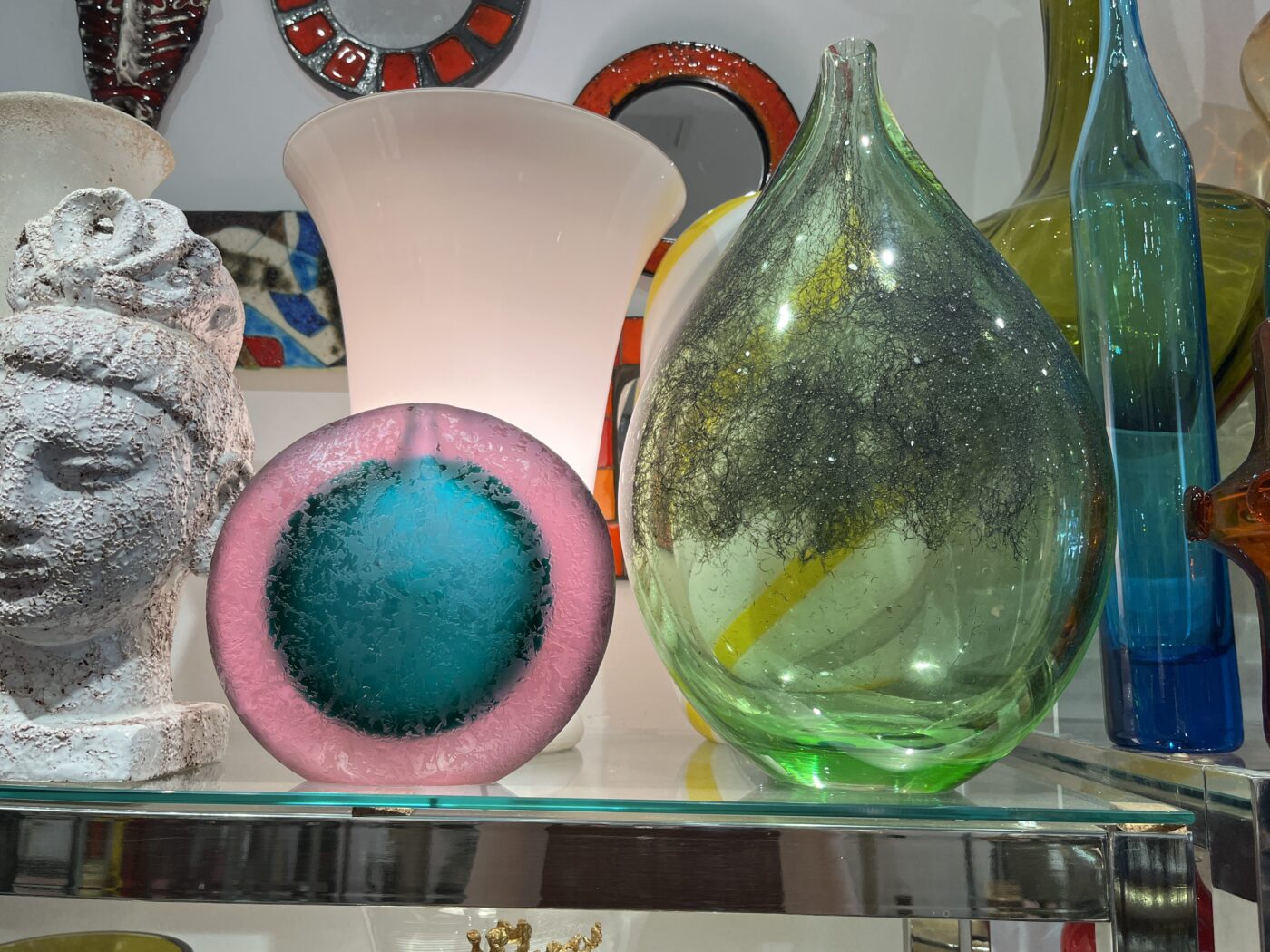
Yet another are ceramics by Bitossi, a longstanding Tuscan pottery manufacturer that produced wildly successful collections during the late 1950s and early 1960s. When The End of History opened, the company was making just sinks, baths, and industrial ceramics. The store’s success in rekindling interest in Bitossi’s mid-century lines has led the company to revisit them, reviving their fortunes.
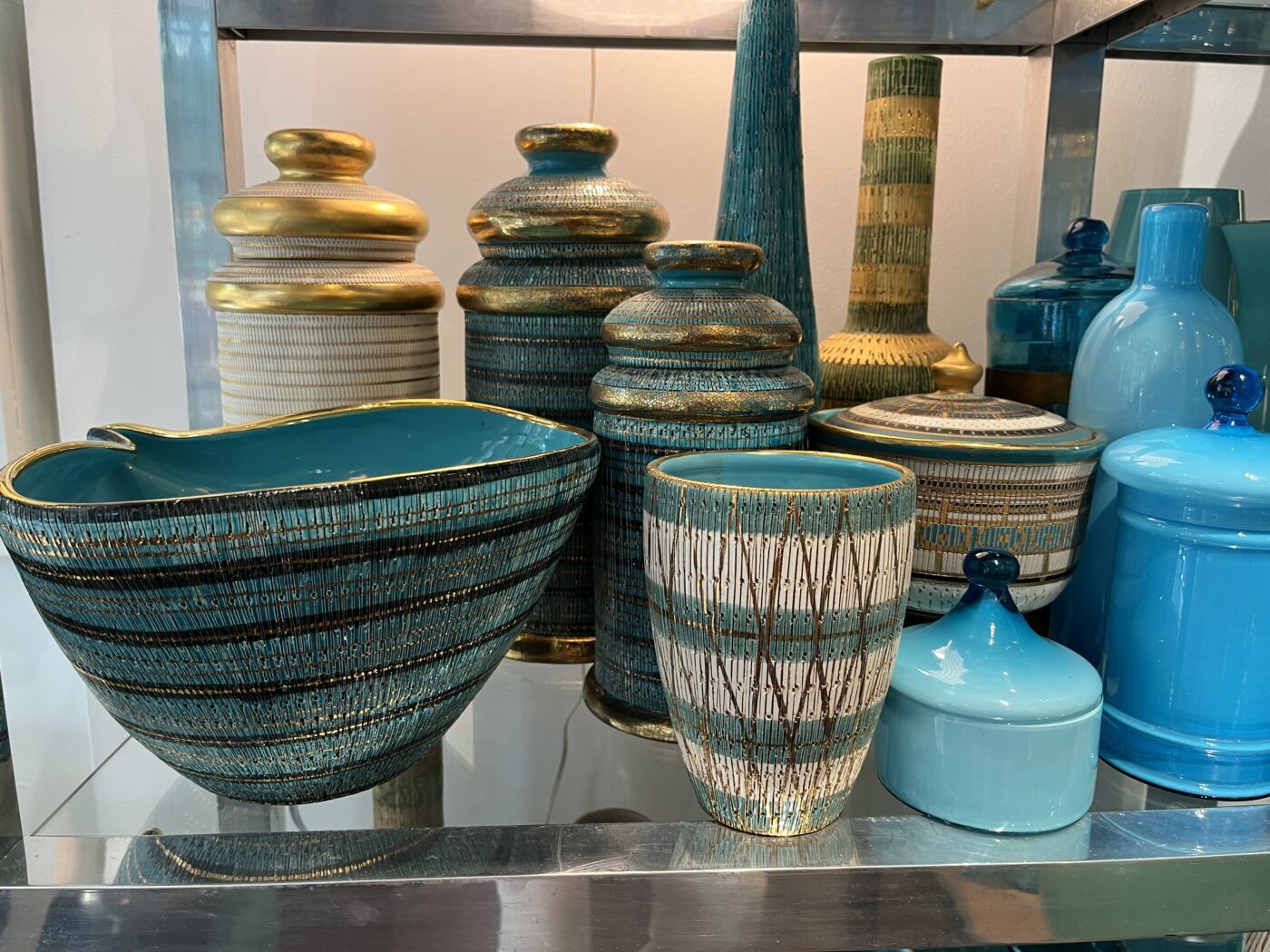
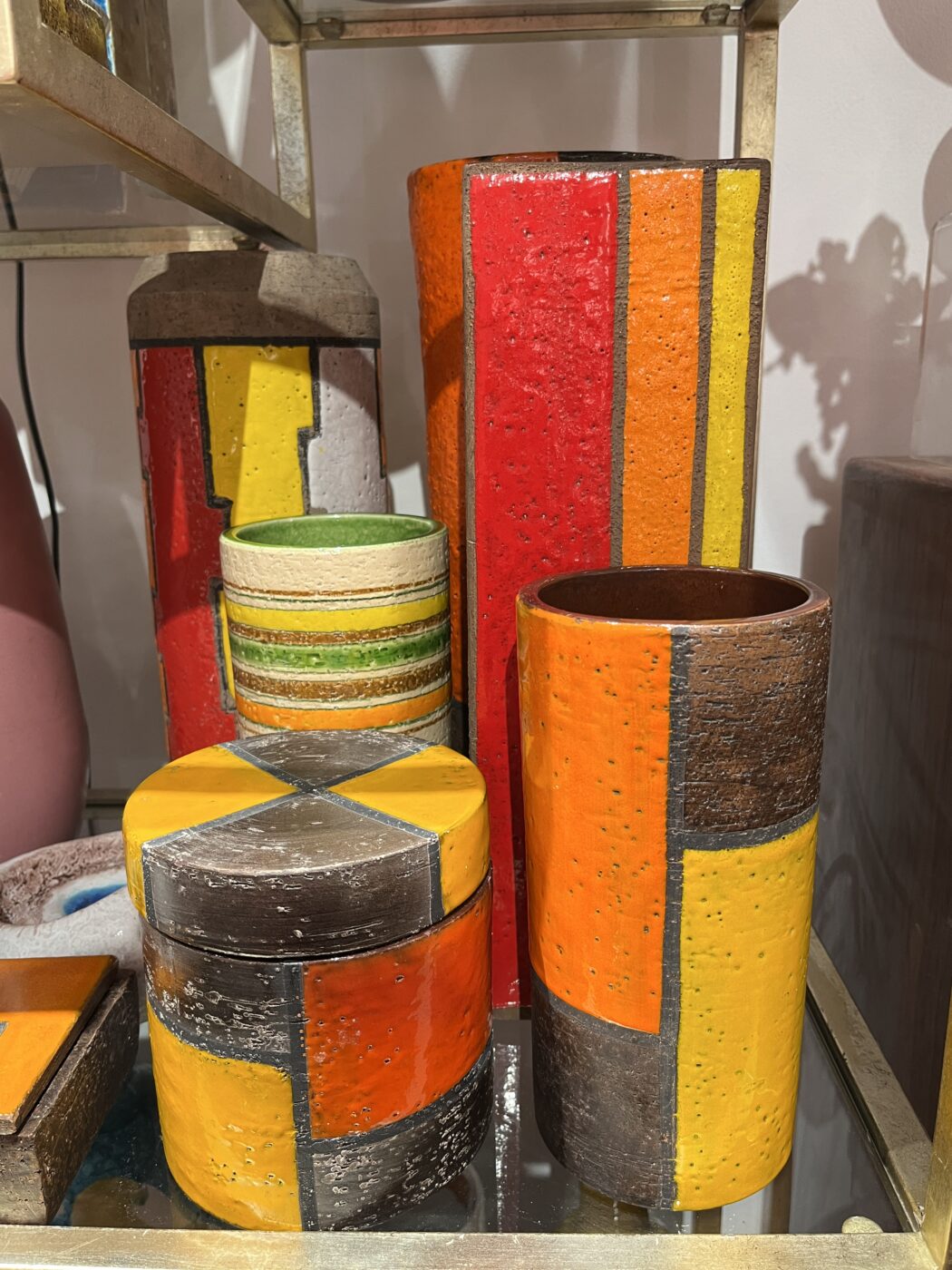
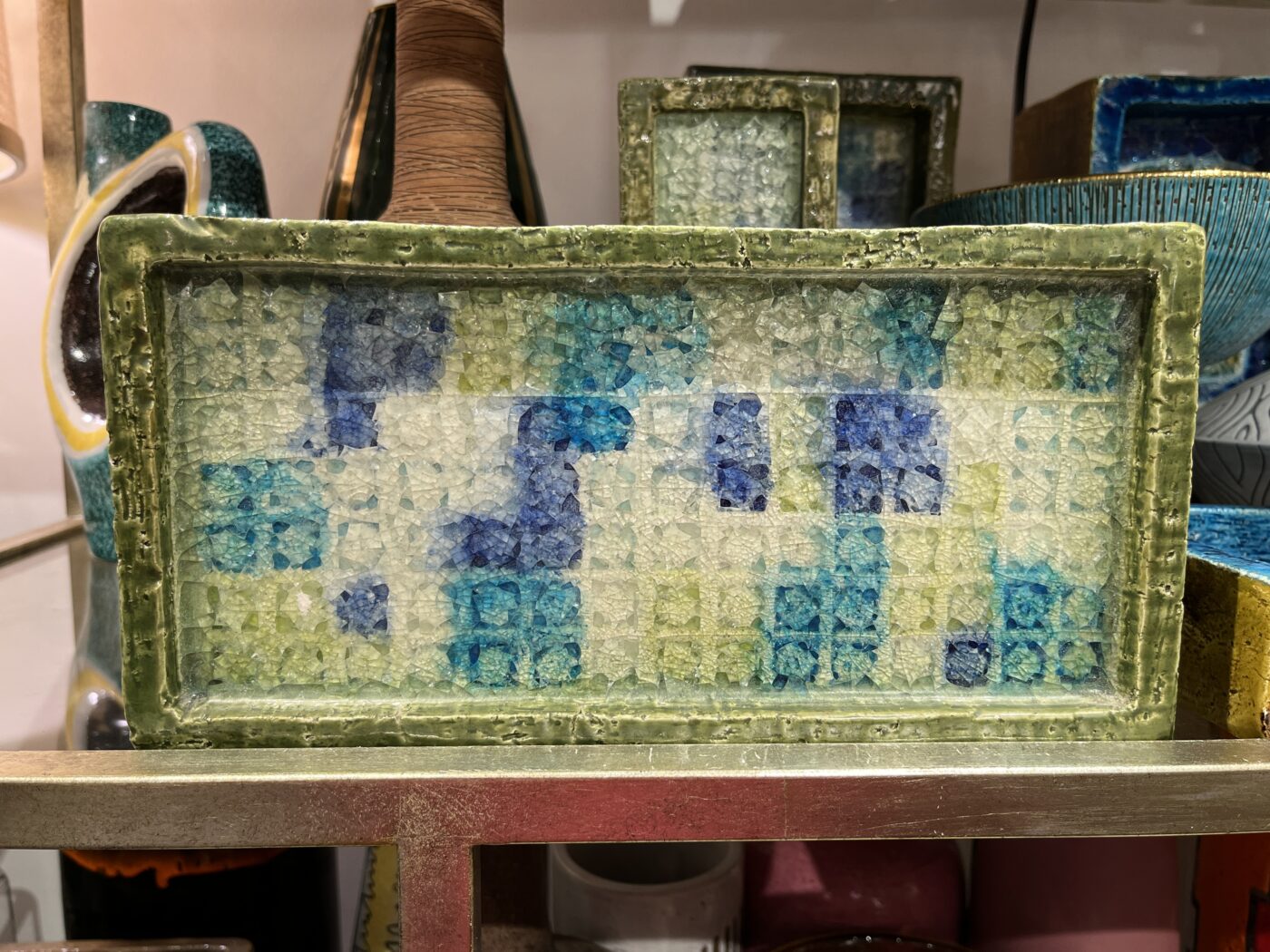
The thousands of vintage pieces in the stock are complemented by a small handful of contemporary works, such as bronze sculptures by B.J. Las Ponas and clay sculptures by neighbor and Westbeth resident Sheryl Zacharia.
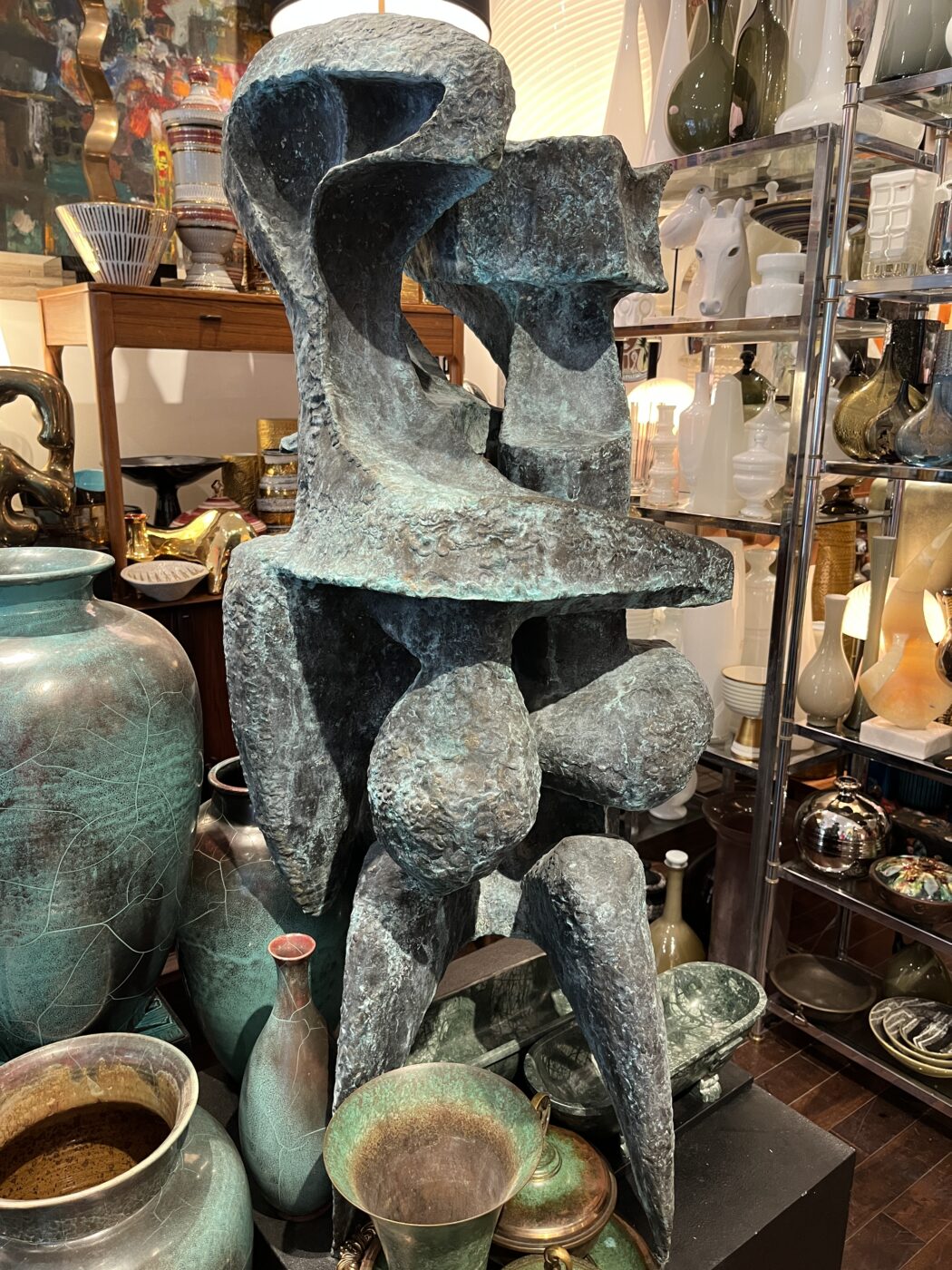
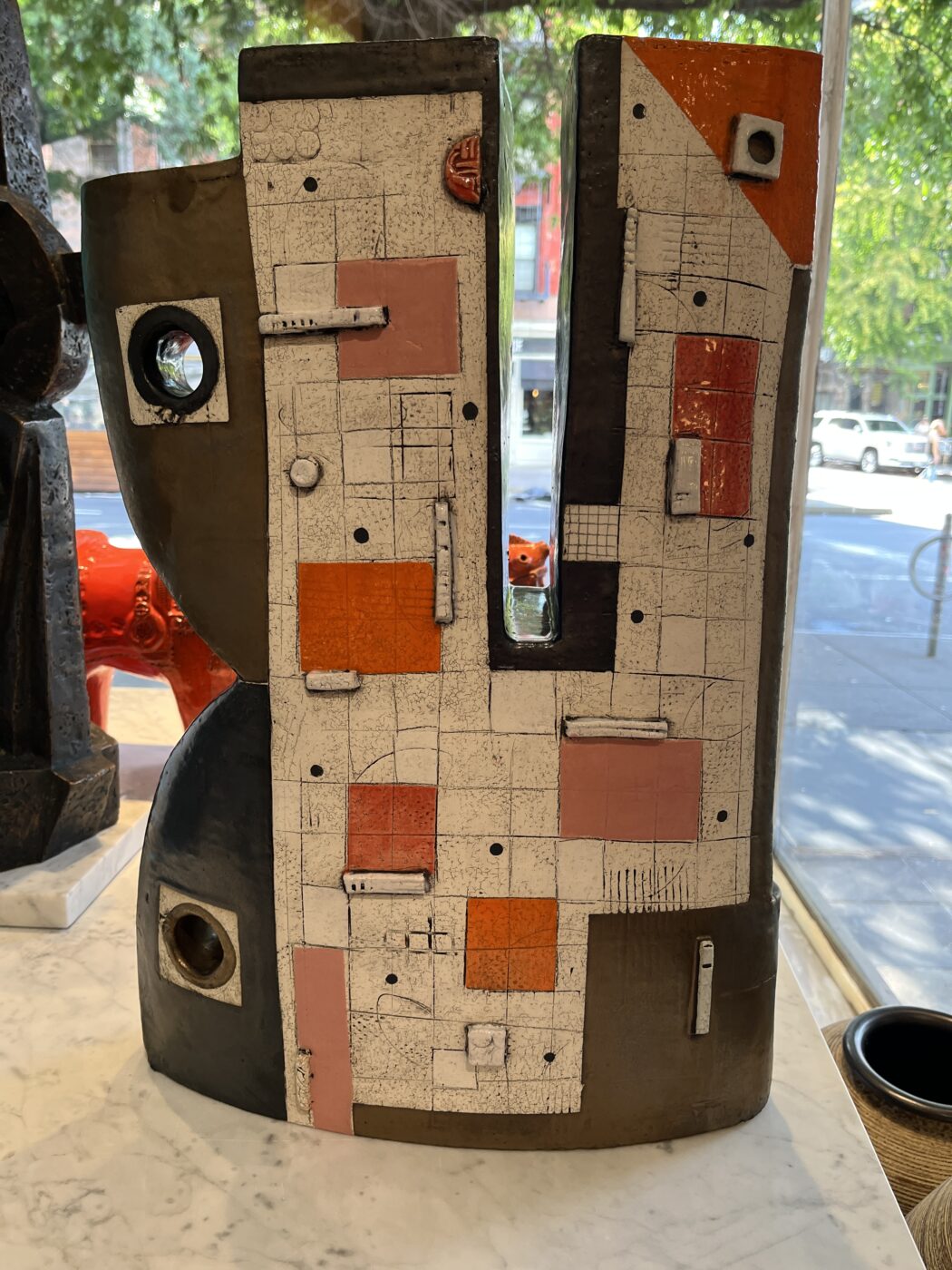
The End of History has outlived the numerous antique stores that lined the area when it first opened. To Stephen’s great fortune, his early real estate intuition paid off. The owner of his building kept his rents reasonable, as has her daughter, ever since she inherited the property. Call it luck. Call it clairvoyance into the upheaval that would befall the local retail market starting at around the time of his arrival. Whatever the case, in enduring, the store has become an institution: a short-hand for a decorative style; a surreal streetside spectacle; an unparalleled resource for those who can afford to bejewel their living spaces with spectacular mid-century objets d’art; and a world-class gallery for those who just want to browse. In sum, it has become a neighborhood icon worthy of celebration.
For its unwavering commitment to a personal aesthetic vision and for reintroducing neglected every-day works of art into our lives, we are thrilled to name The End of History our August 2026 Business of the Month.
What special small business would you like to see featured next? Just click here to nominate our next one. Thank you! #shoplocalnyc
Here is a map of all our Businesses of the in Month: