
Co-Named Streets Commemorate Local Heroes, Part VII
We’ve all seen them: signs tucked under the official names of our neighborhood streets, honoring a local luminary with a “Way,” “Place,” or “Corner.” Unfortunately, the people on these “co-named” street signs are often unknown to most passers-by. But a New York City agency has offered a way for those who are interested to get to know these local heroes and institutions a little better.
The New York City Department of Records and Information Services has assembled an interactive map to help people decipher the signs and connect with the stories behind nearly 2,500 co-named streets, intersections, parks, and other locations across the city. Our own communities feature a number of sites co-named for those who lived, worked, or created in our midst, including three that received honors in our communities over the last year. (Read about other such street honors over the past few decades here.)
Gilda Radner Way, West Houston Street between Varick Street and Sixth Avenue
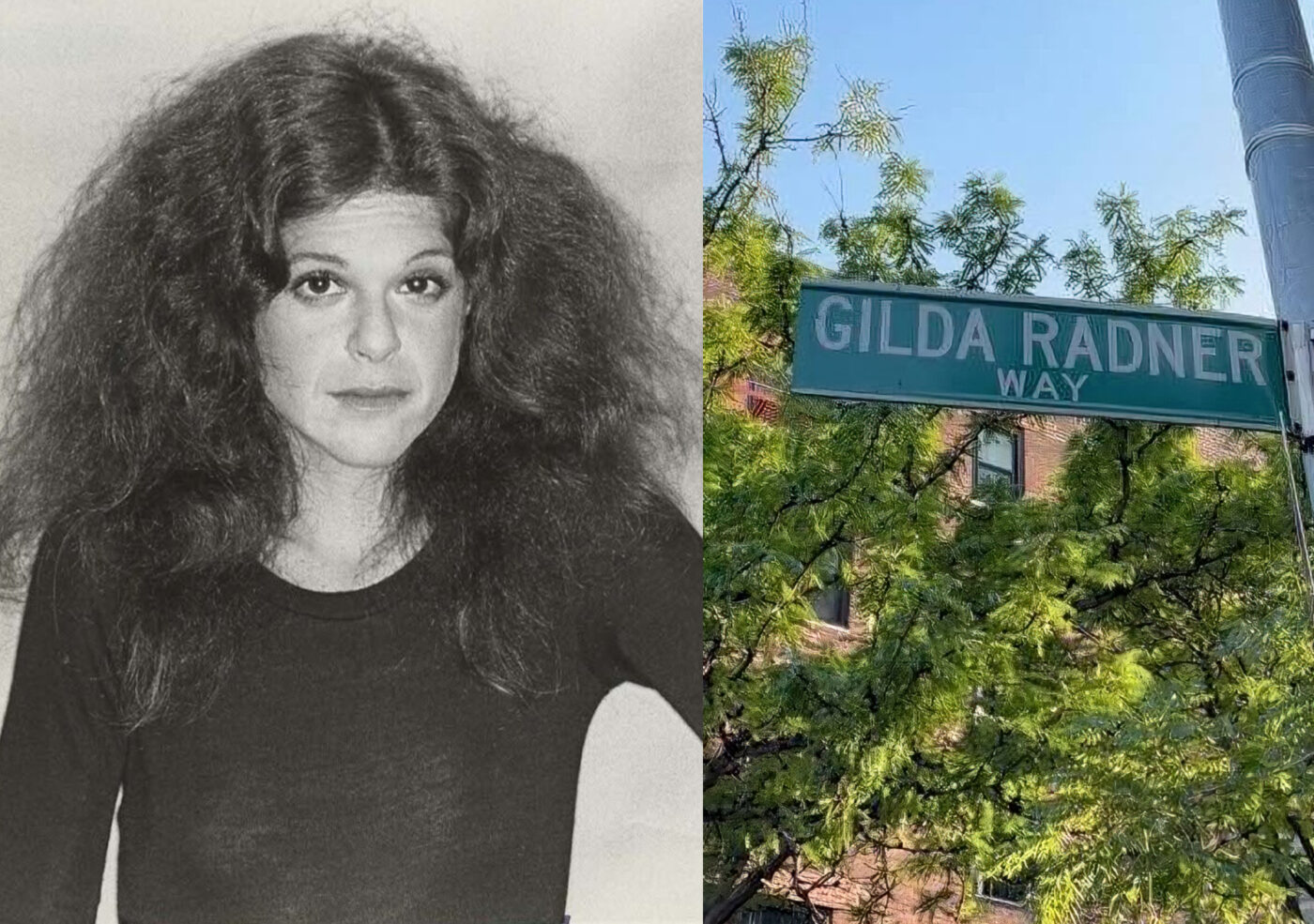
As an original cast member of Saturday Night Live, Gilda Radner (1946–1989) was one of the defining comedians of her generation. Her career started in Toronto with the Second City comedy troupe, alongside future co-stars Dan Aykroyd, John Belushi, and Bill Murray. Radner moved to New York in 1973, joining many of her Second City friends in The National Lampoon Show, an Off-Broadway cabaret, and The National Lampoon Radio Hour. Two years after her arrival here, she became producer Lorne Michaels’ first cast hire for SNL and the original Not Ready for Prime Time Players. Radner created an unforgettable gallery of characters, including Roseanne Roseannadanna, Emily Litella, Baba Wawa, and Lisa Loopner. Her work earned her an Emmy in 1978, and she later brought her distinctive brand of comedy to Broadway, film, and television.
Her noteworthy connection with Greenwich Village sadly arose from tragedy. Diagnosed with ovarian cancer in 1986, Radner found emotional support at a cancer wellness community in California, and came to believe deeply in the importance of creating a similar place in New York. After her death in 1989, her husband, Gene Wilder, and her cancer psychotherapist, Joanna Bull, helped establish Gilda’s Club New York City, which opened in 1995 at 195 West Houston Street. The organization (today known as the Red Door Community for its recognizable entrance) provides support groups, educational programs, workshops, and social activities for people living with cancer and their families and friends. Thus, although Radner was not associated with the Village street that now bears her name during her lifetime, her legacy became firmly rooted in the neighborhood through an institution established in her honor and inspired by her wishes.
Gilda Radner Way was named in 2005, the 10th anniversary of Gilda’s Club New York City. Community Board 2 supported the co-naming, noting both Radner’s accomplishments on Saturday Night Live and the role Gilda’s Club played in the community. Today, the street serves as a reminder of Radner’s extraordinary ability to turn laughter, compassion, and adversity into something that continues to serve the community.
Bill Graham’s Way, Second Avenue and East 6th Street
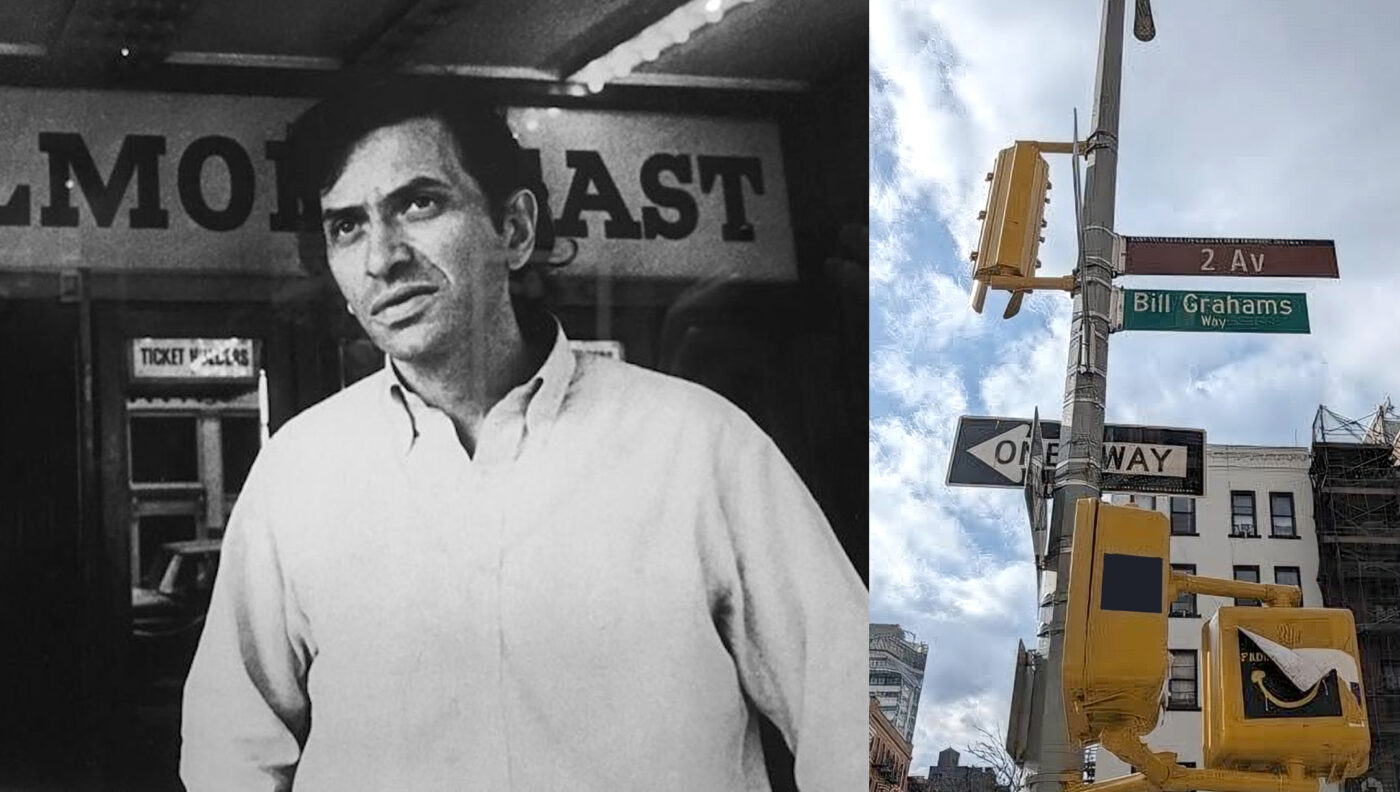
One of the most influential concert promoters in American music history, Bill Graham (1931–1991) helped transform live rock music from a countercultural phenomenon into a major force in popular entertainment. A German Jewish refugee who came to the United States as a child after fleeing the Holocaust, Graham began promoting concerts in San Francisco in the 1960s, where his Fillmore Auditorium became a center of the emerging rock scene. He brought that model to New York in 1968, opening the Fillmore East at 105 Second Avenue near East 6th Street. Graham’s venue quickly became one of the most important concert halls in the country, presenting an extraordinary range of performers, including the Doors, Jimi Hendrix, the Grateful Dead, Jefferson Airplane, Janis Joplin, Pink Floyd, Joan Baez, B.B. King, and the Allman Brothers Band.
The Fillmore East gave Graham a particularly strong connection to New York City’s East Village. From 1968 to 1971, the former Yiddish theater and movie house was known as the “Church of Rock and Roll,” with multiple shows and often multiple acts on a single bill. Graham also hired dozens of local residents and NYU students to help operate the venue, making the Fillmore East not only a destination for audiences and musicians but also a workplace embedded in the neighborhood.
The block of Second Avenue where the Fillmore East once stood was designated Bill Graham’s Way in 1994, three years after Graham died in a helicopter crash. A decade after that honor, Village Preservation installed a historic plaque highlighting Graham’s legacy at the Fillmore East, in a ceremony featuring Joshua White of the Joshua Light Show and critic/guitarist Lenny Kaye.
Read more about Graham and the Fillmore East here.
Ruth E. Wittenburg Triangle, intersection of Greenwich Avenue, Sixth Avenue, and Christopher Street
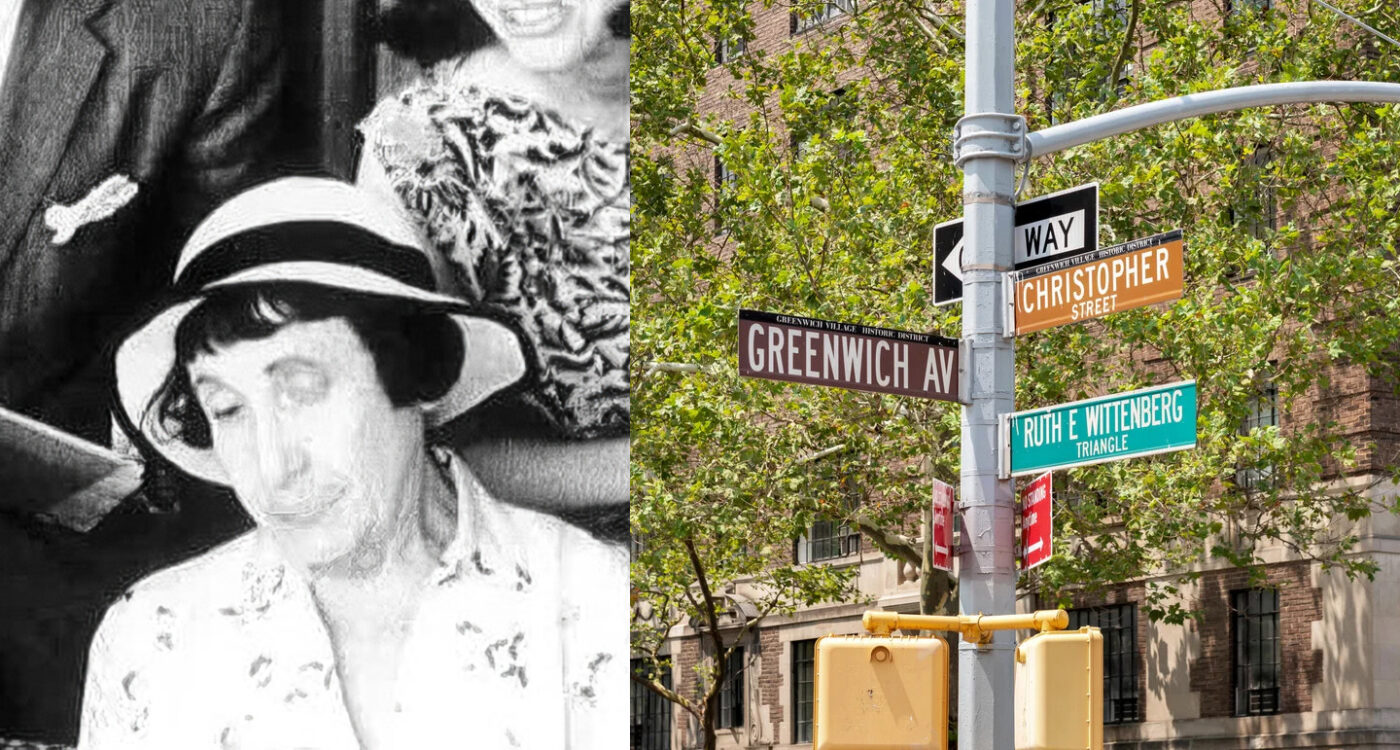
Ruth Wittenberg (1899–1990) was one of the leading figures in the preservation movement that helped shape modern Greenwich Village. A longtime Village resident who lived at 35 West 10th Street with her husband, Philip, Wittenberg was involved in community affairs for nearly four decades, serving on the Community Council for Greenwich Village, which later became Community Board 2. Her activism grew out of an earlier commitment to women’s suffrage and civil rights: she was jailed twice for suffrage activism and marched with Martin Luther King Jr. in Selma in 1965. In Greenwich Village, she became a powerful advocate for protecting the neighborhood from inappropriate development, and played a major role in the campaign that culminated in the designation of the Greenwich Village Historic District in 1969, alongside Jane Jacobs, Verna Small, Shirley Hayes, and others.
Wittenberg was also a key figure in saving the Jefferson Market Courthouse from demolition and transforming it into a public library. After the Women’s House of Detention next to the courthouse was demolished, she worked to turn that site into the Jefferson Market Garden.
The traffic island just south of the garden was designated the Ruth E. Wittenberg Triangle shortly after her death in 1990. Her devotion to the cause of preservation also earned her a certificate of merit from the Municipal Art Society and the President’s Medal from the Graduate Center of the City University of New York.
Read more about Wittenburg’s long preservation legacy here.
Was a Fillmore rat, saw over 100 concerts, all 11:30 pm shows, Grateful Dead shows, would leave at 5:30 a.m., walk across the Brooklyn Bridge to my college, Brooklyn Heights, and knew full well I was in the presence of the greatest. Bill Graham, who was booed every time he introduced a group, was one of the greatest of the great, putting on superb shows. So I’m posting this because after every show, while the theatre would empty, Bill would walk up the theatre via the orchestra seats; I’d shake his hand, thank him, and the memories, in color. still resonate. And it gets better: moved to Hawaii and saw the Stones at HIC Arena, and who’s putting on the show? Bill Graham Productions. At the end of the show, I saw him, and Bill yelled out, ” Brian ” Thanks, Wolodia