
Looking Up and Up Close: The Architectural Treasures South of Union Square
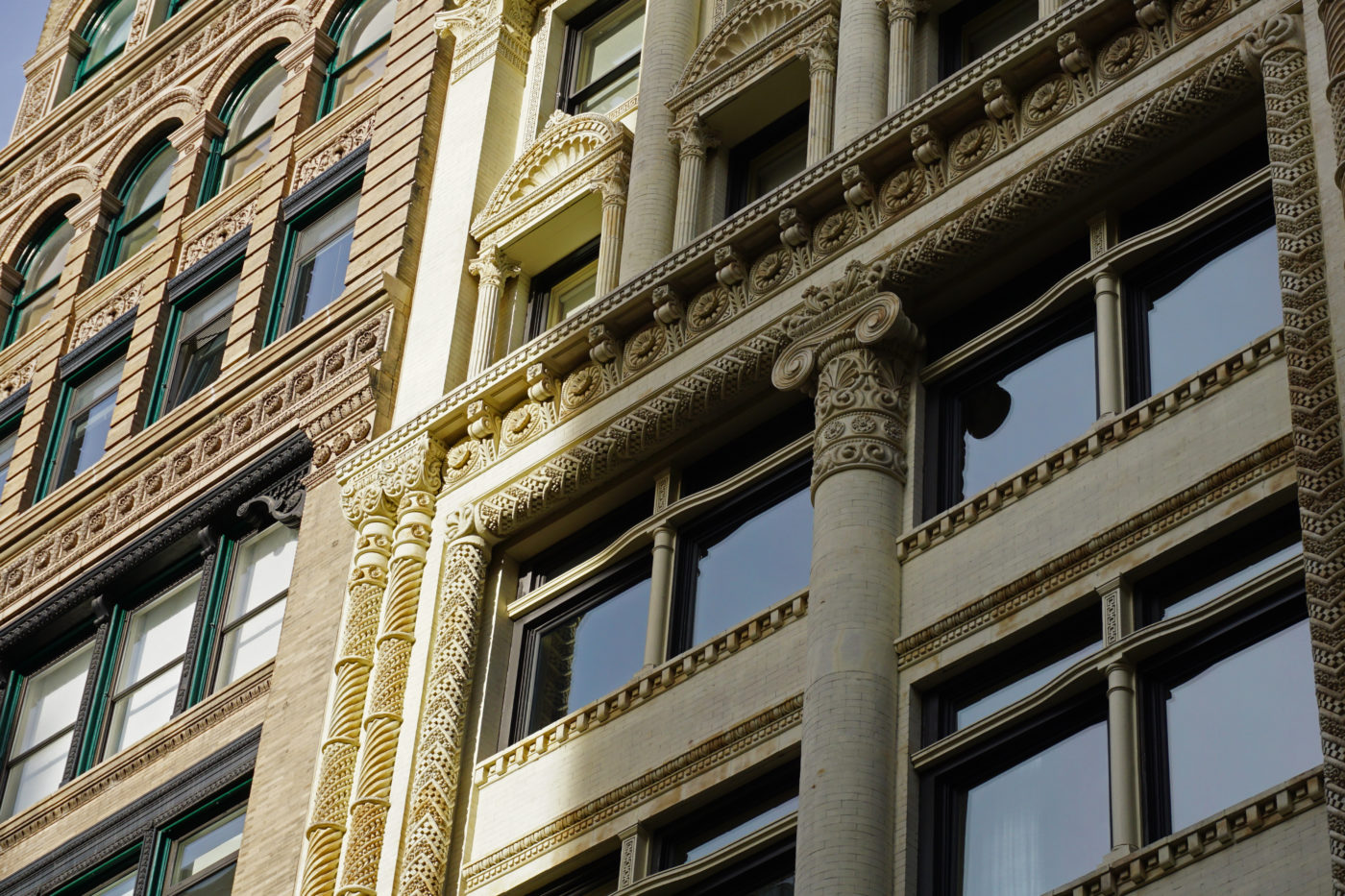
One of the most remarkable and attractive historic districts in the country is one that has neither an official landmark designation nor the protection that comes with it: South of Union Square. If it lacks this designation, however, it has not been for lack of trying. Our proposal for the creation of an official historic district in this area has garnered support from the local community, scholars, local elected officials, and numerous groups with an interest in the histories that have converged in this neighborhood. Our proposed district was determined eligible for the State and National Registers of Historic Places and was named one of the Preservation League of New York State’s “Seven to Save” in 2022-2023. There are good reasons for this groundswell of support. Many of the movements and individuals who shaped the trajectory of our country operated out of this neighborhood. You can trace through it major developments in literary, publishing, dance, music, and art history, as well as in the civil rights, labor, Black, LGBTQ+, women’s suffrage, and women’s rights movements. You can learn more about these not only on our South of Union Square map, but also and in greater detail by searching our site for blogs and programs.
Today, however, we want to focus on perhaps the most visible legacy in the neighborhood — its architecture. The area South of Union Square has one of the most outstanding collections of 19th and early 20th century buildings in the city, including some by renowned architects. Architectural photographer Dylan Chandler has captured some of the standout structures in the area. You can find his full collection here; but here are some of our favorites:
126-128 East 13th Street

This three-story Beaux Arts building was designed in 1903 by architects Jardine, Kent & Jardine as an auction mart for horses and then automobiles. The part of the building facing East 12th Street dates to 1890. During World War II, it housed a vocational school for women; and it subsequently was for decades the studio of noted artist Frank Stella. It was saved from planned demolition by Village Preservation after a six-year campaign to secure landmark designation for the building. In 2021, we placed a historic plaque at this address to honor Frank Stella’s legacy and the history of this building.
808 Broadway (Fourth Avenue facade)

This striking six-story loft building, which runs the entire block from Broadway to Fourth Avenue north of Grace Church, was designed in 1887 by James Renwick, the noted architect of St. Patrick’s Cathedral and Grace Church, along with partners James Lawrence Aspinwall and William Hamilton Russell. The design of the manufacturing building was meant to harmonize with the adjacent historic Grace Church. The building was home to notable publishers connected to the likes of Norman Rockwell. It was the scene of significant labor disputes, and it also played a pivotal role in Caleb Carr’s mystery novel The Alienist.
101-111 East 11th Street/93 Fourth Avenue
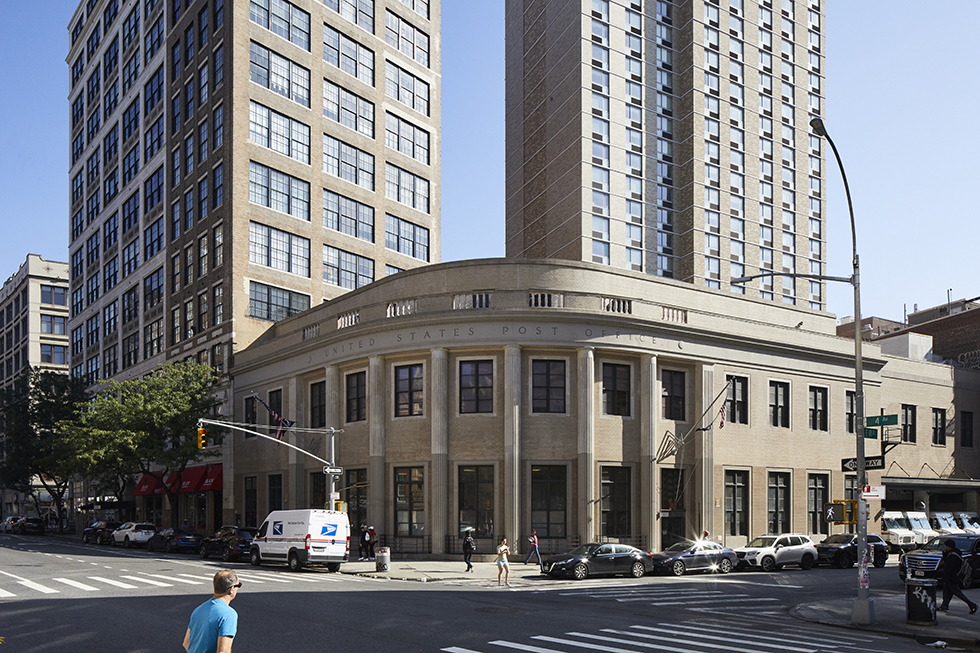
The two-story Cooper Station Post Office was designed by Louis A. Simon in 1936-37 for the Works Progress Administration in a Classical Revival/Moderne style. A number of Book Row sellers were housed in buildings previously located at this site.
42 East 12th Street

Cleverdon & Putzel designed this seven-story Romanesque Revival loft building in 1894. Its bays feature intact cast iron. In the late 19th century, the building served as a boarding house run by United Hebrew Charities. In the 1970s, it was home to the Film & Dance Theater and to the radical Workers Laboratory Theatre.
36 East 12th Street
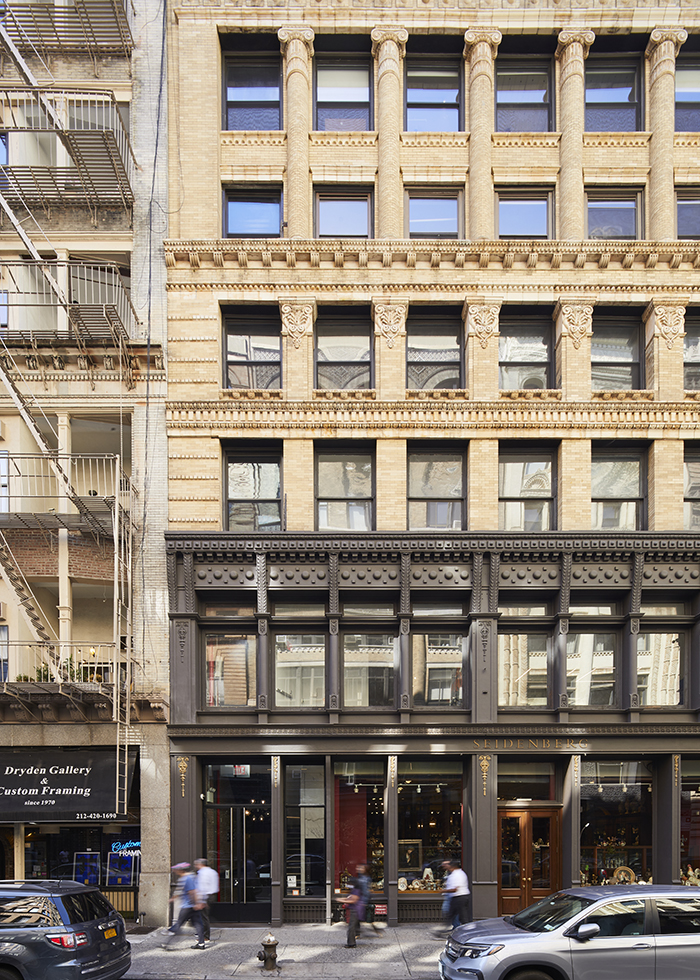
This seven-story neo-Classical/Romanesque–style loft building was designed in 1894 by Cleverdon & Putzel for Philip Braender. It features richly detailed cast-iron work on the first two floors and intricate brick and stonework on the floors above. Since 1940, the ground floor has housed the family-owned business Seidenberg Antiques, one of the few businesses remaining from the days when this area was the antiques center of the country.
97 University Place

This 10-story neo-Classical building was constructed in 1889 and designed by William C. Hazlett. For at least 60 years, it has housed the offices of the Textile Workers Union of America.
We hope this short survey inspires you to slow down and to look up and up close the next time you are walking south of Union Square. Your attention will be rewarded with countless architectural surprises. We also hope that the experience will move you to support our efforts to help protect the tremendous cultural and architectural legacy of this area, by calling on the City to declare this neighborhood a historic district. You can do so here, and learn more about the neighborhood, its rich history, and our efforts to preserve it here.