
From Little Syria to Greenwich Village: The Pen League and New York’s Arab Literary World
In the early 20th century, the Little Syria neighborhood was found south of Greenwich Village on what was then called the Lower West Side, where the World Trade Center complex is now located. It was home to a growing community of Arab writers, artists, and intellectuals. Many of these writers and poets had fled political oppression and religious persecution in Syria and Lebanon. This literary movement became known as the Mahjar, a name derived from hijra, which is Arabic for migration.
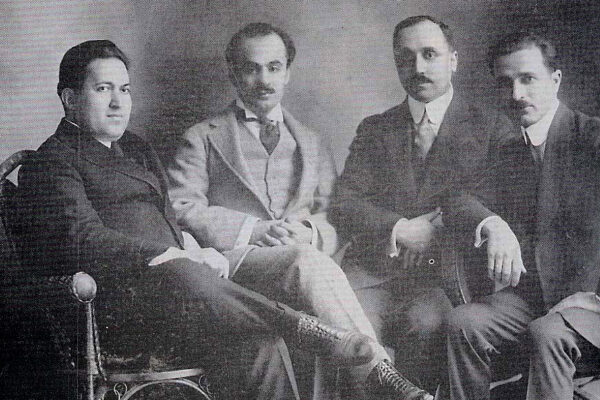
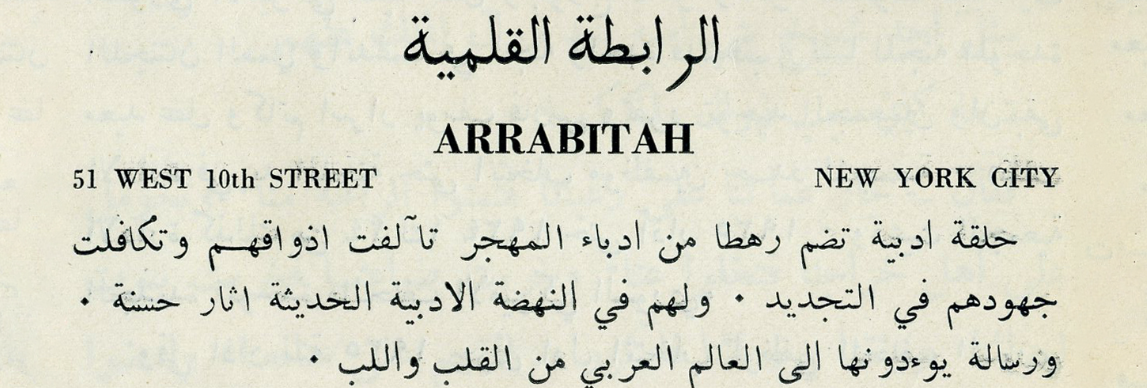
One of the most important literary groups to emerge from this community was the Pen League, or al-Rābitah al-Qalamiyyah, also referred to as the “Mahjar School.” The group began convening in New York in 1916 and was formally organized in April 1920. Its members included some of the best-known writers of the Mahjar movement, including co-founders Kahlil Gibran and Mikhail Naimy, as well as Nasib Arida and Ameen Rihani. Influenced by mysticism, philosophy, and spirituality, the writers of the Pen League sought to rethink the form and substance of Arabic literature and language. They viewed their literary community as a way to preserve their cultural traditions amid an increasingly Americanized society. Nasib Arida founded Al-Funun (“The Arts”) in 1913, while Abd al-Masih Haddad founded As-Sayeh (“The Traveler”), publications that helped writers in New York share their work and ideas with readers across the United States and abroad.
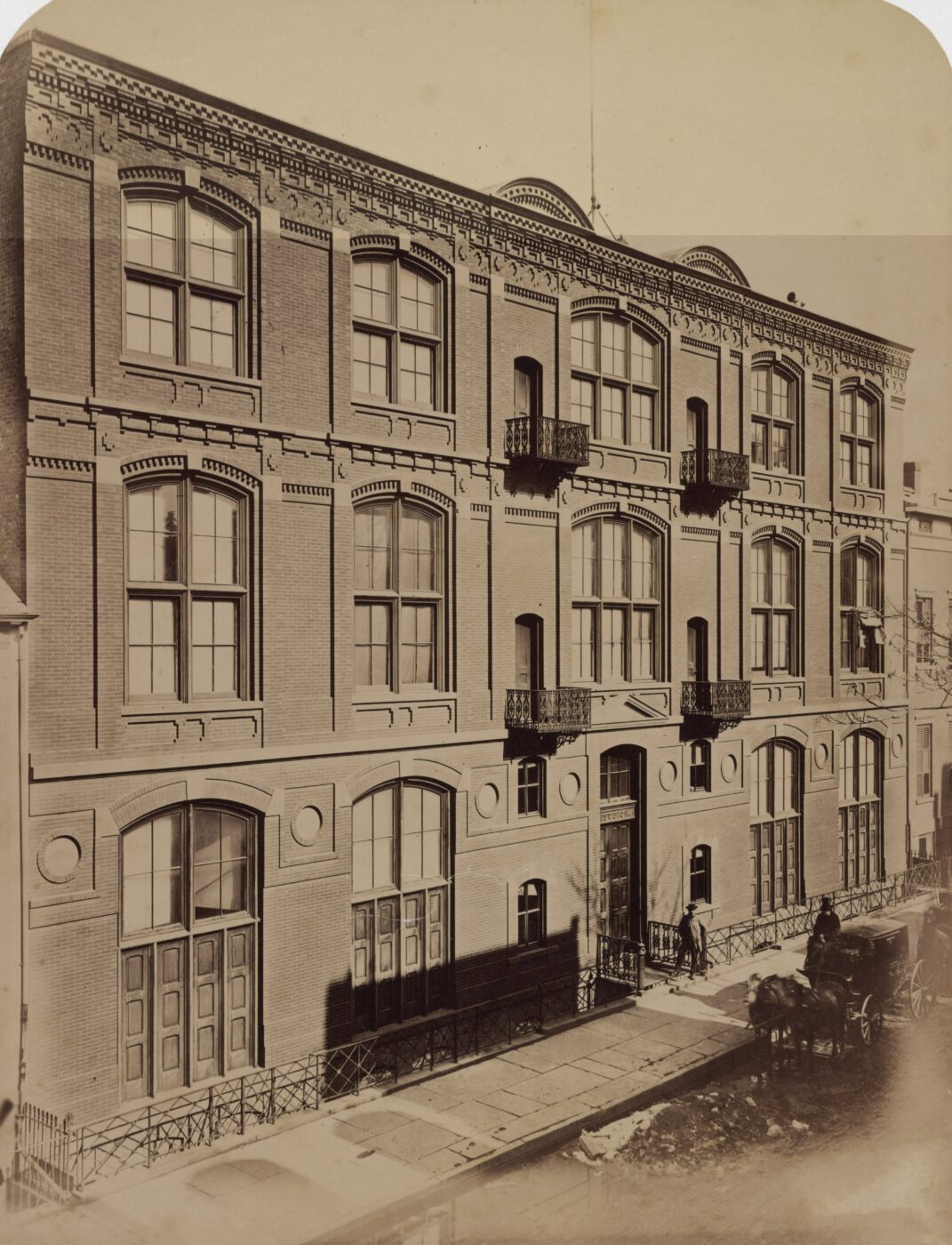
Kahlil Gibran, president of the Pen League, found a home for both his art and writing in Greenwich Village at 51 West 10th Street, in the now-demolished Tenth Street Studio Building. After moving to New York, he lived and worked there for many years, surrounded by other artists who had made the building their home and studio, including Winslow Homer and William Merritt Chase. His studio was a gathering place for friends and fellow artists, where they came together for conversations, to look at art, and to celebrate. It was also where Gibran wrote The Prophet, the mystical and lyrical work that would make him an internationally known writer. Today, his former studio is featured on Village Preservation’s Greenwich Village Historic District map.
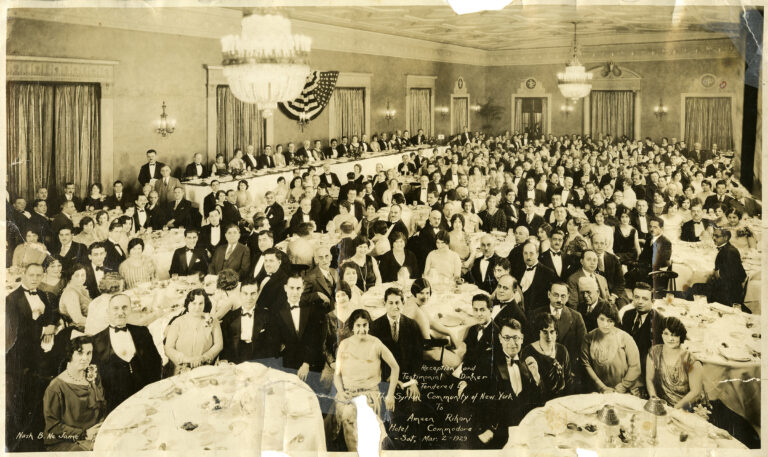
Ameen Rihani, a Lebanese-American writer and co-founder of the Pen League, also had ties to New York’s artistic community. Rihani joined the New York Pleiades Club, a literary and artistic society that was part of the bohemian life of Greenwich Village. The club provided a place for artists, writers, actors, and diplomats to meet and socialize. When Rihani’s The Book of Khalid was published in 1911, the Pleiades Club held a reception in his honor, where the club’s president crowned him with a laurel garland. Kahlil Gibran, who provided the illustrations for the book, was also part of Rihani’s circle at the time.
The connections between Gibran, Rihani, and the Pen League also link Greenwich Village to the Arab literary community that developed in Little Syria and the surrounding Lower West Side. While Little Syria was an important center of Arab immigrant life, writers like Gibran and Rihani also took part in the literary and artistic life of Greenwich Village. Their stories offer a glimpse into the connections between these two downtown communities.