
Back to School at Grace Church
Every September, temperatures begin to drop, summer greens start the slow shift to orange and yellow, and our streets feel a bit fuller as students return to school. But schools have been part of our neighborhoods’ histories far longer than any given school year. Today we take a look at the history of perhaps one of the oldest schools found in our area, Grace Church School, and how it came to be such an institution.
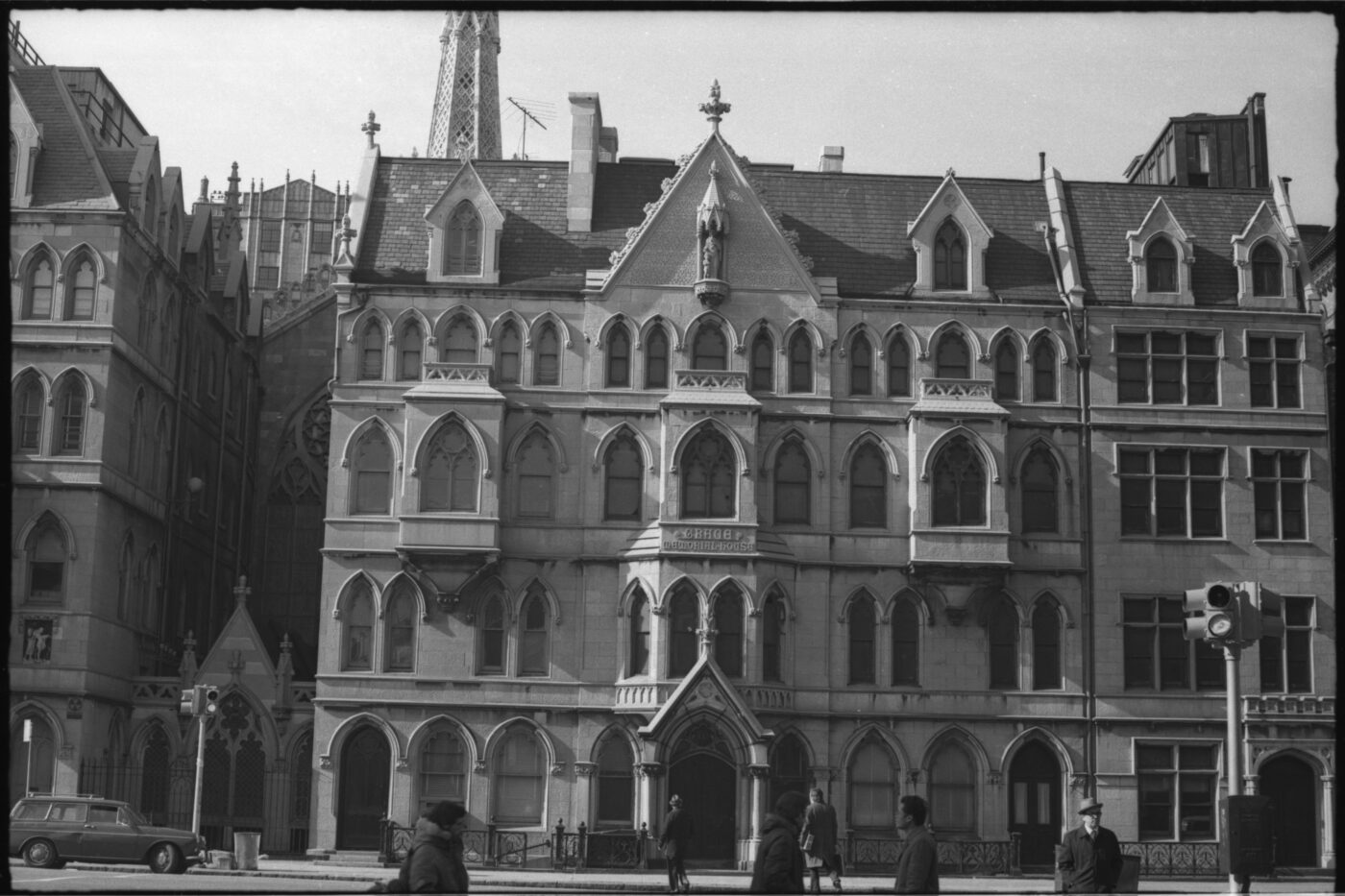
Located just South of Union Square, Grace Church was built by noted architect James Renwick, Jr. in 1846-1847. And Renwick was incredibly green in his career—only 24 years old—when he got this particular job. Renwick took a Gothic approach, impressing Reverend Thomas House Taylor, who had just returned from a year-long trip to Europe. Perhaps inspired by the old world’s lavish and ornate architecture, Reverend Taylor agreed that Renwick’s plan was most appropriate for the ever-expanding, fashionable Grace Church congregation.
The land on which the church was built was purchased from Henry Brevoort, Renwick’s uncle, a successful Dutch farmer and landholder best remembered for his friendship with Washington Irving. At 802 Broadway, at the intersection of East 10th Street and Broadway, Grace Church is one of the earliest examples of Gothic architecture found in the United States. Praised for its greatness, the church was designated an individual landmark on March 15, 1966.
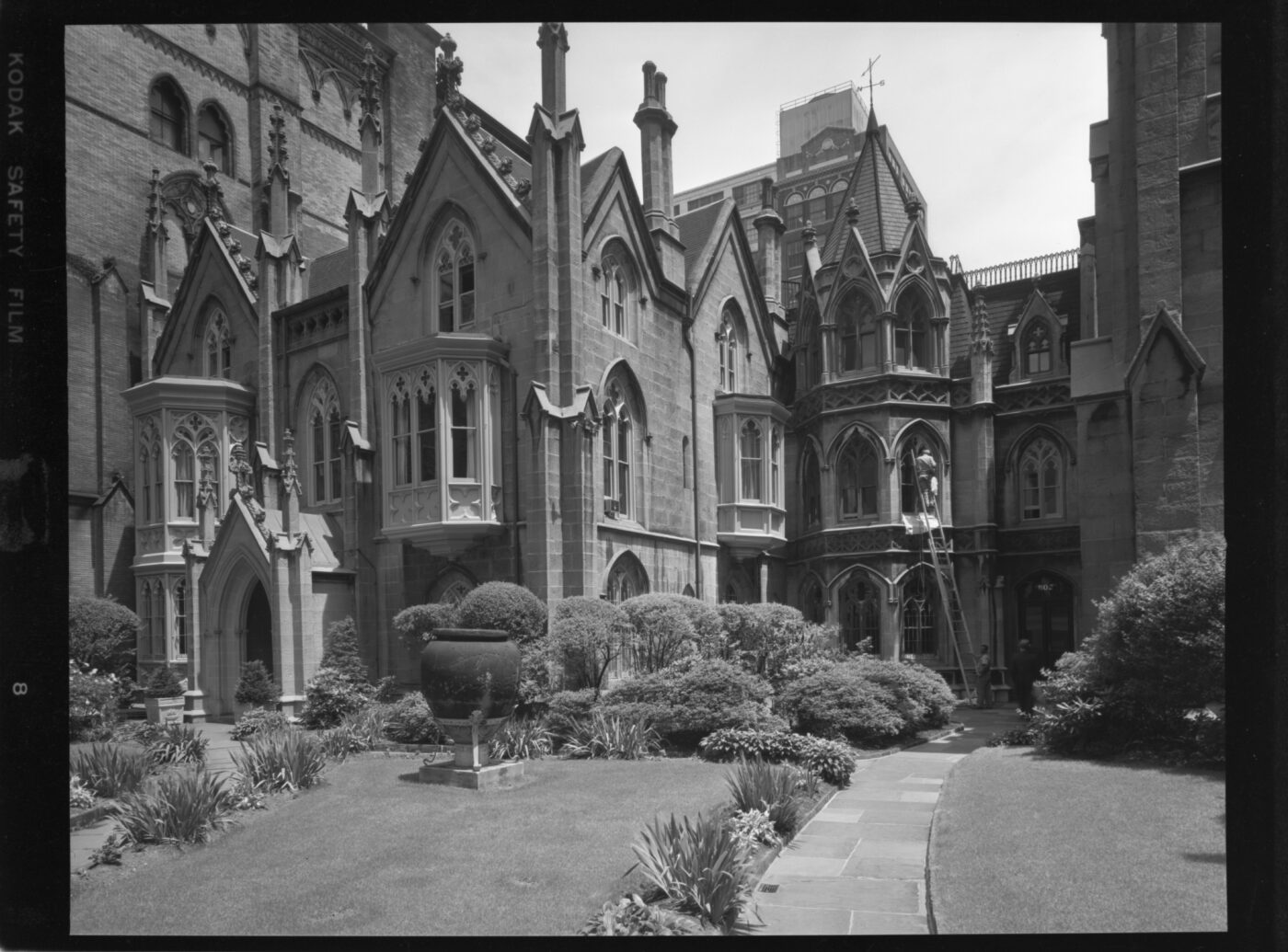
And while Grace Church was when built seen as one of the best examples of Gothic design in the country, it differs noticeably from similarly styled cathedrals of its time. Most notably, the church is made mainly of Sing Sing Marble rather than stone. The ecclesiastical character of Grace Church is carried over into its rectory next door at 804 Broadway in its use of corner buttresses with pinnacles, gables decorated with Gothic details (crockets and finials) and the use of pointed-arch windows both in the gables and elsewhere. Flamboyant tracery adorns the windows, as in the Church, and even the bay windows are in themselves a study in Gothic detail.
Though funds were limited at first, support for the church grew over the next few decades, as seen in investments in its architecture (for example, the original wooden steeple was rebuilt in marble in 1883).
Due to its growing popularity as a place of worship, in 1894 the church opened Grace Church School (GCS), New York City’s first choir boarding school with an enrollment of 16 boys. In 1902, a chorister’s house was constructed next door at 88 Fourth Avenue. The church would eventually own 80-102 Fourth Avenue in order to house the ever-expanding Choir School and its various ministries.
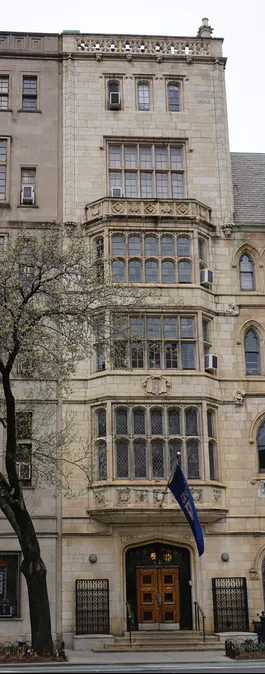
In 1912, James Renwick Jr.’s successor firm, Renwick, Aspinwall, and Tucker, designed and built the six-story structure at 86 Fourth Avenue. Taking its cues from Grace Church, 86 Fourth Avenue is designed in the Gothic Revival Style, clad in stone, and has a large Tudor arch at its entry. A three-story oriel spans the second through the fourth floor with leaded glass at its second-story windows. Grace Church School currently occupies the building.
By 1930, the GCS was no longer solely a choir school. And by 1947, it was coeducational, enrolling boys and girls representing various religious faiths, becoming a member of the Guild of Independent Schools of New York City.
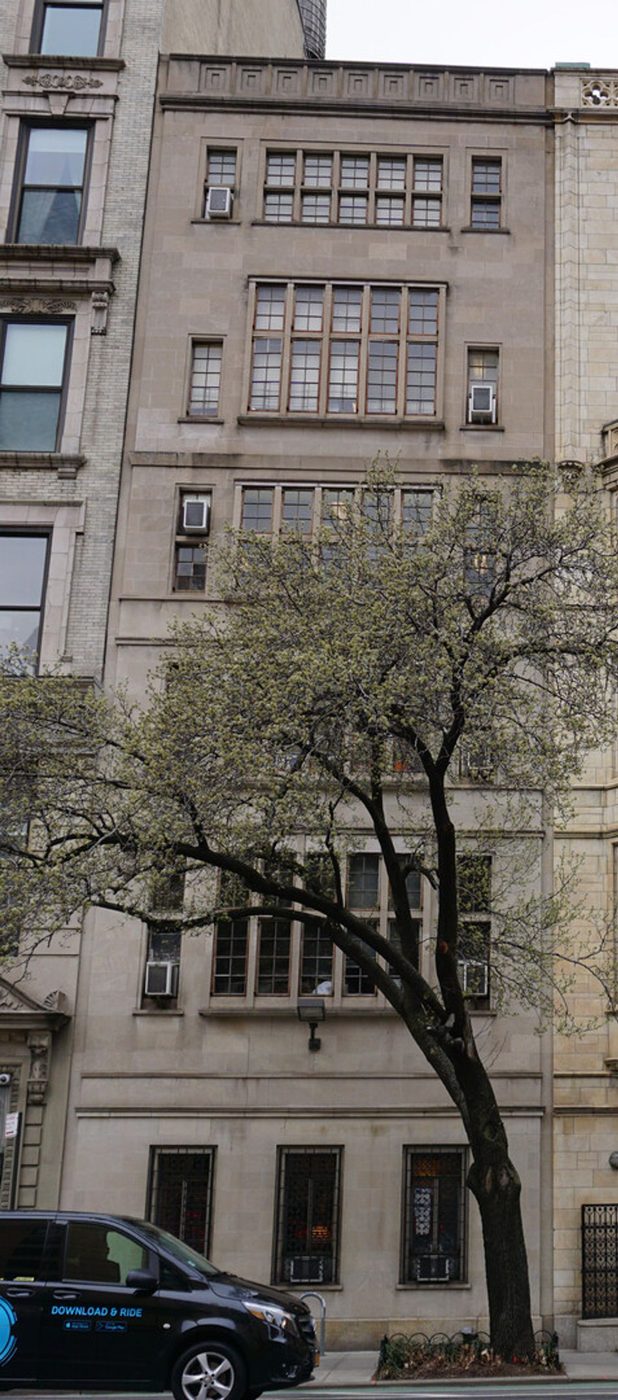
Due to its growing student body, Grace Church School continued to expand its physical presence South of Union Square with the building next door at 84 Fourth Avenue. Constructed in 1951-52 (no. 86 was undergoing a renovation at the same time), it seamlessly blends the same Gothic style of its neighboring structures, just a more pared down and simpler version. The firm on the job was Moore and Hutchins, who specialized in academic architecture. Also clad in stone, it has groupings of slender rectilinear windows on each of the floors and a decorative parapet. Built just over a century after the church’s construction, 84 Fourth Avenue is a prime example of a historically contextual architecture.
In 2006, Grace Church School and Grace Church separated, and the school purchased 86 Fourth Avenue. And in 2012, the school expanded to include a high school at 46 Cooper Square.
While no longer officially connected, both Grace Church and Grace Church School remain integral parts of the neighborhood South of Union Square’s history, and both are prominent manifestations of Gothic Revival architecture in New York City. The the church and its surrounding school buildings reflect nearly two centuries of architectural and institutional history.