
From Save the Village to Village Preservation: Preserving a Movement
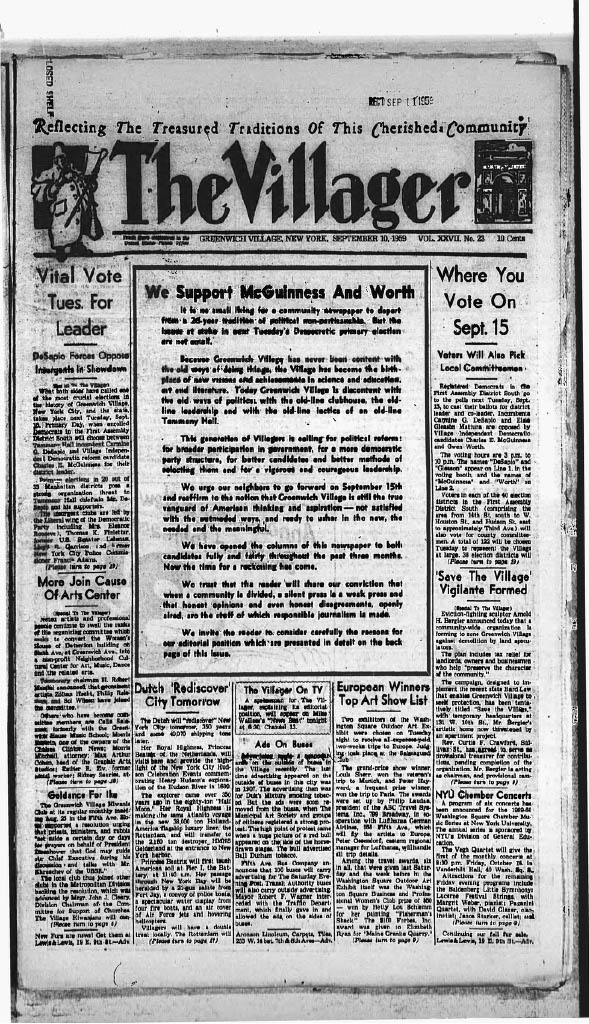
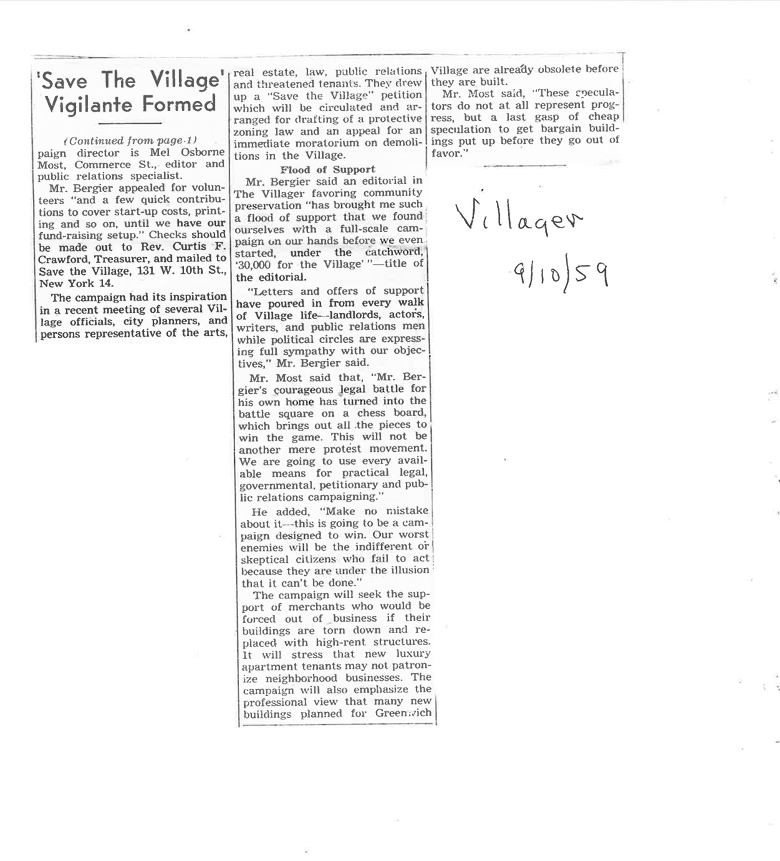
On September 10, 1959, The Villager announced the formation of a new organization with a simple but ambitious name: Save the Village.

Created in response to mounting threats to Greenwich Village’s historic buildings and residents, Save the Village became one of New York City’s earliest grassroots preservation organizations. Its members understood that preserving the Village would require more than saving individual buildings. It would require changing the laws that governed development itself.
More than sixty-five years later, that same spirit still animates Village Preservation’s work. Through our advocacy, archives, oral histories, and educational resources, we preserve not only the buildings these early activists fought to save, but also the stories of the people who made the modern preservation movement possible.
A Movement Born on West 10th Street
The story begins with sculptor Arnold Henry Bergier, who lived and worked in a picturesque studio house at 131 West 10th Street. When Bergier learned that his home lay in the path of a proposed apartment house and parking lot, he convened an emergency meeting of neighbors, architects, attorneys, and civic leaders determined to find a solution.
Among those gathered were architect Arthur Cort Holden, attorney Whitney North Seymour, Sr., and civic leader Robert C. Weinberg. Rather than focus solely on saving Bergier’s home, the group recognized that many Village residents faced the same threat. Their answer was bold. They would organize the community to reform New York City’s zoning laws and protect the neighborhood itself.
Just one week later, on September 10, 1959, The Villager announced the formation of Save the Village.
Fighting for the Future of the Village
Save the Village quickly became one of the city’s most effective neighborhood advocacy organizations.
The group first focused on implementing the Bard Act, one of New York State’s earliest laws authorizing the protection of areas of historic significance. Although those efforts did not immediately succeed, Save the Village helped introduce the idea that entire neighborhoods, not just individual landmarks, deserved protection.
At the same time, the organization rallied behind Planning Commission Chairman James Felt’s proposed zoning reforms. Although Felt’s proposal promised lower-density zoning for Greenwich Village, it included a one-year delay before taking effect. That grace period left the neighborhood vulnerable to developers eager to demolish historic buildings before the new regulations took hold.
Recognizing the danger, Robert C. Weinberg proposed an emergency zoning amendment to protect the Village during that interim period. Save the Village joined forces with the Greenwich Village Association and the Washington Square Association to advocate for its passage.
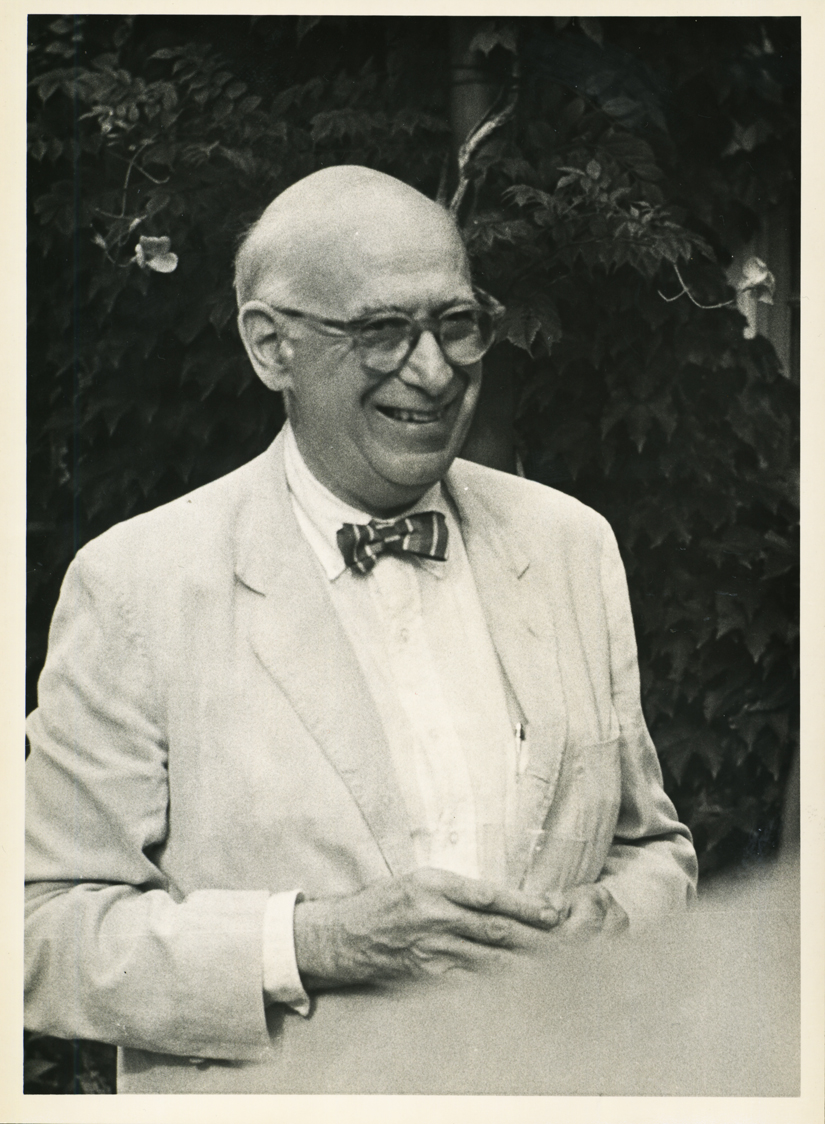
The organization’s grassroots campaign was remarkably effective. Led by activist Alan Marcus, Save the Village gathered 15,000 petition signatures in support of stronger neighborhood protections. Members attended public hearings wearing orange, white, and blue rosettes and pre-World War I derbies to dramatize their cause. Their efforts paid off in March 1960, when the Board of Estimate approved Weinberg’s emergency zoning amendment. That action helped prevent widespread demolition while the comprehensive zoning resolution moved toward adoption.
A Coalition of Neighborhood Advocates
Save the Village did not act alone. A growing coalition of neighborhood organizations also recognized the need to protect Greenwich Village from incompatible development and joined the effort. Among them was the Village Independent Democrats (VID), the reform Democratic club founded in 1956. In 2023, the organization entrusted its archives to Village Preservation, adding an extraordinary collection of photographs, newsletters, flyers, correspondence, and campaign materials that offers fresh insight into the grassroots activism that shaped our neighborhoods.
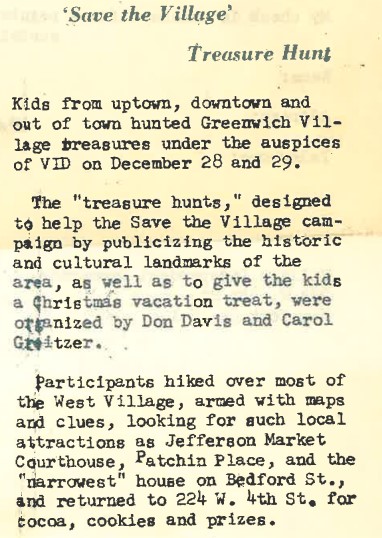
The archives reveal the many ways VID supported preservation efforts. The organization sponsored a “Save the Village Treasure Hunt” for neighborhood children, encouraging them to explore and appreciate the Village’s remarkable historic architecture while fostering a sense of stewardship for their community. VID members also testified at public hearings and advocated for zoning reforms that would preserve the Village’s distinctive low-rise character.
Working alongside Save the Village and other civic organizations, these efforts helped build support for the landmark 1961 Zoning Resolution, which in some ways protected Greenwich Village, along with many other neighborhoods throughout New York City, from large-scale, out-of-context development.
The People Behind the Movement
The story of Save the Village is also the story of the individuals who devoted countless hours to protecting their neighborhood.
Among its most influential members was Doris Diether, who would become one of New York City’s most respected voices on planning and preservation. In Village Preservation’s Oral History Project, Diether recounts the formation of Save the Village, the organization’s early campaigns, and the determination of ordinary citizens who believed they could influence public policy. Her firsthand recollections provide an invaluable window into one of the most important chapters in Village Preservation history.
Another voice preserved through Village Preservation’s Oral History Project is Jane Jacobs. Best known for her groundbreaking ideas about cities and her successful campaigns against urban renewal, Jacobs also recalls the network of neighborhood organizations, including Save the Village, that worked together to protect Greenwich Village’s historic buildings and human scale. Her oral history illustrates how preservation, planning, and community activism became inseparable during this transformative period.
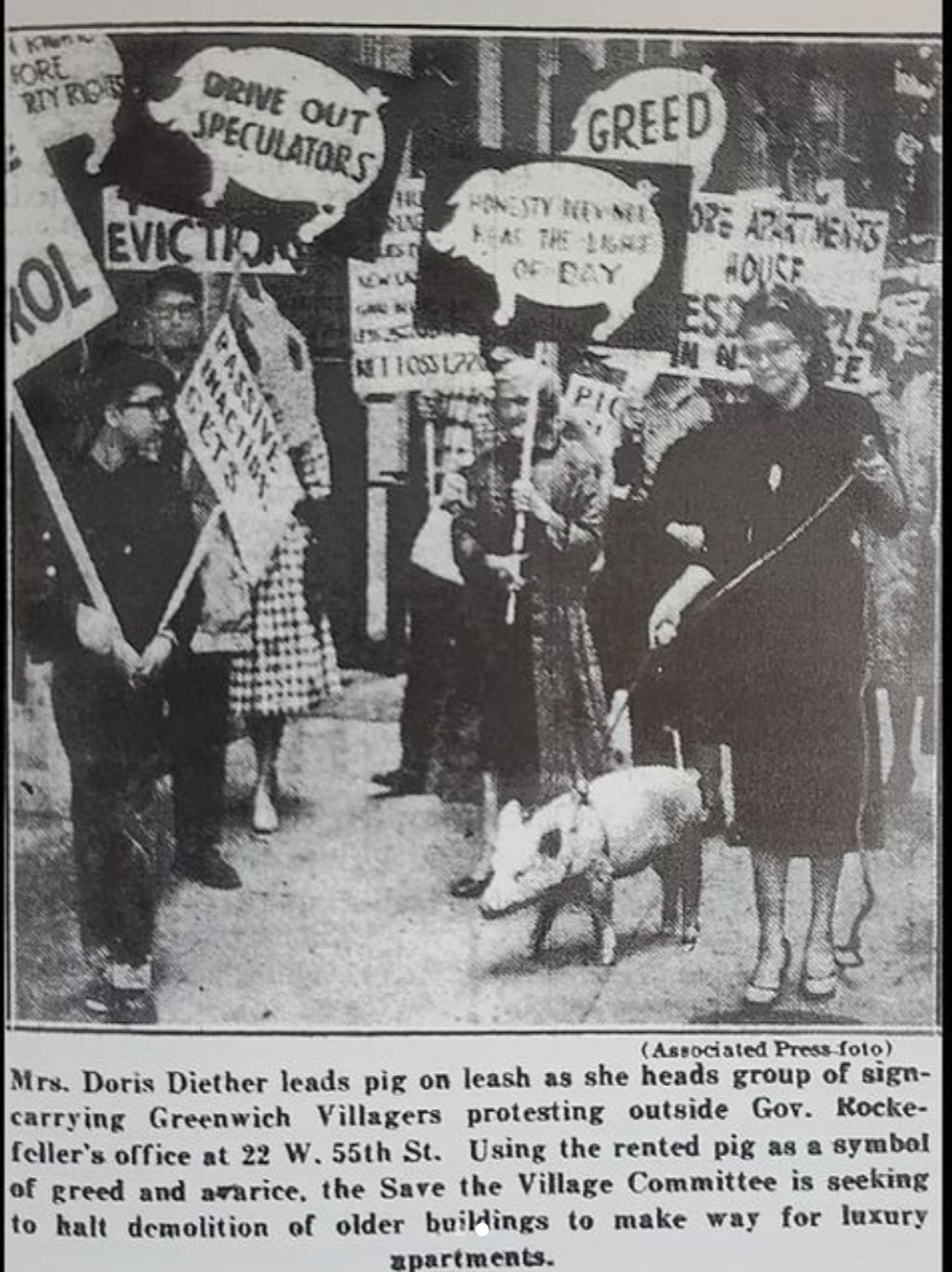
One of Save the Village’s most memorable public demonstrations came in May 1960, when members protested outside Governor Nelson Rockefeller’s office to oppose the demolition of historic Village buildings and call for stronger protections for residents. Doris Diether famously led a pig through the protest as a symbol of the greed driving speculative redevelopment. The image became one of the enduring symbols of early preservation activism.
Preserving the History of Preservation
Today, Village Preservation is proud to preserve not only the neighborhoods these advocates fought to protect, but also the history of the movement itself.
Our Oral History Collection captures the voices of preservation pioneers, civic leaders, artists, and longtime residents whose firsthand accounts illuminate the evolution of Greenwich Village, the East Village, and NoHo.
Our Historic Image Archive, containing thousands of photographs spanning more than two centuries, documents the changing streetscapes, buildings, businesses, and people of our neighborhoods. It includes images that help bring the era of Save the Village and its preservation campaigns vividly to life.
Our Preservation History Archive preserves original documents from landmark designation campaigns, zoning battles, neighborhood organizations, and advocacy efforts. The recently acquired Village Independent Democrats Archive provides an important new record of the civic engagement that helped shape Greenwich Village during a pivotal moment in its history.
Together with Village Preservation’s interactive maps, research collections, and decades of advocacy, these resources allow anyone to explore not only what was preserved, but also how it was preserved, who made that preservation possible, and how YOU can get involved.
Carrying the Legacy Forward
Save the Village proved that organized citizens could shape public policy and protect the places they loved. More than sixty-five years later, Village Preservation proudly carries that mission forward through advocacy, research, oral histories, and archival collections that preserve both our neighborhoods and the history of the preservation movement.
As we commemorate the founding of Save the Village, we celebrate the enduring power of neighbors working together to protect the places that matter most.