
The Star-Spangled Banner and Its Heirs: The Flags of the Revolutionary Village
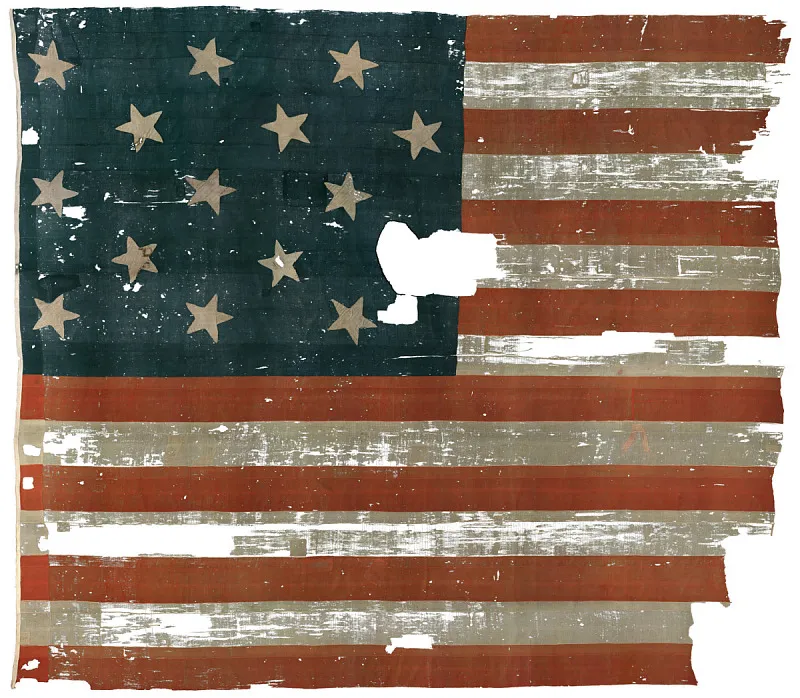
On September 14, 1814, as dawn broke over Baltimore’s Fort McHenry, Francis Scott Key looked across the harbor and saw an American flag still flying after a night of bombardment by British forces. Inspired by the sight, Key wrote the poem “Defence of Fort M’Henry,” which would eventually become “The Star-Spangled Banner,” the national anthem of the United States. More than a century later, in 1931, Congress officially designated it the national anthem.
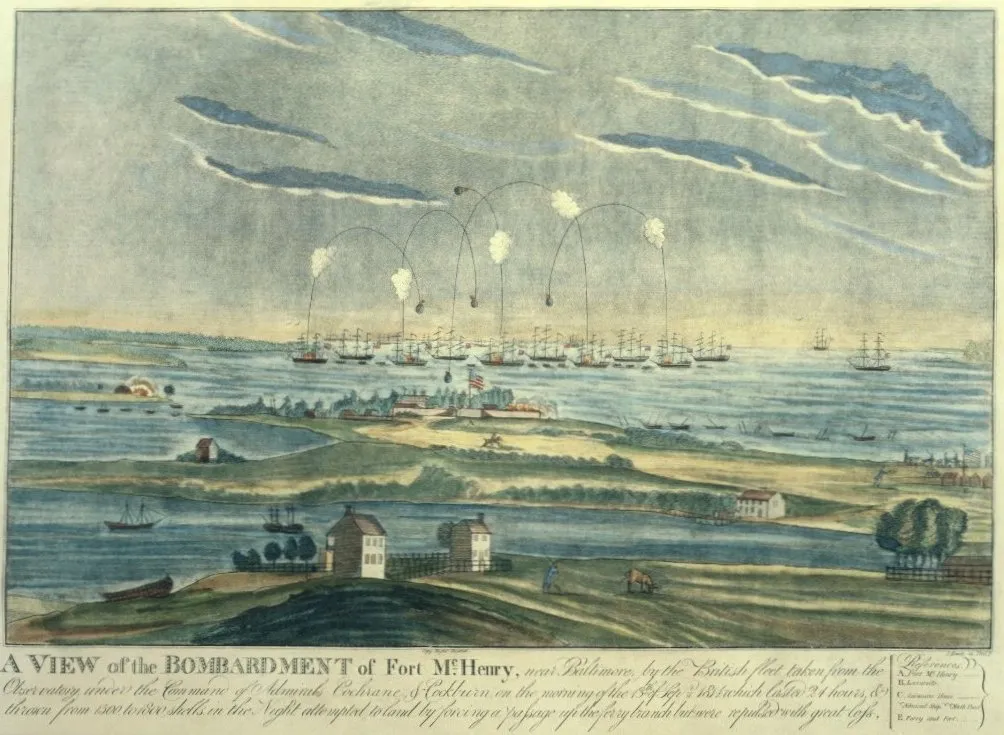
The story of the Star-Spangled Banner is, in many ways, a story about the power of a flag. A flag can represent a nation, its ideals, and its history. But flags can also become powerful tools for protest, challenging a country to live up to the principles it claims to represent. The flag originally became an important symbol to Americans to continue what would become a long arduous fight against the British Empire; especially after after the British defeated George Washington and the Continental Army at the Battle of Long Island, and then proceeded to invade and occupy New York City on September 15, 1776.
In the centuries that followed, the long and complicated history of American flags and symbols can be seen in Greenwich Village and the surrounding neighborhoods. From the Star-Spangled Banner to the Rainbow Flag and the NAACP’s “A Man Was Lynched Yesterday” flag, flags in the Village have celebrated freedom, demanded equality, expressed identity, and confronted injustice.
As the United States marked its 250th anniversary in 2026, these stories offer a particularly fitting way to explore our theme of the Revolutionary Village: the idea that the struggle to define and expand the meaning of American freedom was not completed with the Declaration of Independence in 1776, or the end of the Revolutionary War in 1783, but has been ongoing for the last 250 years, with our neighborhoods at the forefront.
The Star-Spangled Banner Comes to the Village
The connection between Greenwich Village and the Star-Spangled Banner begins not with Francis Scott Key himself, but with people and events that demonstrate how the anthem has continually been reinterpreted.
One of the most remarkable Village connections is Jimi Hendrix, whose version of the national anthem became one of the most famous musical interpretations of the song in American history.
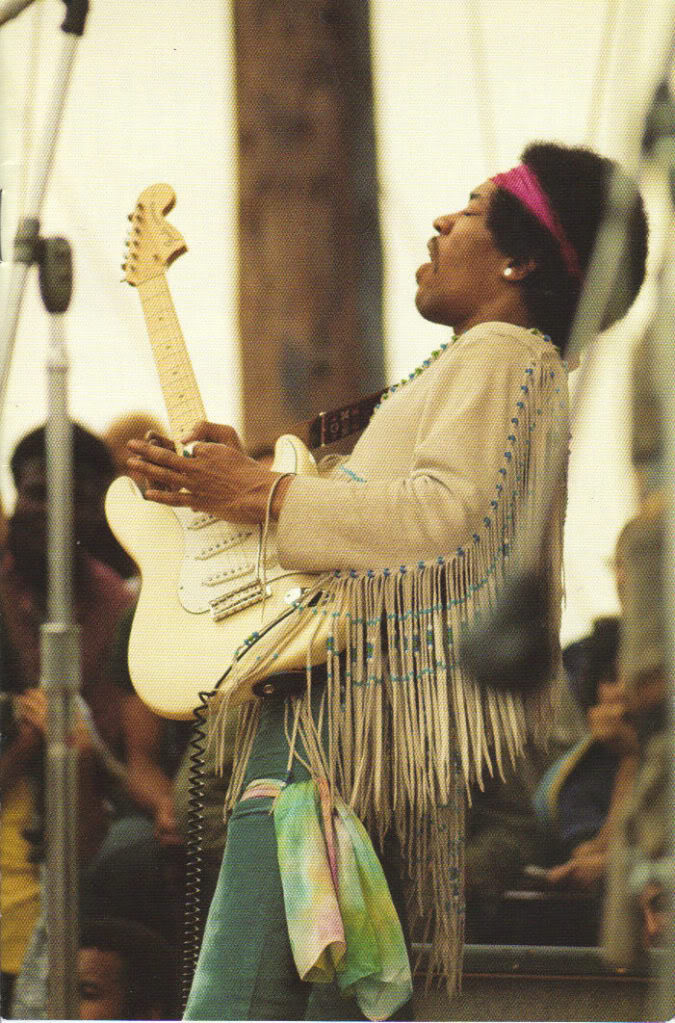
Hendrix had been performing “The Star-Spangled Banner” onstage since 1968. On August 18, 1969, at Woodstock, he transformed the familiar melody into something almost unrecognizable. Using his electric guitar to evoke rockets, explosions, sirens, and other sounds of war, the performance came at a moment when the United States was deeply divided over the Vietnam War, civil rights, racial inequality, and political violence.
Hendrix’s interpretation was sometimes understood as an act of protest, although he himself rejected the idea that he was deliberately attacking the anthem. Whatever his intention, the performance demonstrated how a national symbol could acquire new meanings in the hands of an artist.
Hendrix was deeply connected to Greenwich Village. He lived on MacDougal Street and West 12th Street, and in 1970 opened Electric Lady Studios at 52 West 8th Street. The studio was conceived as a creative environment designed around his own musical and technical needs, and would go on to become one of the most important recording studios in popular music.
Hendrix was hardly the only Village-associated musician to reinterpret the anthem. Folk and protest music were deeply embedded in the neighborhood’s culture. During the 1960s, the Star-Spangled Banner itself could become part of protest.
During the famous 1961 Washington Square Park “Beatnik Riot,” thousands gathered to protest a ban on playing music in the park. Among the protesters was a young Bob Dylan. Some demonstrators sang the national anthem, believing that doing so might protect them from police intervention. It did not. The anthem had become something more than a patriotic song: it could be invoked to claim the rights and freedoms supposedly represented by the nation itself.
The tension between the ideals represented by a national symbol and the realities of American life became one of the defining themes of the Village’s history.
A Flag for Equality
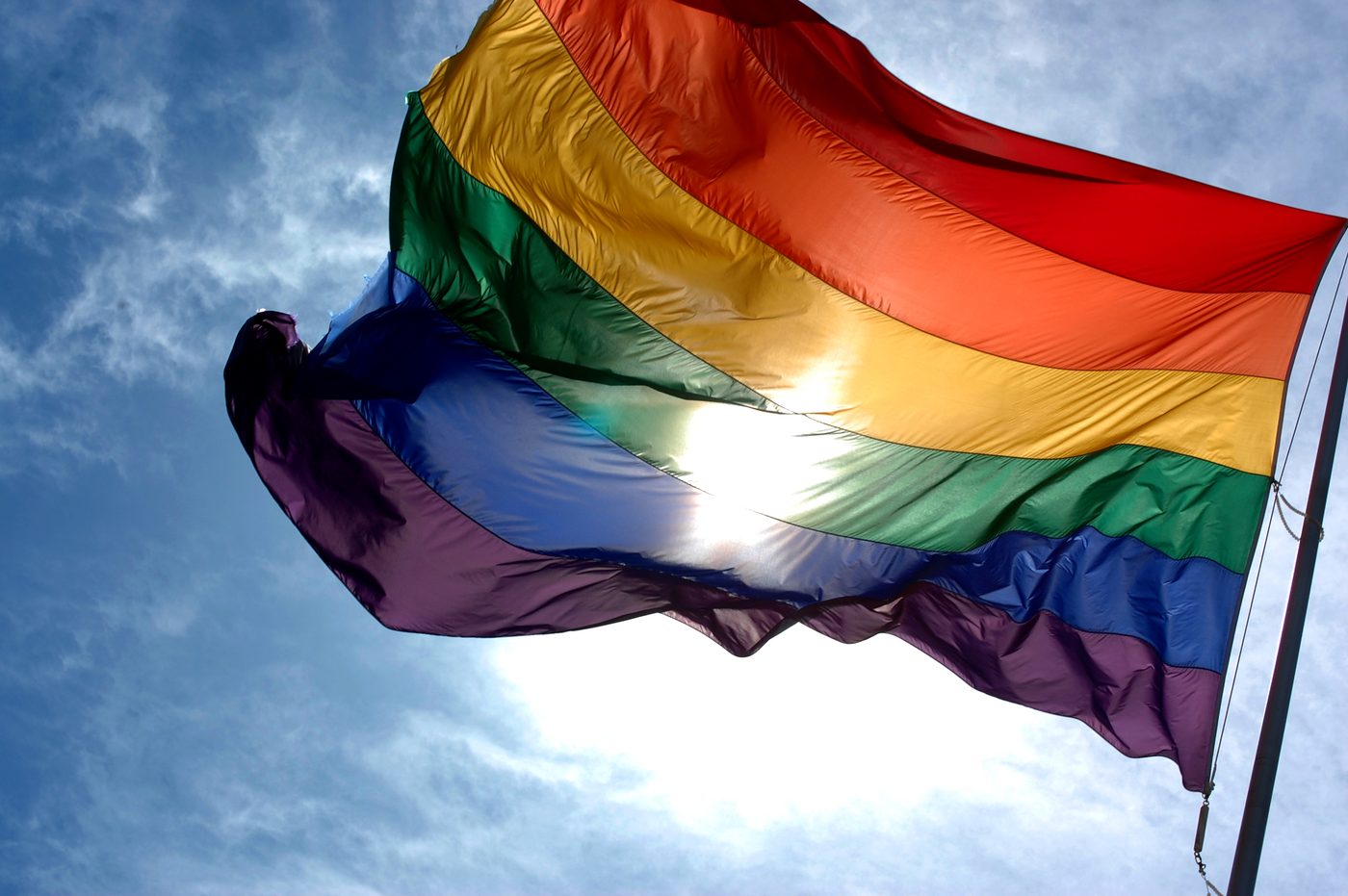
Few flags demonstrate that tension more vividly than the Rainbow Flag.
Designed by artist and activist Gilbert Baker in San Francisco in 1978, the Rainbow Flag quickly became an international symbol of LGBTQ+ pride, visibility, equality, and liberation. Baker created it at the request of Harvey Milk for San Francisco’s Pride celebrations, and the flag’s multicolored stripes offered a visual expression of the diversity and vitality of the LGBTQ+ community.
Its significance is particularly powerful in Greenwich Village, a neighborhood whose history is inseparable from the LGBTQ+ rights movement.
The Stonewall uprising of June 1969 is one of the most important landmarks in the modern struggle for LGBTQ+ equality. In the decades that followed, Greenwich Village became a center for organizing, political activism, artistic expression, community building, and public demonstrations.
The Rainbow Flag consequently became a familiar sight throughout the neighborhood. It could be displayed on businesses, homes, community organizations, and during Pride celebrations. A symbol created thousands of miles away became deeply associated with the Village’s own continuing struggle for visibility and equality.
Like the Star-Spangled Banner, the Rainbow Flag is more than fabric. It is a statement about what a community believes, and what it believes the country should become.
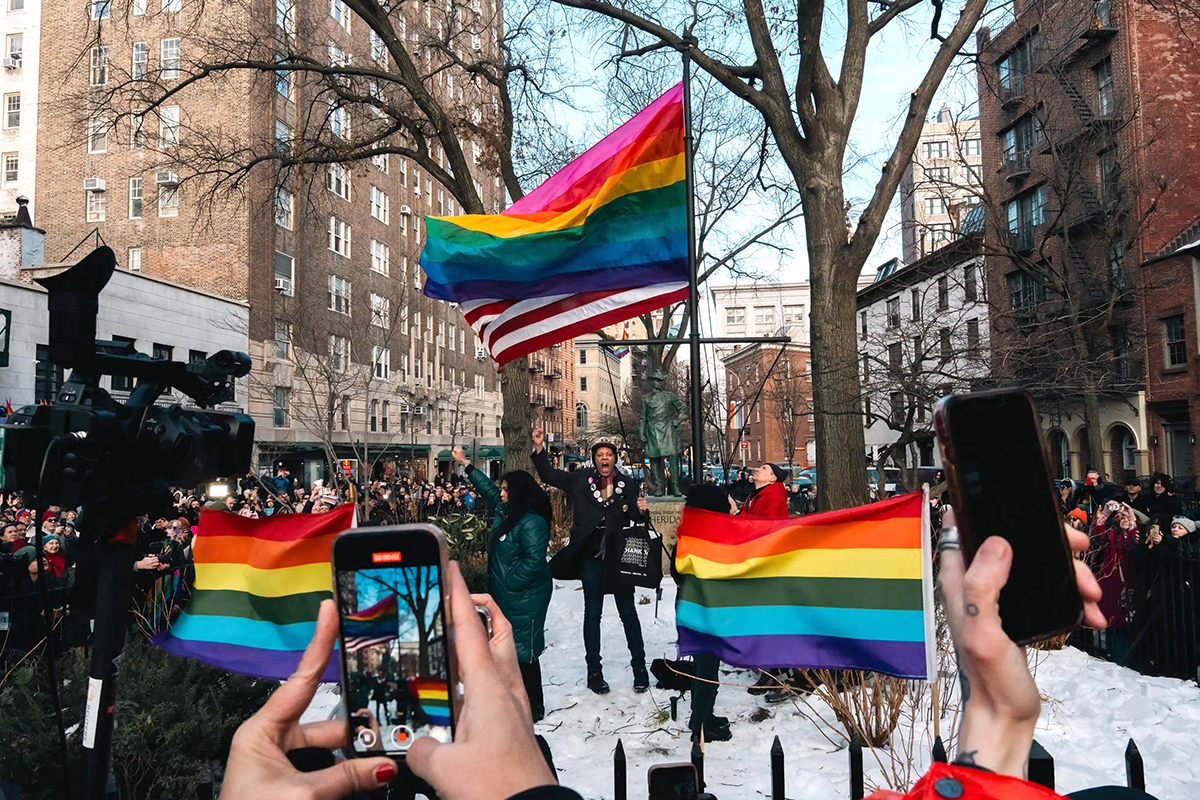
In February 2026 the power of flags and what they represent was on full display when the Federal government decreed only official government flags could be flown on federal sites, which required the removal of the Rainbow Flag and its different iterations from the Stonewall National Monument. This outraged many, leading to several organizations, including Village Preservation, to file a federal lawsuit to restore the flag. The government finally agreed to restoring the Rainbow/Pride flag in April 2026 as its symbolism was as important as the national flag on this site.
The Flag That Announced an American Failure
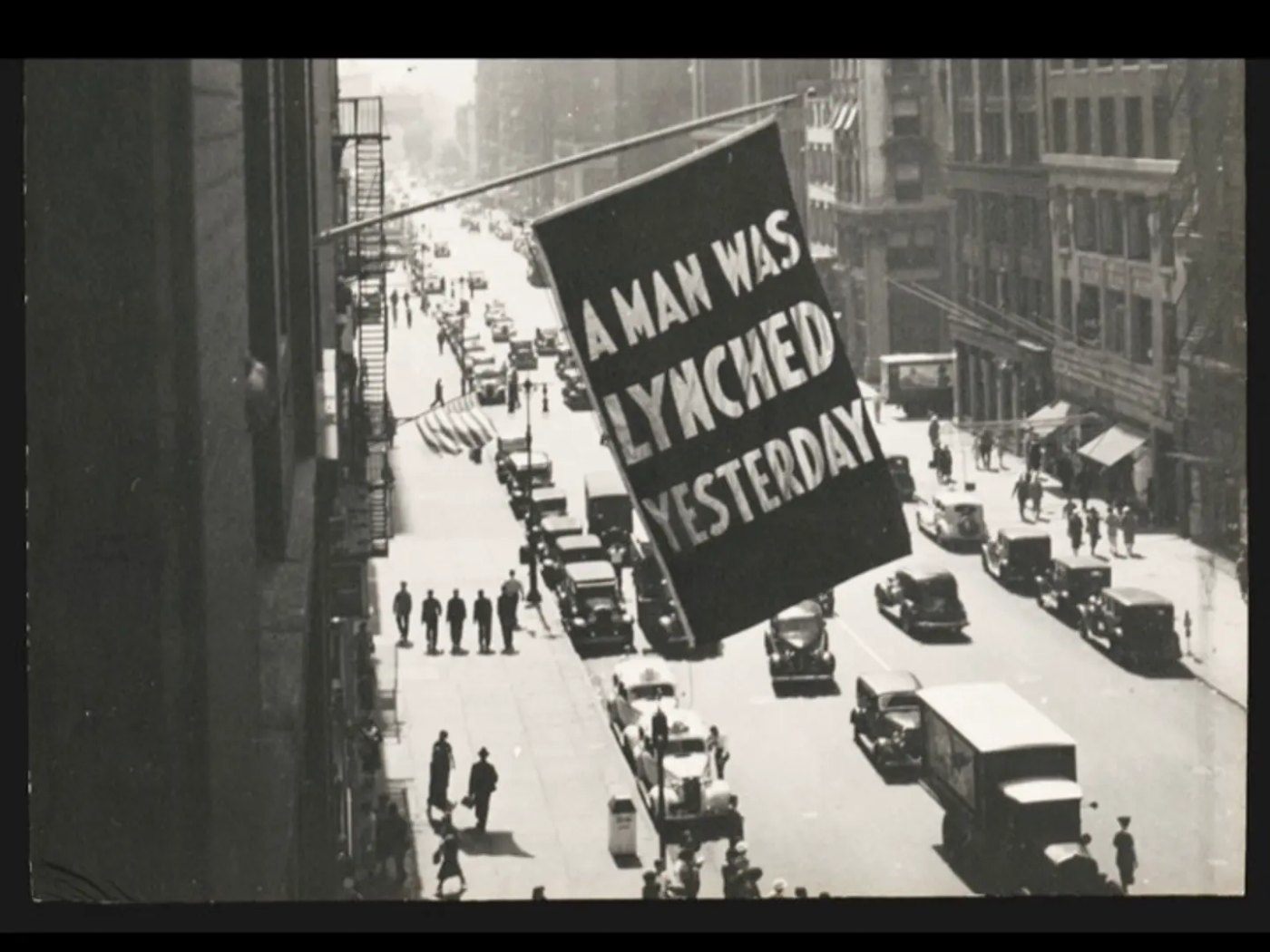
At 70 Fifth Avenue, the National Association for the Advancement of Colored People (NAACP) maintained its New York headquarters. The organization was at the center of some of the most consequential civil rights campaigns of the early 20th century.
While at this location the NAACP began using one of its most powerful tools, a simple black flag bearing white words:
“A Man Was Lynched Yesterday.”
The NAACP used the flag as part of its campaign against racial terror and lynching. Accounts indicate that the organization began flying the flag from its Fifth Avenue headquarters in the 1920s, and a famous photograph from 1936 shows it hanging outside the organization’s later headquarters at 69 Fifth Avenue.
The message was deliberately stark. When a lynching occurred, the flag announced it to everyone passing on Fifth Avenue.
There was no euphemism and no attempt to make the violence easier to confront.
The flag forced New Yorkers to recognize that the violence occurring elsewhere in the country was not an abstract problem. It was an American problem.
The NAACP continued the practice despite pressure from its landlord. In 1938, the organization was forced to remove the flag or face eviction.
The photograph of the flag outside the Fifth Avenue headquarters has since become one of the most recognizable images of American civil rights activism.
It also provides an important connection to the Village’s significant, but often overlooked, Black history stretching back centuries. Greenwich Village and the South Village were home to substantial Black communities and institutions, including Little Africa, one of New York’s most important historic African American communities. The neighborhood later became an important center for Black artists, writers, musicians, intellectuals, and civil rights activists.
The NAACP flag belongs to that larger history: a history in which people used the public spaces of the Village and its surroundings to demand that American democracy live up to its promises.
Flags as Instruments of Revolution
What connects these very different flags?
At first glance, the Star-Spangled Banner, the Rainbow Flag, and the NAACP’s anti-lynching flag might seem to have little in common. One represents the United States; another represents LGBTQ+ identity and equality; the third announced acts of racial terror.
Yet all three demonstrate the extraordinary power of symbols in American public life.
The Star-Spangled Banner was born from a moment of war and national survival. The Rainbow Flag emerged from a movement demanding recognition and equal rights. The NAACP flag confronted the nation with the gap between its democratic ideals and the reality of racial violence.
And Greenwich Village has been a place where all three kinds of symbolism have found an audience.
That is what makes the history of flags in the Village particularly appropriate to Revolutionary Village, our 2026 theme commemorating the 250th anniversary of the Declaration of Independence.
The American Revolution established a new nation around revolutionary ideas about liberty, representation, and individual rights. But the meaning of those ideas was never settled in 1776.
Over the following 250 years, Americans repeatedly asked who was entitled to those freedoms.
Women demanded the right to vote. Abolitionists and African Americans challenged slavery and racial discrimination. Labor activists demanded economic justice. LGBTQ+ Americans fought for the right to live openly and equally. Artists and musicians challenged cultural conventions and political authority.
What Does the Flag Mean?
The Star-Spangled Banner asks whether the American flag still waves over “the land of the free and the home of the brave.”
The history of flags in Greenwich Village demonstrates that Americans have never stopped asking that question.
Sometimes the answer has been expressed through celebration: a flag raised proudly to proclaim identity, community, and belonging.
Sometimes it has been expressed through protest: a flag demanding that the nation recognize injustice.
And sometimes it has been expressed through art, as Jimi Hendrix transformed the national anthem itself into an unsettling, exhilarating meditation on war and American identity.
That may be one of the most important lessons of the Star-Spangled Banner’s legacy. A national symbol does not have one permanent meaning. Its meaning is shaped and reshaped by the people who live under it.
In 2026, we celebrated 250 years of American history, the flags of Greenwich Village remind us that the American Revolution is not merely something that happened in the distant past.
It is an ongoing conversation.
It is the question of who belongs, who is free, whose rights are protected, whose voices are heard, and whether the nation can live up to the ideals it claims as its own.
From the battered flag above Fort McHenry, to the Rainbow Flag flying over the Village, to the stark black banner announcing “A Man Was Lynched Yesterday,” flags have helped Americans make those arguments visible.
Greenwich Village, the Revolutionary Village, has repeatedly been the place where those revolutions in politics, culture, art, identity, and social movements have unfolded; challenging, expanding, and defending the meaning of freedom and equality.