A New Chapter for the Archive Building: Welcoming New Federal Theatre to Greenwich Village
Greenwich Village has an exciting new neighbor! Woodie King’s acclaimed New Federal Theatre has found a permanent home inside the landmarked Archive Building at 154 Christopher Street.
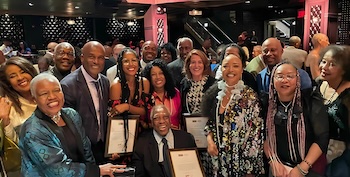
Founded in 1970 by Woodie King Jr., the company has played an important role in American theater for more than five decades, producing the work of Black playwrights, playwrights of color, and women, and providing opportunities for generations of artists. The arrival of this foundational company in our neighborhood is great cause for celebration in its own right.
But its new home also tells an important preservation story.
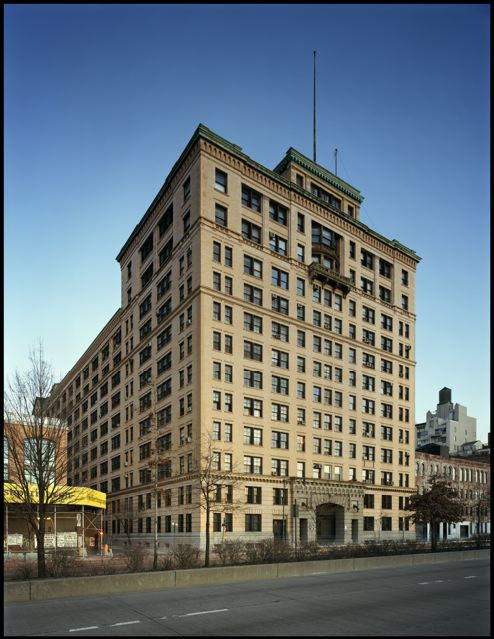
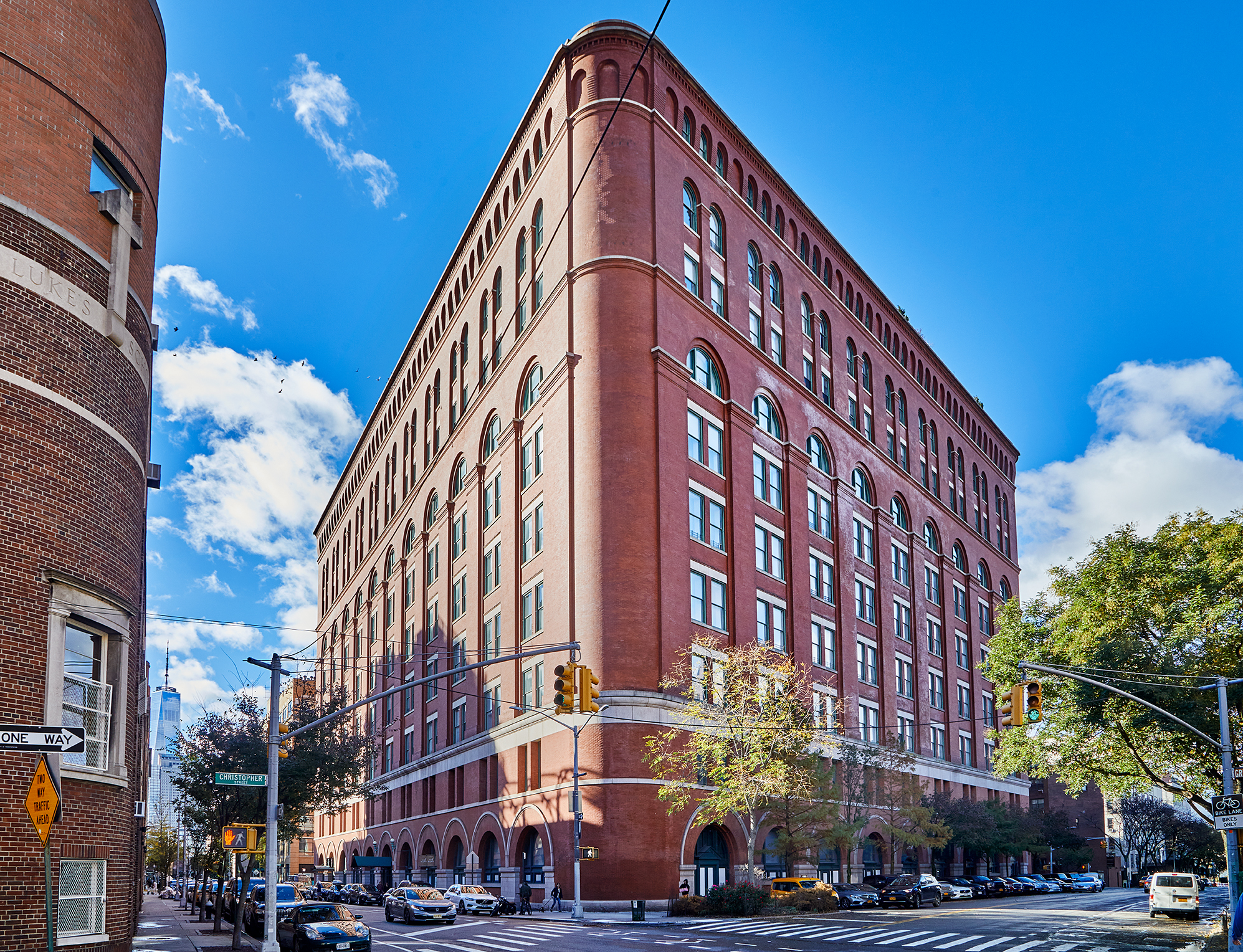
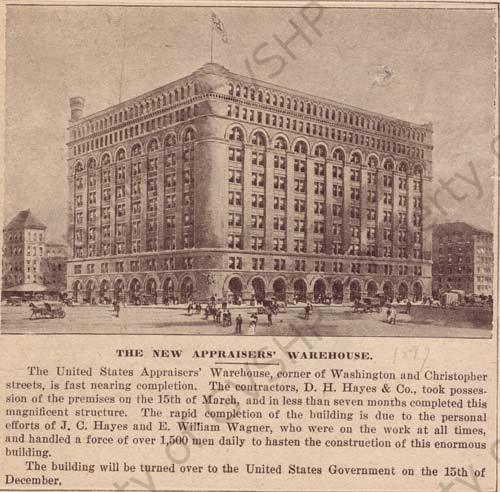
The enormous Romanesque Revival Archive Building fills an entire block bounded by Christopher, Barrow, Greenwich, and Washington Streets. Designed by Willoughby J. Edbrooke, supervising architect of the U.S. Treasury, it was constructed between 1892 and 1899 as the U.S. Appraisers’ Warehouse, where the federal government assessed tariffs on goods arriving through New York’s busy West Side waterfront. Its massive masonry walls, broad brick piers, round arches, and imposing cornice reflected the industrial character of the Far West Village at the turn of the 20th century.
The building later housed the National Archives, a post office, and other federal agencies. Recognizing its architectural and historical importance, New York City designated it an individual landmark in 1966. It was subsequently listed on the State and National Registers of Historic Places.
Yet landmark designation alone did not guarantee its survival.
In 1976, the federal government declared the building surplus property, putting its future in jeopardy. A successful preservation effort led to a deal in which ownership was transferred to the New York State Urban Development Corporation, which then leased the property to a private developer for conversion to residential use.
The story of the Federal Archive Building is also a story of preservation through adaptive reuse. Our colleague organization, the New York Landmarks Conservancy, was instrumental in advocating for the preservation of this remarkable building and set the stage for its transformation into a vibrant new use. The renovation, completed in 1988, retained many of the building’s historic elements while adapting the enormous former federal facility for a new purpose.
As part of that successful preservation effort, space in the building was set aside for nonprofit cultural uses. Today, that commitment to cultural use is being realized by New Federal Theatre, which is bringing new artistic life to a space whose continued existence is itself a preservation victory.
That is what makes this new chapter especially meaningful.
Preservation is not simply about saving buildings from demolition. It is about giving historic places a future. The Archive Building could have been lost when the federal government no longer had a use for it. Instead, through preservation and creative adaptive reuse, this extraordinary structure remains a living part of Greenwich Village.
And now it is once again a place where New Yorkers gather to experience and create culture.
At a time when escalating real estate costs are pushing arts organizations out of Greenwich Village and other parts of Lower Manhattan, the Archive Building stands as an important example of why preserving space for nonprofit cultural use matters. It also demonstrates the broader value of preserving the neighborhood’s architectural heritage: the buildings we save can become the places where entirely new chapters of New York’s cultural history can be written.