
A Subway Station Disconnect Under NoHo
For decades, there was one quirk every in-the-know subway rider knew about: you could only transfer from the IND trains running through the Broadway-Lafayette Street station to the downtown 6 trains running through the Bleecker Street Street station; to get to the uptown 6, you’d have to leave the system and pay an extra fare. The problem was so well known (and hated) that it showed up in Spy Magazine’s 1989’s list of annoying people, places, and things.
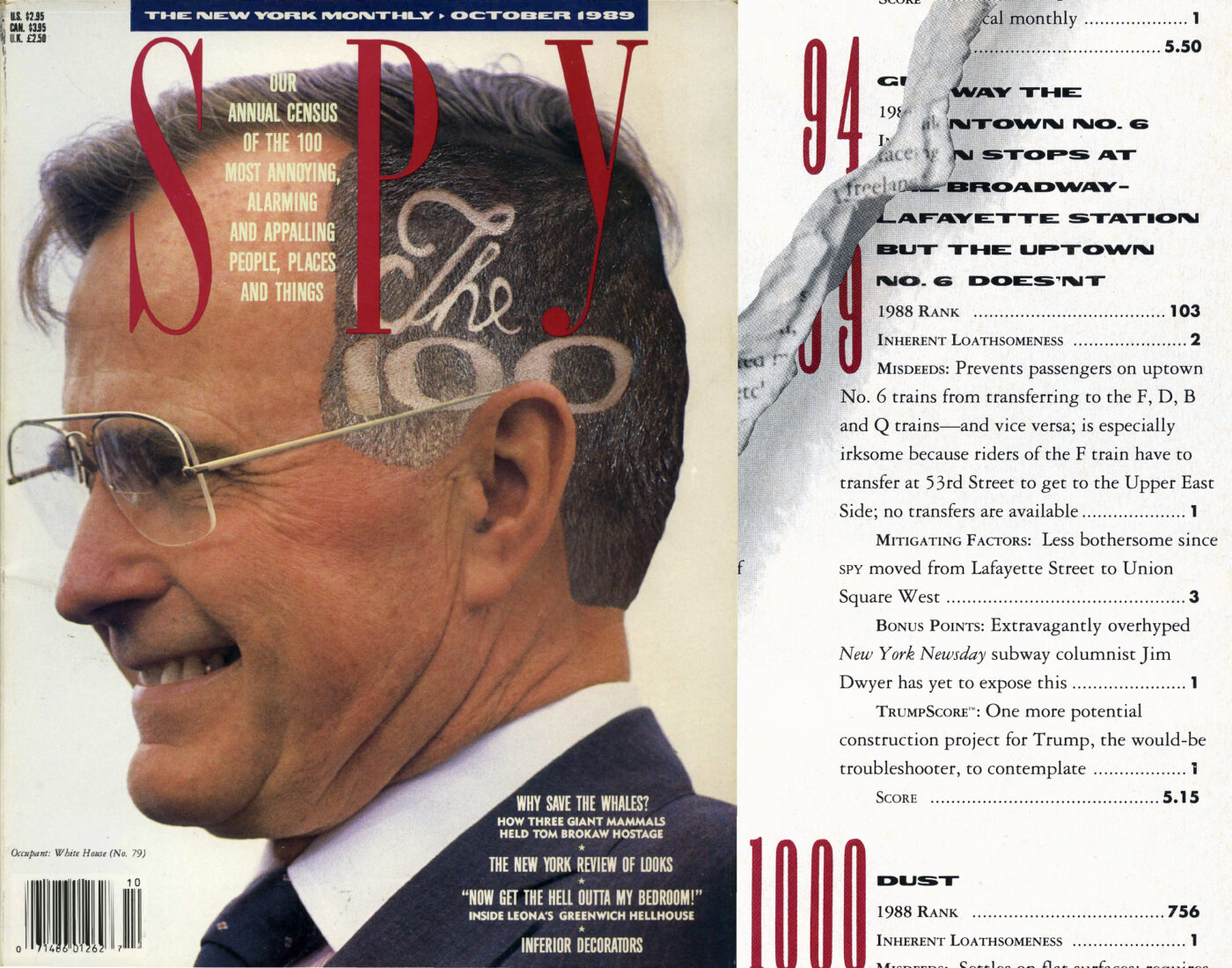
Fortunately for riders in NoHo and all of New York City, the quirk was resolved in September 2012, more than half a century after the initial downtown connection was made. The 21st-century project improved traffic flow for riders, saved them an extra MetroCard swipe, and removed a topic of conversation for subway newbies.
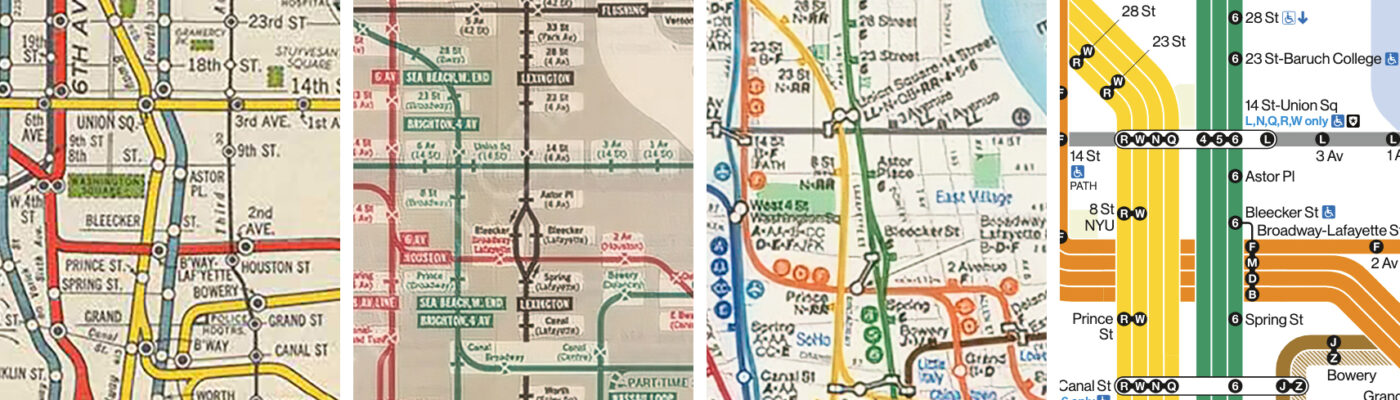
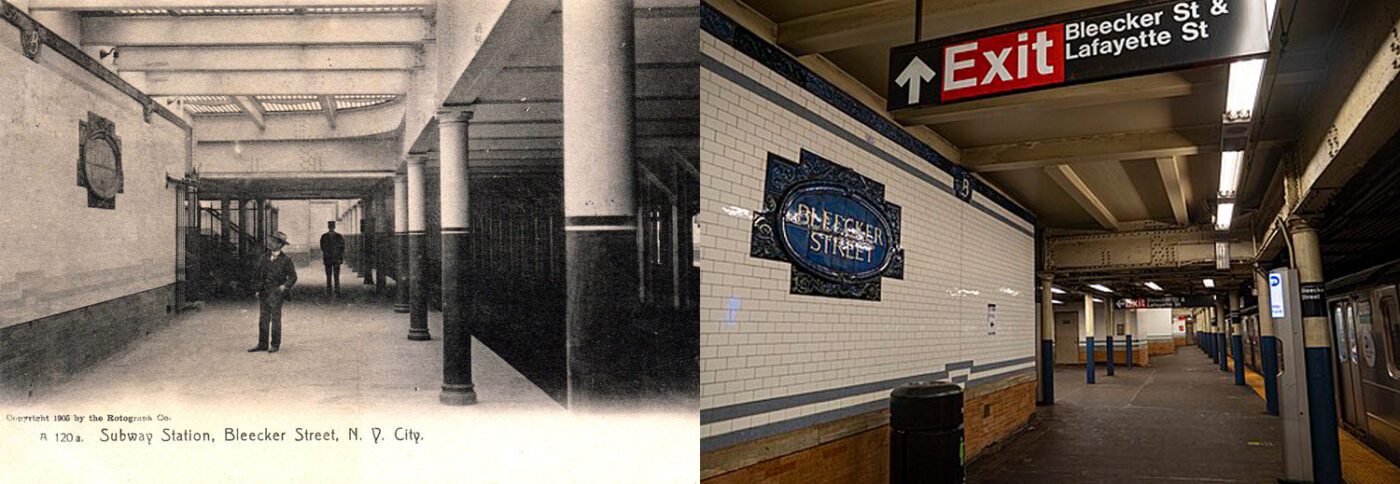
The problem of transferring between the 6 train and the present-day B, D, F, and M lines arose from how the city’s early subway system was built and who built it. The elegant Bleecker Street station — its interiors are listed on the State and National Registers of Historic Places, as well as designated an interior NYC landmark — was constructed in 1904 as a short local station within Manhattan’s first subway line by the privately held Interborough Rapid Transit (the IRT, encompassing all current numbered lines). Broadway-Lafayette was built for the city’s separate Independent Subway System and opened in 1936. Although in 1940 the city took control of the IRT (and another private operation, Brooklyn Manhattan Transit or BMT), the physical infrastructure remained divided in many places.
At Bleecker Street, the first step toward connecting the two systems came in 1957, after the station was lengthened south to accommodate longer, 10-car local trains. That brought the station’s southernmost section above Broadway-Lafayette and led to a fairly straightforward construction project for a connection between the two stops.
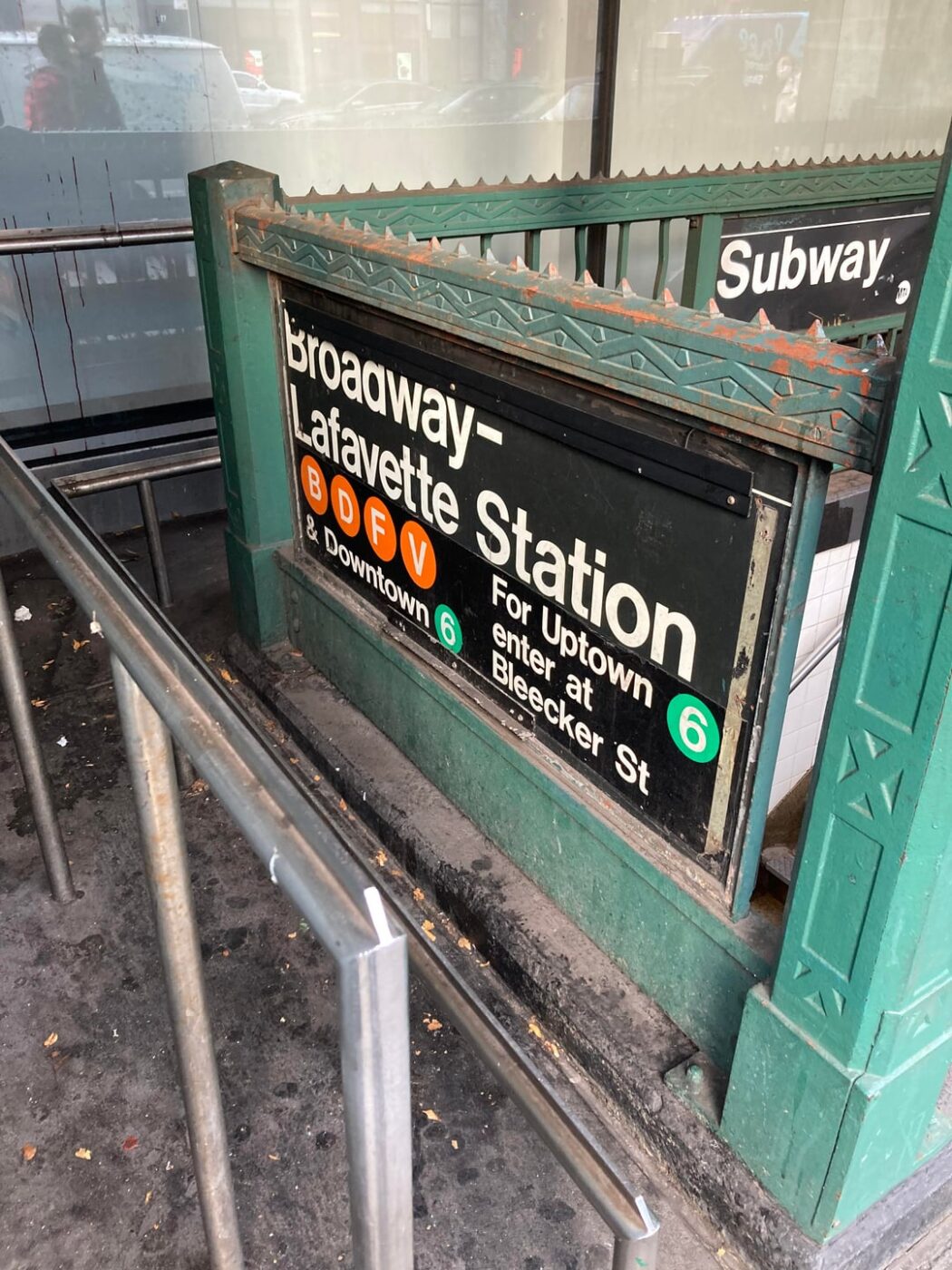
Creating a corresponding in-system transfer to the uptown platform was considerably more complicated. It required moving through substantial structural elements and constructing a completely new passageway. Thus, for more than five decades, passengers faced the bizarre situation of having a free transfer in one direction but not the other. Plans to correct the problem appeared in several proposals over that time span, but all were hindered by bureaucracy, funding, competing priorities, and the physical complexity of working beneath one of the city’s busiest streets.
The long-delayed project finally moved forward as part of the MTA’s 2005–2009 capital program. Construction involved shifting the uptown Bleecker Street platform, creating a new transfer mezzanine and passageway, and installing elevators and escalators connecting the different levels of the complex. The project also incorporated renovations to the historic Bleecker Street station. Work took years, but the complete uptown transfer finally opened on September 25, 2012. By then, the overall rehabilitation had grown substantially beyond its original estimated cost.
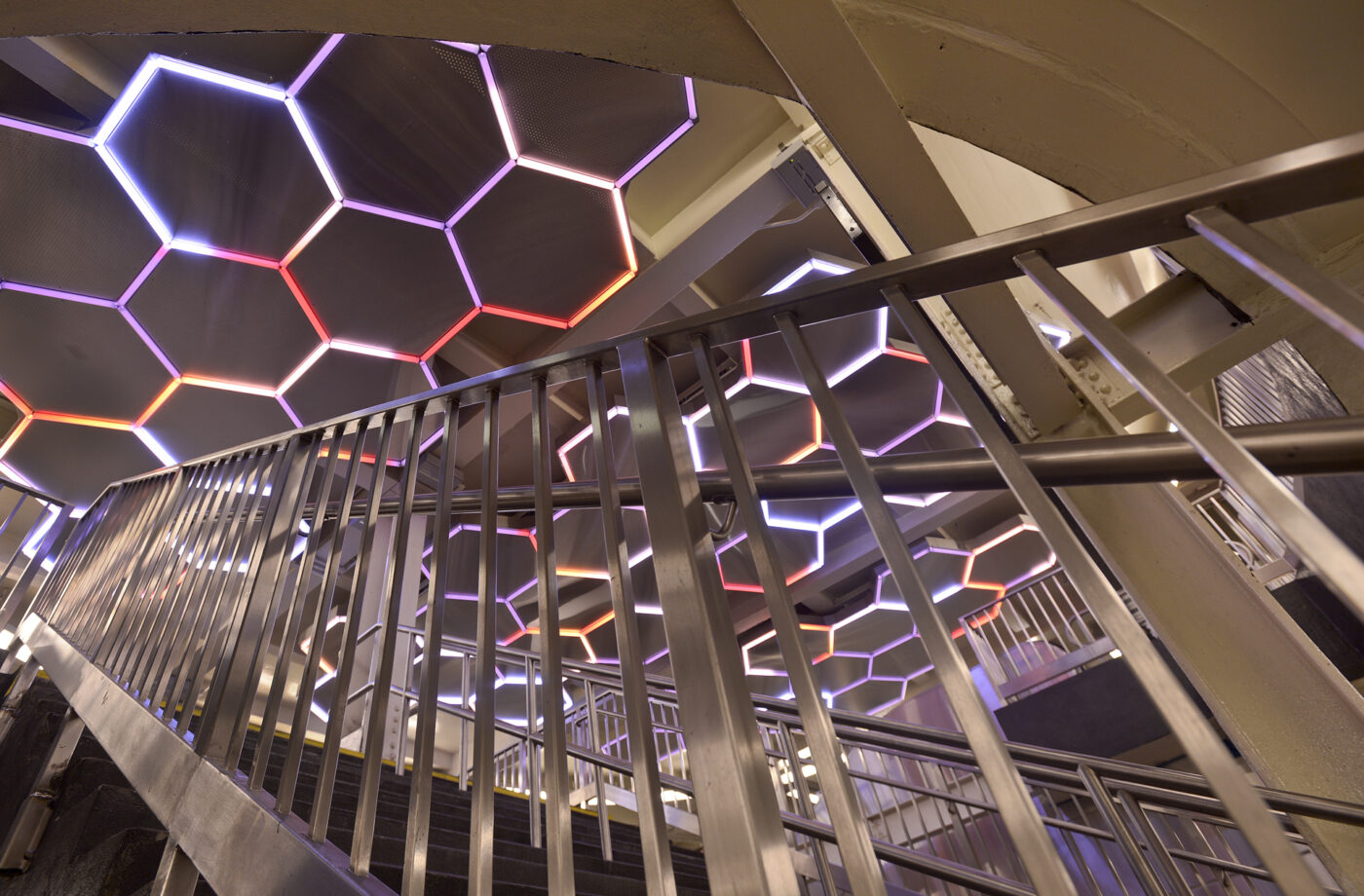
The newly constructed connection also brought a striking piece of public art to the station: Hive, a 2012 light installation by artist Leo Villareal. Suspended above the stairs and escalator connecting the uptown Bleecker Street platform with Broadway-Lafayette, the work consists of a large honeycomb-like array of hexagonal LED lights that continually change and pulse in shifting patterns, creating an ever-changing field of light overlooking subway riders. Commissioned through the MTA Arts for Transit program, Hive was conceived specifically for the newly created architectural space and became both a visual focal point and a kind of beacon for the new transfer. The geometric forms were inspired by mathematical patterns associated with mathematician John Horton Conway.
Hive joined another large-scale artwork in the station that was installed during a 1990s renovation project. Signal was created in collaboration with Seneca artist G. Peter Jemison and the Six Nations of the Iroquois. The work acknowledges that Broadway follows an ancient Native American trail and brings that history into the subway through tile designs, mosaics, and stainless-steel forms. Among its most distinctive elements are conical forms at the bases of columns, designed to resemble campfires whose lights brighten as trains approach and dim as they depart, transforming an abstract reference to the past into an actual subway “signal.” Blue tile patterns based on wampum belts and images of figures with outstretched arms further evoke Native presence, communication and peace. Together, Signal and Hive make the station’s circulation spaces more than merely functional, improving the daily commutes for the thousands of riders who use both stations.
The two installations beautify what to most riders today seems like an obvious connection between subway lines, one hardly worth a second thought. Even with the lengthy time required for construction in the New York City subway, it’s still hard to believe that it took 55 years to bring this transfer to fruition.
Read more about local subway stations and history here.