
The Haunted History of St. Mark’s Church
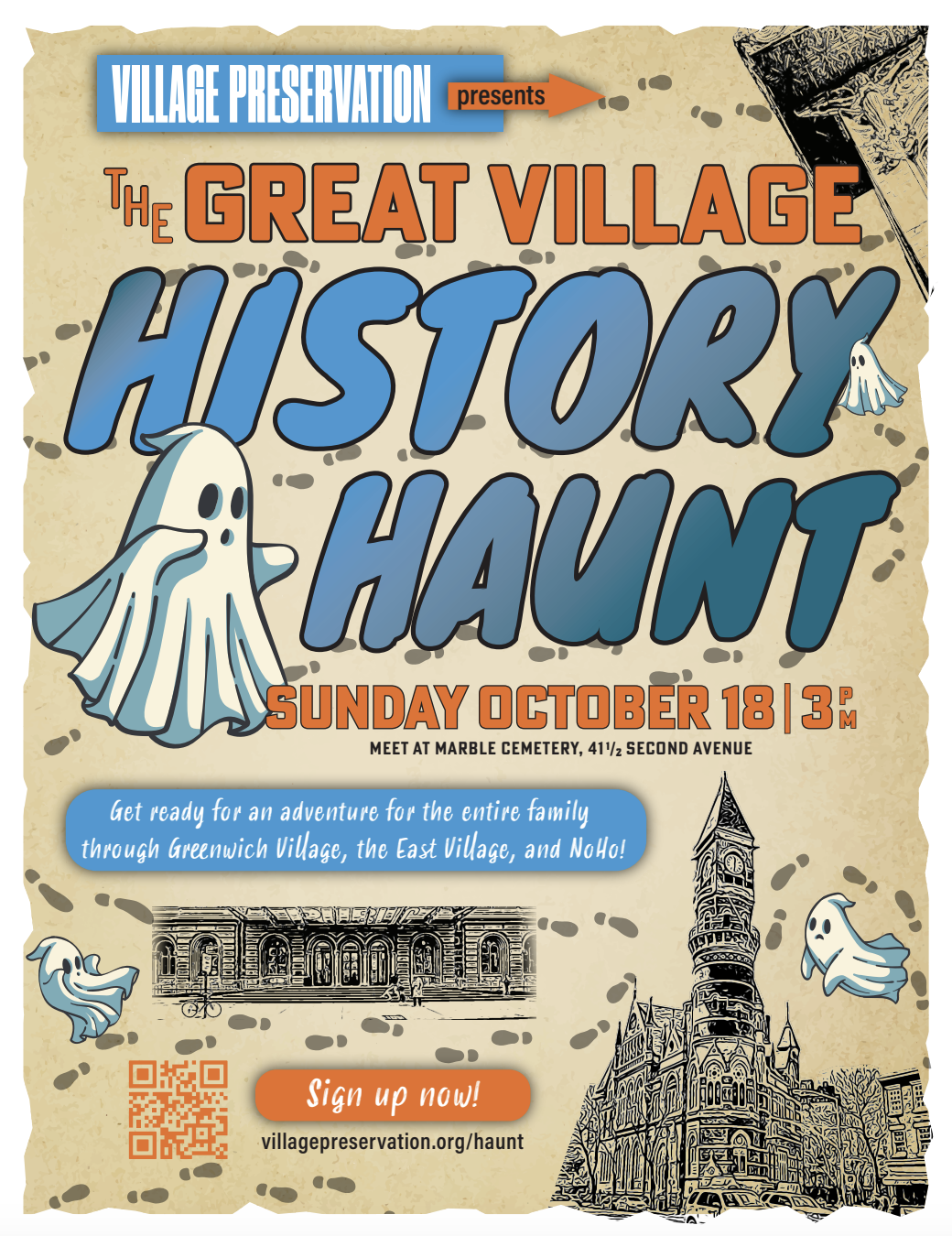
On October 18, 2026, Village Preservation will host the Great Village History Haunt! This year, however, the expedition has a new twist. As with the 2025 History Hunt, participants will receive a Village Preservation passport, a treasure-hunt map, and a bag to collect the day’s treats. But this year the hunt centers around the East Village’s spookiest spots, where attendees will meet some friendly ghosts and discover the fascinating, sometimes eerie histories behind these neighborhood haunts. Participants are encouraged to dress in their Halloween best as they trick-or-treat around the East Village.
In 2020, Village Preservation co-hosted a virtual ghost-tour program with the Boroughs of the Dead, the Merchant’s House Museum, and the Village Alliance. Ghost expert Andrea Jones led viewers through the neighborhood’s eerie history. Today, we are looking at the haunted past behind one of the sites featured on the history haunt: St. Mark’s Church in the Bowery.
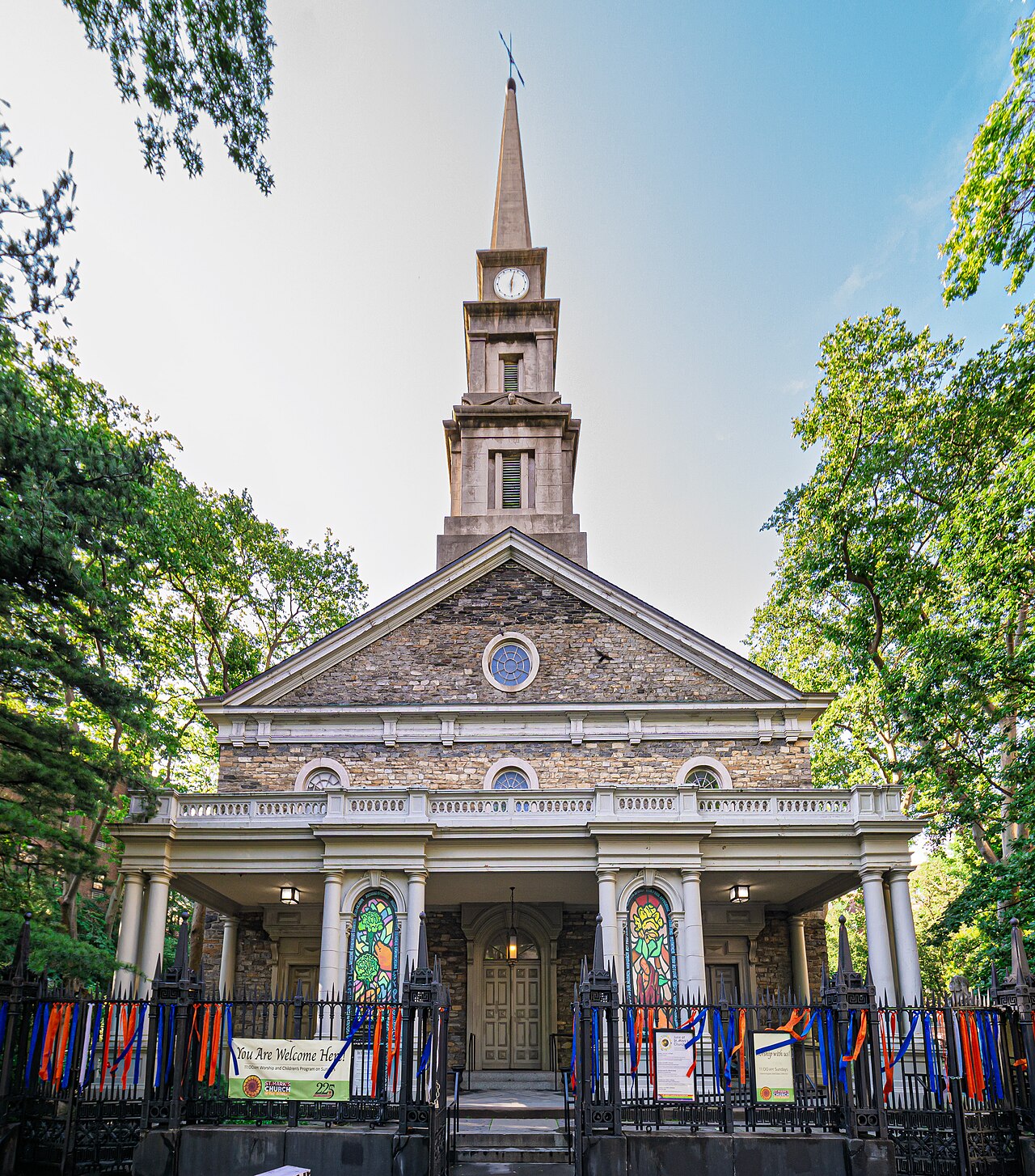
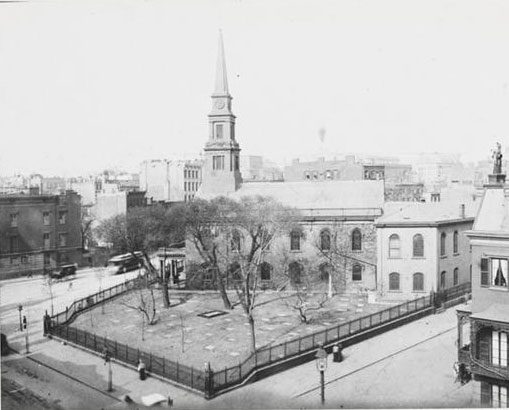
Architecturally, the church stands out against the backdrop of busy Second Avenue (which it pre-dates), and acts as a physical reminder of an earlier New York. St. Mark’s Church in the Bowery sits on land once owned by the Stuyvesant family dynasty. On March 12, 1651, Peter Stuyvesant, Director General of the Dutch West India Company, purchased the farmland. And while the area was eventually reworked and developed, the land remained in the family for generations to come.
Located at 131 East 10th Street, between East 10th and 11th Streets and 2nd Avenue, St. Mark’s Church in the Bowery has been a neighborhood fixture for centuries. It’s rectory, located behind the church at 232 East 11th Street, is also the home since 1999 of Village Preservation’s own offices. On April 25, 1795, the cornerstone was laid for the building we now call St. Mark’s Church in the Bowery. At the time, the church stood on Governor Peter Stuyvesant’s farm, or bouwerie (Dutch for farm), and replaced another church built in 1660 in the same place. Its location on that sprawling farm is why the church does not face either Second Avenue or 10th Street, as neither thoroughfare existed at the time. It took four more years after the cornerstone was laid for the fieldstone church to officially open; the Georgian-style church was completed in 1799. Several additions followed over the next century: architect Ithiel Town completed the Greek Revival steeple in 1828, and the cast-iron, Italianate portico was added in 1854, possibly by architect James Bogardus. The iron fence was added in 1838, likely part of a series of renovations undertaken by architect Martin E. Thompson.
But before St. Mark’s Church in the Bowery and before the hustle and bustle of today’s East Village, a private chapel stood on the Stuyvesant plot, located at what we now call 131 East 10th Street. Peter Stuyvesant built this chapel for his family in the 1660s, where they worshipped according to the Dutch Reformed tradition. Peter Stuyvesant passed away in 1672 and was buried on the same land as the chapel. Today, his burial plot lies beneath St. Mark’s Church in the Bowery.
The hauntings of St. Mark’s Church are generally attributed to Peter Stuyvesant himself, whose ghost is said to be restless because he was dissatisfied and disgruntled with the direction New York City took after his death. Similar to Gertrude Treadwell of the Merchant’s House, sightings of Peter Stuyvesant’s ghost were seen almost immediately after his death. And his ghost is always recognizable due to his distinctive limp, having lost one of his legs in a military accident, Peter Stuyvesant is colloquially known as Peg Leg Pete. And he lived close by, but his residence burned down in a fire after his death. It’s said his spirit was seen hobbling on his peg leg amongst the smoking rubble in the hours after the fire.
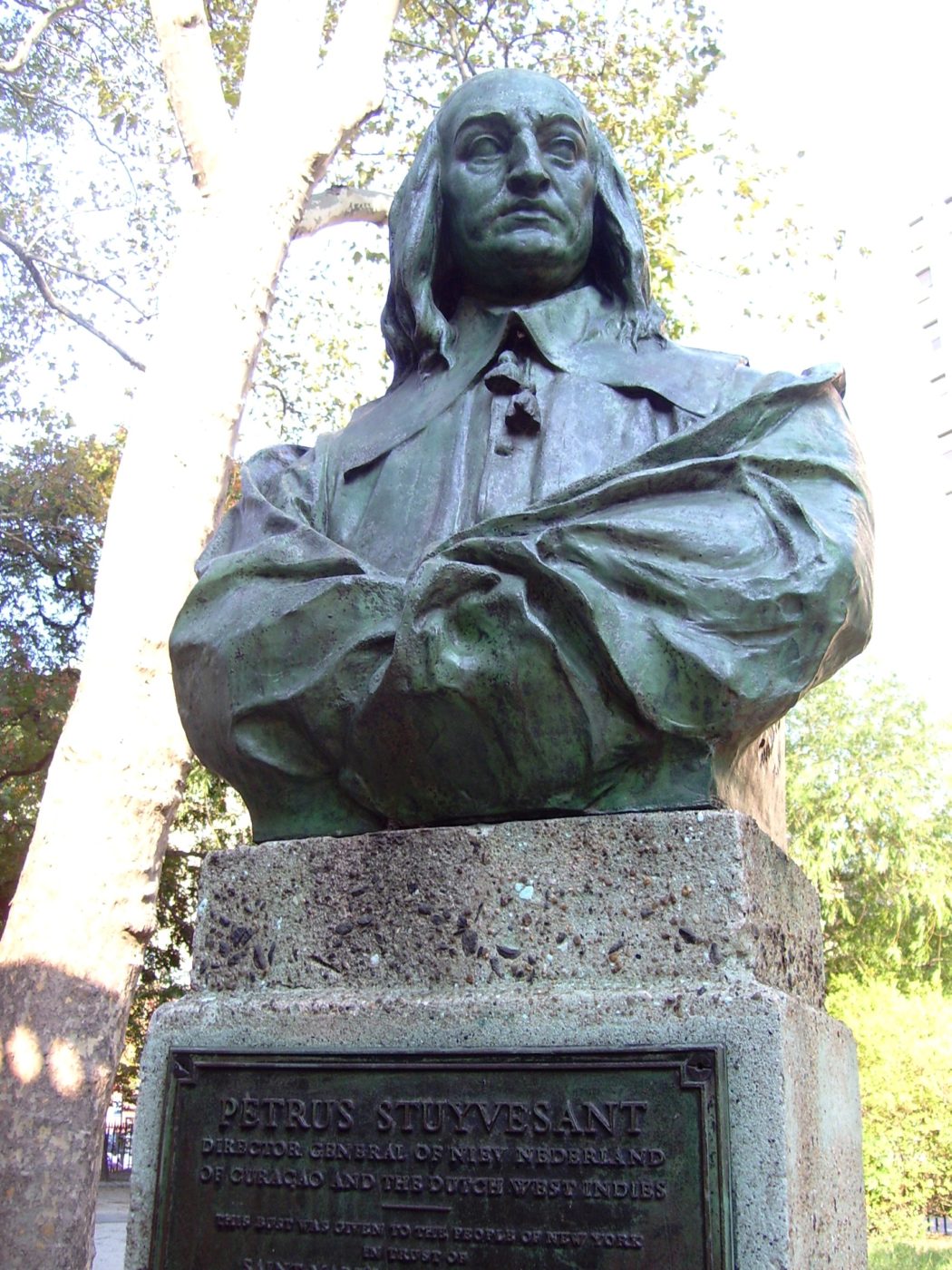
His ghost would ring the Church’s bell after hours when the doors were all locked, spooking sextons and churchgoers throughout the 1800s. On Christmas Eve, people would hear him join in the holiday carols. While his presence has certainly faded over the last century, it is still felt, especially in the rectory.
The Great Village History Haunt is set for October 18, 2026. Attendees will learn more about St. Mark’s Church’s history and the haunted past of several nearby East Village sites. Register for the fun day here. While the tour’s themes and structure are geared toward families with elementary school children, all are welcome to join!