
Archtober and Beyond: Deep Dives into Our Neighborhoods’ Architecture
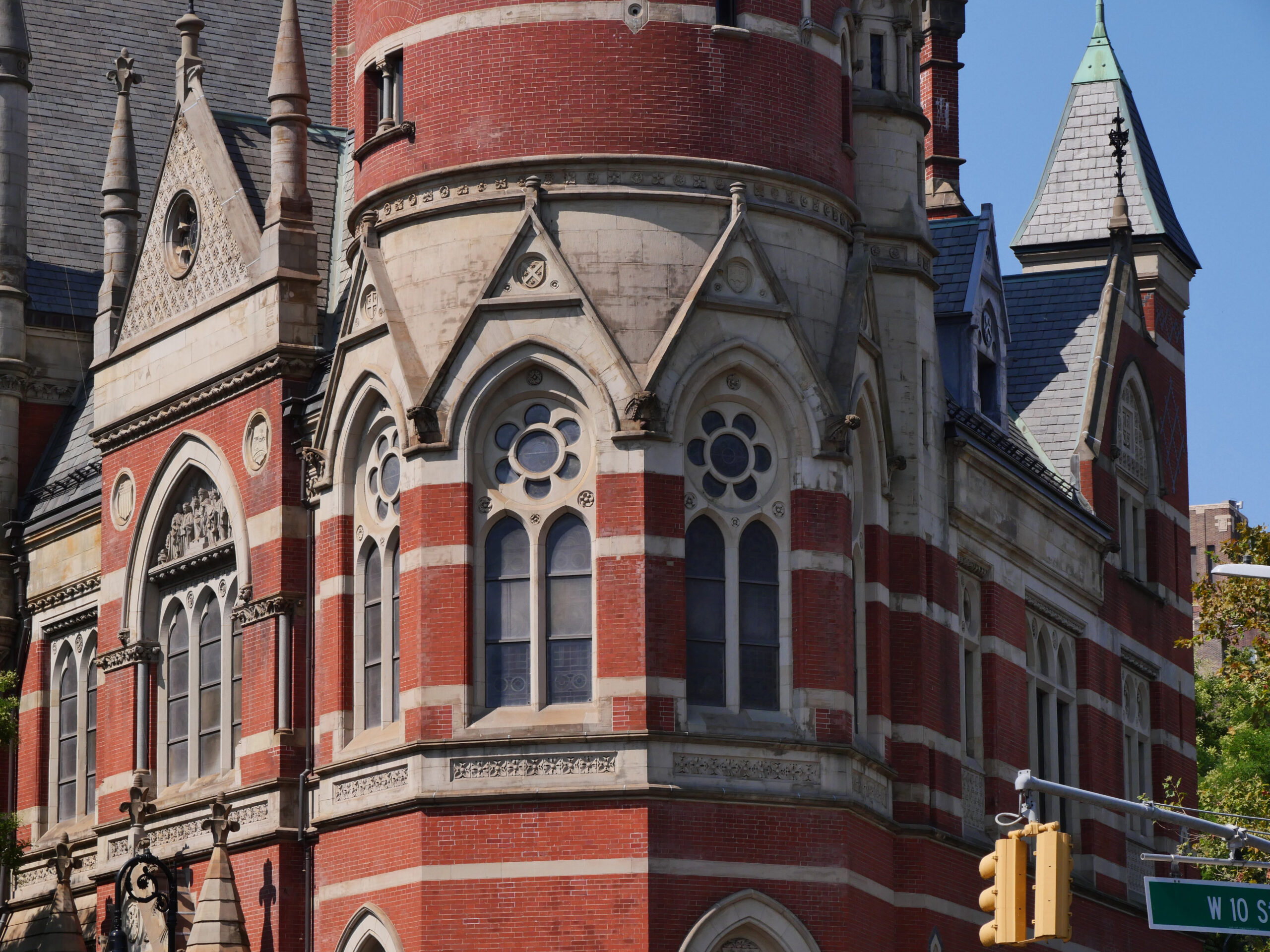
Archtober is a month-long celebration of architecture in New York City. Here at Village Preservation, however, we celebrate the architecture of our neighborhoods all year long. Even better, we invite you to join us in this celebration and provide you with ample resources to do so. The possibilities abound. Village Preservation has secured the landmark designation for 1,300 buildings, and you can find on our site the Landmarks Preservation Commission reports for all designated individual sites and districts within our neighborhoods. These reports provide information about buildings’ architectural details, histories, and significance. Several of our maps focus specifically on our local architecture, allowing you to take a walking tour organized around particular styles, like Art Deco or Greek Revival. Today, however, we focus on the reports that we’ve created for several parts of our neighborhoods either as part of efforts to create new historic districts or simply to document their rich architectural legacy.
The East Village
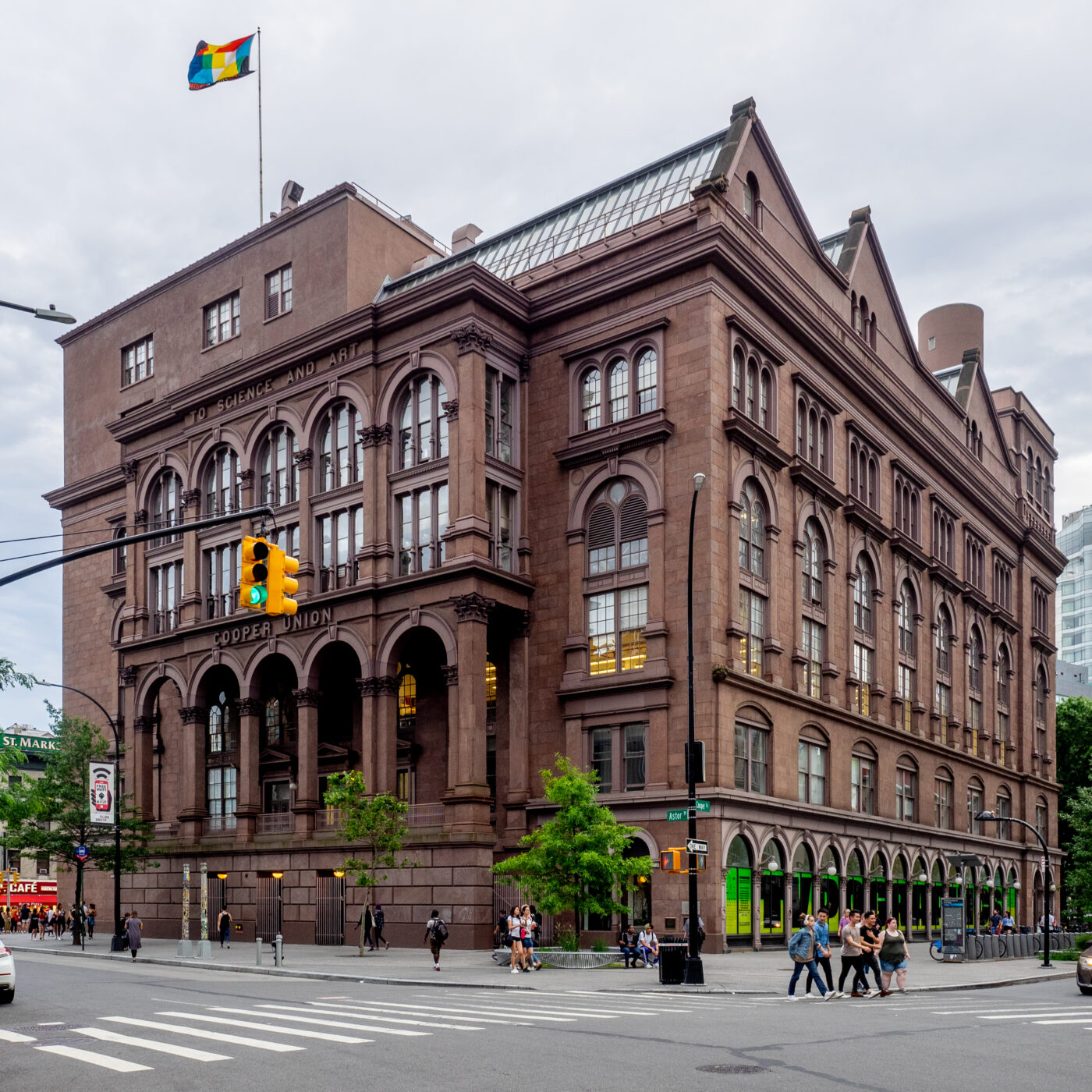
The East Village holds one of New York’s richest and most varied architectural legacies, layered across more than two centuries. Some of its streets predate the Manhattan grid, following Native American trails and Dutch colonial roads, and its oldest buildings date to the 18th century, including the city’s oldest site of continuous religious worship and Manhattan’s oldest residential building still serving as a home. Elegant early-19th-century houses built by families like the Stuyvesants and Astors still stand on St. Mark’s Place and Second Avenue, though many have been adapted for commerce, worship, or performance. The neighborhood also has one of the city’s most impressive and intact collections of 19th- and early-20th-century tenements. Some date back to the earliest years of the building type, and several boast rich detail by notable architects like George F. Pelham and the Herter Brothers. Alongside them stand the city’s largest concentration of C.B.J. Snyder schools, some of New York’s earliest public libraries, and houses of worship for many ethnicities and denominations. This remarkable legacy remains at risk. Rowhouses, churches, and theaters have been demolished, and cornices and historic storefronts are being stripped away, which makes the case for further landmark protection urgent. See our report here.
South of Union Square

The nearly twenty blocks south of Union Square offer some of the most stunning and varied architecture in the city. It contains dynamic juxtapositions of townhouses, grand commercial emporia, industrial lofts, and rowhouses and tenements. Some of the extant early-19th-century houses are the first and only buildings to have occupied their lots. Several of the mid-19th-century commercial buildings were among the most important of the era. And a number of turn-of-the-century lofts and factories stand out for their intricate and innovative detailing. Demolitions, including the 165-year-old St. Denis Hotel and a 140-year-old cast-iron building on Broadway, make evident the urgency of the case for landmark protection. See our report here.
South Village

The South Village, the area south of Washington Square and east of Seventh Avenue, has perhaps New York’s finest collection of intact working-class architecture from the late 19th and early 20th centuries. Its tenements cover nearly every style and type, from pre-law to new law and Italianate to Beaux Arts, and many keep their original storefronts, cornices, and ironwork. These sit among more than 200 Federal and Greek Revival rowhouses, along with stables, lofts, reform housing, and churches built for the neighborhood’s Italian immigrant community. Whole streets look much as they did a century ago. Thanks to our efforts, the Landmarks Preservation Commission designated a South Village Historic District in 2013.
We have also prepared reports on individual buildings, for those who want a deep dive into some of the more notable structures in our neighborhoods.
Webster Hall

The stunning Webster Hall, at 119-125 East 11th Street, has, of course, tremendous cultural importance as a gathering space and performance venue. But it is just as remarkable architecturally. It was designed by Charles Rentz in 1886 in a richly ornamented Romanesque Revival style. Its red Philadelphia brick façade is trimmed with brownstone and elaborate terra cotta foliage. The fourth bay, which was added in 1892, matches the materials, height, and cornice so closely as to render the transition seamless. Up close, though, its terra cotta swaps the foliage found elsewhere in the building for lyres, violins, and cherubs that evoke the dances held inside. Apart from the original mansard roof, which was lost in one of several fires, the façade has changed remarkably little. Thanks to the efforts of Village Preservation, the hall was landmarked in 2008.
Westbeth Artists’ Housing

Westbeth, which fills an entire West Village block, began as the Western Electric and Bell Labs complex. The complex consists of yellow-brick and terra-cotta industrial buildings dating from about 1861 to 1929. One of them is famously traversed by the High Line. In 1967-70, a young Richard Meier undertook as his first major commission adapting the complex for artist housing. This ambitious project was the first conversion of its kind in the nation. Meier kept the original fabric largely intact but added duplex units modeled on Le Corbusier’s Unité d’Habitation, an open-air courtyard ringed with rounded fire balconies, and a landscaped park on Bank Street. Thanks to our advocacy, the complex was landmarked in 2011.
Church of Most Holy Redeemer
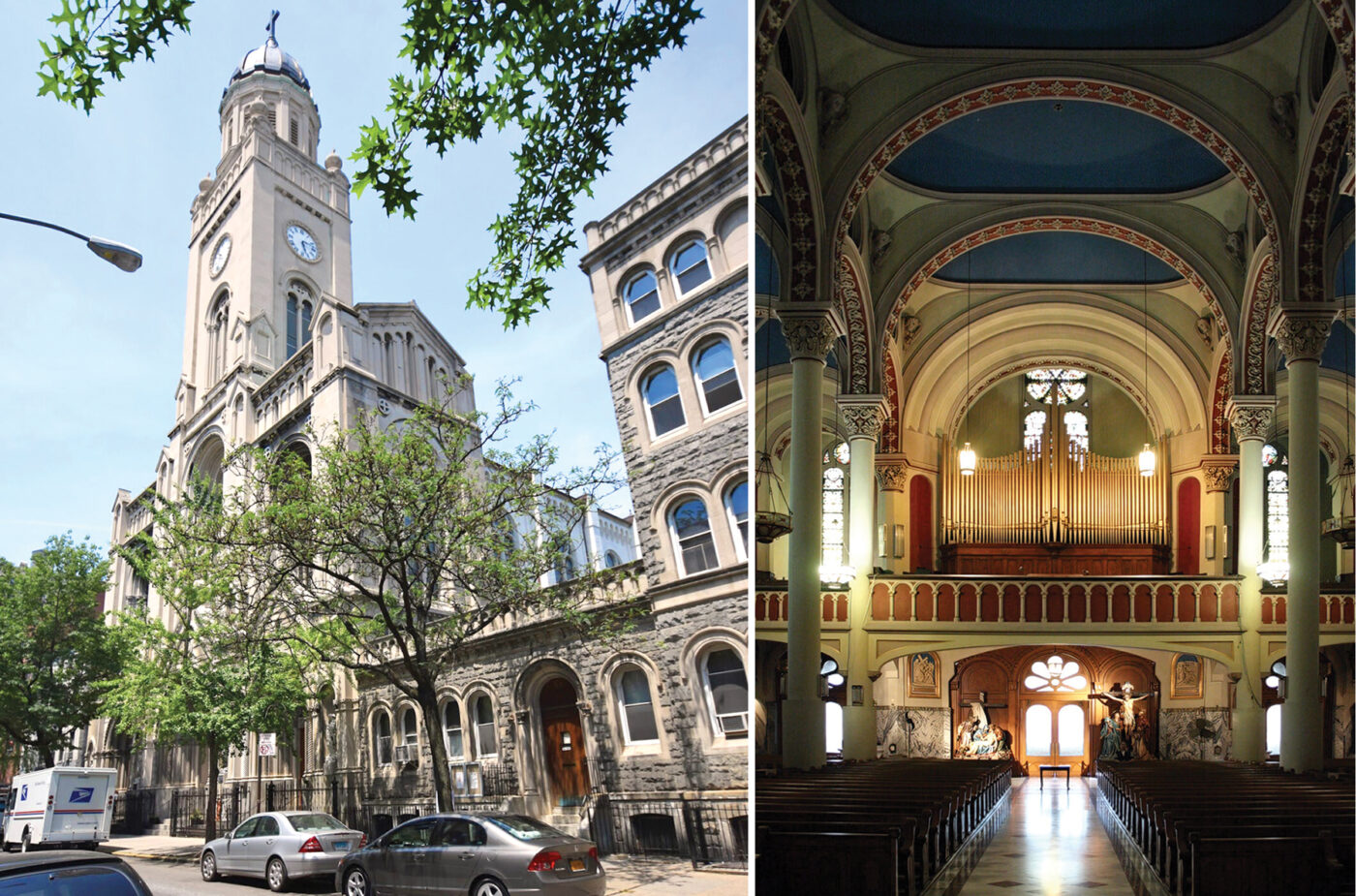
The Church of the Most Holy Redeemer on East 3rd Street was built in 1851-52 for the East Village’s German Catholic community, back when the area was known as Kleindeutschland. Designed by architect Joseph Walch, it was among the city’s largest churches at the time. In 1913, Paul Schultz refaced the church and its rectory in granite and limestone and added several Romanesque Revival details: three deeply recessed arched entrances, paired stained-glass windows framed by Corinthian columns, and a central rose window. Its 232-foot tower, which is crowned by a copper-domed belfry, still defines the East Village skyline. The complex is the last surviving church of the neighborhood’s German-speaking Catholics. Despite its remarkable architecture and rich history, the church’s future remains in doubt, ever since masses there were discontinued, under dubious circumstances. We have asked the Landmarks Preservation Commission to consider the landmark designation of the church; but the commission has had a poor track record of preserving churches, synagogues, and other historic sites in the East Village in recent years. Join our campaign to preserve the Most Holy Redeemer Church and its ongoing service to and legacy in the East Village here.
These resources should go a long way toward making just about any stroll through the neighborhood an architectural adventure to remember. We hope that they enrich your appreciation of the history and artistry that the built fabric of our neighborhoods have to offer.