
Celebrating a President’s Birthday with a Neighborhood Tour
Theodore Roosevelt, born on October 27, 1858, is often remembered as a larger-than-life president: a Rough Rider, a conservationist, and an energetic champion of reform. But before he entered the White House, he was a New Yorker whose family had deep roots in and around Greenwich Village.
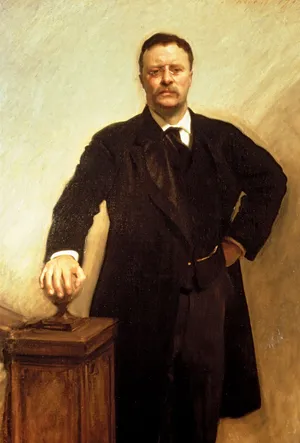
Those connections remain visible in the neighborhood’s streets and buildings, from the site of a Roosevelt family mansion near Union Square to a former police station in the Far West Village. Along the way, we can also explore the work of Frances Perkins, whose efforts on behalf of workers brought her into contact with the former president.
Stop 1: Theodore Roosevelt’s Birthplace
28 East 20th Street
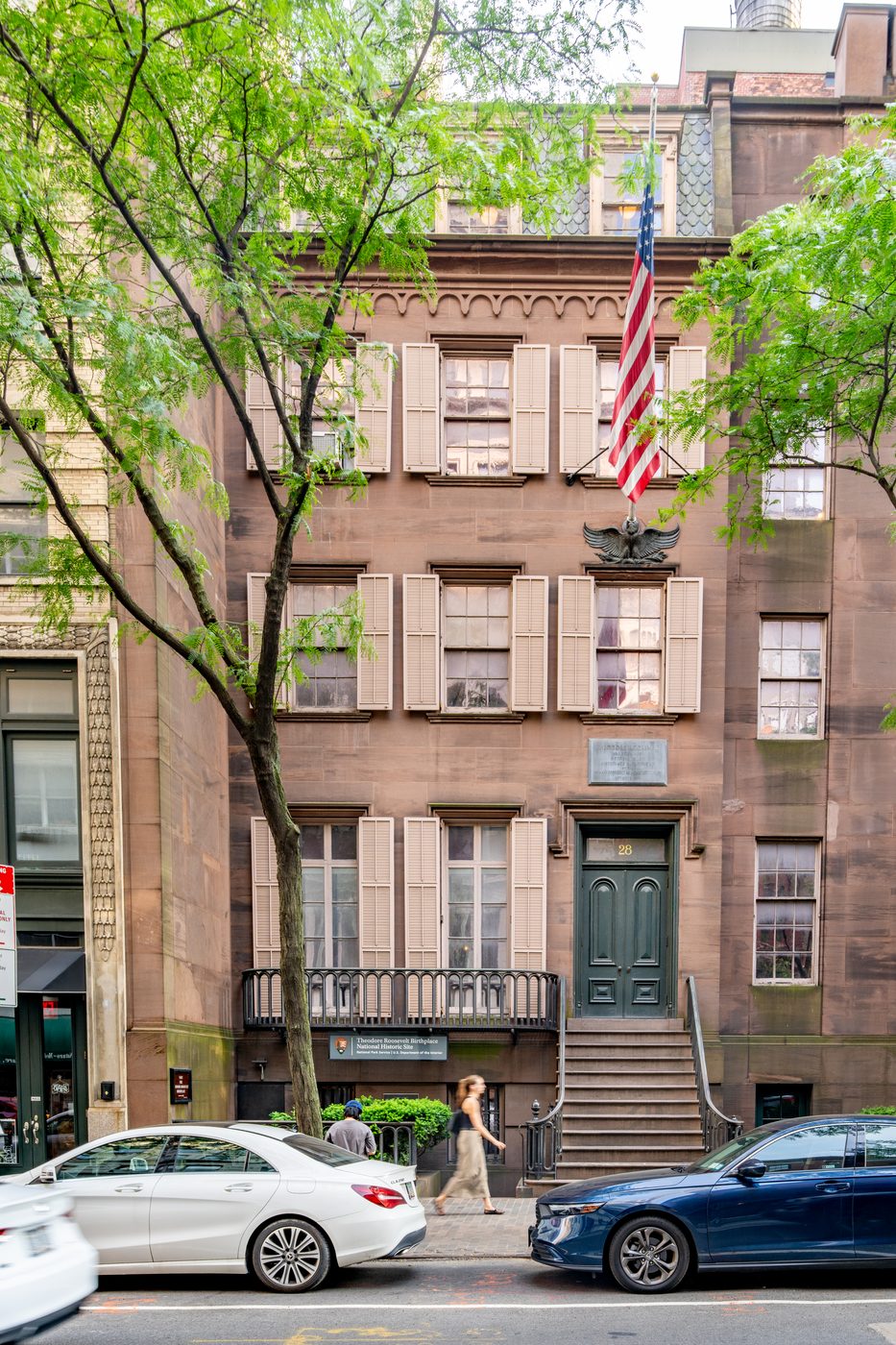
Our walk begins just north of Union Square, where Theodore Roosevelt was born into a prosperous New York family. He spent much of his childhood at 28 East 20th Street before his family moved uptown in 1872.
The brownstone we see today, however, is not the original house. The building was demolished in 1916, and after Roosevelt’s death in 1919, the Women’s Roosevelt Memorial Association acquired the property and recreated his childhood home. Today it is the Theodore Roosevelt Birthplace National Historic Site.
The story of the house and its reconstruction offers a reminder of how much this area changed as commercial development moved northward.
Stop 2: The Site of the Roosevelt Family Mansion
Southwest corner of Broadway and East 14th Street
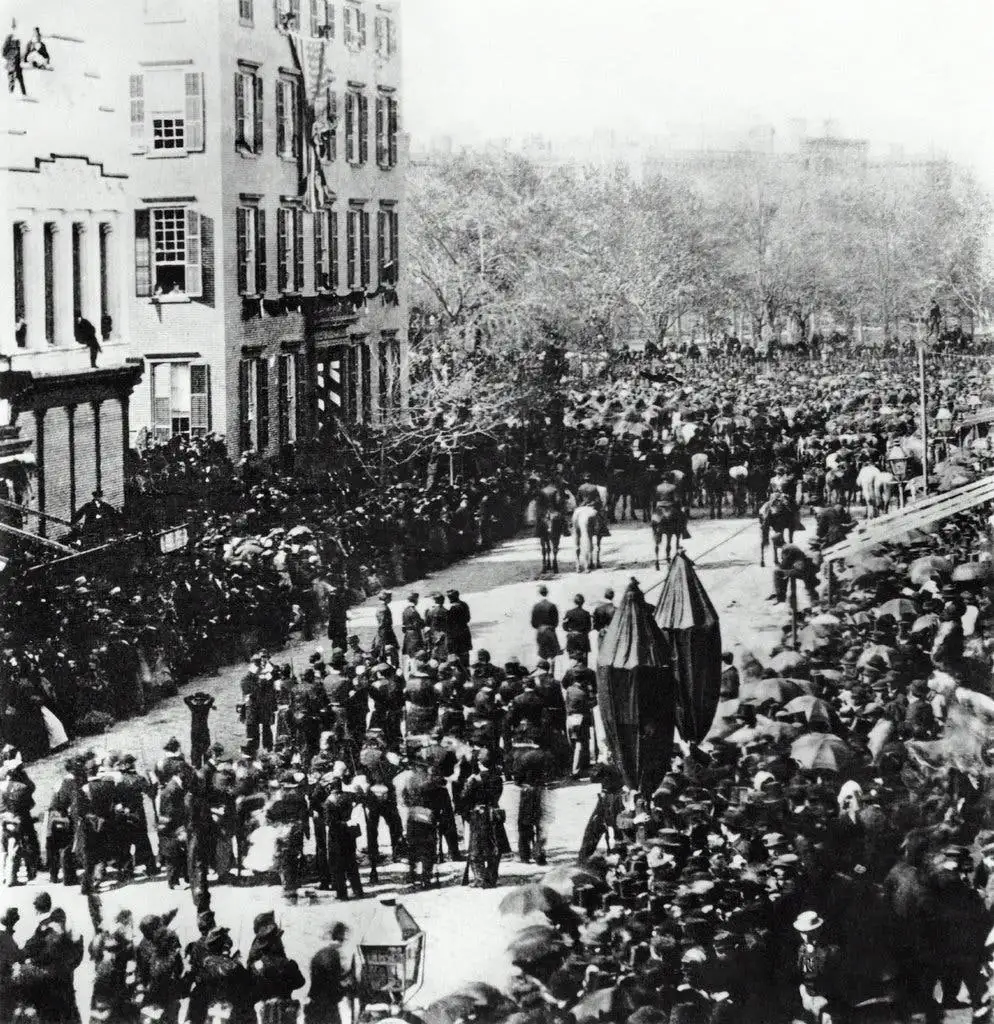
Walk south to Union Square and the former site of the home of Theodore’s grandfather, Cornelius Van Schaack Roosevelt. A wealthy merchant and real estate owner, Cornelius acquired property along Broadway between East 13th and East 14th Streets and built his mansion at the northern end of the block.
The house is associated with a remarkable moment in American history. In April 1865, Abraham Lincoln’s funeral procession traveled up Broadway toward Union Square. A well-known photograph shows the procession passing the Roosevelt home, where the young Theodore and his brother Elliott are said to have watched from an upstairs window.
The mansion was later demolished, but the photograph preserves a glimpse of the future president’s childhood neighborhood. Explore the image and the story of the procession in Village Preservation’s “The Nation Mourns: Lincoln’s Final Journey Through New York”.
Stop 3: The Roosevelt Building
841 Broadway at East 13th Street
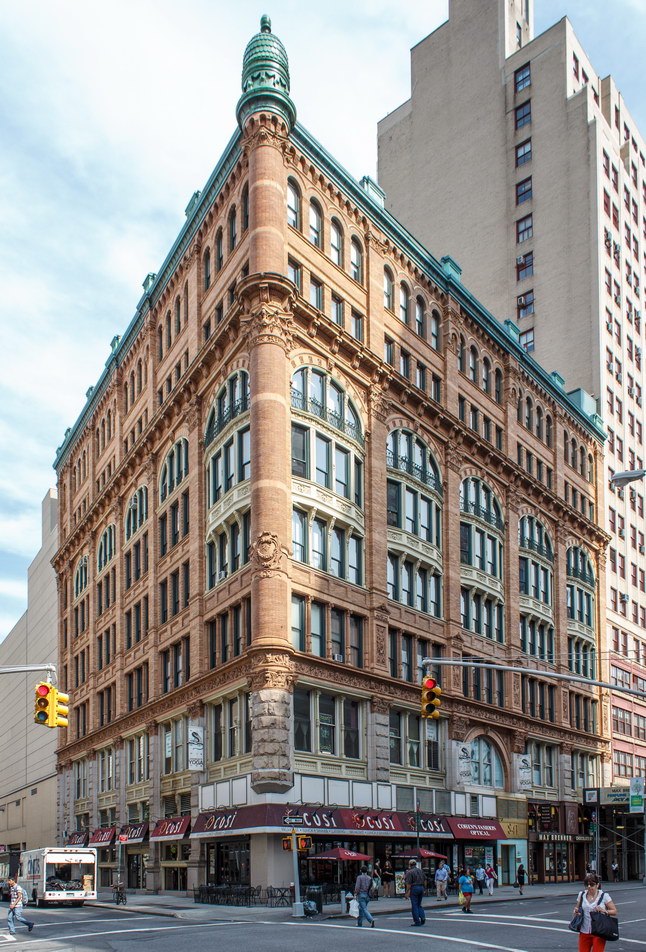
Continue south along Broadway to the Roosevelt Building, a striking reminder of the family’s continued presence in the area after the mansion disappeared.
Completed in 1894 and designed by architect Stephen D. Hatch, the commercial building was developed by members of the Roosevelt family on property associated with Cornelius’s holdings. Its construction reflects the transformation of the neighborhood south of Union Square from an elite residential enclave into a bustling commercial and manufacturing district.
Look up to appreciate the building’s ornate façade, with its combination of Romanesque and Renaissance Revival elements. The Roosevelt Building was designated an individual New York City landmark in 2019.
Learn more about the building in “The Roosevelt Building—Where Great History and Architecture Intersect” and explore the wider neighborhood on our South of Union Square map.
Stop 4: The Triangle Shirtwaist Factory Fire Site
23–29 Washington Place at Greene Street
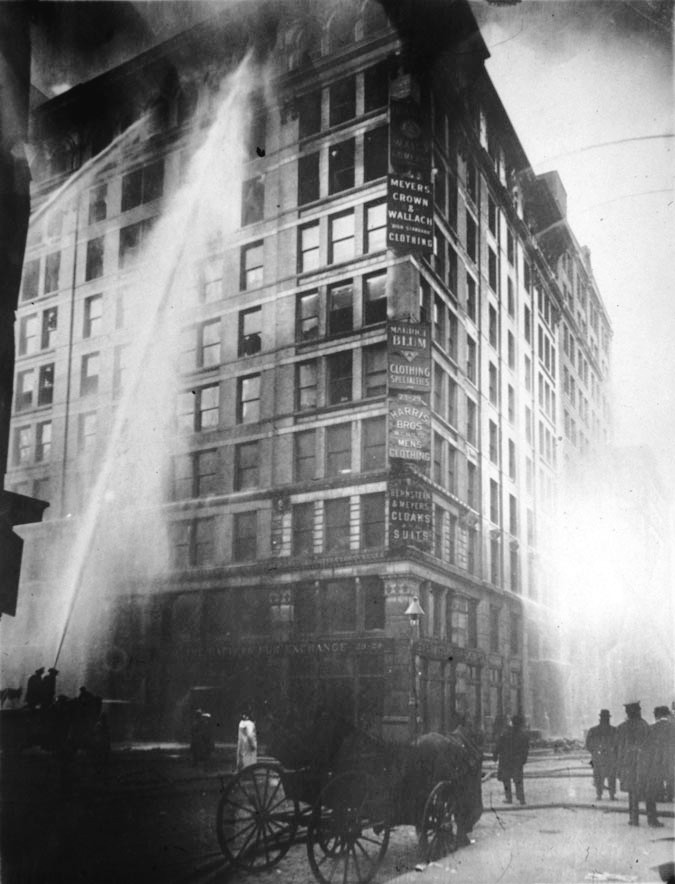
From Broadway, head south and west to Washington Place. Here stands the former Asch Building, now known as the Brown Building, site of the devastating Triangle Shirtwaist Factory fire on March 25, 1911.
The fire claimed the lives of 146 workers, most of them young women, many from immigrant families. The tragedy galvanized a movement for stronger workplace protections. Among those who witnessed it was Frances Perkins, a young social reformer living in Greenwich Village.
The connection to Theodore Roosevelt came afterward: the former president recommended Perkins for a leadership role with the Committee on Safety, which worked to improve conditions for workers. The fire and the reform campaign that followed would shape Perkins’s lifelong work.
Read more about the tragedy and how it is remembered today in Village Preservation’s “How Greenwich Village Remembers the Triangle Shirtwaist Factory Fire” and Columbia University’s Frances Perkins exhibition.
Stop 5: Frances Perkins’s Greenwich Village Home
121 Washington Place
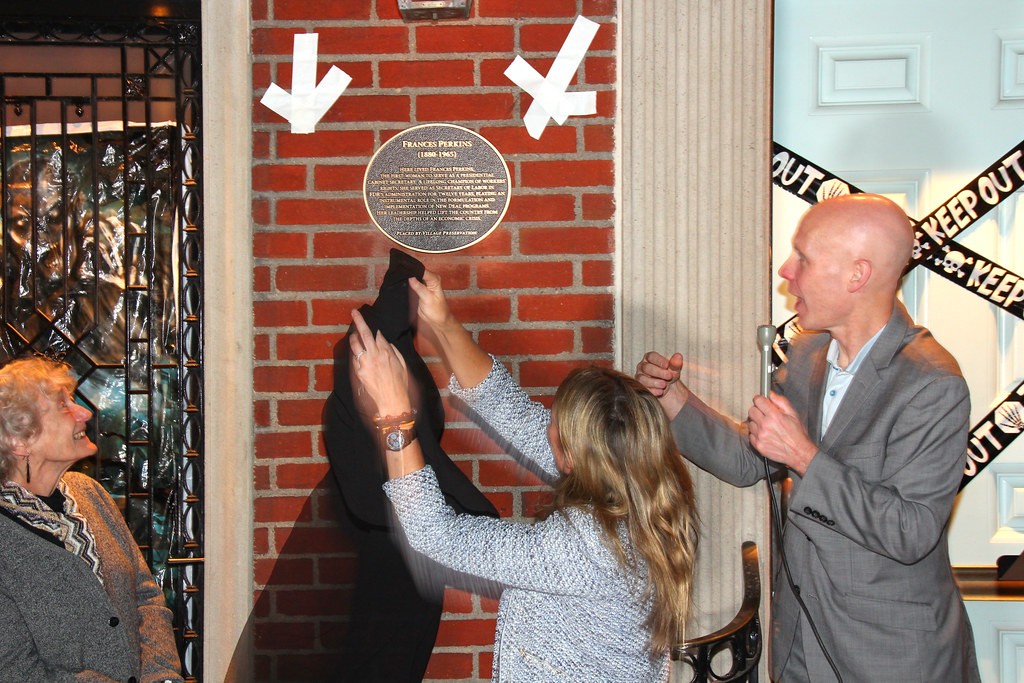
A short walk west brings us to 121 Washington Place, where Frances Perkins once lived and where Village Preservation unveiled a historic plaque in late October 2024 honoring her.
Perkins had already immersed herself in the Village’s community of reformers. She lived and trained at Greenwich House, the settlement house founded to serve the neighborhood’s growing immigrant population. Her work for workplace safety in New York would lead to an extraordinary national career: in 1933, President Franklin D. Roosevelt, Theodore’s distant cousin, appointed her Secretary of Labor, making her the first woman to serve in a presidential cabinet.
The plaque and the nearby Triangle fire site help tell a story that connects two Roosevelt presidencies to the Village through the life and work of one pioneering reformer.
Read more in “Frances Perkins: From Greenwich House to the White House” and about Village Preservation’s plaque unveiling.
Stop 6: The Former Ninth Police Precinct Station House
133–137 Charles Street
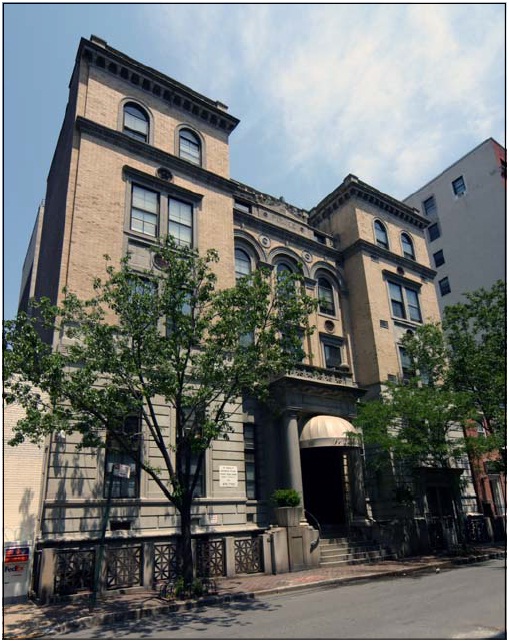
Our final stop takes us west to Charles Street and a building linked directly to Roosevelt’s own public career. Before he became governor and president, Roosevelt served on New York City’s Board of Police Commissioners from 1895 to 1897.
Built in 1896–97, the former Ninth Police Precinct Station House was the first police station constructed in the city during his tenure. Architect John duFais designed it in the Renaissance Revival style. Roosevelt and his friend, journalist Jacob Riis, were known to patrol the streets together as Roosevelt sought to address corruption and misconduct within the department.
The former station house was later converted into apartments and remains a distinctive part of the Far West Village. It is protected within the Greenwich Village Historic District Extension I, designated in 2006 after advocacy by Village Preservation.
Learn more in our Presidents’ Day look at Roosevelt and the station house and our history of the Greenwich Village Historic District Extension.
From East 20th Street to Charles Street, this walk traces more than the life of one president. It reveals a changing New York: a city of wealthy family homes and ambitious commercial buildings, of crowded factories and reform movements, and of historic structures that still help us tell those stories today.
To continue exploring, visit Village Preservation’s South of Union Square map and our Greenwich Village Historic District resources.