
Emma Lazarus: The Greenwich Village Poet Who Redefined Liberty
“Give me your tired, your poor, / Your huddled masses yearning to breathe free.”
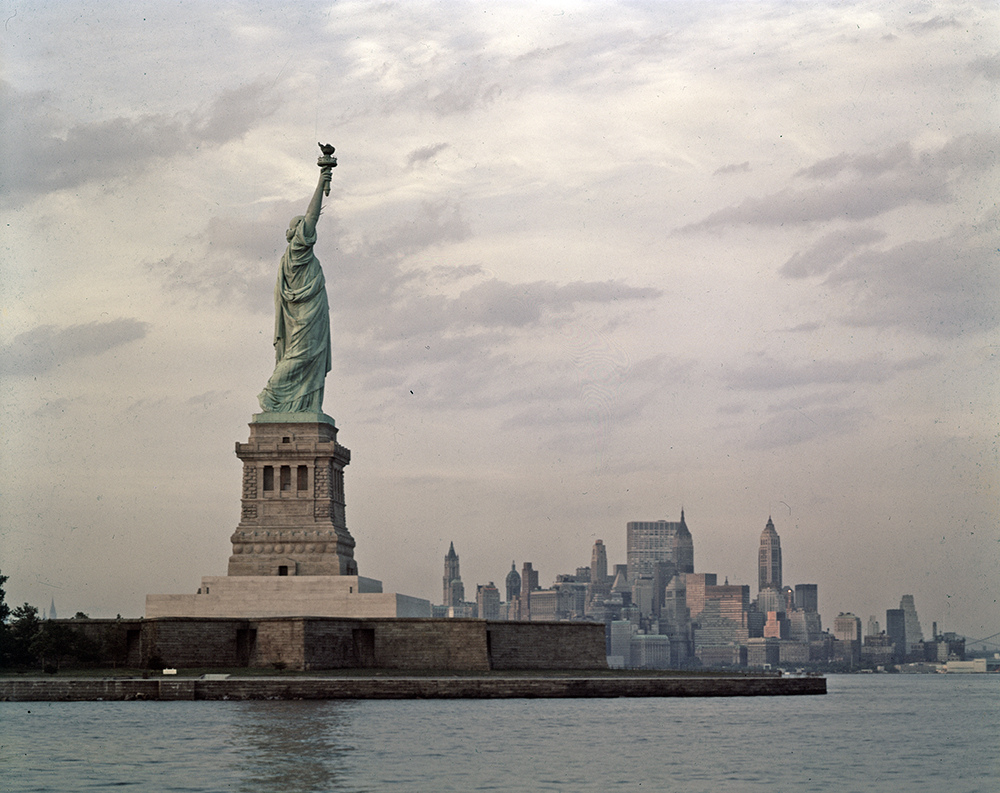
Few lines of American poetry are as recognizable as these words from Emma Lazarus’s “The New Colossus.” Inscribed on the pedestal of the Statue of Liberty, they have become an enduring expression of the American dream. Though these few words define Lazarus’s legacy, her life and impact extended far beyond them. She was also a lifelong Greenwich Village resident, a Jewish American writer, and a passionate advocate for people fleeing persecution.
Today, Emma Lazarus’s legacy continues to resonate as a part of WE STAND, Village Preservation’s new public art and history initiative. Celebrating the remarkable women who have shaped Greenwich Village, the East Village, NoHo, and the nation, We Stand invites visitors to take part in the rich history of these Village trailblazers and carry their stories forward.

Born in New York City on July 22, 1849, Emma Lazarus grew up in a wealthy Sephardic Jewish family descended from some of the earliest Jewish settlers in America. Her family had deep roots in Greenwich Village, where she spent much of her life.
A gifted writer from an early age, Lazarus studied classical literature and several European languages, translated the works of celebrated authors, and began publishing poetry as a teenager. Her literary talents eventually caught the attention of Ralph Waldo Emerson, who became an important mentor.
As antisemitism intensified in Europe and Jewish refugees sought safety in the United States, Lazarus became increasingly committed to confronting prejudice and assisting those in need. She volunteered with Jewish immigrants and refugees, worked with people at Ward’s Island, and helped establish the Hebrew Technical Institute in our neighborhood, which provided vocational training to disadvantaged immigrants.
Her advocacy was inseparable from her identity as a Jewish American and from her understanding of the responsibilities that came with belonging to a community. She wrote about Jewish history, persecution, and belonging at a time when Jewish people faced discrimination on both sides of the Atlantic.
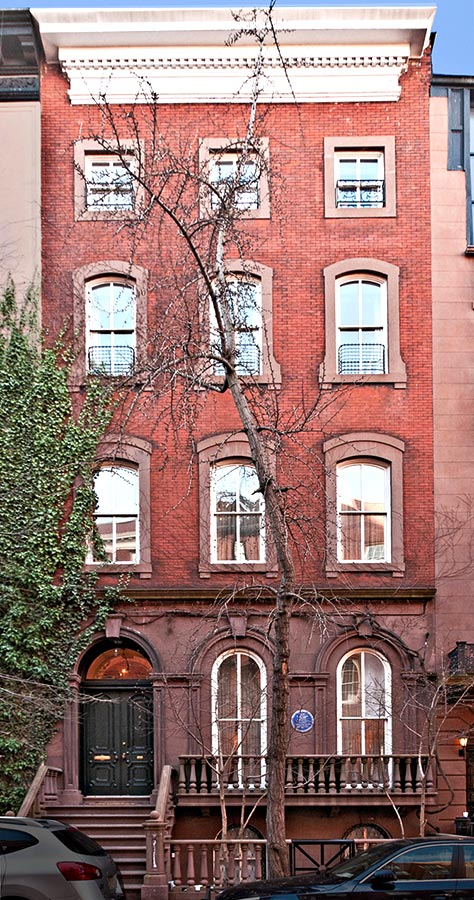
In 1883, Lazarus and her family moved into 18 West 10th Street, an Italianate-style house built in 1856. That same year, she wrote the poem that would ultimately define her legacy.
Commissioned by writer Constance Cary Harrison for a fundraising exhibition to help complete the pedestal of the Statue of Liberty, “The New Colossus” offered a new vision of the monument that departed from the original intent. Rather than emphasizing military might or national power, Lazarus imagined Liberty as a welcoming figure offering refuge to those in search of freedom.

The poem was not immediately associated with the statue when it was unveiled in 1886. Lazarus died in 1887, at just 38 years old, and did not live to see her words become a defining part of the monument. Thanks to the efforts of her friend Georgina Schuyler, “The New Colossus” was rediscovered and eventually installed on a bronze plaque inside the statue’s pedestal in 1903.
From her home on West 10th Street, a Greenwich Village poet helped transform the meaning of one of the nation’s most recognizable landmarks.
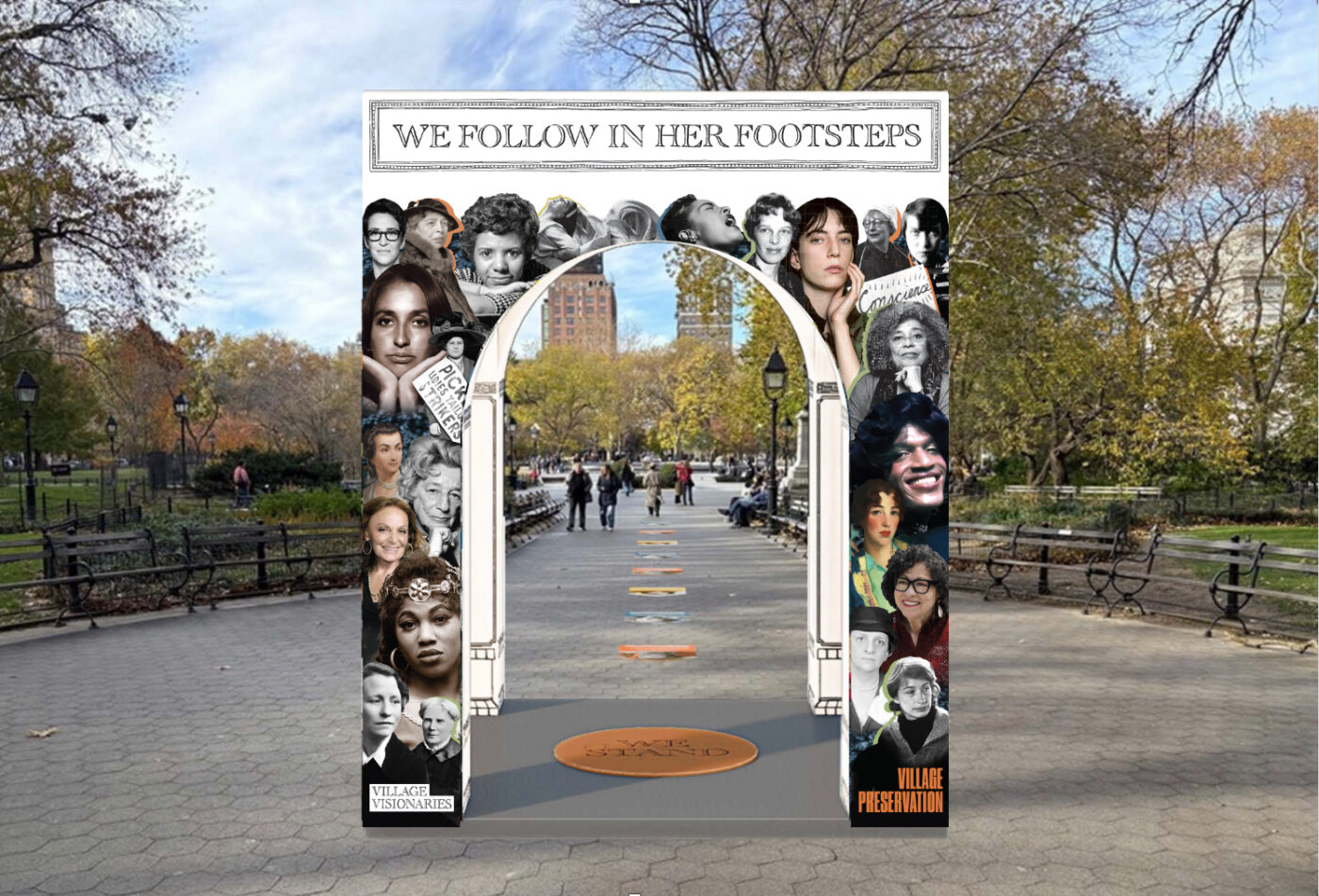
Lazarus’s legacy offers a compelling lens through which to understand WE STAND. Designed for Washington Square Park, WE STAND will feature a monumental, 12-foot-high structure inspired by the park’s iconic arch. Titled “We Follow in Her Footsteps,” the installation is intended to bring the stories of remarkable women into public view and invite visitors to carry their legacies forward.
The project celebrates a wide range of women, from Abigail Adams and Edna St. Vincent Millay to Marsha P. Johnson, Jane Jacobs, and Sonia Sotomayor. Their fields of achievement differ, but their stories share a common thread: women who challenged conventions, expanded possibilities, and left an enduring mark on public life.
Learn more about WE STAND here, and learn more about the many incredible women in our neighborhoods through Village Preservation’s Civil Rights and Social Justice Map. You can also join the waitlist for our upcoming inaugural WE STAND event, Follow in Her Footsteps – Greenwich Village Women’s History Walking Tour.