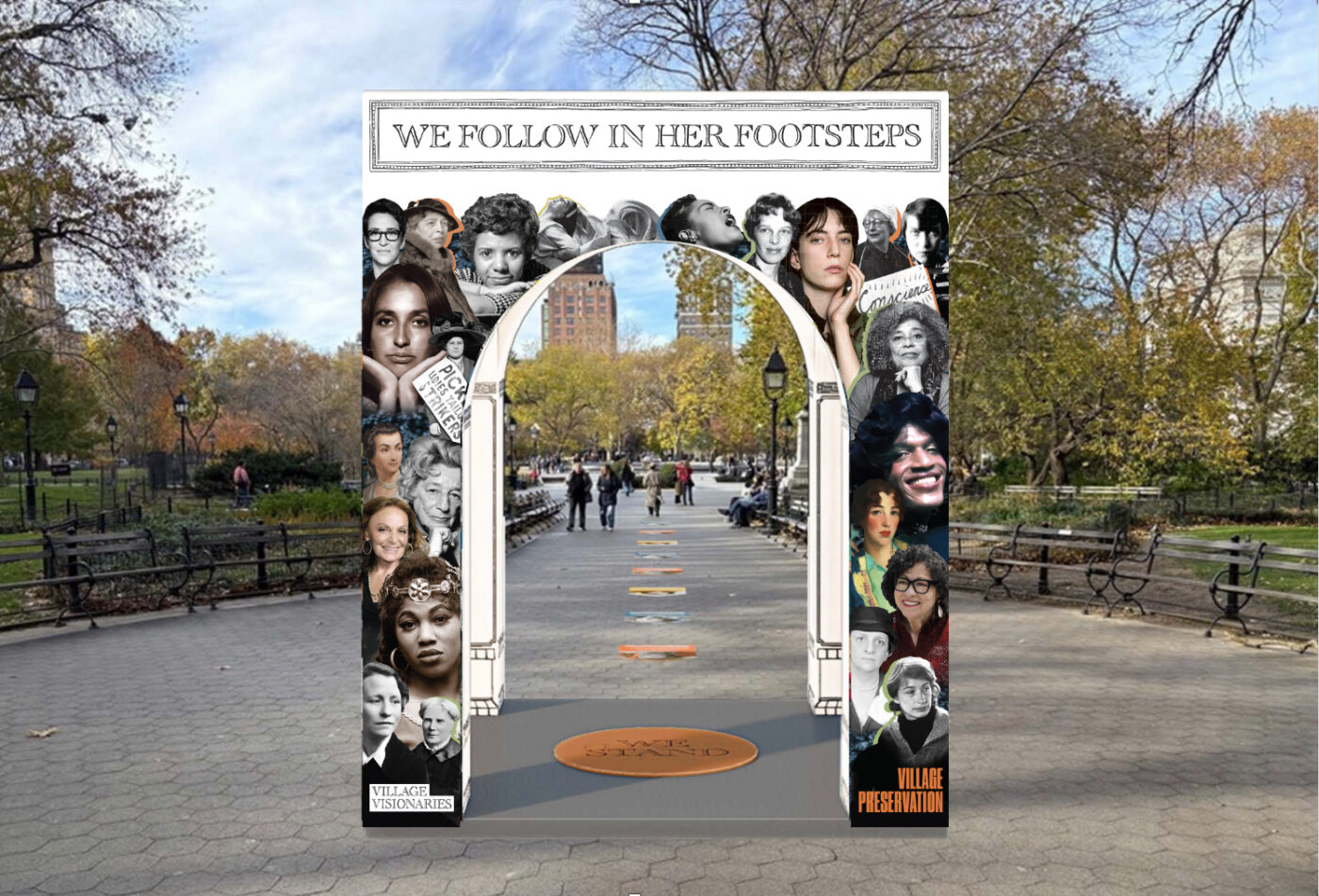
Diane von Furstenberg: A Fashion Icon in the Village
Once called the woman who reinvented fashion, Diane Von Furstenberg is no doubt a trailblazer. After debuting her flagship, uber-successful wrap dress in the 1970s, Von Furstenberg’s enduring career attests to her vast influence. This November, Village Preservation’s WE STAND installation in Washington Square Park will honor Von Furstenberg alongside other remarkable women whose lives and work helped shape our neighborhoods and the wider world. Today, we explore Von Furstenberg’s life, her ties to the Village, and how she helped redefine women’s fashion and independence.
Diane Von Furstenberg was born Diane Simone Michele Halfin on December 31, 1946, in Brussels, Belgium, to Jewish parents. Her mother, Liliane Nahmias, was captured by the Nazis during the war, taken to Auschwitz, and then Ravensbrück—only to be liberated 20 months before Diane’s birth. Born just after World War II, much of Von Furstenberg’s childhood was deeply shaped by her mother’s experience as a Holocaust survivor who instilled a deep conviction that “fear is not an option.”
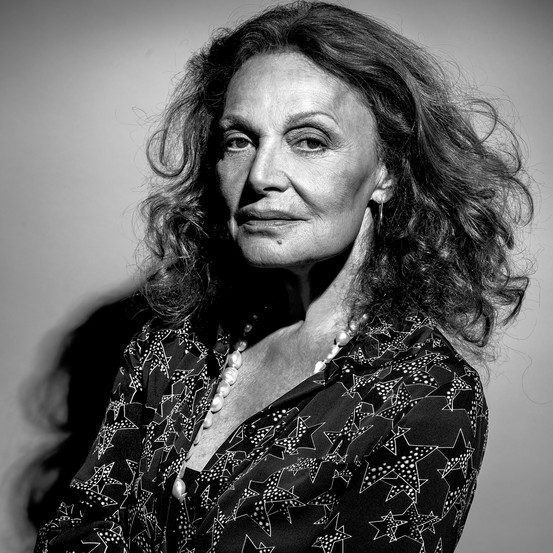
In her early twenties, she met and married German aristocrat Prince Egon von Furstenberg. Although this union set Von Furstenberg up for a more-than-comfortable life, she was determined to succeed on her own and make her own fortune. She declined the title of Princess, opting instead for Ms. Her fashion career began soon after college. In Paris, she worked as an assistant to fashion photographer’s agent Albert Koski. In Italy, she apprenticed with the textile manufacturer Angelo Ferretti, learning all about cut, color, and fabric. In Italy, her unique perspective on women’s fashion began to take shape; she converted silk jersey wrap tops and skirts into a seamless, one-piece dress.
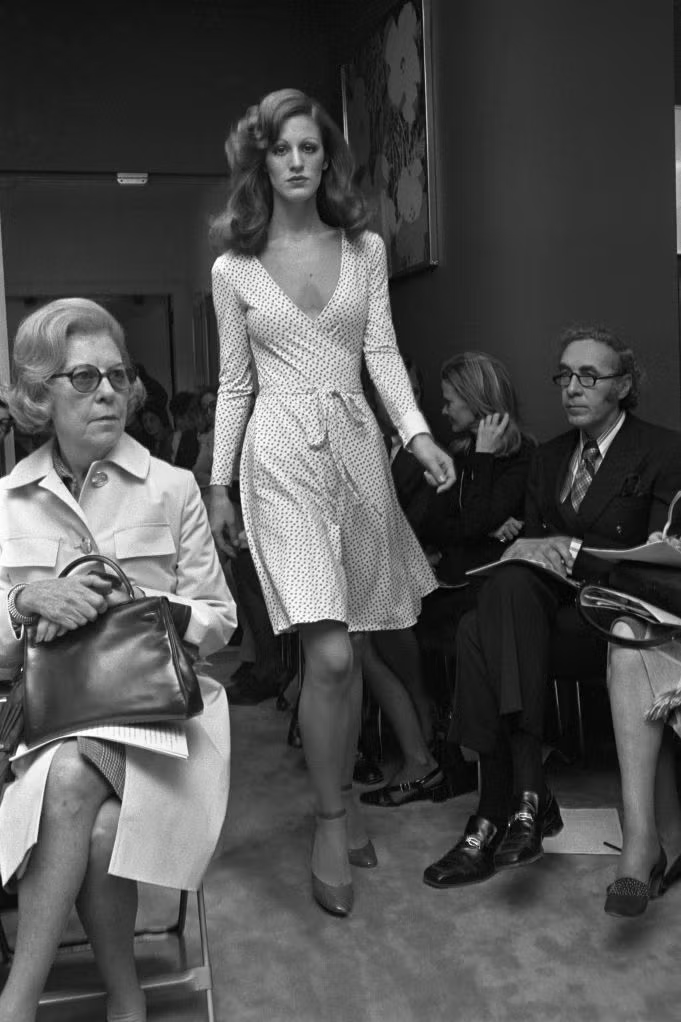
Soon after their wedding, the Von Furstenbergs left Europe for New York, where she quickly found fame as a designer, society figure, and Studio 54 mainstay. In 1974, the trajectory of Von Furstenberg’s fashion career irrevocably changed after she debuted her iconic wrap dress. The dress arrived at the height of second-wave feminism—its comfortable, lightweight fabric stood in stark contrast to the restrictive silhouettes often found in professional clothing. Marketed to professional, successful women, the dress debuted at $80 a piece—Von Furstenberg knew her clientele intimately, as they were her peers. Cinching at the waist, and ending just above the knee, the dress was universally flattering and wildly popular. Eccentric patterns and prints added to the garment’s versatility, making it a staple in any New York woman’s closet. Her eponymous company is more often known simply as DVF; her work became synonymous with her own trailblazing personhood.
Von Furstenberg’s connection to our neighborhood is longstanding. In the late 90s, she purchased a former factory and stable on West 12th Street in the West Village. Long before the neighborhood was hip and fashionable, Von Furstenberg converted the building into her studio, showroom, and personal residence. The cobblestone streets and brick facades reminded her of Belgium, and it didn’t take long for Von Furstenberg to feel right at home.

She became fast friends with restaurateur Florent Morellet, owner of Florent, formerly located at 69 Gansevoort Street. Florent was a no-frills diner; its lunch counter provided a French-American fusion of burgers, soups, mussels, and steak frites. Its clientele mirrored Von Furstenberg’s—a down-to-earth New York celebrity. When Florent first opened his diner, his monthly rent was $1,350. The restaurant closed in 2008 when the rent was set to rise to $30,000 a month. Known for its iconic stainless steel moderne R&L Restaurant sign (honoring Florent’s predecessor), the site was landmarked as part of the Gansevoort Market Historic District which Village Preservation secured in 2003.
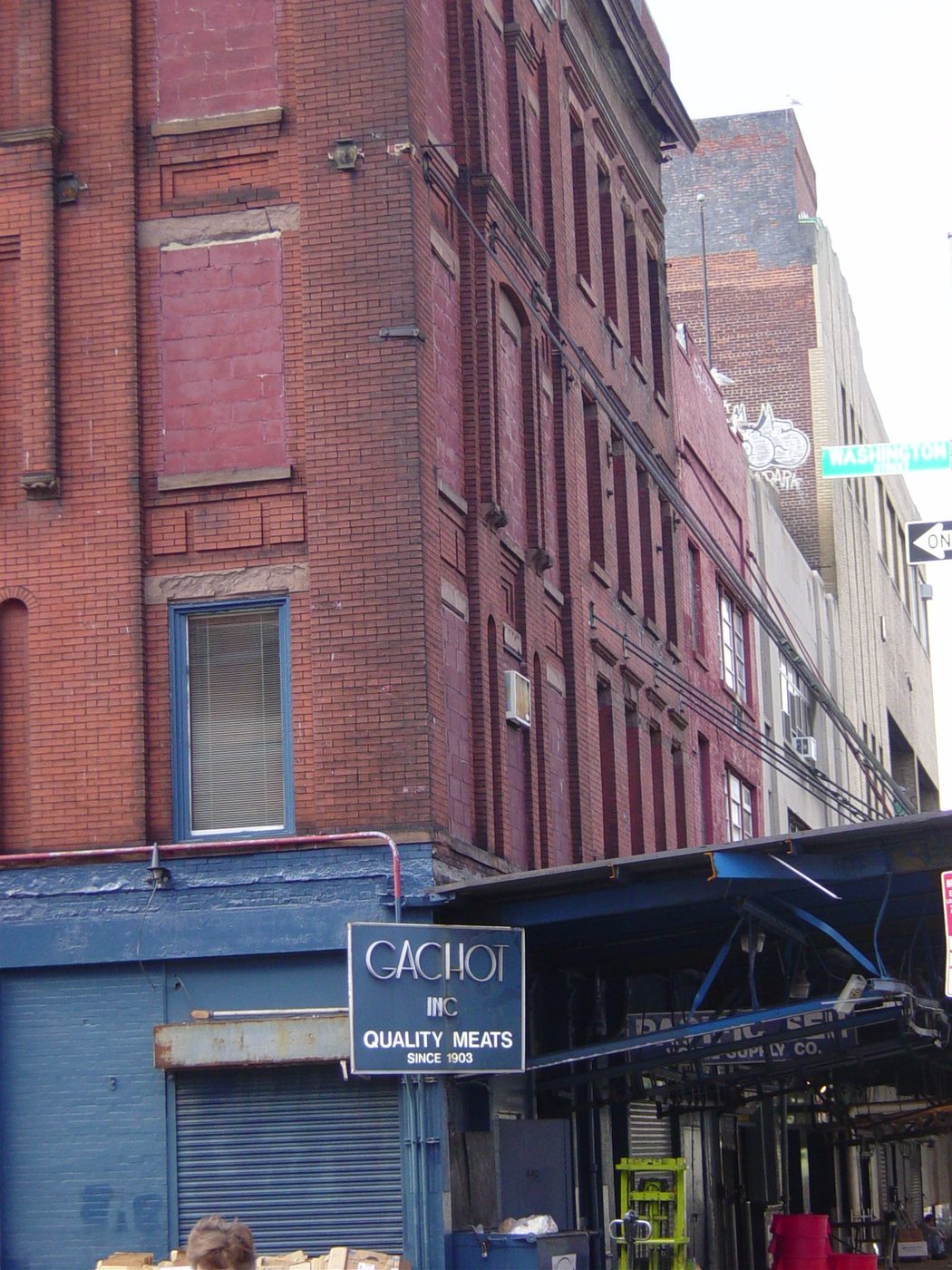
In the early 2000s, Von Furstenberg established her fashion studio and showroom at 440-442 West 14th Street, in what is now the Gansevoort Market Historic District. Known as the French Flats building, 440-442 West 14th Street was designed by architects Thom & Wilson in 1890. The building shows that the neighborhood was always architecturally mixed, with both residential and commercial buildings. In more recent years, Von Furstenberg’s working studio was featured in Village Preservation’s annual House Tour Benefit.
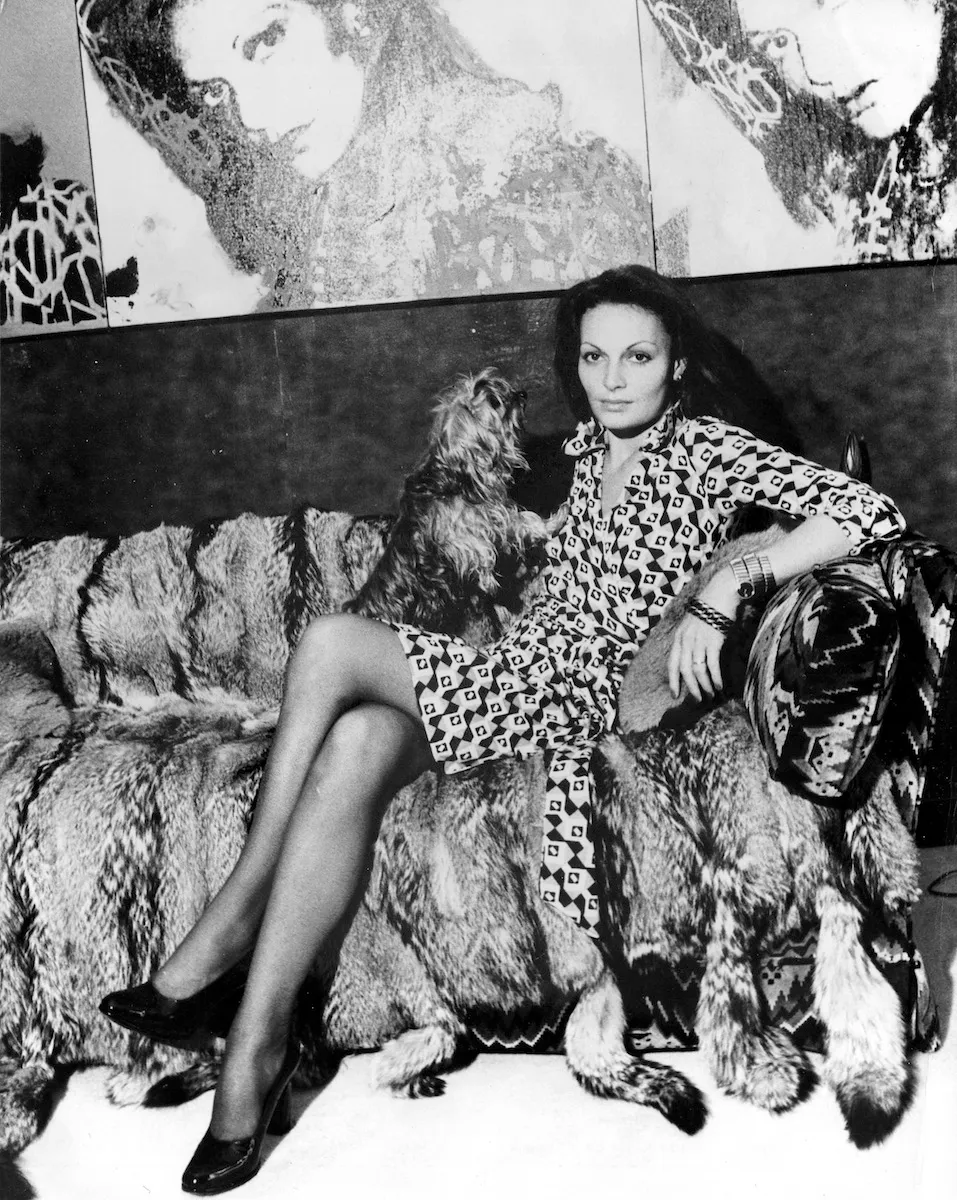
From her revolutionary wrap dress to her longstanding ties to the West Village and Meatpacking District, von Furstenberg has left a lasting mark on both the fashion industry and New York City. We’re excited to feature Diane Von Furstenberg and honor her legacy this winter through our WE STAND public art installation in Washington Square Park. Celebrating the remarkable women who have shaped Greenwich Village, the East Village, NoHo, and the nation, We Stand invites visitors to take part in the rich history of these Village trailblazers and carry their stories forward. If you are interested in donating to WE STAND, you can do so here.