
Women Crush Wednesday: Rachel Maddow, the Journalist Who Makes History Matter
Rachel Maddow has built a remarkable career by doing something that seems increasingly rare in the modern media landscape: taking the time to understand the story behind the story. A journalist, author, political commentator, and historian at heart, she has distinguished herself through her ability to connect current events to the larger forces, personalities, and historical moments that shape American life.
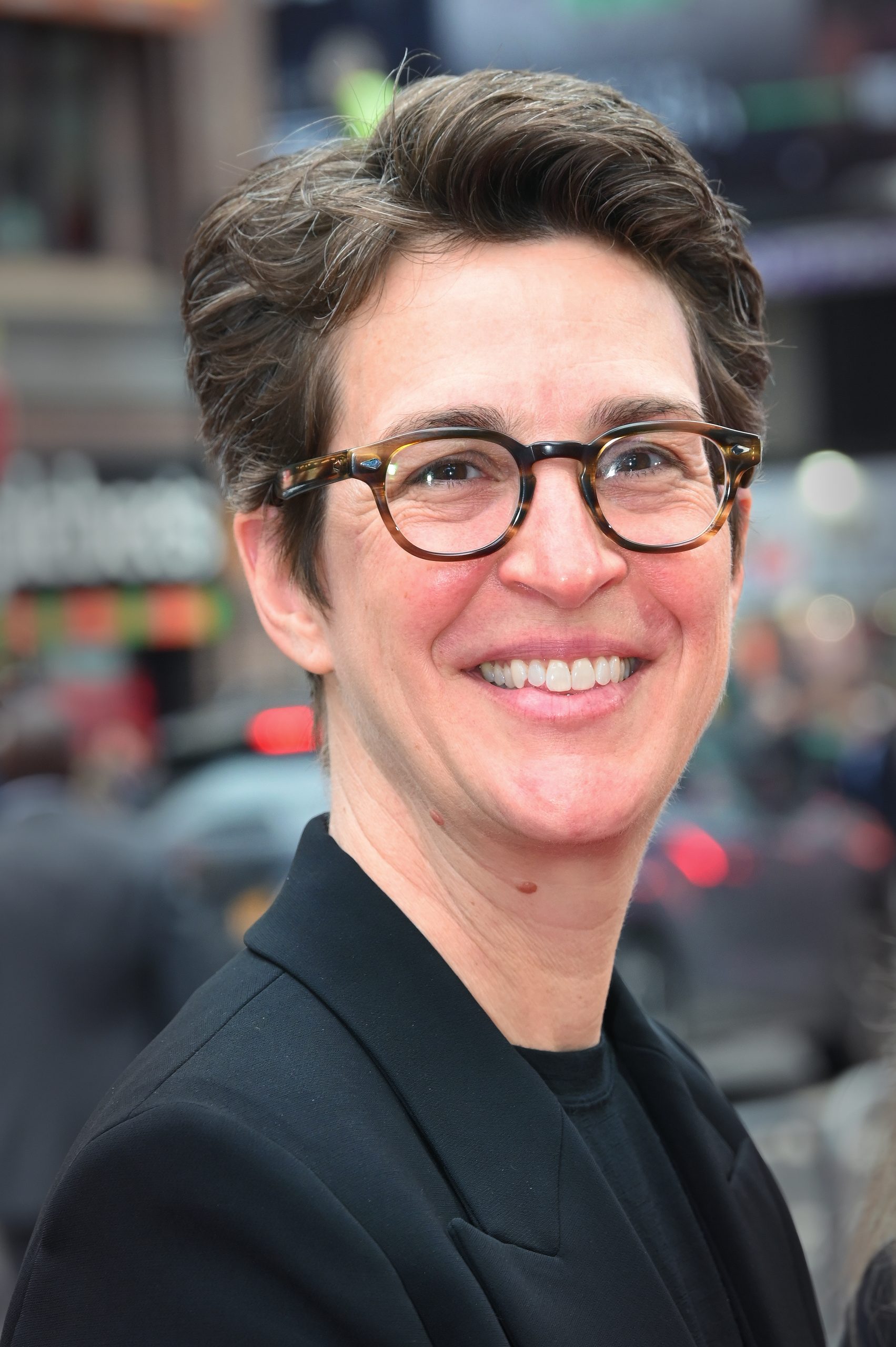
A resident of Greenwich Village (and western Massachusetts), Maddow is part of a neighborhood with a long tradition of independent thinkers, outspoken writers, artists, and political activists. Her work reflects that spirit of intellectual curiosity and willingness to challenge conventional narratives.
Maddow’s path to journalism was unconventional. Raised in Castro Valley, California, she graduated from Stanford University in 1994 with a degree in public policy. She went on to earn a Rhodes Scholarship, becoming the first openly gay American to receive one, and completed a doctorate in political science at Oxford University. Her academic background would prove central to her distinctive approach to journalism: she brings the instincts of a researcher and the perspective of a political historian to the examination of contemporary events.

Her broadcasting career began in radio, where she developed the engaging, conversational style that would later make her a familiar presence in American households. In 2008, she became the host of The Rachel Maddow Show on MSNBC. The program established her as a leading voice in political journalism, known for its detailed reporting, historical context, and often unexpected connections between seemingly unrelated events.
What distinguishes Maddow is her insistence that the news cannot be understood in isolation. She frequently takes a single development and traces its origins, revealing the history and institutional decisions behind it. Her storytelling combines extensive research with a gift for making complicated subjects accessible and compelling.
That approach has extended well beyond television. Her podcast Bag Man investigated the political corruption scandal that led to the resignation of Vice President Spiro Agnew in 1973, a story that had largely faded from public memory. In Ultra, she examined the influence of Nazi sympathizers and far-right political movements in the United States during World War II, uncovering a little-known chapter of American history. The series received the 2023 Hillman Prize for Broadcast Journalism.
In her 2023 book, Prequel: An American Fight Against Fascism, Maddow explored the efforts of Americans who worked to undermine democratic institutions in the years preceding World War II, as well as those who organized to resist them. The book draws striking connections between historical events and recurring challenges to American democracy.
Maddow’s work is not simply about revisiting the past. It is about understanding how history informs the present, why democratic institutions matter, and how individual decisions can have consequences far beyond their immediate moment.
That approach to storytelling has a natural parallel in the work of Village Preservation. We, too, believe that understanding the present requires looking closely at the past. Whether examining a threatened building, a proposed development, or a change in city policy, we trace the history, decisions, and forces behind what is happening today. By making that context accessible, we help people understand not only what is at stake, but why it matters. In both cases, history is not simply a record of what came before; it is an essential tool for making sense of the world around us.
Maddow’s personal story has also made her an important figure in American media. As an openly gay woman who has achieved extraordinary professional visibility in a field long dominated by men, she has expanded the possibilities of representation in broadcast journalism. She has spoken openly about her life and career while maintaining a focus on the reporting and ideas that define her work.
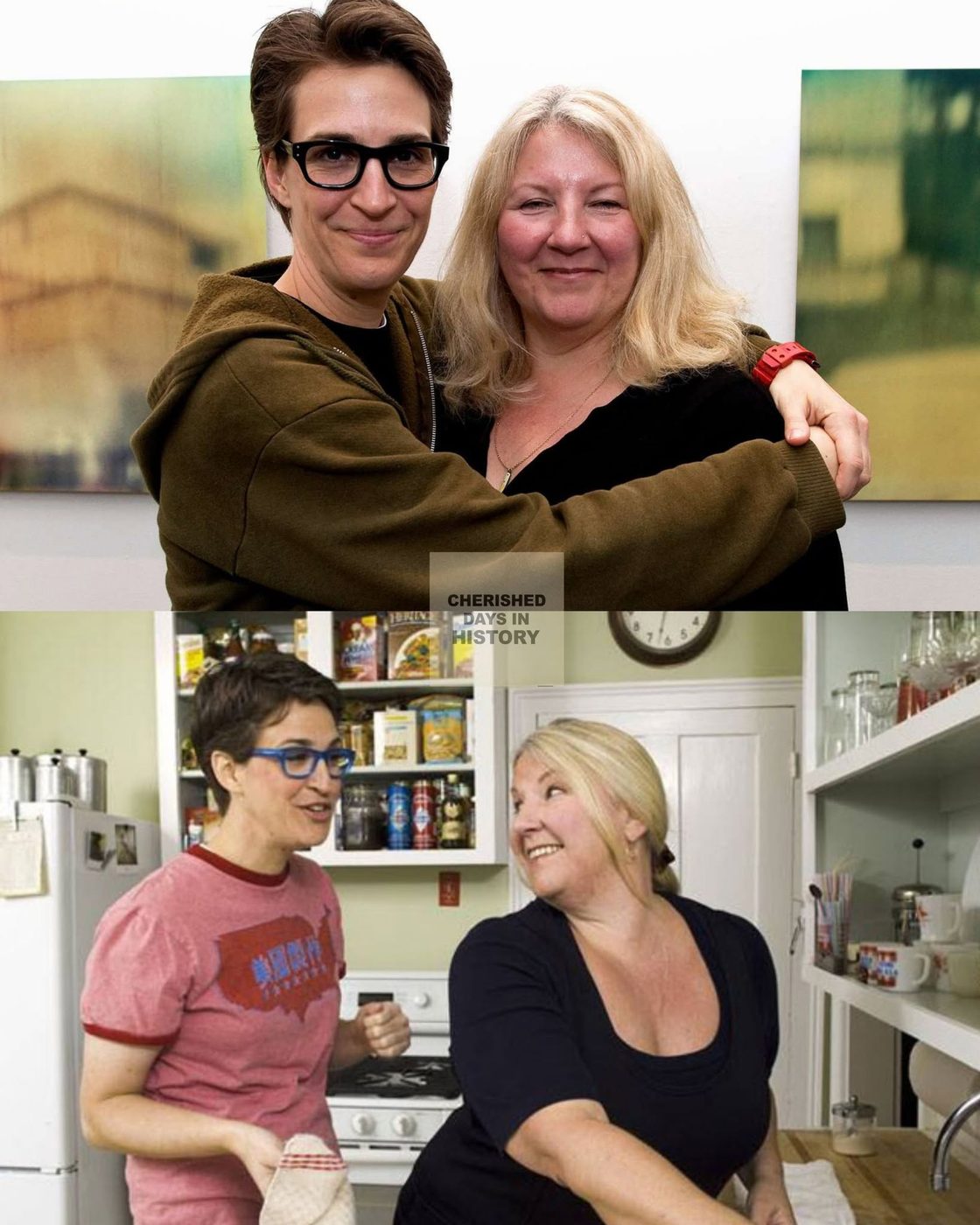
Greenwich Village, with its history of political dissent, artistic experimentation, and independent thought, provides a fitting setting for someone whose career is built around asking questions and challenging accepted accounts of events. Maddow’s connection to the neighborhood is part of a continuing Village tradition in which public life, intellectual inquiry, and the freedom to express unconventional ideas have long intersected.
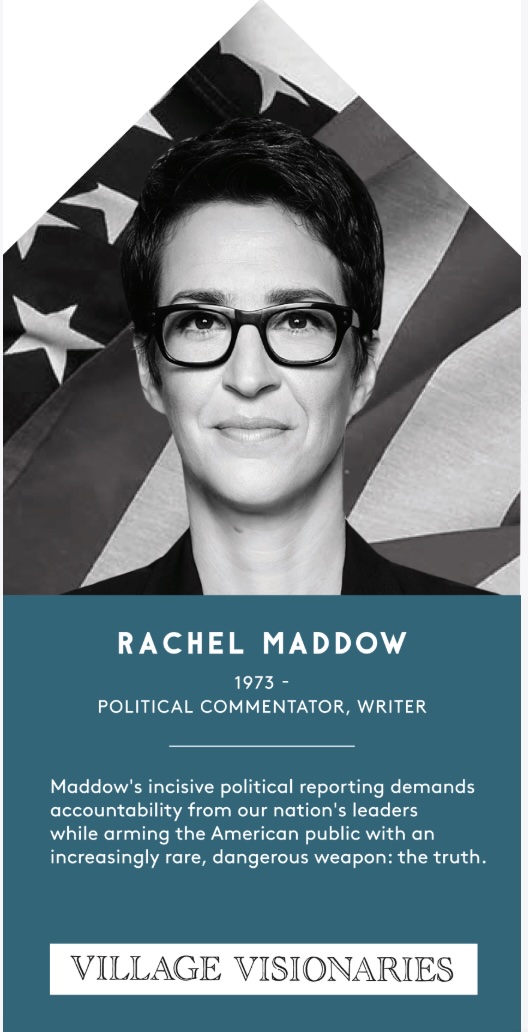
We are proud to include Rachel Maddow among the women celebrated in Village Preservation’s WE STAND installation in Washington Square Park. Her inclusion recognizes not only her accomplishments as a journalist and author, but also the importance of independent inquiry, historical understanding, and the voices that help us make sense of our times.
In a world of fast-moving headlines and short attention spans, Maddow makes the case for slowing down, looking more closely, and understanding how we arrived at the present. Her work reminds us that history is never entirely behind us. It continues to shape the questions we face today.