
Helen Frankenthaler: A Pioneer of Abstract Art
For generations, Greenwich Village, the East Village and NoHo have been a safe haven for creatives. Its unique architecture and off-the-grid streets have attracted artsy folk since as early as 1830. In the twentieth century, these neighborhoods became meccas for bohemians and the Beat movement. These neighborhoods’ secluded side streets, low rents, and tolerance for radicalism and nonconformity were attractive to a growing number of artists who wanted to live in the city. Before fame or acclaim, Bob Dylan couch surfed here, Jack Kerouac borrowed money from friends to live here, and Jackson Pollock toiled penniless in a tiny apartment at 46 Carmine Street, among other locations in the neighborhood.
Our neighborhoods were home to and the inspiration behind some of New York’s most influential artists. This November, Village Preservation’s WE STAND installation in Washington Square Park will honor the remarkable women artists and other creatives, activists, and influencers whose lives and work helped shape our neighborhoods and the wider world. Today, we explore the life and history of Helen Frankenthaler—an unexpected pioneer and force in the American abstract art movement.
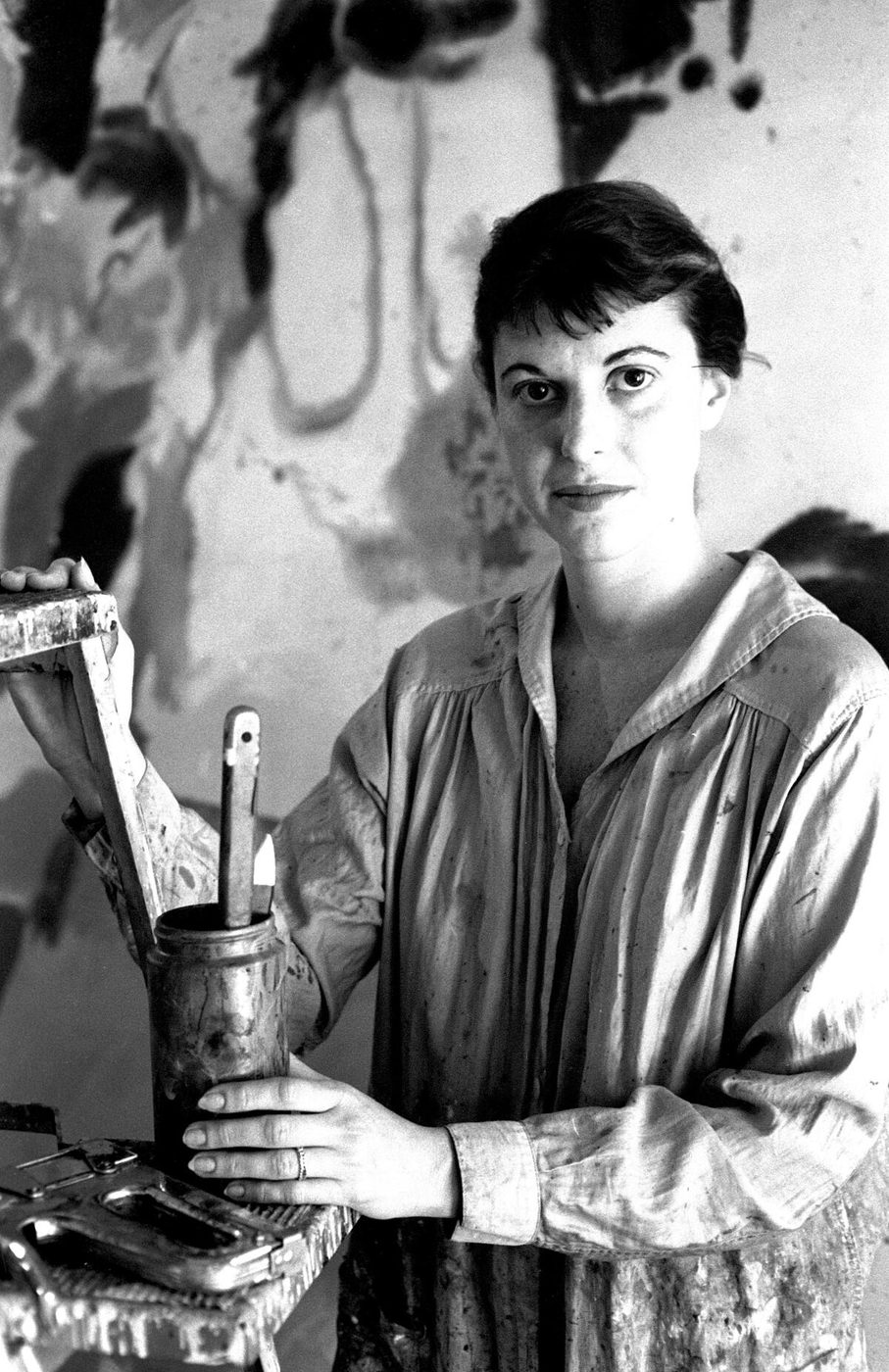
Born December 28, 1928, Frankenthaler was the youngest of three daughters of the highly respected New York State Supreme Court judge Alfred Frankenthaler and German immigrant Martha (Lowenstein) Frankenthaler. Having grown up on Park Avenue, shuttling between schools like the ultra-strict Brearley and the more progressive Dalton, Frankenthaler’s early years were marked by privilege and intellectual curiosity. And she was always interested in art—Alexander Nemerov recounted an amusing but telling anecdote about Frankenthaler as a child in his biographical work, Fierce Poise: Helen Frankenthaler and 1950s New York.
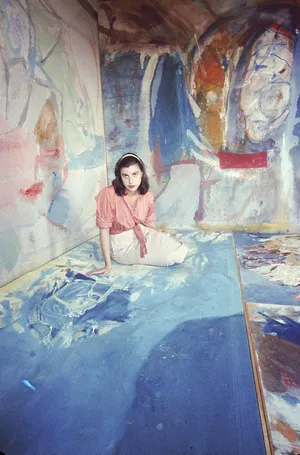
As a young girl, museums and all things artistic fascinated Frankenthaler: Nemerov recounts that she chalked out her path from her family’s apartment to the Metropolitan Museum of Art, just a few blocks away, and she would intentionally spill her mother Martha’s nail polish in the bathroom sink, just to admire how the colors would take shape and make new patterns.
At the suggestion of her high school art teacher, Rufino Tamayo, Frankenthaler studied painting at Bennington College in Vermont under the instruction of Paul Feeley, an academic Cubist. Soon after graduating, Frankenthaler returned to New York, this time downtown. In her early days as an artist, Frankenthaler shared a Greenwich Village studio with Friedel Dzubas, whom she had met at the home of art critic and her then-boyfriend Clement Greenberg, who vigorously promoted Jackson Pollock to great acclaim. The couple met at a Bennington Alumni Art exhibition in May 1950, where Frankenthaler was showing her art. After Greenberg told Frankenthaler he thought her piece was terrible, he invited her down to Greenwich Village for a drink. And Greenberg was a complicated partner. A heavy drinker with a volatile temper, he even kept a diary in which he privately disparaged Frankenthaler’s artwork. Arguably a toxic pairing, the relationship was Frankenthaler’s entry into the New York downtown art world. While together, the pair attended every art show and gallery New York had to offer, and like a sponge, Frankenthaler absorbed what made an expression of art actually intriguing and interesting.
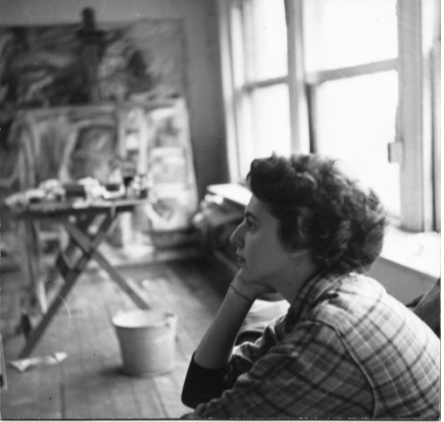
Studio, New York, 1951-52. Photographer: Cora
Kelley Ward. Photo Source: Helen Frankenthaler Foundation
While the exact address of Frankenthaler and Dzubas’ shared apartment remains unconfirmed, Frankenthaler’s early core group included Village mainstays such as Larry Rivers, Grace Hartigan, and Joan Mitchell. And like many of her peers, Frankenthaler was a pioneer. At the time, the art world was dominated by men like Pollock and Picasso; it was Frankenthaler who introduced the next breakthrough in painting, at just 23 years old.
In October 1952, while working in her studio on West 23rd Street, Frankenthaler thinned her paints with turpentine, colorless essential oil, and solvent, then let them soak onto the empty canvas, creating by staining rather than conventional stroking. After its debut, The New York Times called Frankenthaler’s Mountains and Sea “sweet and unambitious,” failing to recognize her innovative technique. It was not until Morris Louis and Kenneth Noland, two other painters, adopted Frankenthaler’s methodology that the new soak-stain, color-field painting style became popular.
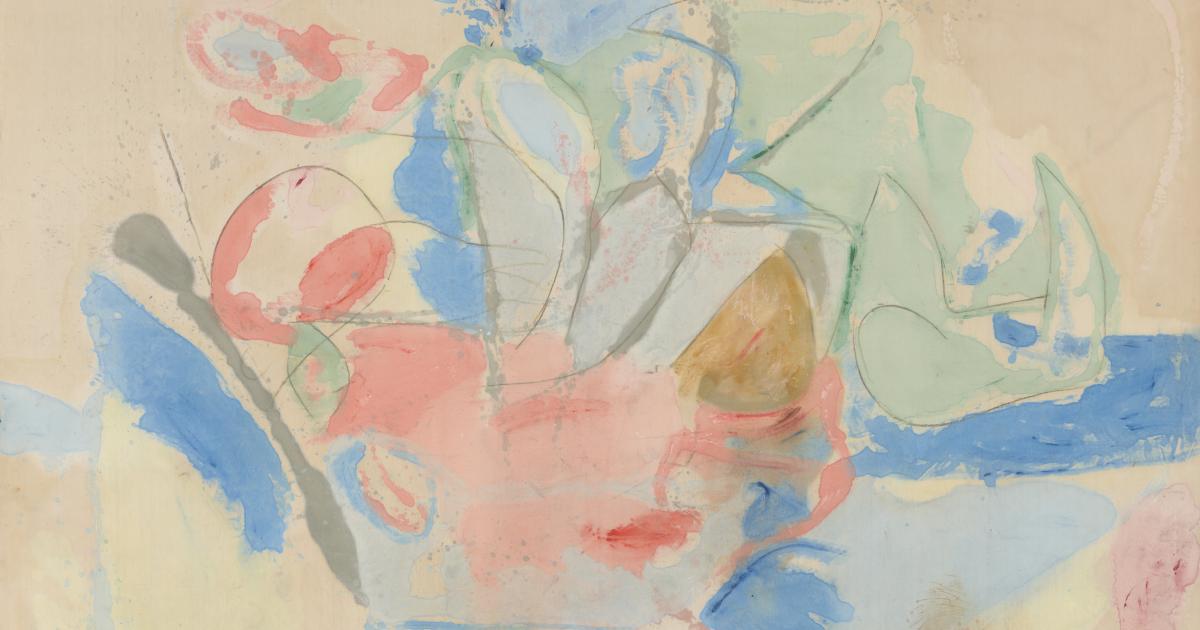
Subsequently, critics pounced on Frankenthaler—deeming her work overly feminine and underdone. In 1957, the painter Barnett Newman wrote Frankenthaler a cruel letter in Esquire: “It is time that you learned that cunning is not yet art, even when the hand that moves under the faded brushwork so limply in its attempt to make art, is so deft at the artful.” But the simplicity is perhaps what is most impressive about Frankenthaler’s art. In her earliest soak-stain pieces, they are inherently abstract with such little brushwork on the surface.
In the early 1960s, Frankenthaler switched from oils to acrylics, which allowed her to achieve a watercolor effect by thinning the paint even further. And she continued to experiment, now with sponges, heavier brushes, and thicker globs of paint. Her career spanned more than six decades, establishing her as one of the most influential American artists of the twentieth century.
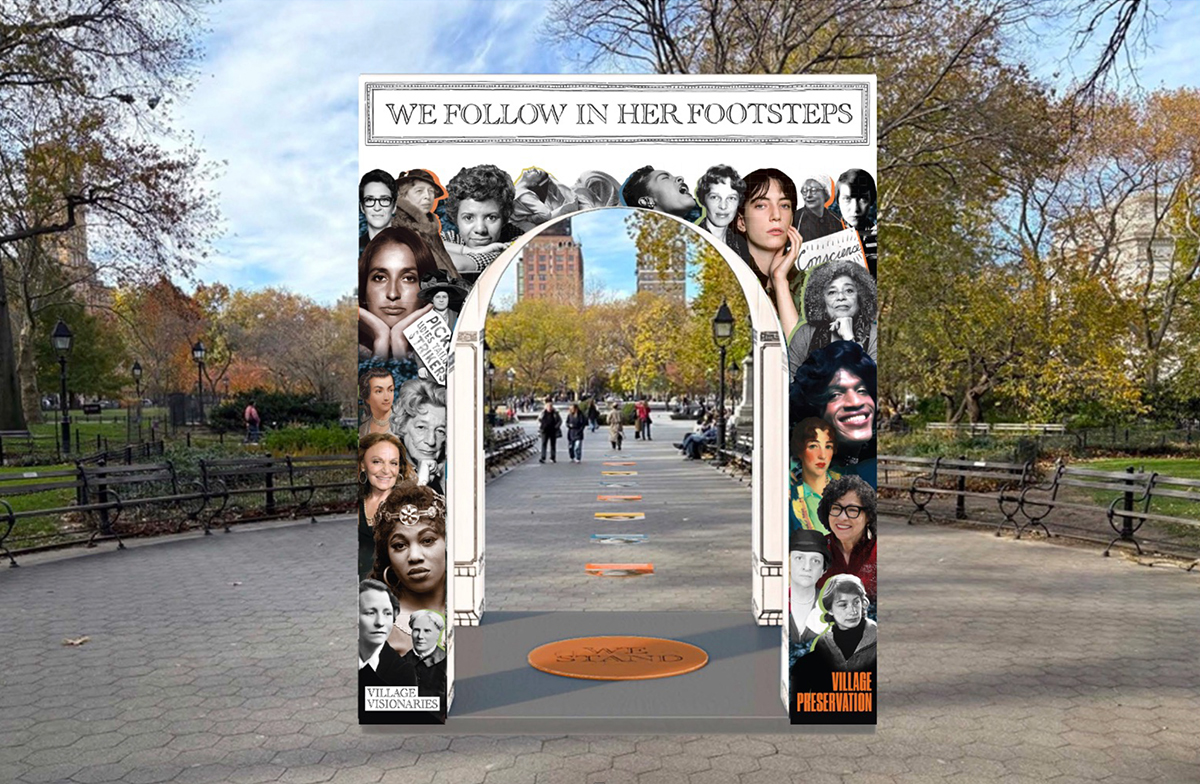
Yet Frankenthaler’s story is also a reminder of how easily women’s contributions can be overlooked, even when they fundamentally change the course of an art movement. We’re excited to feature Helen Frankenthaler and honor her legacy this winter through our WE STAND public art installation in Washington Square Park. Celebrating the remarkable women who have shaped Greenwich Village, the East Village, NoHo, and the nation, WE STAND invites visitors to take part in the rich history of these Village trailblazers and carry their stories forward. If you are interested in donating to WE STAND, you can do so here.