
Susan Sontag: A Legacy Beyond Definition
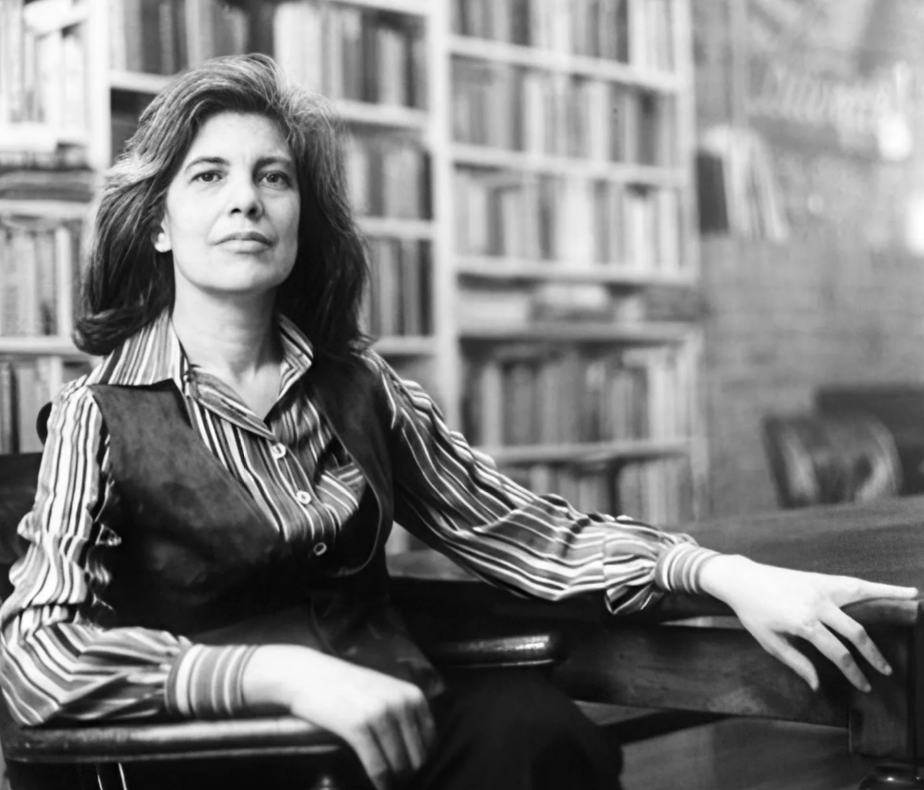
A novelist, essayist, literary critic, filmmaker, playwright, and political activist, Susan Sontag (1933-2004) was known for her extraordinary range of interests and her willingness to take on difficult subjects. She wrote about photography, literature, illness, war, fascism, sexuality, and the meaning of art.
Her essays helped introduce American audiences to new artistic movements and ideas from abroad, while her public presence made her an unmistakable figure in New York’s intellectual and cultural life. Her relationship with downtown Manhattan was reflected not only in the literary circles she inhabited, but also in the independent, questioning spirit that characterized the Village and the East Village during her lifetime.
Susan Sontag was born Susan Rosenblatt on January 16, 1933, in New York City. Her father, Jack Rosenblatt, was a fur trader who died of tuberculosis when she was five years old. Her mother, Mildred, subsequently moved with Susan and her younger sister, Judith, to warmer climates, living in Miami, Tucson, and eventually Los Angeles. Mildred later married Nathan Sontag, an Army officer, whose surname Susan adopted, although she was never formally adopted by him.
Sontag was an exceptionally precocious child with an intense appetite for reading. She graduated from high school at fifteen and briefly attended the University of California, Berkeley, before transferring to the University of Chicago. There, she encountered an intellectually stimulating academic environment and met Philip Rieff, a sociology instructor whom she married in 1950, when she was seventeen. Their son, David Rieff, was born in 1952.
After earning her bachelor’s degree, Sontag pursued graduate studies in philosophy at Harvard University and continued her education at Oxford and the Sorbonne in Paris. Her interests extended well beyond any single academic discipline. She immersed herself in European literature, philosophy, theater, and cinema, developing the broad intellectual curiosity that would become a defining characteristic of her writing.
In 1959, Sontag returned to New York with her young son after separating from Rieff. She was determined to establish an independent life as a writer and intellectual. The city offered an opportunity to break from her previous circumstances and become part of a vibrant literary and artistic community. She worked briefly as an editor at Commentary and held teaching positions at several colleges and universities, including Sarah Lawrence, City College, and Columbia University.
Sontag initially imagined herself primarily as a novelist. Her first novel, The Benefactor, was published in 1963. An experimental work concerned with dreams, consciousness, and the boundaries between reality and imagination, it established her interest in unconventional forms of storytelling. Her second novel, Death Kit, followed in 1967.
It was her essays, however, that brought her widespread recognition. Throughout the early 1960s, Sontag wrote about subjects that were often dismissed as too popular, too frivolous, or too unconventional to merit serious intellectual consideration. She examined modern dance, theater, cinema, photography, science fiction, and popular culture, arguing that artistic value could not be confined to established definitions of high culture.
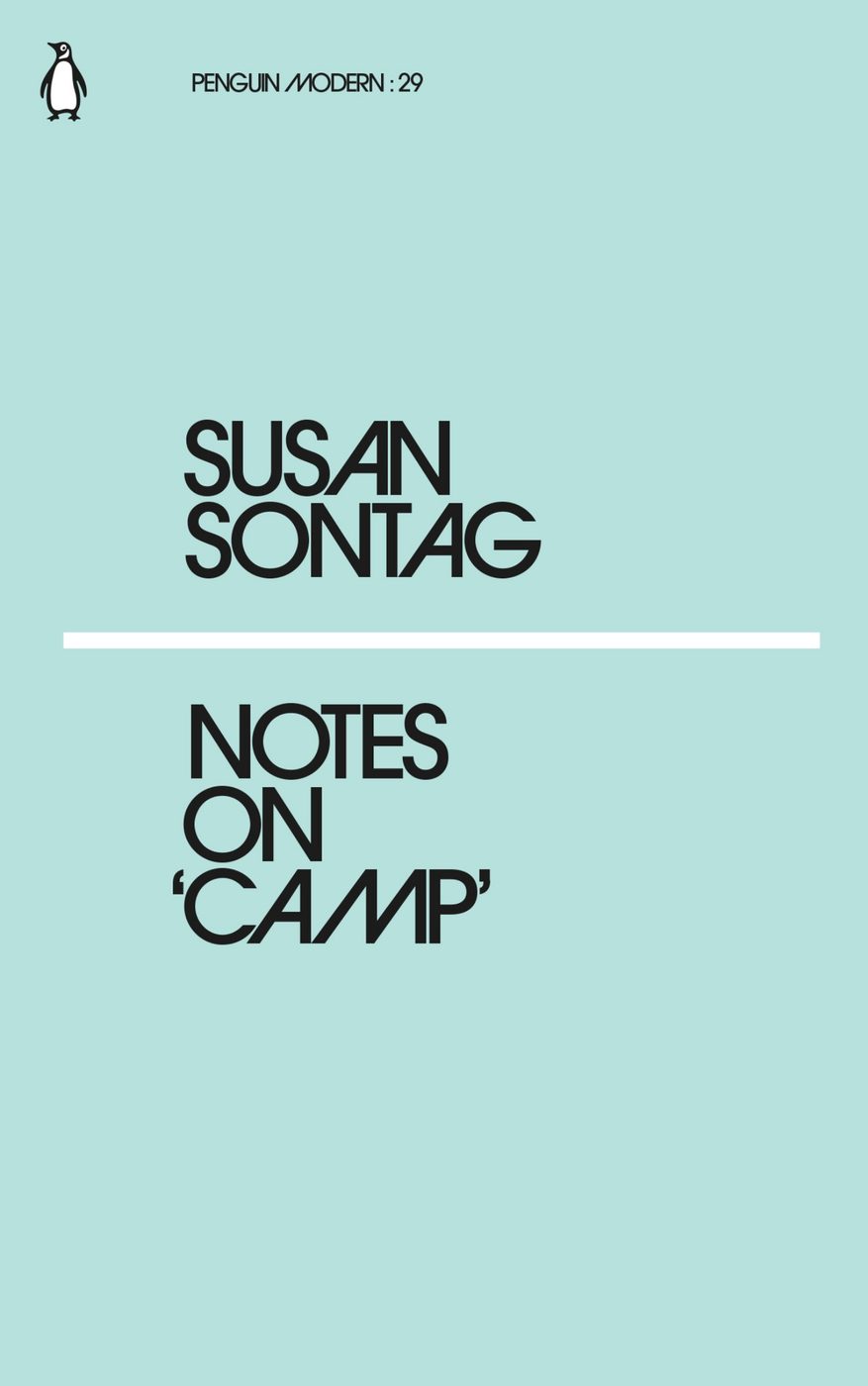
Her 1964 essay “Notes on ‘Camp'” became one of her best-known works. Published in Partisan Review, it explored an aesthetic sensibility characterized by theatricality, exaggeration, artificiality, and an appreciation of the unconventional. Sontag examined the ways camp challenged conventional ideas of taste and seriousness, drawing attention to cultural forms that had often been dismissed by traditional critics.
The essay helped bring camp into mainstream intellectual discussion and became an important contribution to the cultural history of the 1960s. It also reflected Sontag’s interest in gay culture and the ways marginalized communities developed distinctive forms of artistic expression and cultural identity.
In 1966, she published Against Interpretation and Other Essays, a collection that included “Notes on ‘Camp'” and the influential title essay, “Against Interpretation.” The collection established her as a leading voice in American cultural criticism. Her writing was intellectually ambitious but accessible to readers outside academic circles.
New York’s downtown cultural world would become an important part of the environment in which she developed her voice. The Village literary scene, with its bookstores, independent publishers, coffeehouses, and gathering places for writers and artists, offered a setting in which ideas circulated across traditional boundaries.
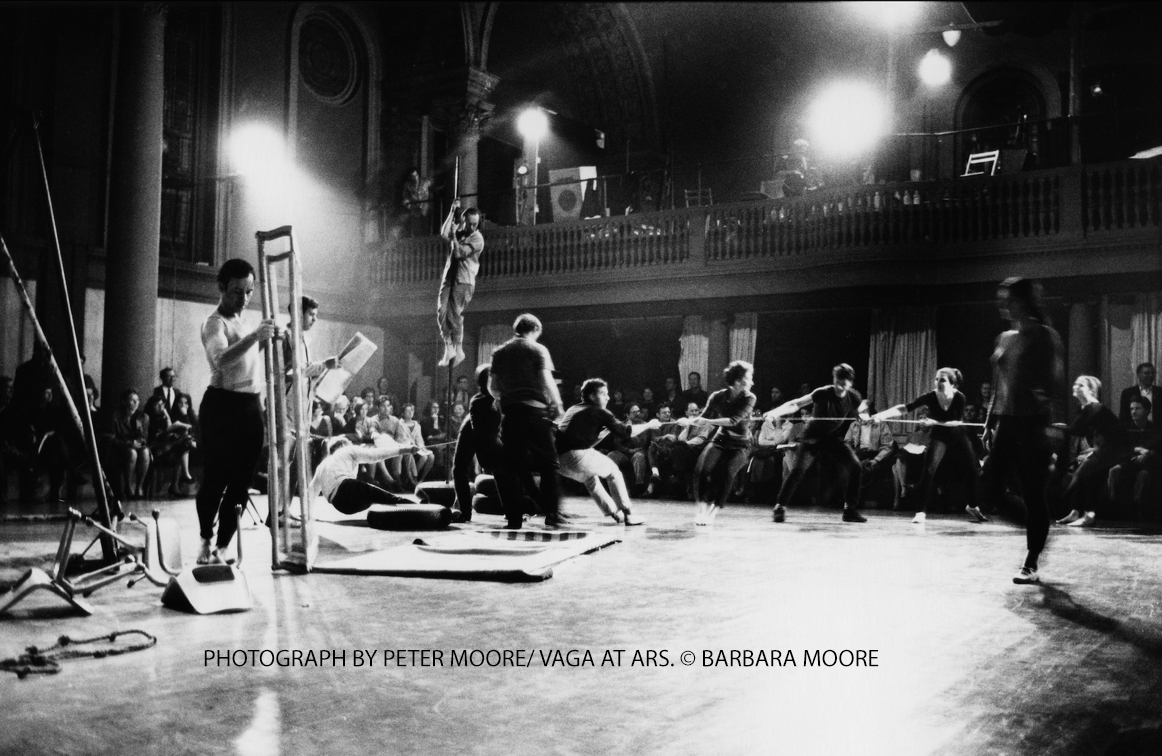
When Sontag first moved to New York, she lived in Greenwich Village, though she spent much of her life residing in the Upper West Side and her well-known Chelsea loft. While she may have migrated further uptown, Sontag’s creative life and workspaces continued to center around Greenwich Village and the East Village. Her work was in conversation with the artistic communities in the Village, including other authors and essayists, beat poets, and dancers, including those in Judson Dance Theater.
In the mid-1970s, Sontag was diagnosed with advanced breast cancer. The diagnosis was especially devastating because her doctors initially gave her a very limited chance of survival. She pursued aggressive treatment, including experimental medical procedures, and eventually recovered.
Her experience led to one of her most important books, Illness as Metaphor, published in 1978. In it, she examined the language and cultural assumptions surrounding disease, arguing that illness was often burdened with moral and symbolic meanings that could stigmatize patients.
Sontag returned to the subject in AIDS and Its Metaphors in 1989, addressing the fear, prejudice, and moral judgments that accompanied the AIDS epidemic. Her work challenged the tendency to portray illness as punishment or evidence of personal failure.
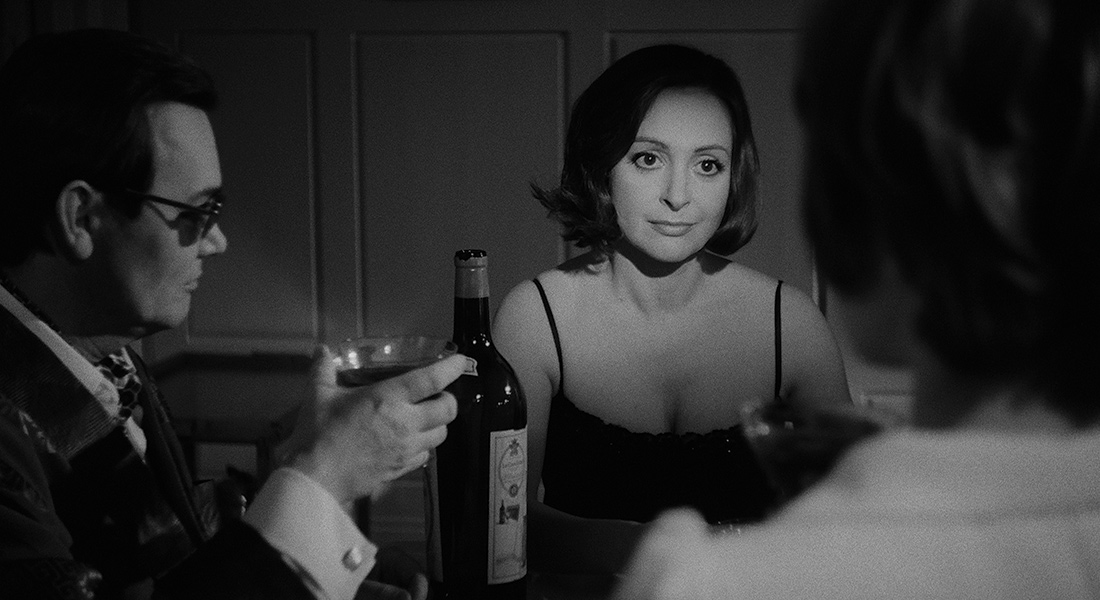
Although Sontag is most widely remembered for her essays, she worked in many different artistic forms. She wrote novels, short stories, plays, and screenplays, and directed several films. Her first film, Duet for Cannibals, was released in 1969. Shot in Sweden, it reflected her interest in experimental cinema and unconventional storytelling. She followed it with Brother Carl in 1971 and Promised Lands in 1974.
Sontag’s intellectual life was never separated from her political convictions. She believed that writers and artists had a responsibility to engage with the world beyond their immediate surroundings, particularly when confronted with injustice and violence.
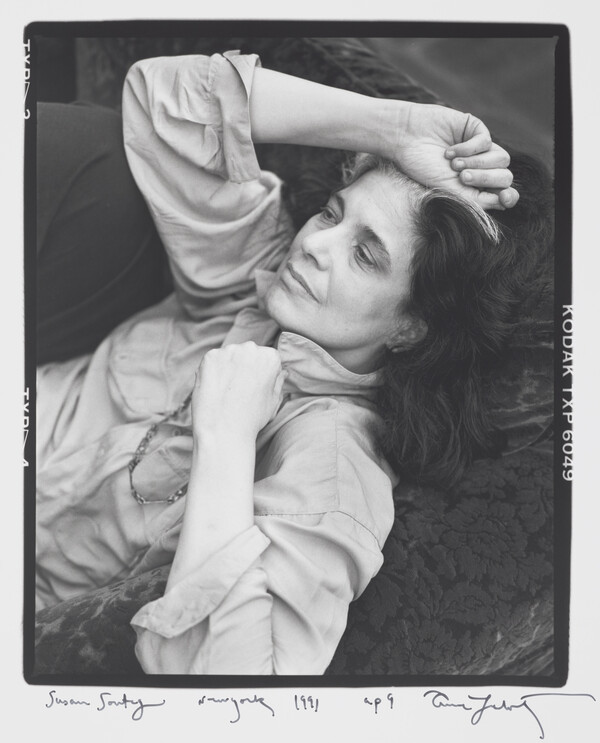
While she rarely discussed it publicly, and while many accounts of her life only discuss her marriage to Rieff, Sontag had many relationships with women. Most notably, she had a decades-long romantic involvement with the photographer, Annie Leibovitz.
Susan Sontag died of leukemia on December 28, 2004, at the age of seventy-one. She was buried in Paris, where she had spent important periods of her life and developed many of the intellectual interests that shaped her work.
Her legacy is difficult to confine to any single field. She was a literary critic who helped change how people thought about art, a novelist who explored the possibilities of experimental fiction, a filmmaker interested in challenging established forms, and a political activist who believed that intellectual engagement carried moral responsibilities.
Her writing continues to influence discussions about photography, popular culture, illness, war, and the relationship between aesthetics and politics. In an era when images circulate constantly, and public debate is increasingly shaped by visual media, her questions about what it means to look, interpret, and respond remain especially relevant.
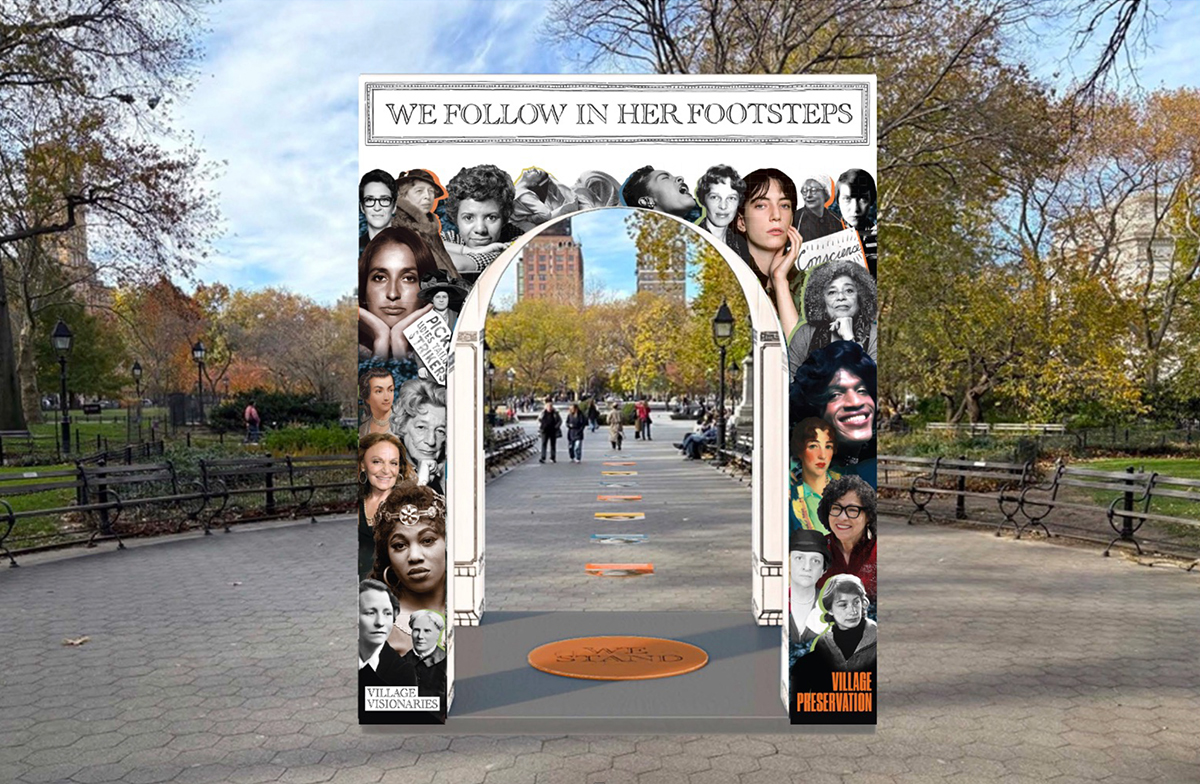
Sontag’s legacy is honored in Village Preservation’s new initiative, WE STAND. Designed for Washington Square Park, WE STAND features a monumental, 12-foot-high structure inspired by the park’s iconic arch. Titled “We Follow in Her Footsteps,” the installation is intended to bring the stories of remarkable women into public view and invite visitors to carry their legacies forward.
The project celebrates a wide range of women, from Abigail Adams and Edna St. Vincent Millay to Marsha P. Johnson, Jane Jacobs, and Sonia Sotomayor. Their fields of achievement differ, but their stories share a common thread: women who challenged conventions, expanded possibilities, and left an enduring mark on public life.
By placing women’s stories in Washington Square Park, WE STAND will create an opportunity to encounter history in the everyday life of the neighborhood, whether while walking through the park, meeting friends, or exploring the streets that inspired generations of writers and reformers.
Learn more about WE STAND and Village Preservation’s work to protect the history, architecture, and cultural legacy of our neighborhoods.