
Growing Up at Porto Rico: Peter Longo’s Oral History
Today we are revisiting Peter Longo of Porto Rico Importing Company’s 2015 Village Preservation oral history, learning all about the history behind one of the neighborhood’s most iconic coffee shops.
Few institutions and businesses are as beloved and as enduring as Porto Rico Importing Company. Located at both 201 Bleecker Street and 40 ½ St. Mark’s Place, Porto Rico has been a neighborhood go-to for over a century, even winning a village award in 2007. First opened by Italian immigrant Patsy Albanese at 194 Bleecker Street in 1907, Porto Rico has been owned and operated by the Longo family for decades. Currently, Peter Longo runs the shop, the third generation of his family to oversee the business. In 2015, Village Preservation sat down with Peter Longo and recorded an oral history covering his family and upbringing, life in the South Village, and how he got involved in the coffee business.
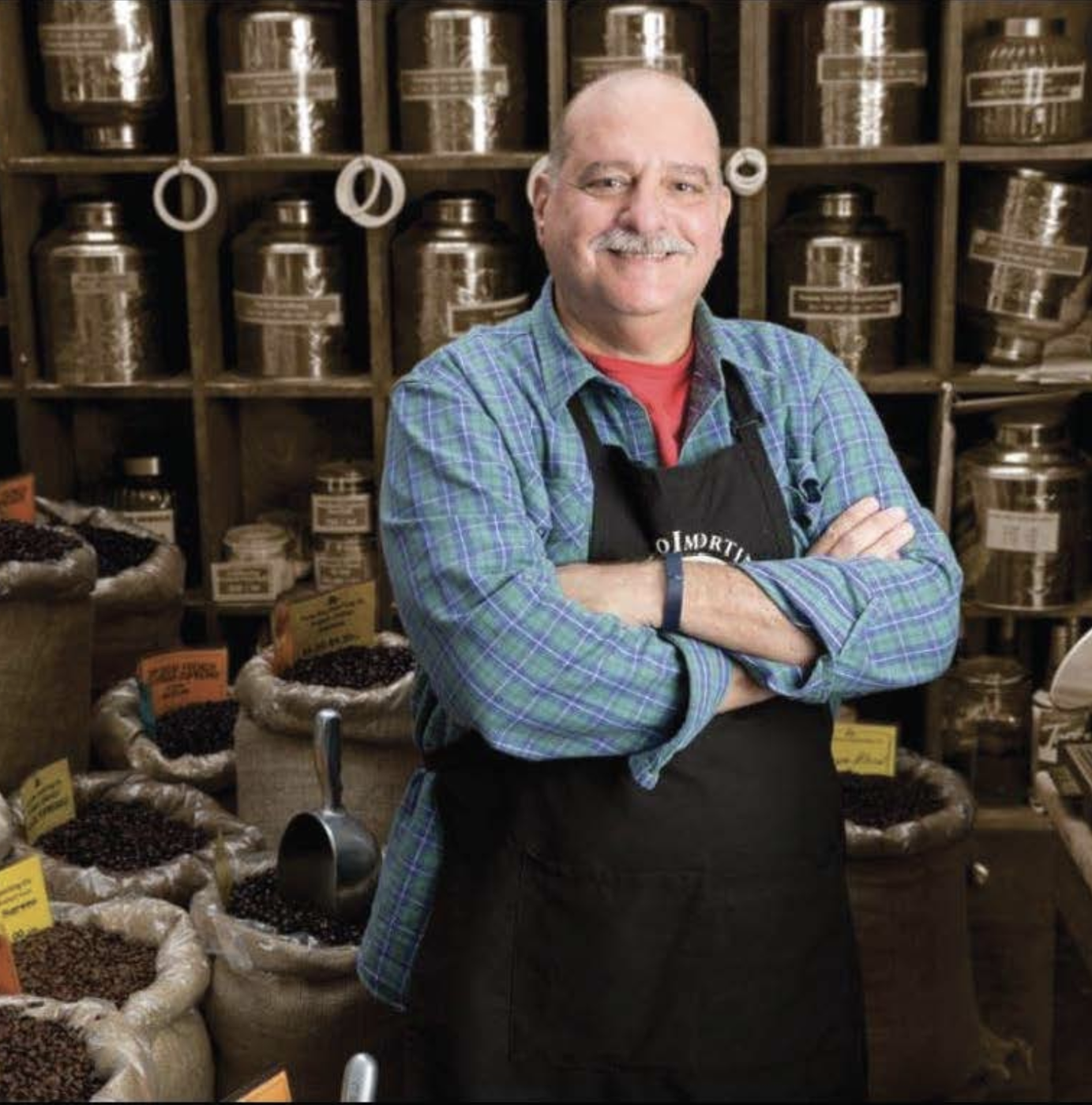
Born October 22, 1951, at Saint Vincent’s Hospital on West 12th Street, Peter Longo is a Villager through and through. Both sets of his grandparents emigrated from Italy and landed in New York, following a path shared by many Italian immigrants who settled in the South Village. His maternal grandparents lived in a five-floor tenement walk-up on East Houston Street, while his father’s side lived at 201 Bleecker Street, where Porto Rico still operates today.
And when Longo’s paternal grandfather, Mr. Longo, bought 201 Bleecker for five thousand dollars in 1905, he worked a few doors down for a baker at 190 Bleecker Street. While both were local to the neighborhood, Peter’s parents came from different backgrounds. His mother Rose, daughter of a tailor, grew up incredibly poor, or as Peter Longo put it, broke. Had she not been dating Peter’s father Angelo at the time, she could have gone to university on the dime of a local minister’s family. But Rose instead stayed in the Village. Angelo, Peter’s father, grew up in a strict Sicilian household where university and education were more accessible, and therefore more accepted. Still a working-class family, though, the Longos spent years as working-class bakers, operating the Longo Sanitary Bakery. Their days were long and hard, beginning at 3 AM to prepare and proof dough, greeting delivery drivers by 8 AM, and finally closing up shop at 6 PM. At 201 Bleecker, the Longos lived upstairs, ran the bakery, while the kids went to school, and they rented out the downstairs. The pair met as schoolchildren at Bethlehem Chapel, a neighborhood community center of sorts, and began dating as teenagers. Assimilation was important on both sides of Peter’s family, prioritizing English over Italian in almost all settings.
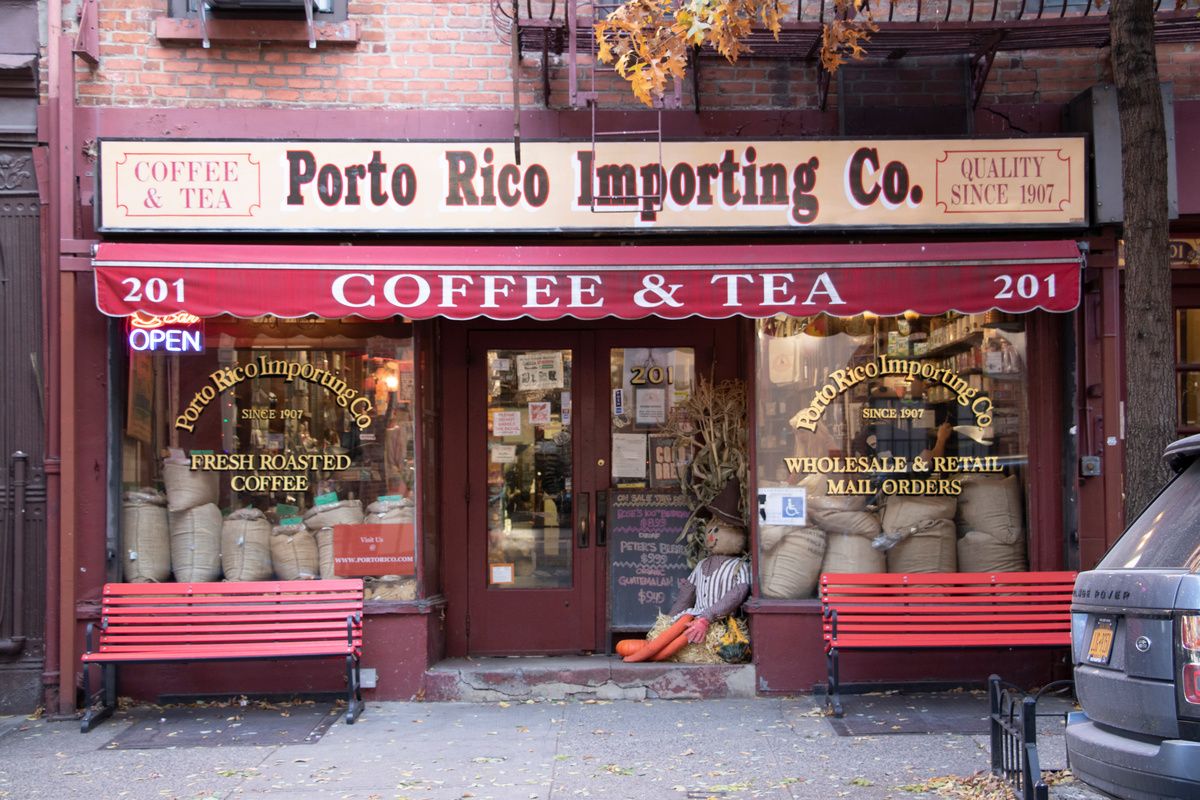
Peter grew up with his parents and two sisters on the top floor of 201 Bleecker, and attended the Our Lady of Pompeii School. His mother, ever class-conscious, forbade her children from venturing south of Houston Street. Nonetheless, the kids would lie and sneak around their mother anyway, accessing the enticing dance and social clubs of Sullivan Street. They would, however, always return home by 9 PM, much to their mother’s approval.
After World War II, Angelo left the bakery, instead renting out the space while he pursued a career in sales. In the 1950s, Angelo worked for the coffee company Frommes. Subsequently, he purchased Porto Rico Importing Co. from their neighbor Patsy Albanese, at 194 Bleecker Street, moving the store into the Longo space at 207 Bleecker. Peter remembers:
He purchased the store from Patsy, and the store was like a cornucopia of Italian products. We roasted coffee. We sold olive oil, dried mushrooms, a variety of dried spices, things like Ferro-China Bisleri and Fernet-Branca. All these items that Italians were used to getting at home, they were able to get through this store. The store was founded in 1907, and he purposely supplied a lot of the items that the Italian American immigrants were used to.
Zapol.
And Peter’s parents made a good pair, with Angelo running operations and Rose overseeing its merchandising. It quickly became a neighborhood place, catering to the bohemians, Beats, and NYU students.
Peter began working at Porto Rico around age 11, running deliveries and cleaning up the shop. And his entire life became walking up and down Bleecker and its neighboring streets. He would pay visits to Cafe Wha at 115 MacDougal, Fiagro at 184 Bleecker Street, and the legendary Gaslight Cafe at 116 MacDougal, where he became quite friendly with the manager, Kevin.
Not long after graduating college, Angelo fell ill and soon passed away, and Peter stepped in to help run the store. But Peter had spent his life picking up on the little tricks and creative innovations of his parents, as well as other local business owners.
I just watched, and I continued to do what they showed me to do. Then my personality took over, and I did what I knew. I learned that you should expose yourself to as much as you can about what you do. My father had a lot of friends who are older in the coffee business and tea business. I was very lucky because these men and women—when salespeople are younger, they’re very competitive, but I’ve found as they get older, they don’t care anymore. They’re willing to share.
And Porto Rico watched as America’s relationship with coffee and coffeehouses changed dramatically. Peter says he positioned himself “as the antihero and the small David to Starbucks’ Goliath…” allowing them to “…[ride] the crest of the wave of coffee popularity” as it became more mainstream.
Listen to Peter’s entire oral history here and learn all about the time his cousin got kidnapped by bakers from Brooklyn, his first love with the princess of Greenwich Village, becoming a radical hippie in college, and more!
This is just one of more than 70 oral histories that Village Preservation has conducted with great activist, business owners, artist, and community leader leaders of our neighborhoods, from Jane Jacobs to Calvin Trillin, and dozen more. Explore all our oral histories here.