
Slavery and Abolition in Greenwich Village, the East Village, and NoHo
Slavery in New York emerged almost immediately after Dutch settlement began in the early 17th century, and continued under English and American rule until it was finally abolished in 1827 in the state. It would not end throughout the country until 1865, with Union troops arriving in the farthest reaches of the Confederacy in Galveston, Texas on June 19 to free enslaved people there, now marked as Juneteenth, and the passage of the 13th Amendment on December 6 banning slavery in the country.
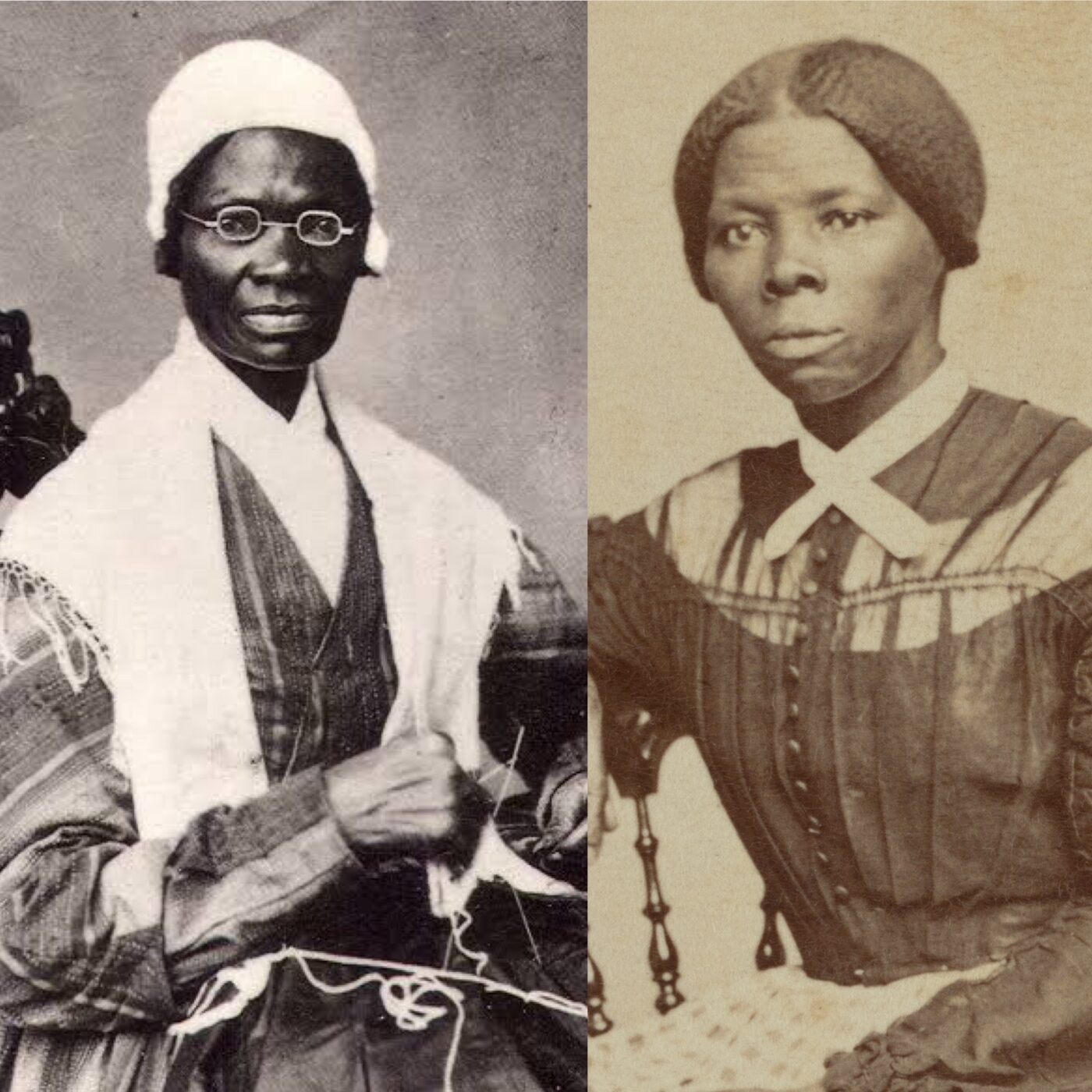
Many people and locations in our neighborhood played important roles in the history of slavery and the fight for its abolition. Here are a few:
“Land of the Blacks”
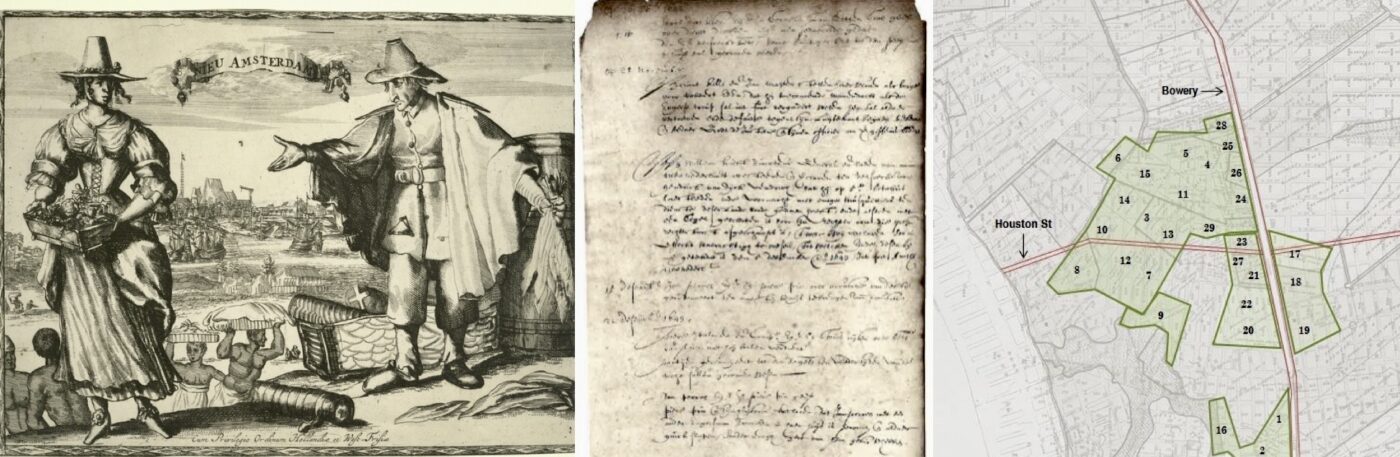
Too few know that the first permanent settlers of our neighborhoods, and much of Lower Manhattan north of the tip where the small Dutch New Amsterdam colony was located, were formerly enslaved African men and women who won their freedom and secured land in this area to farm. This included some of the very first Africans brought to New York, who began the process of securing their freedom around 1643. Known as “The Land of the Blacks,” it constituted the first free Black settlement in North America.
“Little Africa”
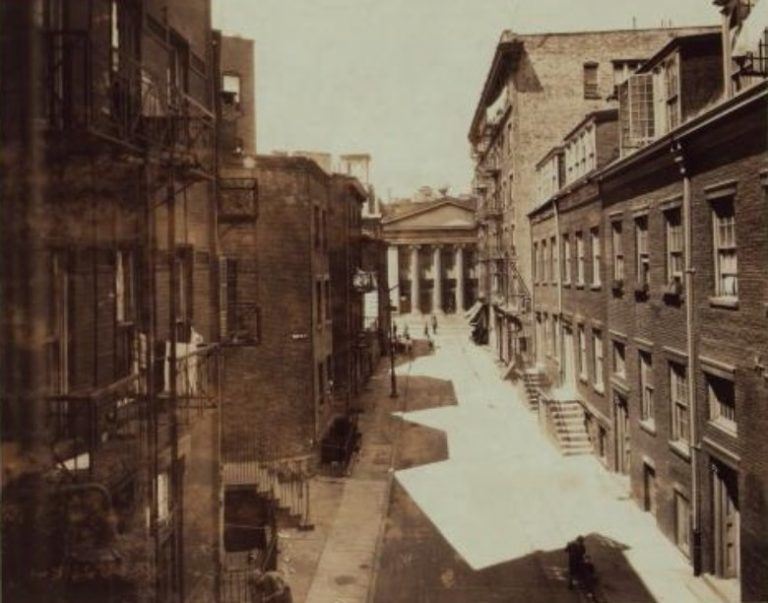
While the “Land of the Blacks” had largely disappeared by the early 18th century, as wealthy English settlers took control of their land, by the mid-19th century Greenwich Village had again become a center of Black life in New York, with a community consisting of emancipated Black New Yorkers and formerly enslaved Southern Blacks who formed a concentrated community emanating out from the blocks around today’s Minetta Lane and Street. Known as “Little Africa,” the community was mostly poor and working class, but a notable number of successful Black merchants also lived in and around the area. The community flourish with multiple large churches and other institutions, until it began to shrink in the late 19th century and disappear altogether in the early 20th. The causes were the outmigration of Black residents due to new housing opportunities in the Tenderloin, San Juan Hill, and Harlem neighborhoods uptown; a huge influx of, and competition for housing in the neighborhood from, Italian immigrants and later artists and bohemians; and the destruction of much of the final remnants of Little Africa for the southern extension of Sixth Avenue and Seventh Avenue and the construction of subway lines underneath them.
50 West 13th Street — The Jacob Day House
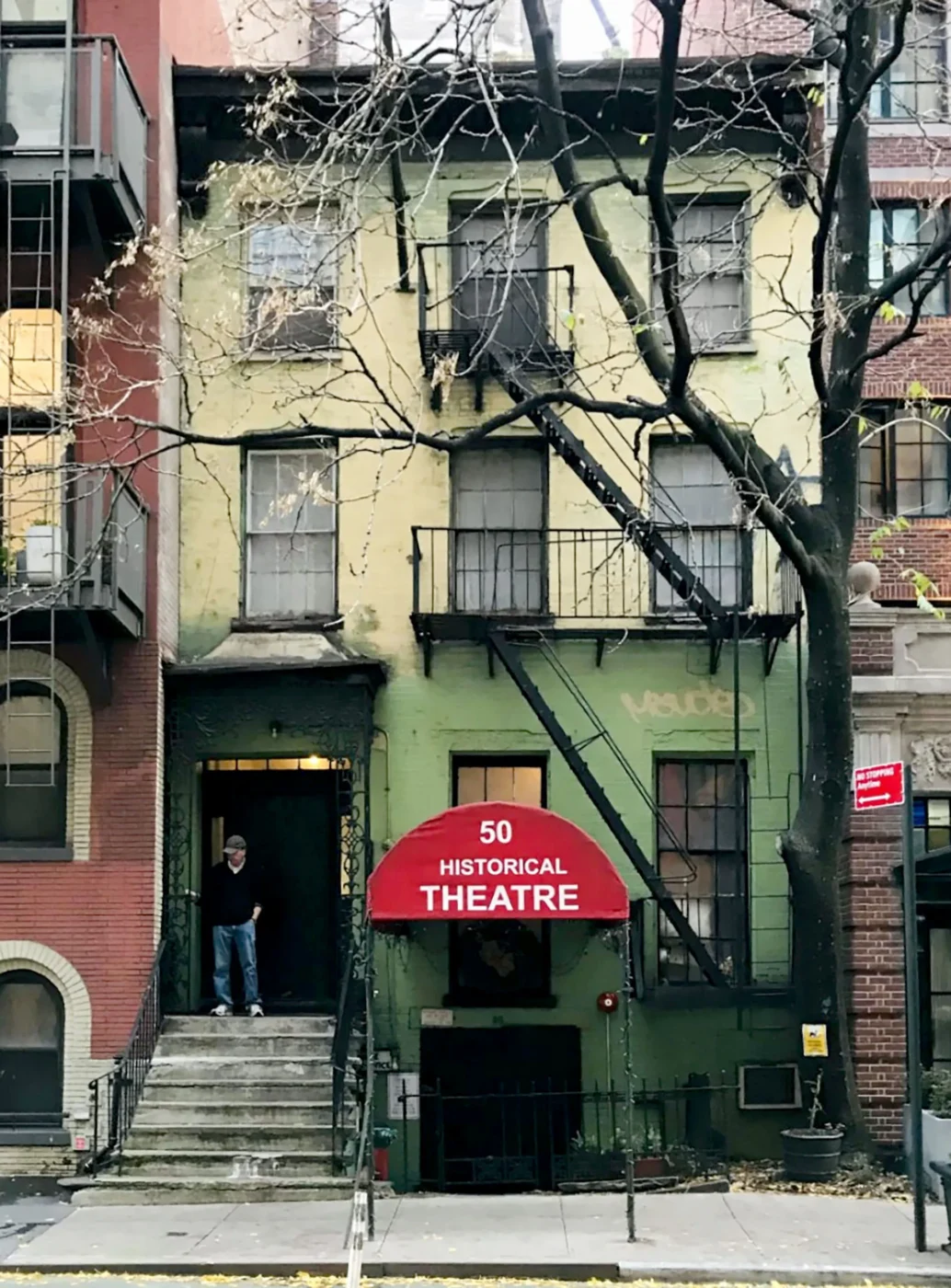
From 1858 to 1884, this 1846 house was home to Jacob Day, one of New York’s most successful Black businessmen as well as a staunch abolitionist who strongly supported abolitionist causes and institutions with his wealth and is suspected to have supported, and possibly used his home to aid, the Underground Railroad. He also took on as a boarder here the great abolitionist, suffragist, and educator Sarah Smith Garnett. Village Preservation proposed and led the successful campaign to secure landmark designation for this building. Read more here.
Cooper Union Foundation Building
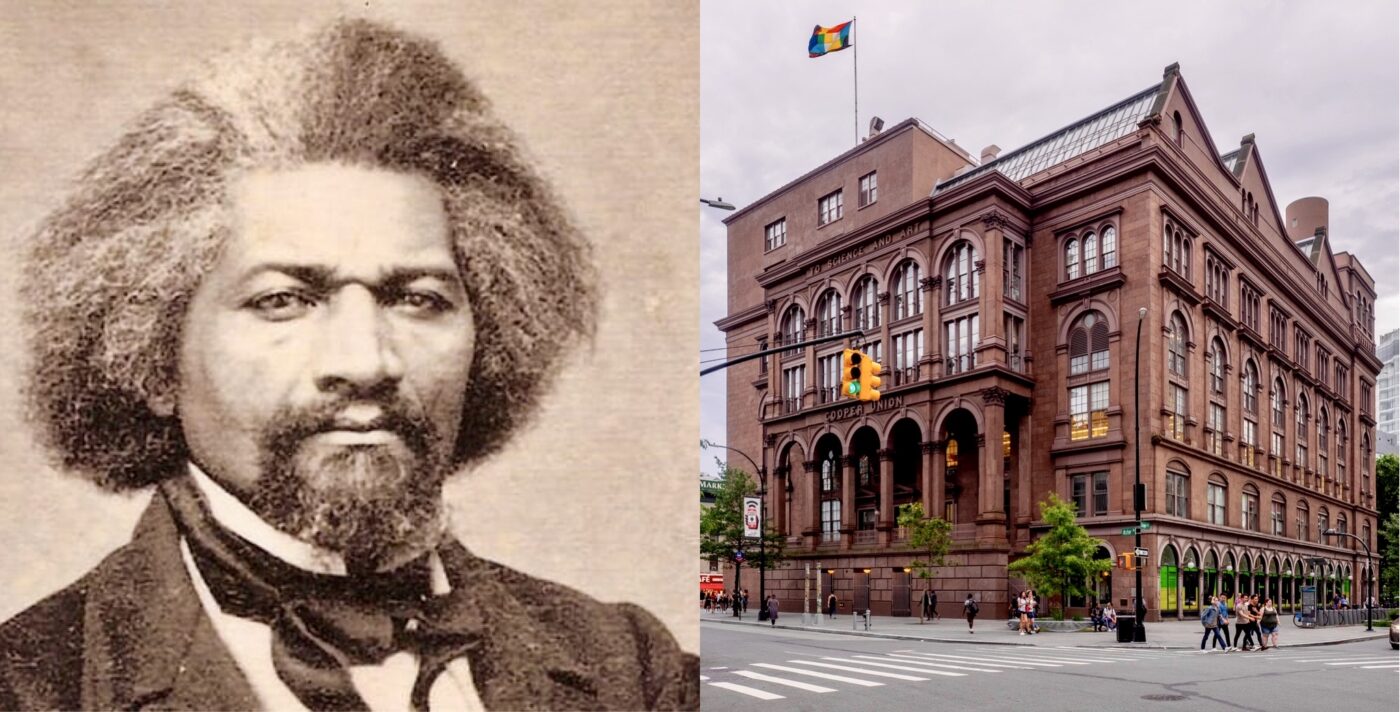
Founded by the industrialist, inventor, philanthropist, and abolitionist Peter Cooper, Cooper Union was also connected to abolitionist history in multiple other ways.
On February 27, 1860, presidential hopeful Abraham Lincoln gave his celebrated Cooper Union address here, which helped him win the Republican nomination and catapult him to the Presidency, sparking southern secession, the Civil War, and the end of slavery in the United States. Lincoln would issue the Emancipation Proclamation in 1863.
The former enslaved celebrated orator and abolitionist leader Frederick Douglass gave a historic speech at the Great Hall a month after the Emancipation Proclamation in which he recounted to his audience of black and white New Yorkers the reactions of the men and women around him upon first hearing of the Emancipation Proclamation. “I never saw enthusiasm before,” he recalled. ”I never saw joy before. Men, women, young and old, were up; hats and bonnets were in the air, and we have three cheers for Abraham Lincoln and three cheers for about everybody else.”
Decades later, Cooper Union’s Great Hall was the site of the first public meeting of the NAACP, held in the summer of 1909.
Learn more here.
Abyssinian Baptist Church, 166 Waverly Place (demolished)
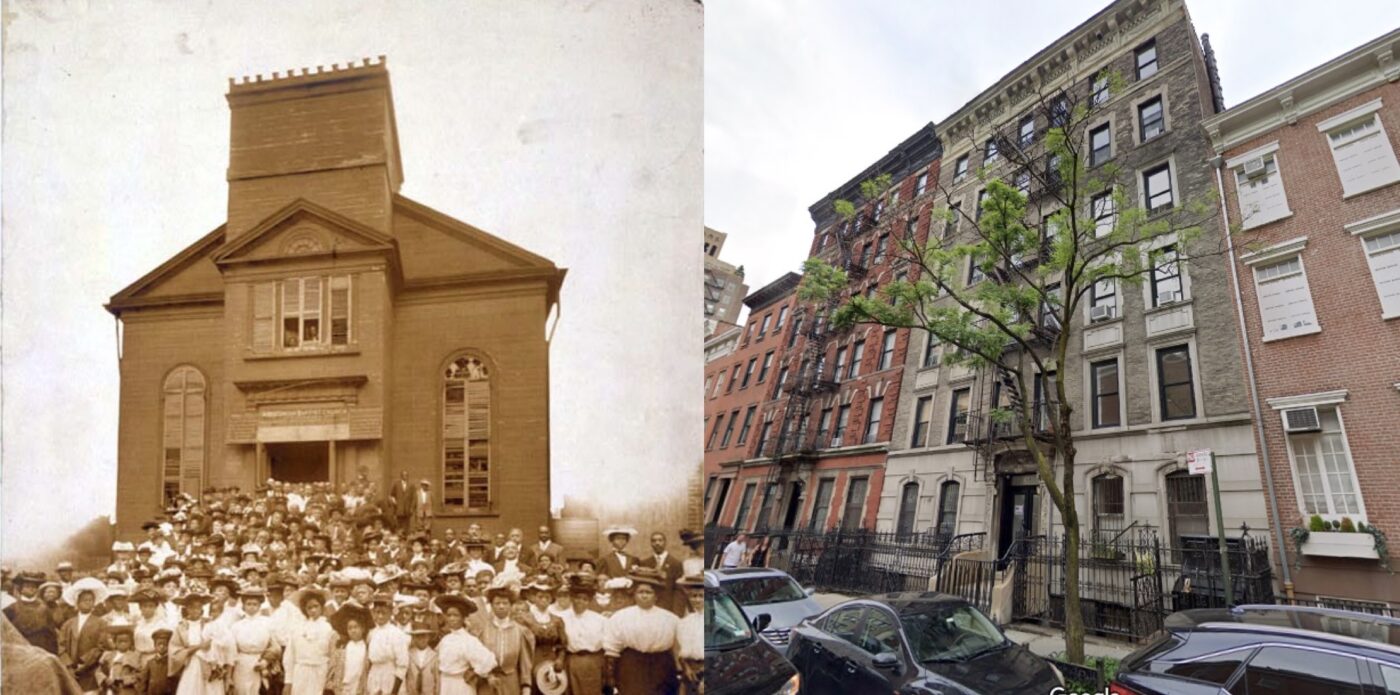
This congregation formed in 1808 when a handful of free blacks withdrew from the First Baptist Church in New York in protest against the practice of segregating blacks in what was called a “slave loft.” It was also only the second Black church in New York City, after Mother Zion AME Church. They moved to this location in 1856, in the heart of the then-thriving “Little Africa” neighborhood, and gained a reputation as one of the richest black churches in the city, and by 1900 claimed over 1,000 members. Its choir was admired as one of the best in the city. The church was an active supporter of abolitionism, and via some wealthy trustees was able to give significant financial resources to the cause, and was known to support Underground Railroad activities. The church was a target during the draft riots and other anti-abolitionist violence in New York City in the pre-Civil War years.
AME Zion Church, West 10th and Bleecker Streets (demolished)
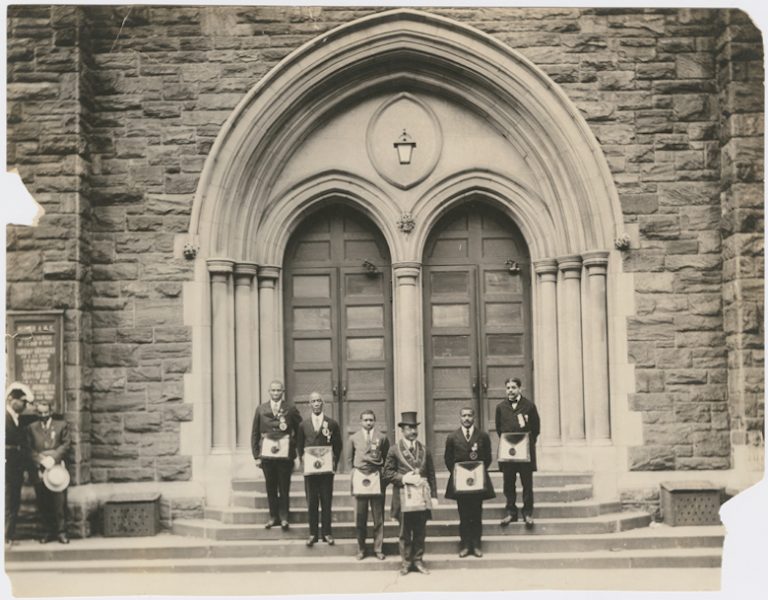
This is the site of the third home of Mother Zion African Methodist Episcopal Church, the founding congregation of the Zion African Methodist Episcopal (AME) church and the very first Black church in New York City. Zion AME had a profound effect on African-American life and has been a force for abolition and civil rights since the late 18th century, and has been the home to some of the most prominent African-American abolitionist and civil rights leaders, including Sojourner Truth, Harriet Tubman, and Frederick Douglass. Zion AME relocated here at the height of the Civil War from prior locations in Lower Manhattan, reflecting the migration of the center of African-American life in New York uptown and into the Village in the 19th century. The church moved from here to Harlem in the early 20th century.
Abolitionists Harriet Tubman, Sojourner Truth, and Frederick Douglas were all part of the Zion church, which came to be known as “Freedom Church.” Zion AME Church was the only Black church in all of New York City until 1808, when the Abyssinian Baptist Church was founded .
The Mother AME Zion Church, also known as “Mother Zion,” had been part of the network of Underground Railroad “stations” at its prior location on Church Street, moving here in 1864. The Church’s time on West 10th Street was known as “The Flourishing Period” for the church and the conference’s expanding wealth and success. After 1904 the church moved to Columbus Avenue and 89th Street, before finally settling on West 136th Street in Harlem, where it remains today. The church is still referred to as “Mother Zion” for its role in originating and launching the entire Zion AME movement.
Alex Haley Home and Writing Studio, 92 Grove Street
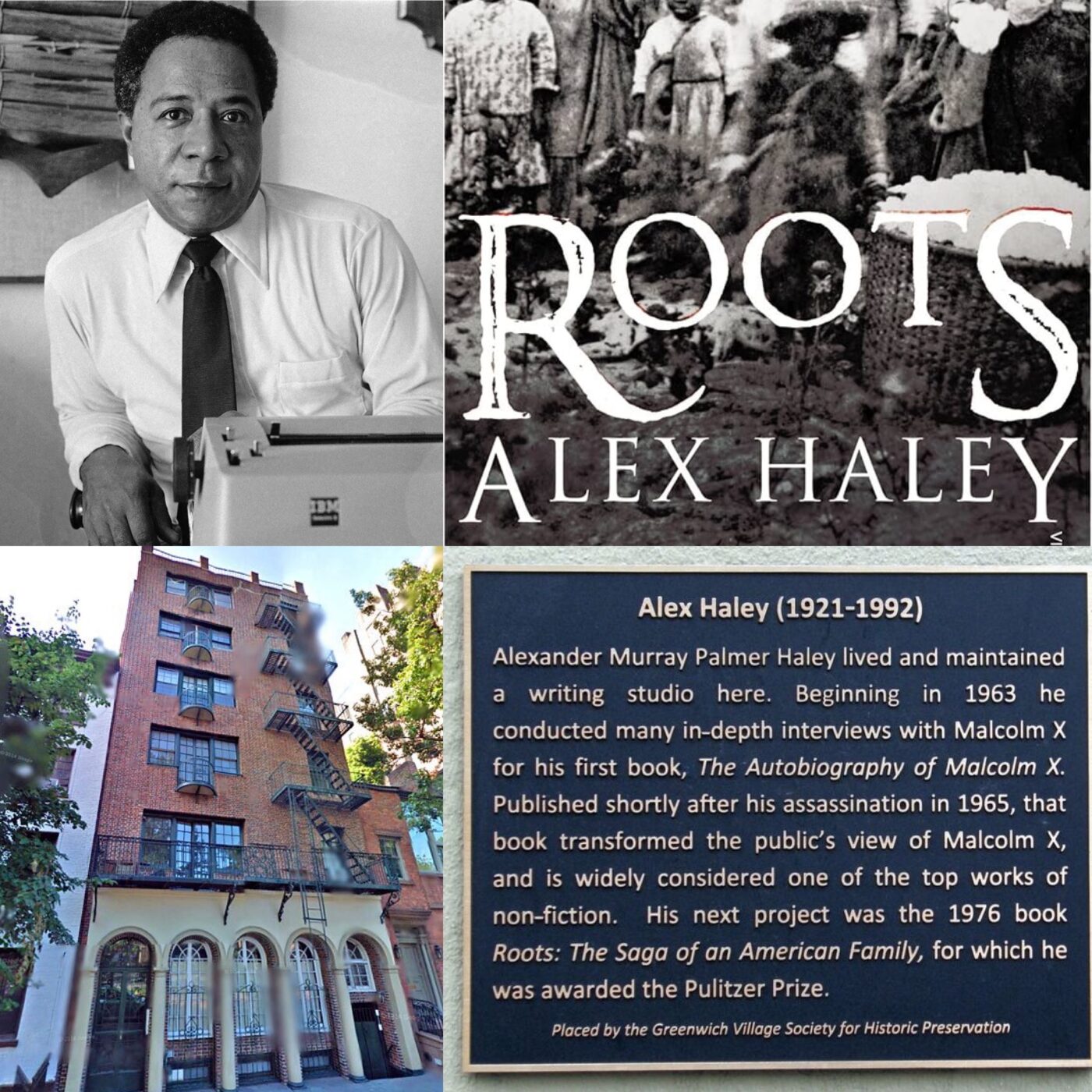
Award-winning author Alex Haley lived and wrote here in the 1960s. Haley’s book, “Roots,” popularized in a widely-viewed network television miniseries, shone a previously-unseen light upon the experiences of Black families and individuals under slavery, from their capture in Africa to the cruel and dehumanizing conditions they faced and survived in America. The book and TV series dramatically and viscerally increased awareness and an understanding of the reality and impact of slavery to late 20th century Americans, now over a century removed from its abolition, of all races. In 2019, Village Preservation unveiled a plaque on the building marking it as the site of Haley’s studio.
Draft Riots — First Avenue near 11th Street, Clarkson Street near Greenwich Street
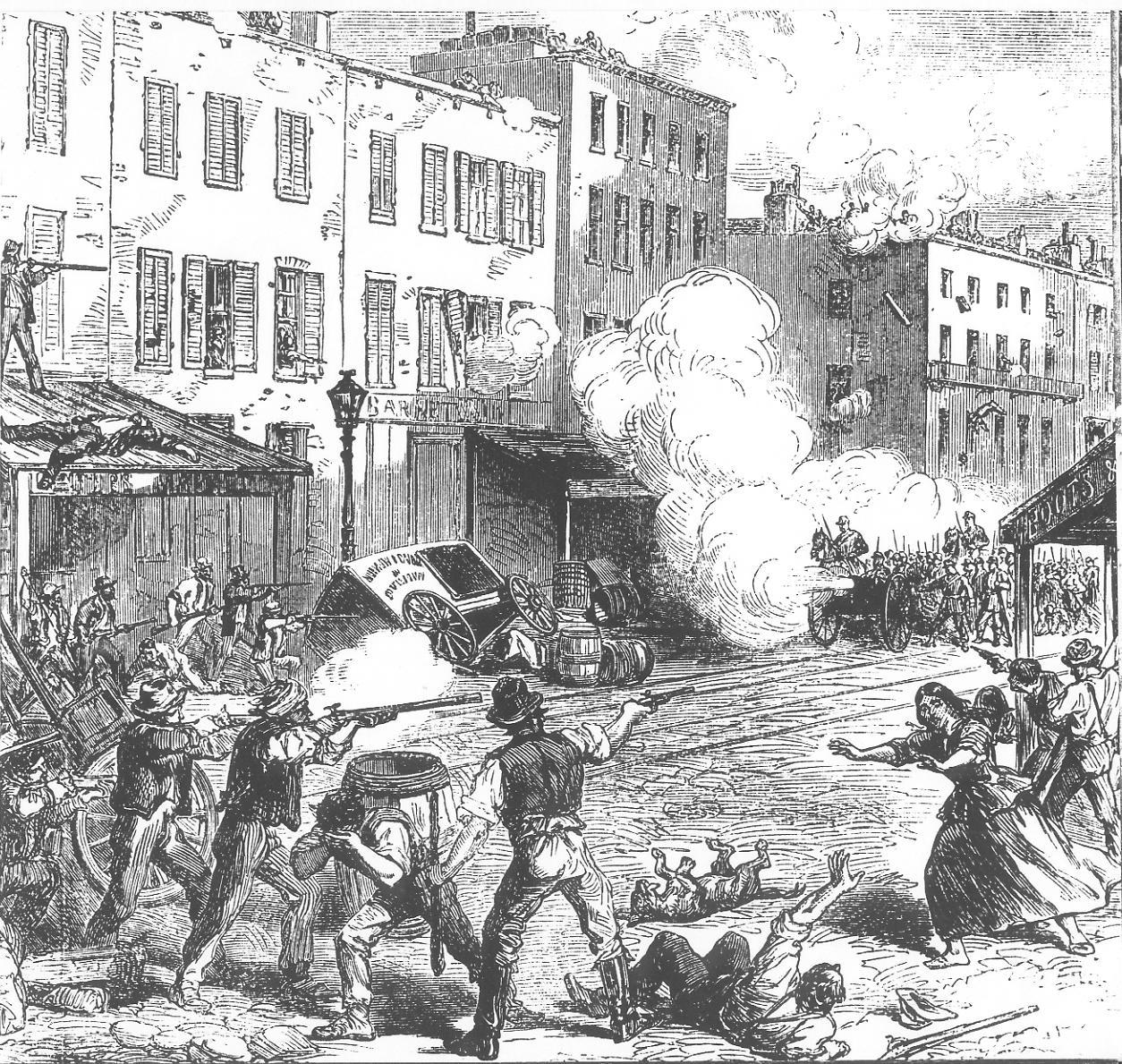
The draft riots of 1863 raged for four days in July in multiple locations in New York, including several in Greenwich Village in the East Village, and resulted in the deaths of at least 119 people. Many of these victims were Black who were lynched and their bodies mutilated. The riots only ended when regiments fresh from the Battle of Gettysburg were brought to New York to bring order to the city. They constitute the “largest single incident of civil disorder” in the history of the United States. After the riots, approximately one-fifth of New York’s Black population left the city. The riots emanated from a variety of factors, including classist provisions in the Conscription Act which allowed men of means to pay their way out of military service, and the fact that Blacks, not considered citizens, were also exempted from the draft. However, at the heart of the violence was also a lack of support for the cause of abolitionism, which was pervasive in New York, and a scapegoating of Blacks and the anti-slavery cause for a variety of pressures and hardships white working-class New Yorkers had to contend with during this time. As a result, the streets became entirely unsafe for Black New Yorkers, with dozens lynched or killed; other targets included Black orphanages, draft offices, Black neighborhoods, and institutions visibly associated with the Union cause.
John Brown and Thaddeus Hyatt, 46 Morton Street
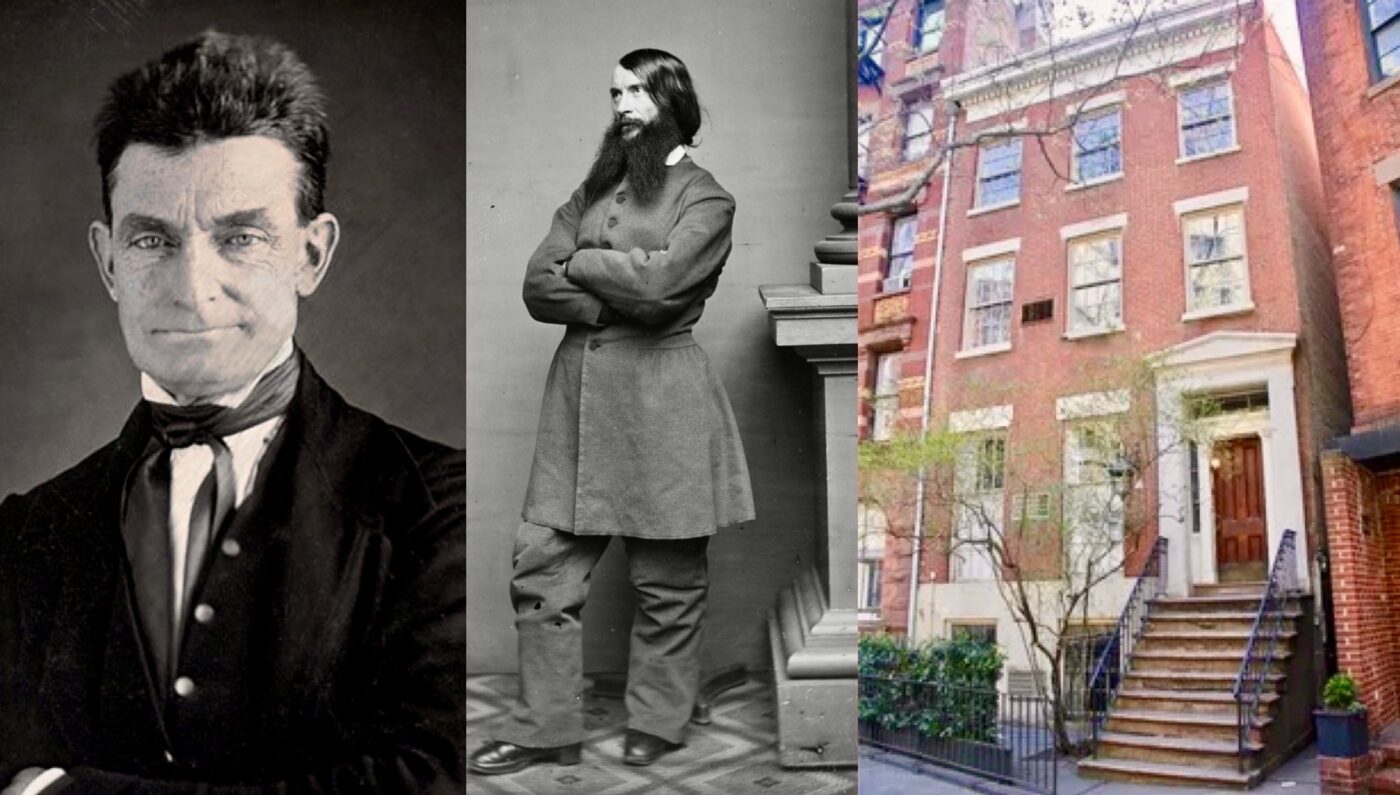
This 1854 home was built by inventor and ardent abolitionist Thaddeus Hyatt (July 21, 1816 – July 25, 1901). An accomplished structural engineer who invented vault lights, Hyatt’s wealth allowed him to commit time and resources to the fight against slavery. He was President of the New York Kansas League, an anti-slavery organization that provided support and resources for anti-slavery Kansans in the “Bleeding Kansas” conflict, and later President of the National Kansas Committee which raised over $100,000 to support 2,000 new “free state” supporting settlers in the territory. The settlement of Hyattville, Kansas was named for him.
Through his work with the National Kansas Committee, Hyatt became a close friend and supporter of John Brown, a radical abolitionist leader who helped lead free state forces in the Bleeding Kansas conflict. Whenever Brown was in New York City, he made Hyatt’s townhouse at 46 Morton Street his unofficial headquarters. In October 1859, Brown led a raid and demonstration on a federal armory in Harpers Ferry, Virginia in hopes of inciting a slave rebellion in the southern states. Brown and his party of 22 abolitionists were defeated by the United States Marines. Ten were killed on site, seven were captured, tried, and executed by the United States government, and five escaped. John Brown was captured and found guilty of treason as a result of the raid. Following Brown’s arrest, Hyatt spearheaded a fundraising effort to support John Brown and his family. Brown was executed for his role in raid on December 2, 1859. In the aftermath of Harpers Ferry and John Brown’s execution, Congress learned how much the National Kansas Committee and Thaddeus Hyatt personally offered aid and support to John Brown, and subpoenaed Hyatt to testify before the congressional committee investigating the matter. Hyatt refused to do so, and was jailed in Washington, D.C. from March to June of 1860. He continued to advocate strongly for abolition.
Edmonia Lewis Bust of John Brown at 450 Sixth Avenue, Shiloh Presbyterian Church (demolished)
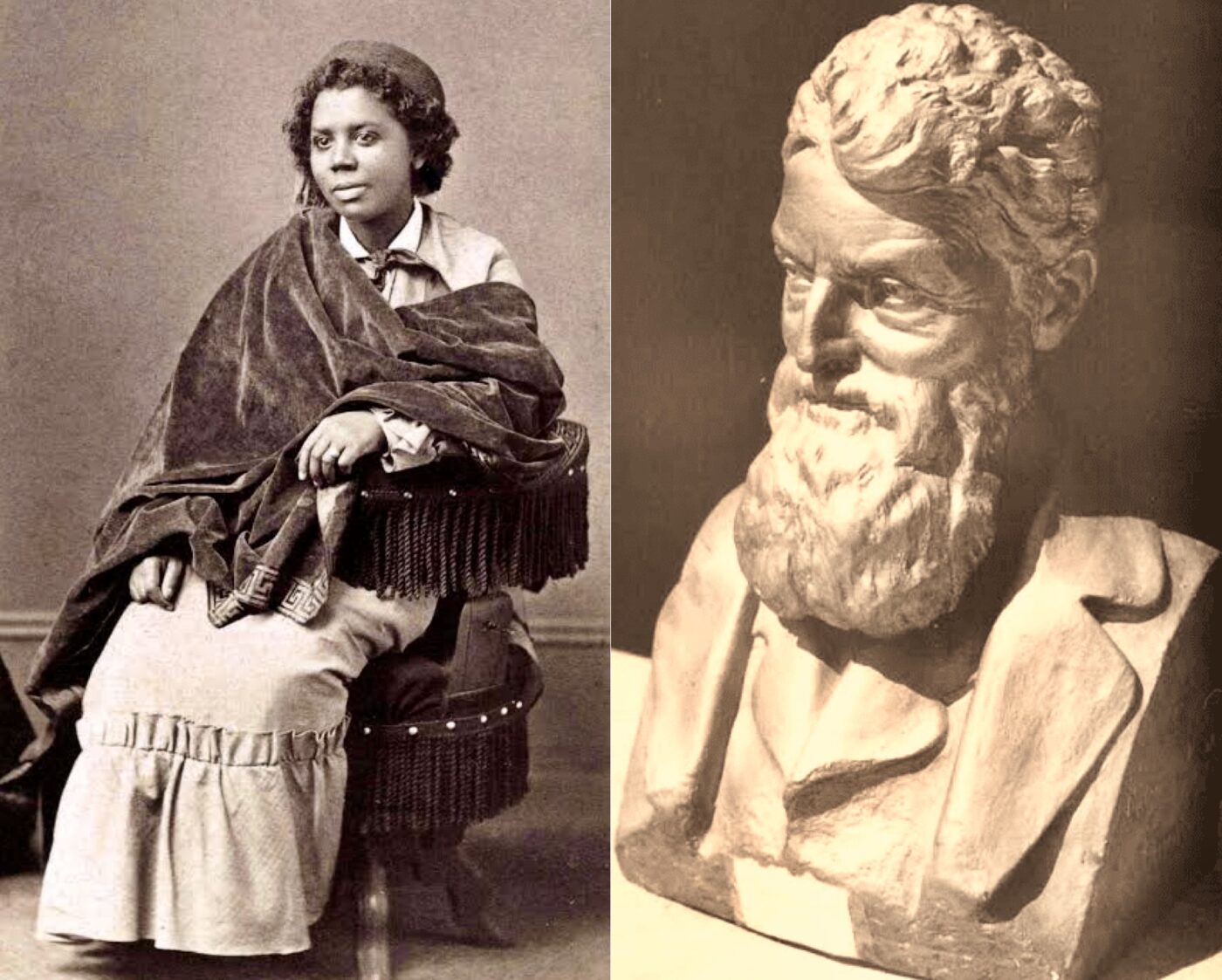
On December 26, 1878, Edmonia Lewis (July 4, 1844–September 17, 1907) — one of the first African American sculptors to gain international fame — unveiled a bust of militant abolitionist John Brown at Shiloh Presbyterian Church, and presented it to the church’s leader, Rev. Henry Highland Garnet, D.D., one of the foremost civil rights leaders of the time.
The reception at Shiloh Presbyterian Church for the unveiling of Edmonia Lewis’ Bust of John Brown honored both the sculptor’s illustrious career and John Brown’s sacrifice to the cause of abolition following his 1859 raid on Harpers Ferry and armed slave revolt he led, and his subsequent execution. Speakers read poems that breathlessly described Lewis’ work while offering personal remembrances of their friend and ally John Brown.
In 2022, the U.S. Postal Service issued a commemorative forever stamp honoring Edmonia Lewis.
The Freedmen’s Savings and Trust Co., 185 Bleecker Street (demolished)
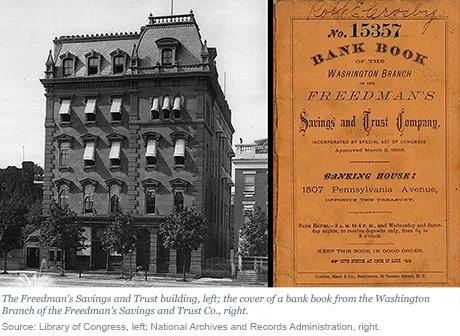
On March 3, 1865, The Freedmen’s Savings and Trust Company, commonly referred to as The Freedmen’s Bank, was created by the United States Congress to aid freedmen in their transition from slavery to freedom. During the bank’s existence, 37 branches were opened in 17 states and the District of Columbia. After opening in a building at the southwest corner of Bleecker Street and LaGuardia Place (then referred to as Laurens Street) in August 1866, the bank moved into a pair of no longer extant row houses at 183-185 Bleecker Street (the address is now 185 Bleecker Street).
During the Civil War, small banks had been established across the South to serve black soldiers and runaway slaves working at Union garrisons. However, many of the deposit records were lost, preventing freedmen from recovering their deposits. Deposits also went unclaimed when Black troops who were killed in combat had not listed a next-of-kin, or when their next-of-kin could not be located. The Freedmen’s Bank was created by John W. Alvord, a Congregational Minister, and A.M. Sperry, an abolitionist, to eliminate bank mismanagement and bring all Black deposits under central control. Deposits could only be made by or on behalf of former slaves or their descendants and received up to 7% interest. Unclaimed accounts were pooled together to fund education for the children of ex-slaves. By 1874, fraud and economic instability had taken its toll on the bank. Frederick Douglass, who had been elected president of the bank in 1874, donated tens of thousands of dollars of his own money in an attempt to revive the failing bank. Despite his efforts, the bank closed on June 29, 1874, leaving many Black Americans cynical about the banking industry. After the bank failed, Congress established a program that made depositors eligible for up to 62% of what they were owed; however, many never received even that much. Depositors and their descendants fought for decades for the money they were owed and for the government to assume some responsibility, but they were never compensated.
John Mercer Langston, one of the bank’s black trustees, wrote in his 1894 autobiography, “Perhaps the failure of no institution in the country … has ever wrought larger disappointment and more disastrous results to those interested in its creation.”
African Free School No. 3, 120 West 3rd Street (demolished)
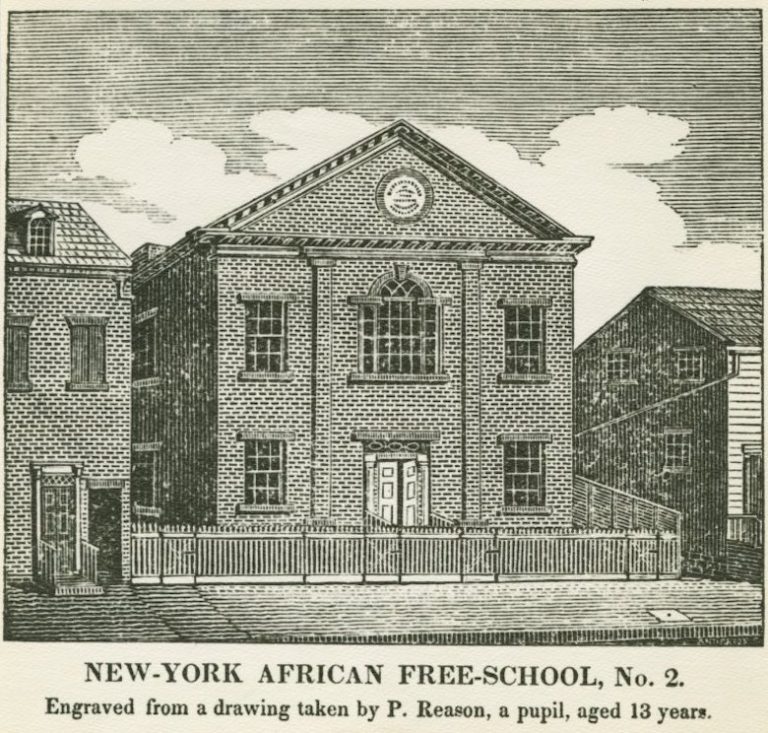
No. 120 West 3rd Street (formerly 120 Amity Street) is the former location of African Free School No. 3, one of seven schools dedicated to the education of the children of free and enslaved blacks in the late 18th and early 19th centuries. The first African Free School was the very first school for blacks in America. The African Free School Institution was founded in 1787 by members of the New York Manumission Society, an organization devoted to the full abolition of African slavery.
At the time of its creation, many African residents in the city were still slaves. The mission of the institution was to empower young Black people and educate them on something other than slavery, which was a complicated and bold proposition for the time. In 1785 the Society worked to pass a New York State law prohibiting the sale of slaves imported into the state. This preceded the national law prohibiting slave trade, passed in 1808. The 1783 New York law also lessened restrictions on the manumission of enslaved Africans. In New York, a gradual emancipation law was passed in 1799, which provided that children of enslaved mothers would be born free. However, long periods of indentured servitude were required: 28 years for men and 25 for women. Existing slaves were eventually freed until the last slaves were freed in 1827.
The first African Free School, a one-room school house located in lower Manhattan, was established in 1794 and held about 40 students. Here, the children of both free and enslaved blacks were taught reading, writing, arithmetic, and geography. Boys were also taught astronomy, a skill required of seamen, and girls were taught sewing and knitting. After a fire destroyed the original building, a second school was opened in 1815 and held 500 students. African Free School No. 2, located on Mulberry Street, was alma mater to abolitionist and educator Henry Highland Garnet. African Free School No. 3 was established on 19th Street near Sixth Avenue; however, after objections from whites in the area, it was relocated to 120 Amity Street (now known as 120 West 3rd Street). By 1834 the seven existing African Free Schools, with enrollment surpassing a thousand students, had been absorbed into the public-school system.
Execution of Rose Butler, Washington Square
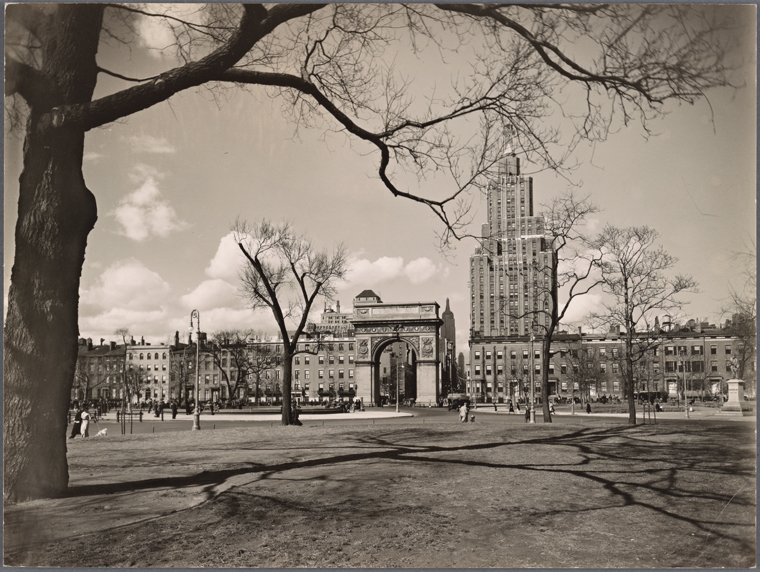
On July 9, 1819, Rose Butler was executed in the Potter’s Field located in what is now Washington Square Park in Greenwich Village. Rose, a 19-year-old enslaved Black woman, had been convicted of arson. During the trial, Rose admitted to intentionally setting fire to the residence of her enslavers, and to tying a string to the kitchen door to prevent the Morris family from escaping. Rose also said she was aided by some accomplices, but they were never caught. Although there were no reported injuries or casualties, and the only damage was the destruction of two or three kitchen stairs, Rose was sentenced to death. Rose’s case made it all the way to the Supreme Court, raising questions as to whether arson was a capital offense or a common-law offense. She became the last known person to be executed by hanging in Potter’s Field.
Henry Highland Garnet Residences, 185 and 183 Bleecker Street, 102 West 3rd Street (all demolished), and 175 MacDougal Street (extant)
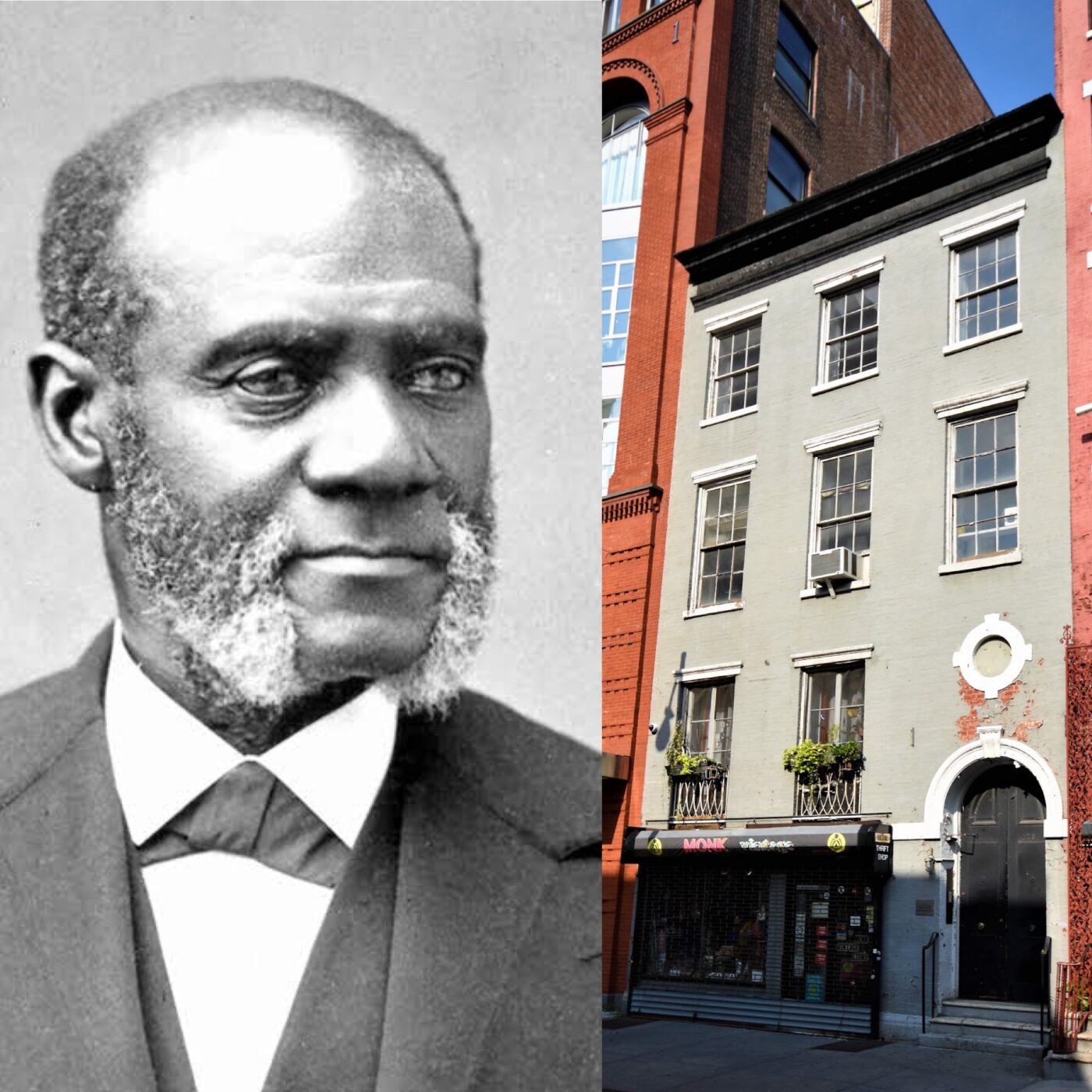
Henry Highland Garnet was an African American abolitionist, minister, educator, and orator, and the first African-American to address the United States House of Representatives. He was married to Sarah Smith Garnet, a suffragist who founded the Equal Suffrage League. Henry Highland Garnet was born into slavery in Maryland in 1815. In 1824, his family (a total of 11 members) received permission to attend a funeral, and used the opportunity to escape to Delaware, from which they continued on to New York City. From 1826 to 1833, Garnet attended the African Free School and then the Phoenix High School of Colored Youth. It was in school that he began his career in abolitionism. He became pastor of the Liberty Street Presbyterian Church in Troy, NY, during which time he published papers that combined religious and abolitionist themes and supported the temperance movement and political antislavery. In New York City he joined the American Anti-Slavery Society and frequently spoke at abolitionist conferences. His radical message included encouraging slaves to rise up against their masters. His 1843 “Address to the Slaves,” a call to resistance which he made at the National Convention of Colored Men in Buffalo, brought him to the attention of leaders in the black community across the country. Convinced that talking would never change the minds of slave owners, he was among the first to call for an uprising. “Brethren, arise, arise! Strike for your lives and liberties” he said. “Now is the day and the hour…Rather die freemen than live to be slaves.”
By 1849, Garnet began to support the emigration of blacks to Mexico, Liberia, and the West Indies, where they would have more opportunities. He also supported black nationalism in the United States. He later moved to Washington D.C. where he became a prominent preacher at the 15th Street Presbyterian Church.
In New York, Garnet was the leader of the Shiloh Presbyterian Church (then located at Prince and Lafayette Streets, and later 140 Sixth Avenue, which was then around 11th Street; its present-day incarnation is located in Harlem). The church boasted a long tradition of radical black leadership, and Garnet, along with other black clergymen, dispensed aid to those in need following anti-slavery riots and collaborated with local newspapers to convey to white and black New Yorkers a desire to move forward living in an atmosphere of fairness. Shiloh Church was founded as the First Colored Presbyterian Church by Samuel Cornish in 1822. Cornish helped found Freedom’s Journal, the nation’s first black newspaper. Its second pastor, Theodore Wright, was a founding member of the American Anti-Slavery Society, and its third pastor was the fiery Henry Highland Garnet. All three were great thinkers, speakers, and leading abolitionists.
From its founding, the Shiloh Church was part of the Underground Railroad. Under Garnet, the Shiloh congregation found new ways to fight slavery. He called for boycotts of sugar, cotton, and rice because they were products of slave labor. Years later, when John Brown was hung for leading an armed slave uprising in Virginia, Garnet held a large memorial for him at the Shiloh Church.
On February 12, 1865, in the final weeks of the Civil War, the Rev. Dr. Henry Highland Garnet became the first Black person to address the U.S. House of Representatives when he delivered a sermon commemorating the victories of the Union army and the deliverance of the nation from slavery. He had been invited by President Lincoln with the unanimous consent of his cabinet and the two congressional chaplains for a special Sunday service held on President Lincoln’s birthday. In 1881 he was appointed U.S. Minister to the black African nation of Liberia, founded by freed U.S. slaves.
John Jay II Residence, 22 Washington Square North (extant)
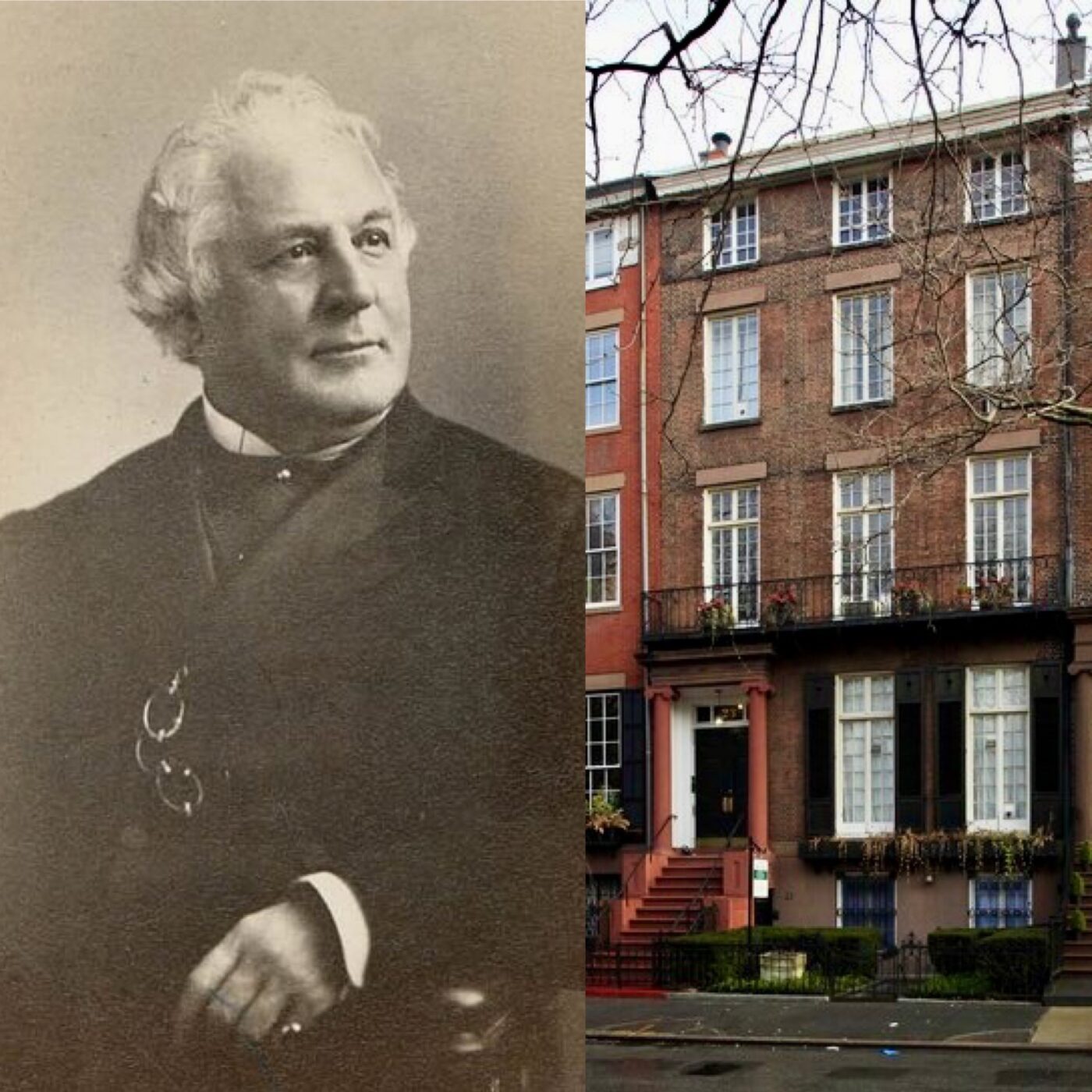
Leading abolitionist John Jay II moved to 22 Washington Square North with his family in the 1870s. An abolitionist, lawyer, and one of the founders of the Republican Party in New York, Jay spent much of his career defending fugitive slaves and promoting abolitionism through his publications and law practice.
Jay was the son of William Jay, who became president of the New York State Anti-Slavery Society in 1835, and grandson of John Jay, president of the first Congress and the first Chief Justice (as well as an abolitionist and co-founder with Alexander Hamilton of the African Free School, the first school for black people in the United States). In the mid-1830s, while studying at Columbia College, John Jay II became the manager of the New-York Young Men’s Anti-Slavery Society, which rejected the practice of slavery and called for immediate abolition. During the New York anti-abolitionist riots in 1834, Jay and his peers defended the home of Arthur Tappan, then the president of the American Anti-Slavery Society.
Jay’s work as a lawyer focused on defending fugitive slaves, including Henry Long, George Kirk, and two Brazilian slaves. In 1852, in his best-known, nationally-significant case Lemmon v. New York, Jay served as one of the lawyers for the eight slaves who were ultimately freed by the court. Separately, Jay also successfully campaigned to secure the black congregation of St. Philip’s Church admission to the annual Episcopal Convention, from which it was previously barred.
Jay participated in the Free Soil Party movement, becoming its candidate for the Attorney-General of New York, and during the Civil War he advised Abraham Lincoln and the president’s cabinet.
Thomas Paine Residences, 309 Bleecker and 59 Grove Street (both demolished)
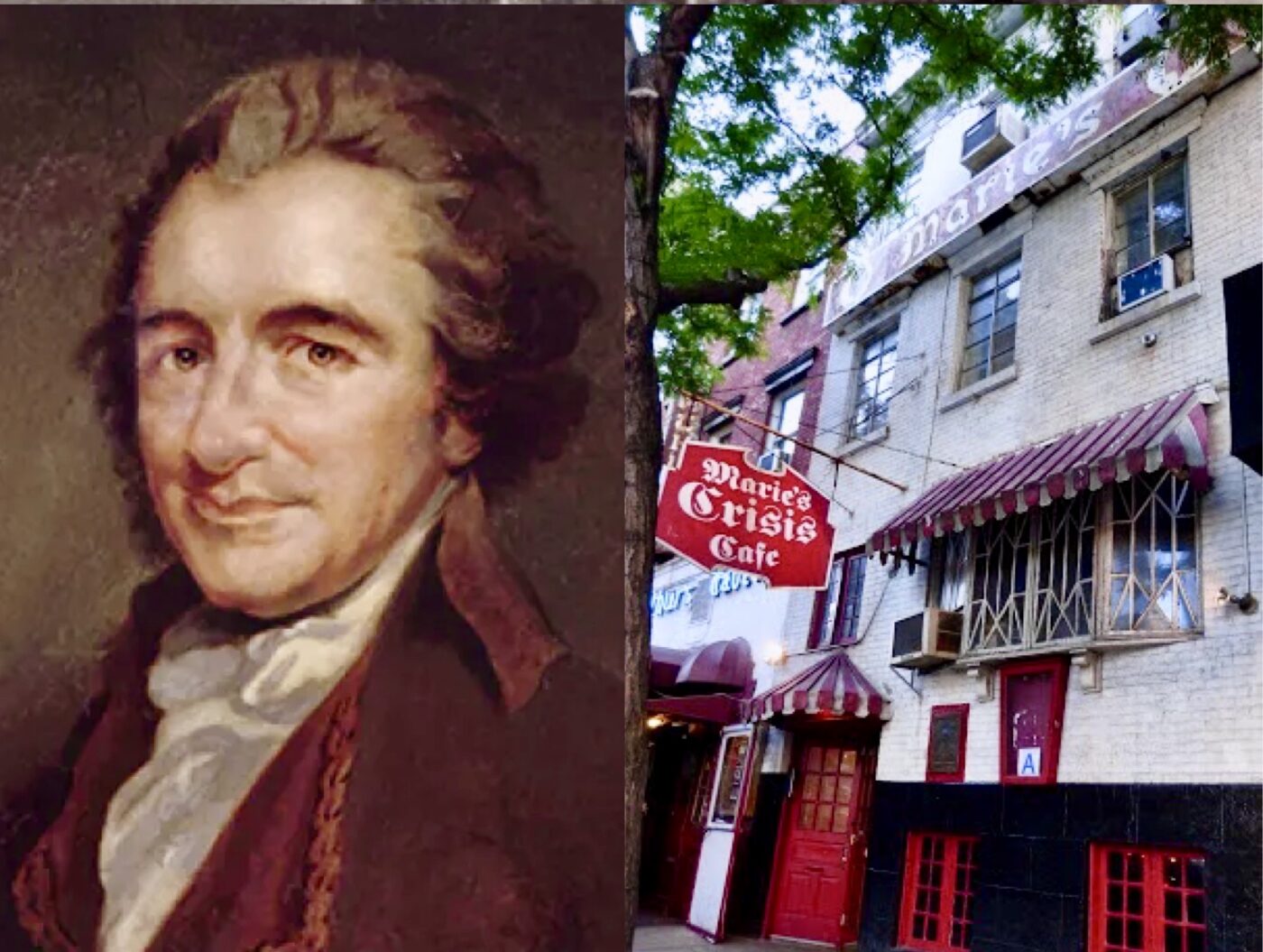
Founding Father and “Father of the American Revolution” Thomas Paine, author of “Common Sense” and “The American Crisis,” was also an ardent abolitionist. He tied the American fight for independence to the emancipation of enslaved people, famously penning one of the earliest published American anti-slavery tracts. In March 1775, Paine published this radical essay under the pseudonym “Justice and Humanity.” He scathingly criticized the colonists for demanding liberty while enslaving others. He proposed that enslaved people be emancipated, given a portion of the land they worked as a reasonable rent, and granted the rights to property, labor, and family. He actively supported various legislative measures to curb or end the slave trade. Marginalized as a radical thinker in his later years, he died penniless in Greenwich Village in 1809.
Dr. David Kearney McDonogh, New York Eye and Ear Infirmary, Second Avenue and 13th Street
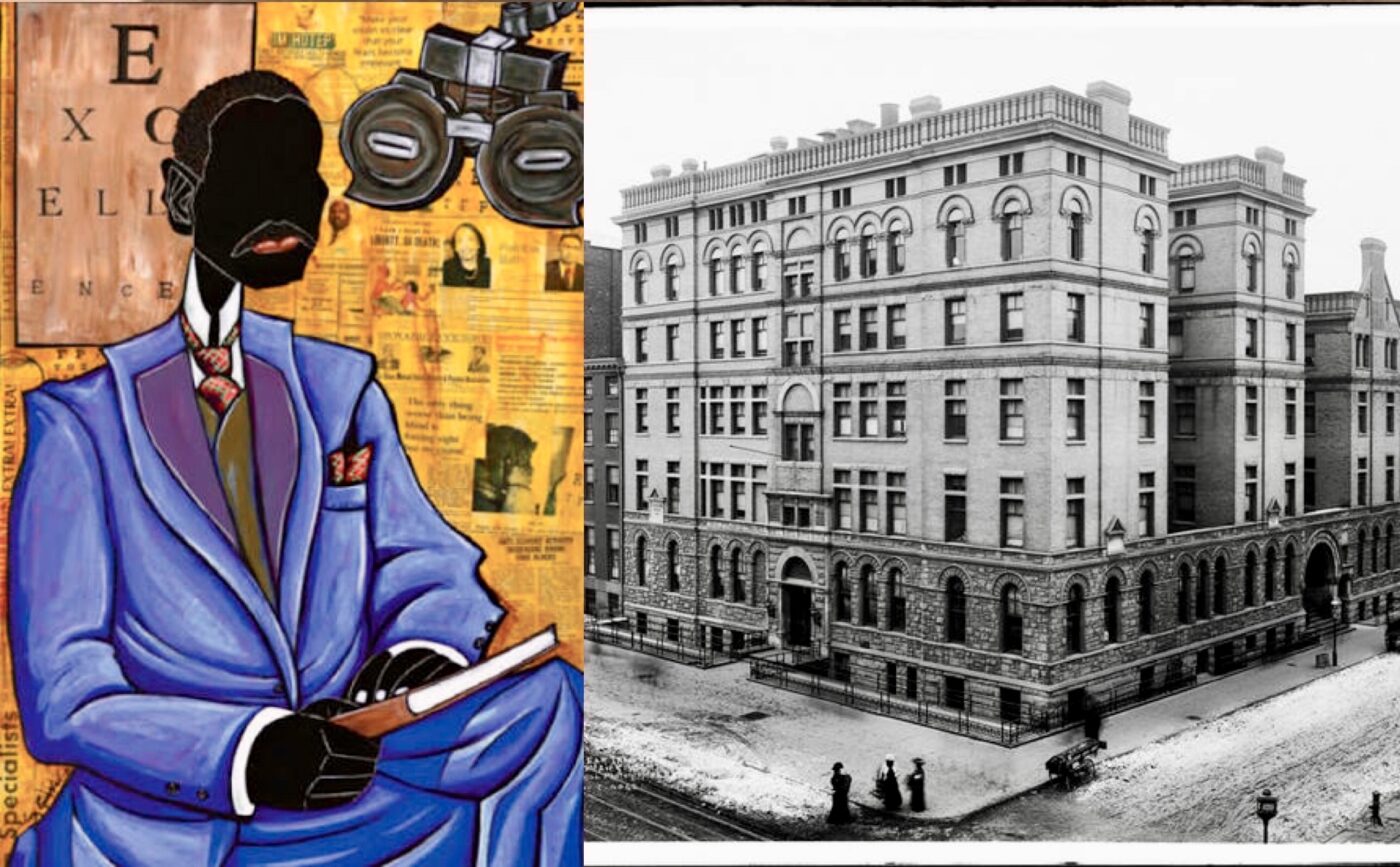
David McDonogh, born into slavery in 1821 in New Orleans, became the first formerly enslaved person in America to earn a college degree, and the first Black eye doctor in the United States. He practiced at NYEEI at a time when opportunities for Blacks to practice medicine in predominantly white institutions in America were almost non-existent. McDonogh had been granted his freedom by his owner based upon the condition that he join the freed slave colony in Liberia. But David ultimately decided to pursue an education as a doctor in America, defying his owner and risking re-enslavement. McDonogh eventually began a private practice on Sullivan Street, in a racially-integrated section of Greenwich Village. McDonogh also joined with Frederick Douglass in abolitionist and worker’s rights causes.
After McDonogh died the McDonogh Memorial Hospital was opened on West 41st Street in 1898 to honor his legacy. That hospital offered medical education and care and hired staff without regard to race, and was the first medical institution with a charter to train black women as nurses.
Village Preservation is leading a campaign to seek landmark designation for the New York Eye and Ear Infirmary. Read more here and here.
You can learn more about Black history in our neighborhoods here, and Civil Rights history here.