
The Summer America Could Have Been Lost: George Washington’s Village Headquarters in 1776
There is almost nothing left to see. Stand today near Varick and Charlton Streets, and the landscape gives little indication of what happened here 250 years ago. The farms are gone. The orchards are gone. The hill itself is gone. But in the summer of 1776, as thirteen colonies made the extraordinary decision to declare themselves independent, George Washington was here. Not passing through. Not visiting. He was working.
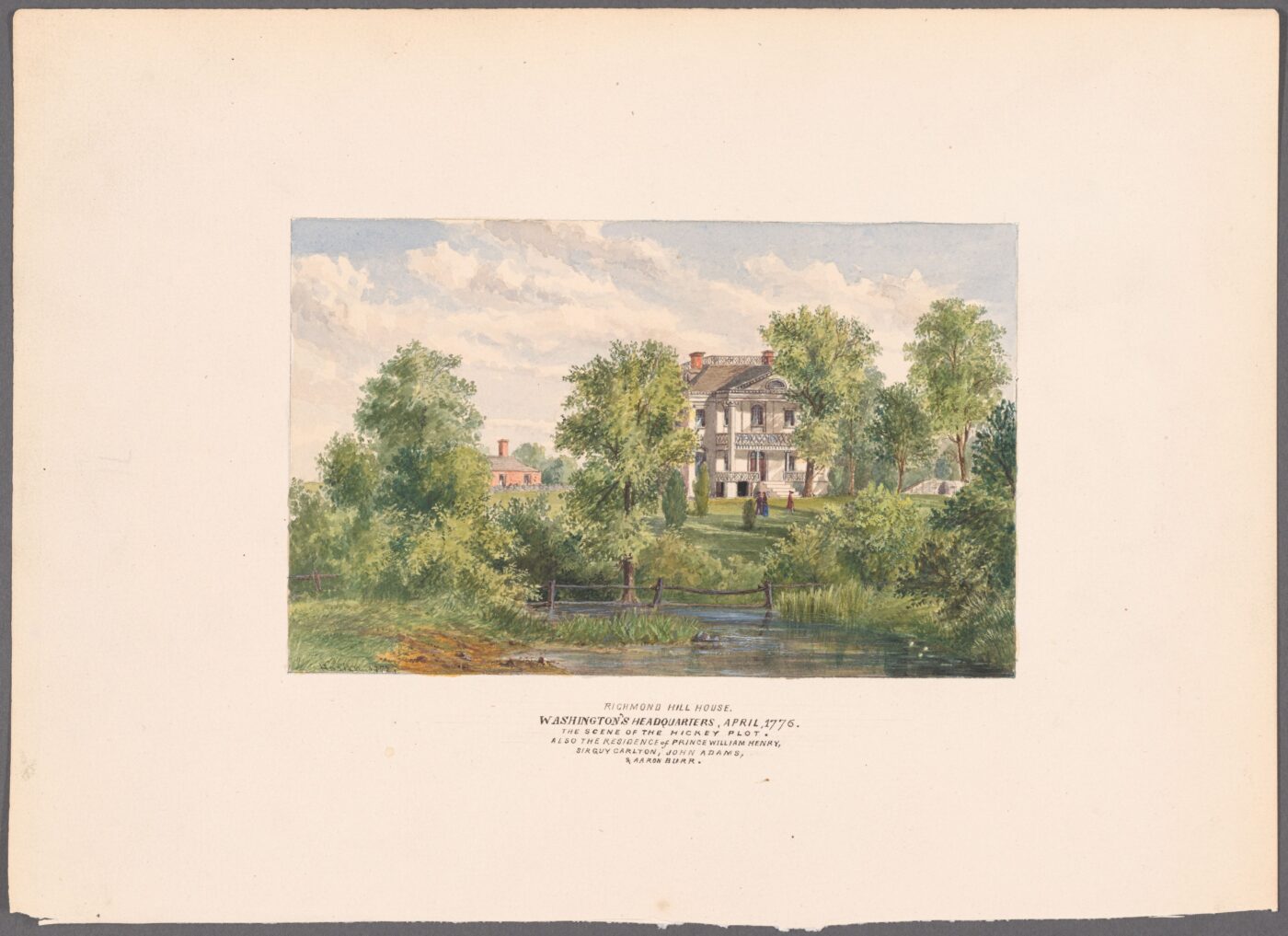
From a country estate called Richmond Hill, Washington commanded the Continental Army and prepared New York for the arrival of British forces. The future first president of the United States was trying to defend a country that did not fully exist yet.
It is easy to look back at the American Revolution and see inevitability. The Declaration of Independence. Washington crossing the Delaware. Victory. A new nation rising.
History becomes cleaner with distance. But nothing about the summer of 1776 was inevitable. And for several critical months, part of that uncertain story unfolded right here in what we now know as Greenwich Village.
Before the Village Was the Village
To understand Richmond Hill, we first have to erase the neighborhood we know today.
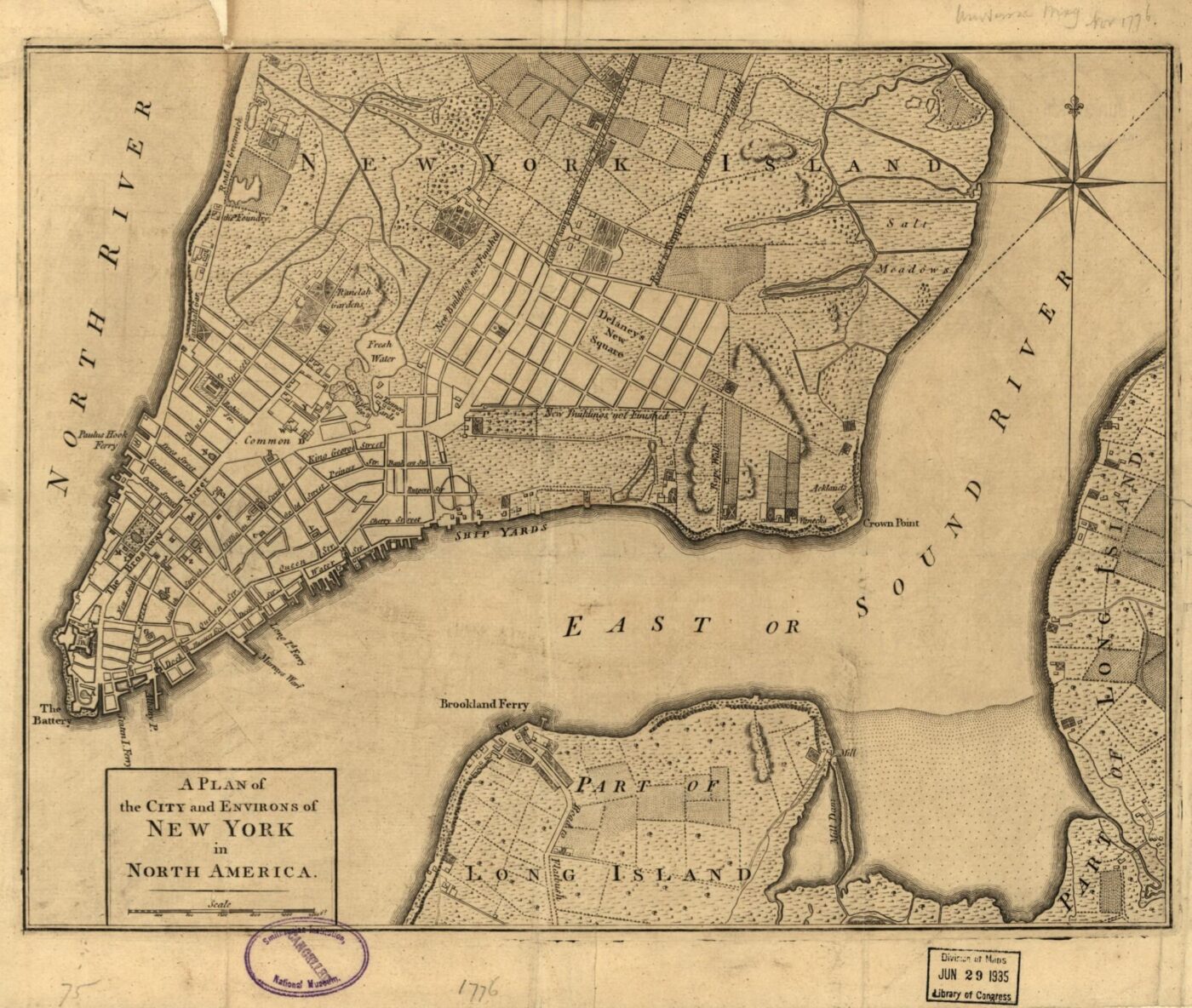
There were no rows of brownstones. No traffic moving up Varick Street. The city was concentrated farther south, and beyond it stretched farms, streams, orchards, roads, and large country estates.
Village Preservation’s Revolutionary War StoryMap allows us to step into that lost landscape.
One of its most important sites was Richmond Hill.
Built in 1767 on part of the former King’s Farm, the estate stood southeast of today’s Varick and Charlton Streets. On April 17, 1776, George Washington moved his headquarters there.
From Richmond Hill, Washington faced a problem almost too large to imagine.
He had to prepare an inexperienced army to defend New York against the greatest military power of the age. The British were coming.
Defending a Country That Had Just Been Born
Washington understood New York’s importance. Its harbor and position along the Hudson made it essential to both sides of the conflict. From Richmond Hill, he communicated with generals and political leaders, worked on the city’s defenses, and prepared for an enemy he knew was coming.
Then, on July 4, 1776, everything changed. The Continental Congress adopted the Declaration of Independence. The colonies were no longer simply fighting British rule. They were declaring themselves a new country. We know where the story eventually goes. Washington did not.
From Richmond Hill, the commander of the Continental Army was suddenly responsible for defending something that had never existed before.
The United States of America. That is what makes the Village’s Revolutionary War history so powerful as we mark the country’s 250th anniversary. The United States was not founded in one room, on one battlefield, or in one city. It was built across a landscape. Ideas were written in one place and defended in another.
Soldiers crossed fields that later became city streets. Country homes became military headquarters.
The Revolutionary War StoryMap lets us see those connections together.
Richmond Hill is only one point on the map.
Follow it outward, and a larger world begins to appear.
The Revolution Was Not Inevitable
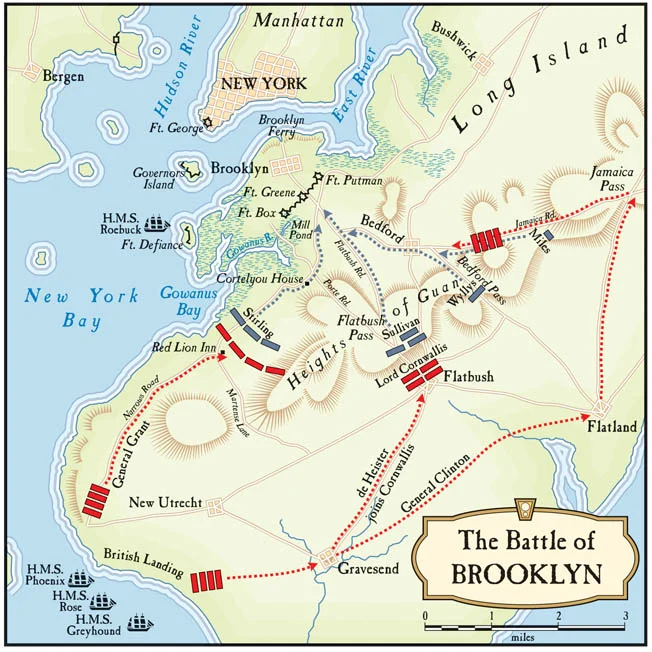
By August 1776, the British threat was no longer distant. British forces crossed onto Long Island, leading to the first major battle after independence was declared. Washington’s army was badly defeated at the Battle of Brooklyn and narrowly escaped destruction. Within weeks, the Americans were pushed out of New York.
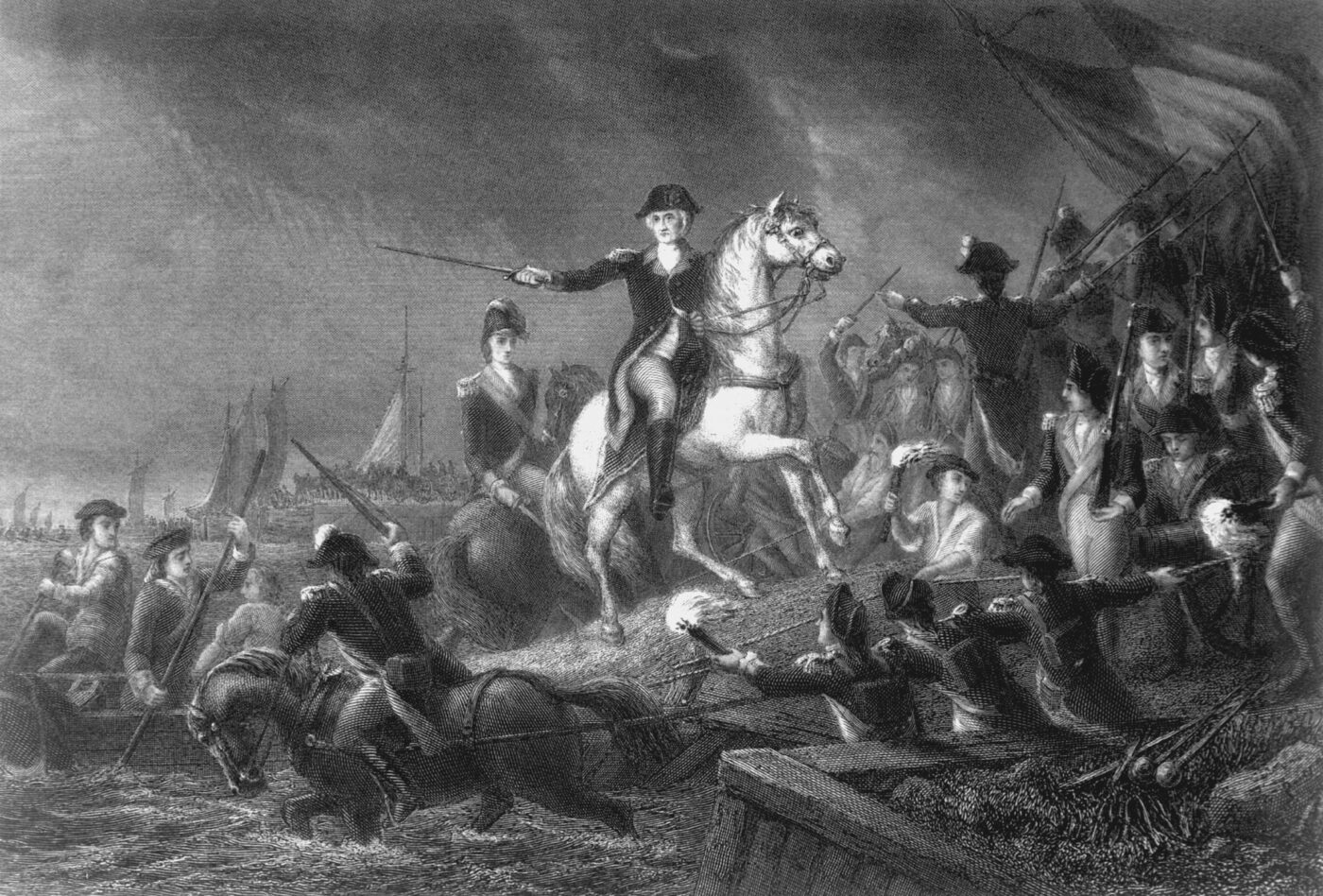
The city would remain under British occupation for seven years. Again, we know the ending. Washington did not. The Revolution almost failed. That matters, because the story of the United States at 250 is not only the story of what was built. It is also the story of how uncertain its survival once was.
The Village was part of that uncertainty. These streets and landscapes witnessed a moment when independence was still only an idea, and the country we know today could have disappeared before it truly began.
One House, Several Chapters of the New Nation
Richmond Hill’s connection to the founding of the country did not end with Washington.
After independence, the house became the official residence of Vice President John Adams. Aaron Burr later lived there as well. The same estate that had served as Washington’s wartime headquarters remained connected to some of the most important figures in the early United States.
Think about that transformation.
A house built by a British military paymaster became the headquarters of the general leading a revolution against Britain, then the home of the Vice President of the new nation that emerged from that fight. The mansion is gone today. So is the hill. But the story remains.
Find the Revolution Beneath Your Feet
There is a particular power in discovering that history happened somewhere you already know. A street you walk down. A corner you pass.
A place where you have waited for the light to change without knowing that, 250 years ago, the future of the country was being prepared for nearby. That is what makes Village Preservation’s Revolutionary War StoryMap so exciting.
Richmond Hill is only the beginning. The map allows you to explore George Washington’s headquarters, estates divided between Patriots and Loyalists, military routes, and places connected to the people whose decisions, rivalries, and sacrifices helped shape the new nation.
America’s founding can feel distant when it is reduced to portraits, monuments, and dates.
The map brings it closer. It reminds us that before the Village became known for artistic revolutions, political movements, music, literature, and protest, it had already witnessed a revolution in the most literal sense. Two hundred and fifty years later, the streets have changed almost beyond recognition.
But the ground remembers.
I am particularly interested in protecting the NYPD property across from 35 E. 12th Street. What can I do to help get that building in shape and used for something useful.
Thanks for your interest in preserving this landmarked building. Village Preservation is leading a campaign to restore the historic structure and ensure its future. Visit https://villagepreservation.org/campaign/34-1-2-east-12th-street/ to learn more and sign a letter supporting this effort to the mayor and other elected officials.