
Before Hemingway Became Hemingway: His Greenwich Village Chapter
Before Paris, literary fame, and the novels that defined the “Lost Generation,” Ernest Hemingway spent several formative weeks in Greenwich Village.
In May 1918, the eighteen-year-old journalist Ernest Hemingway (July 21, 1899 – July 2, 1961) stayed at the Hotel Earle, now the Washington Square Hotel, at 103 Waverly Place, near MacDougal Street and Washington Square Park. He had recently left his reporting job at the Kansas City Star and was preparing to travel to Europe as a volunteer ambulance driver for the American Red Cross during World War I. Hemingway’s letters from the hotel document his time in New York before his departure.
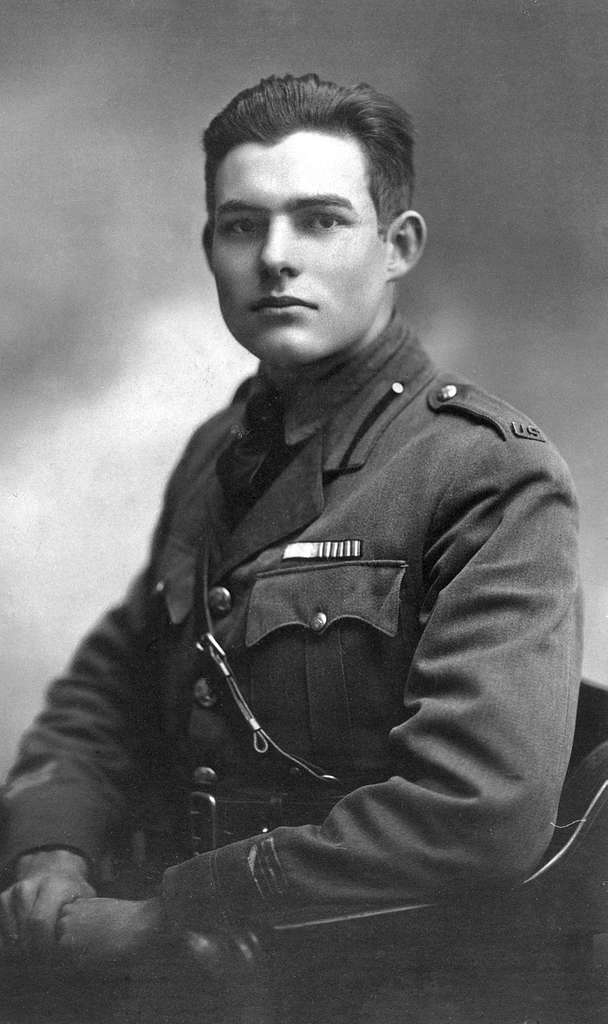
A Hotel at the Edge of a New Life
The Hotel Earle was built in 1902, replacing an earlier residence at 103 Waverly Place. It expanded into 105 Waverly Place in 1907, added a ninth floor in 1911, and grew again between 1916 and 1917, when the former Van Rensselaer mansion at 101 Waverly Place was replaced by an annex. The connected buildings eventually became today’s Washington Square Hotel.
Hemingway stayed there only briefly, but the timing was pivotal. Soon after leaving New York, he traveled to Italy. On July 8, 1918, he was severely wounded while distributing supplies to soldiers near the Italian front. His wartime experiences later helped shape his 1929 novel, A Farewell to Arms.
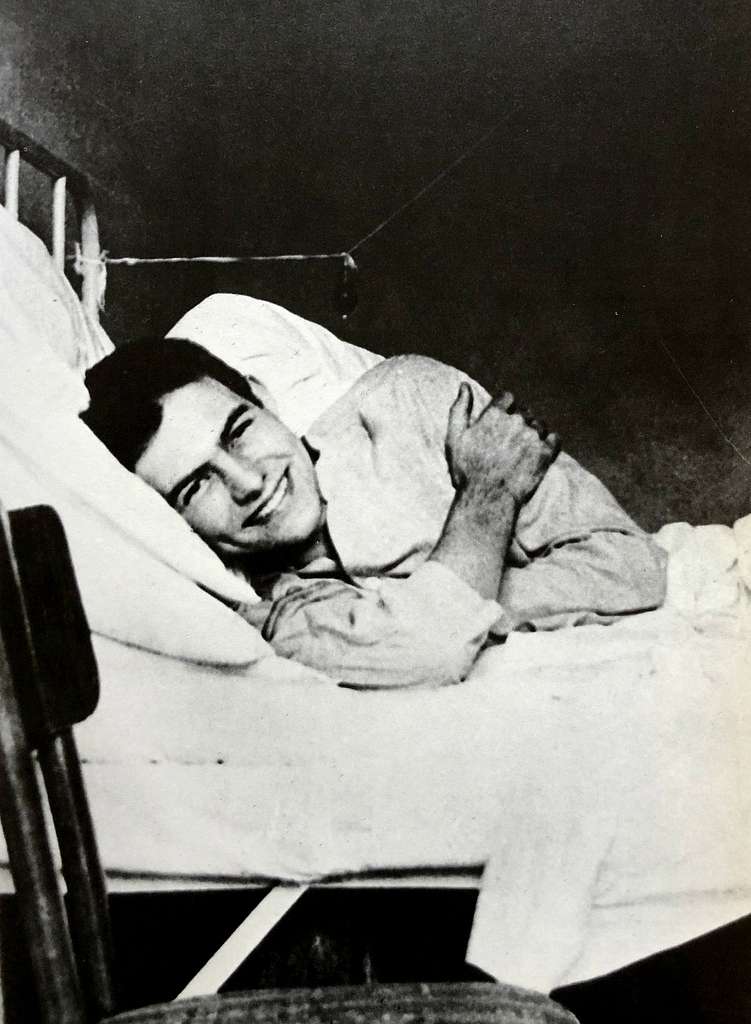
Hemingway entered the Hotel Earle as an unknown junior reporter. He left New York for the experiences that would transform his life and writing.
Village Preservation previously explored the hotel’s architecture and remarkable guest list in “If the Washington Square Hotel Could Talk (or Write, or Sing)” and “The Times They Are A-Changin’: The Evolution of the Washington Square Hotel”. The hotel later housed Dylan Thomas, Bob Dylan, Joan Baez, Chuck Berry, Bo Diddley, and the Rolling Stones, becoming a temporary home for generations of writers and musicians.
Hemingway at Minetta Tavern
Hemingway is also connected to Minetta Tavern, located at 113 MacDougal Street, near Minetta Lane.
Opened in 1937, the tavern became a gathering place for writers including Hemingway, Eugene O’Neill, E.E. Cummings, and Dylan Thomas. Its walls, rooms, and history reflect the period when the South Village’s restaurants, bars, theaters, and inexpensive housing drew writers and artists from across the city and beyond.
Village Preservation has written about the tavern and its surroundings in “Map It! Minetta Street, Lane, and…Place?”, “Dylan Thomas in New York: The Rock Star Poet at His Zenith”, and “Thank You and Goodnight, Mrs. Maisel!”. These histories place Hemingway within a larger Village tradition of writers finding community in public gathering places.
Preserving the Places Where History Happened
Hemingway never made Greenwich Village his permanent home. His connection to the neighborhood was brief, but it was not insignificant.
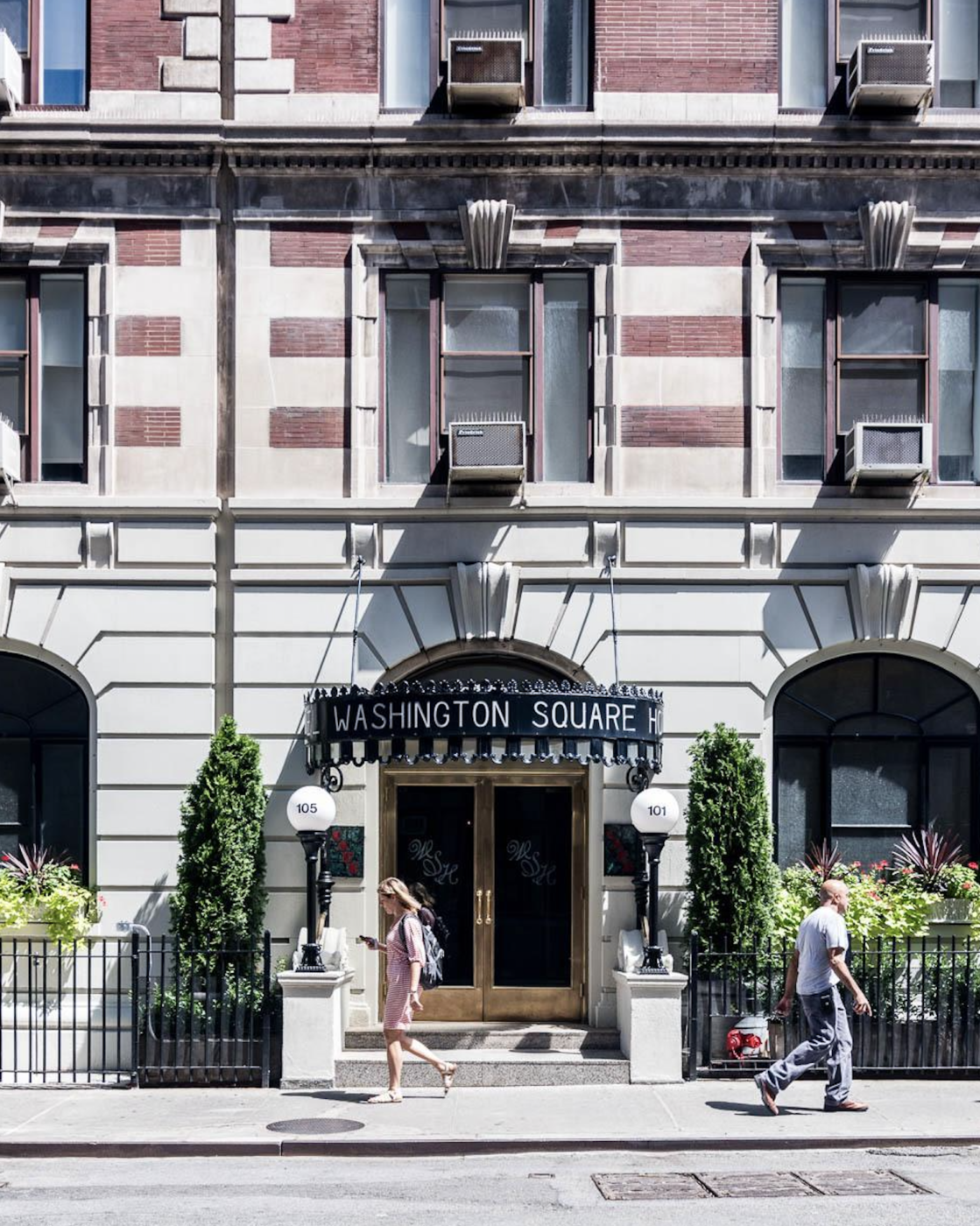
The Hotel Earle preserves a physical link to the eighteen-year-old Hemingway on the threshold of war. Minetta Tavern recalls the Village’s later literary culture, when writers gathered in its bars and restaurants to exchange ideas, build reputations, and create enduring myths.
The former survives within the Greenwich Village Historic District, designated in 1969; the latter within the South Village Historic District Village Preservation proposed and secured designation of in 2013. Their preservation allows us to understand history at street level, through the hotels, taverns, and gathering places where lives changed and cultural movements took shape.
That is why preserving the Village matters. History does not live only in books. Sometimes it waits inside an old hotel, behind a tavern door, or along a familiar stretch of Waverly Place.