
From Reconstruction to Reform: How Our Neighborhoods Helped Advance the Promise of Equal Protection
On July 28, 1868, the United States ratified the 14th Amendment to the Constitution, establishing birthright citizenship and declaring that no state could “deny to any person within its jurisdiction the equal protection of the laws.”

The amendment was born out of Reconstruction, intended to secure the rights of formerly enslaved Americans after the Civil War. Yet its promise was never self-executing. For more than 150 years, generations of Americans have worked to ensure that the words “equal protection” became a reality rather than merely a constitutional ideal. Many of those efforts unfolded right here in Greenwich Village, the East Village, and NoHo.
These neighborhoods have long served as incubators for social justice movements, home to organizations, activists, artists, educators, lawyers, and ordinary citizens who challenged discrimination and expanded civil rights. Village Preservation has worked to document and preserve many of these places, because understanding where history happened is essential to understanding how change happens.
70 Fifth Avenue: A Headquarters for Civil Rights
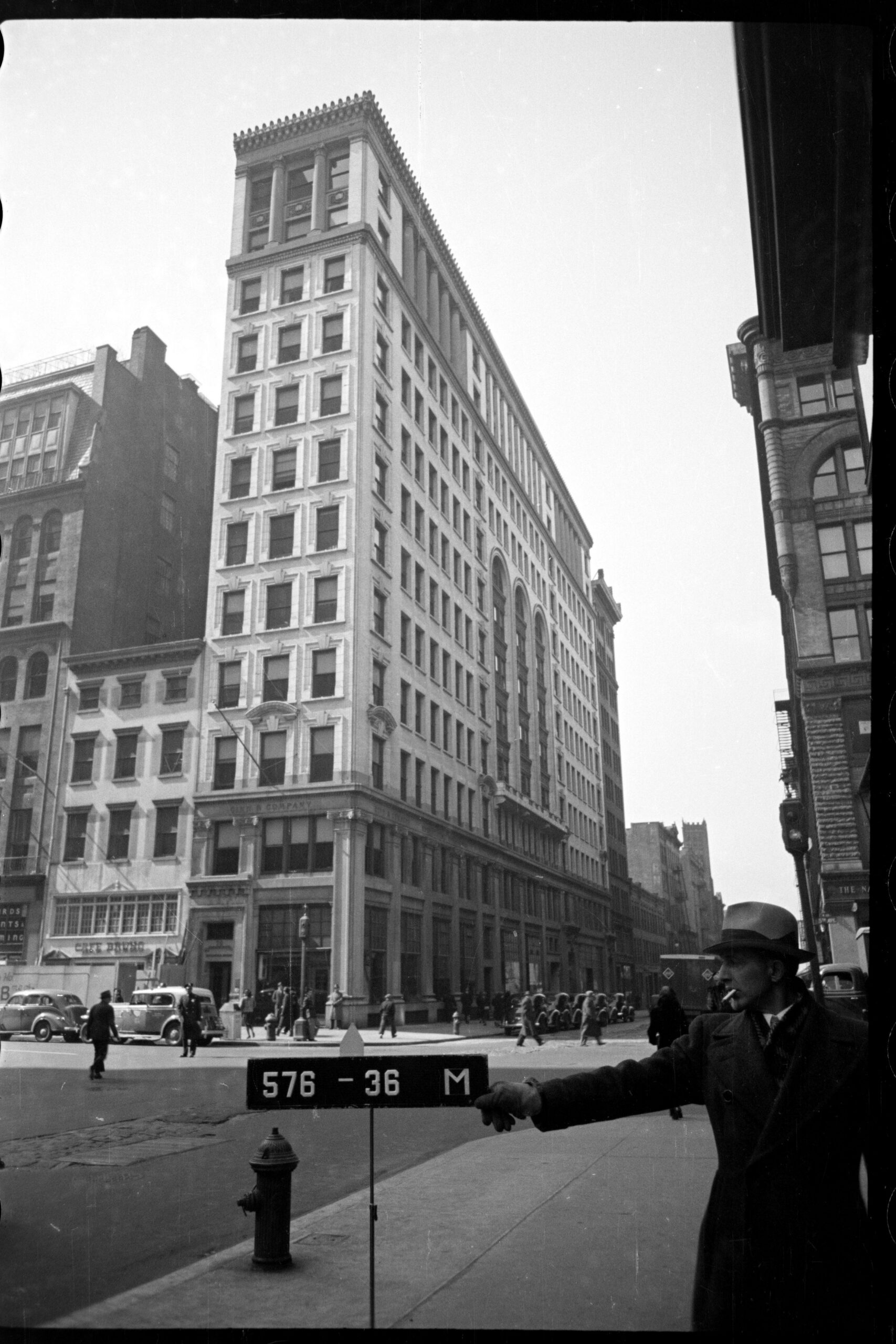
Few sites better illustrate the connection between our neighborhoods and the struggle for equal protection than 70 Fifth Avenue.
Completed in 1912, this office building became one of the nation’s most important centers for progressive reform and civil rights during the first half of the twentieth century.
Among its many notable tenants were the National Association for the Advancement of Colored People (NAACP) and The Crisis, the organization’s influential magazine edited for nearly a quarter century by W.E.B. Du Bois.
From offices in this building, The Crisis documented racial violence, challenged segregation, promoted voting rights, celebrated Black achievement, and argued passionately that the promises of the 14th Amendment must apply equally to every American (including all women; the magazine also championed women’s suffrage and the 19th amendment which removed barriers to voting based upon sex). It became one of the most influential publications of the twentieth century, reaching readers across the country and helping shape the national conversation about race and equality.
The building also housed the National Urban League, whose work focused on expanding economic opportunity and combating discrimination in employment and housing, issues that are deeply rooted in the Equal Protection Clause.
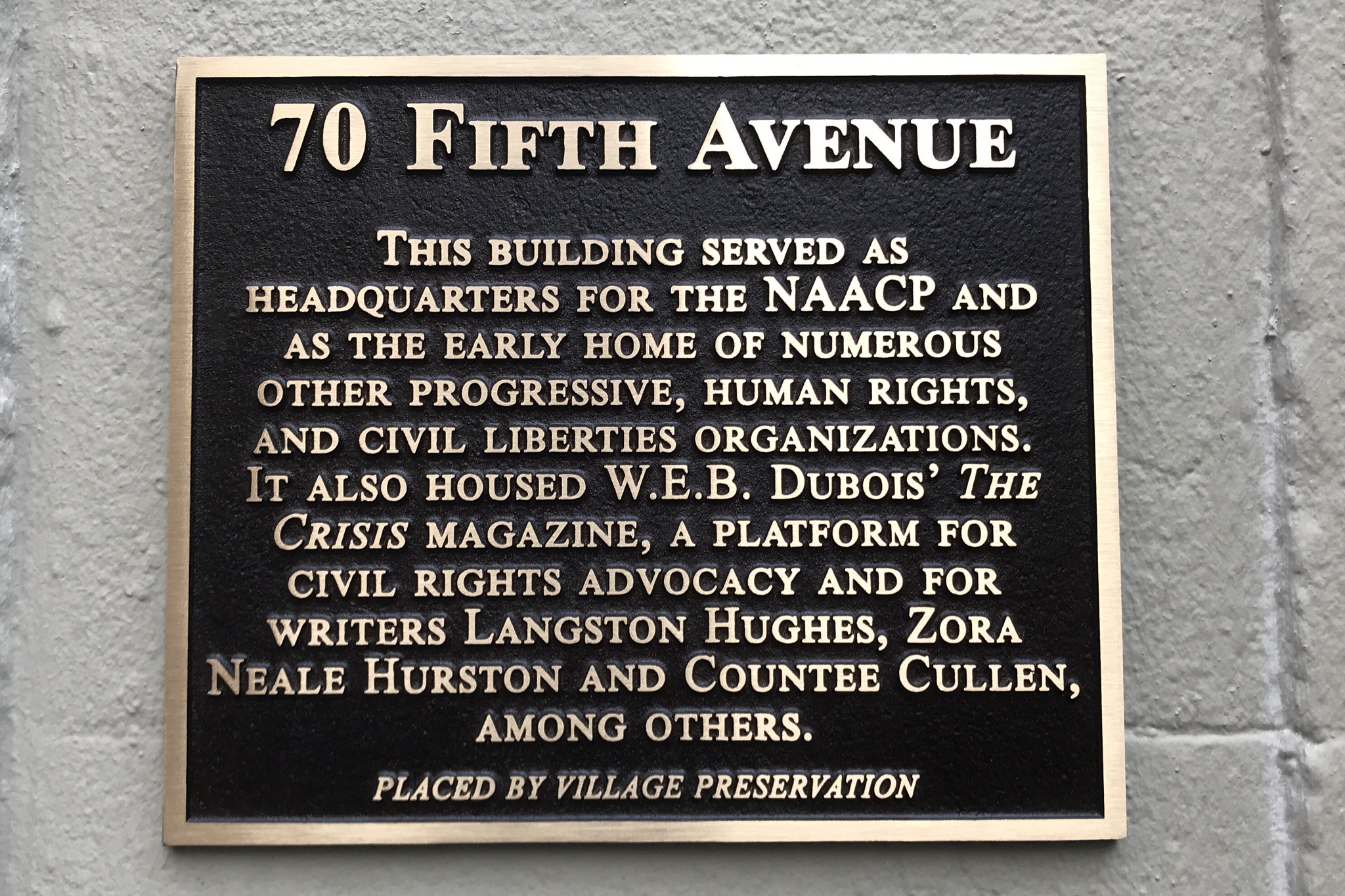
Village Preservation successfully advocated for the landmark designation of 70 Fifth Avenue in 2021, ensuring that this extraordinary center of civil rights history will remain part of New York City’s landscape.
South of Union Square: An Epicenter of Reform
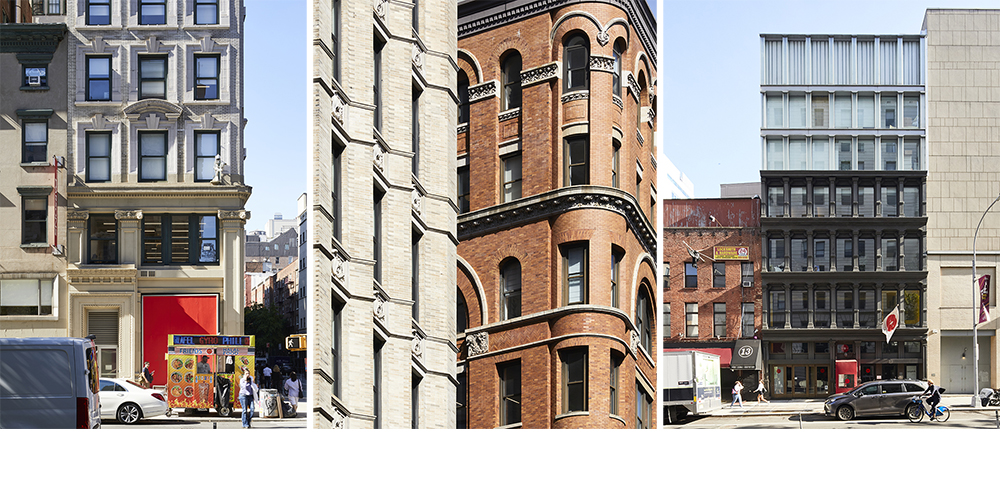
The area south of Union Square, roughly Fifth to Third Avenues, 14th to 9th Streets, contained one of the country’s greatest concentrations of reform organizations during the early twentieth century.
Publishers, advocacy organizations, labor unions, educational associations, and civil rights groups established headquarters in loft buildings throughout the neighborhood, transforming it into a national center for progressive activism.
The area’s modern office buildings, excellent transit access, and relatively affordable commercial space attracted organizations working to improve American society. Ideas developed here influenced national debates about workers’ rights, women’s suffrage, public education, immigration, free speech, and racial equality. Village Preservation’s South of Union Square project has documented this remarkable history, demonstrating that the neighborhood was not simply a business district—it was one of America’s most important laboratories for democratic reform.
Cooper Union: A Forum for Equality

Just east of Broadway stands Cooper Union, whose Great Hall has hosted some of the most influential voices in American history.
Before the Civil War, abolitionists including Frederick Douglass spoke there about slavery and equal rights. In 1860, Abraham Lincoln delivered his famous Cooper Union Address, helping launch the presidential campaign that would ultimately end slavery, preserve the Union and pave the way for the Reconstruction Amendments.
In the decades that followed, the Great Hall welcomed reformers, labor leaders, suffragists, and civil rights advocates who continued pressing the nation to fulfill the constitutional promises made after the Civil War.
Washington Square Park: Equal Protection in Action

If the 14th Amendment established legal rights, Washington Square Park became one of the places where New Yorkers demanded those rights be honored.
Throughout the twentieth century, the park served as a gathering place for civil rights demonstrations, interracial rallies, anti-discrimination campaigns, and protests calling for equal educational opportunity, fair housing, and voting rights.

Generations of activists assembled beneath the Washington Square Arch to insist that constitutional protections extend to every American.
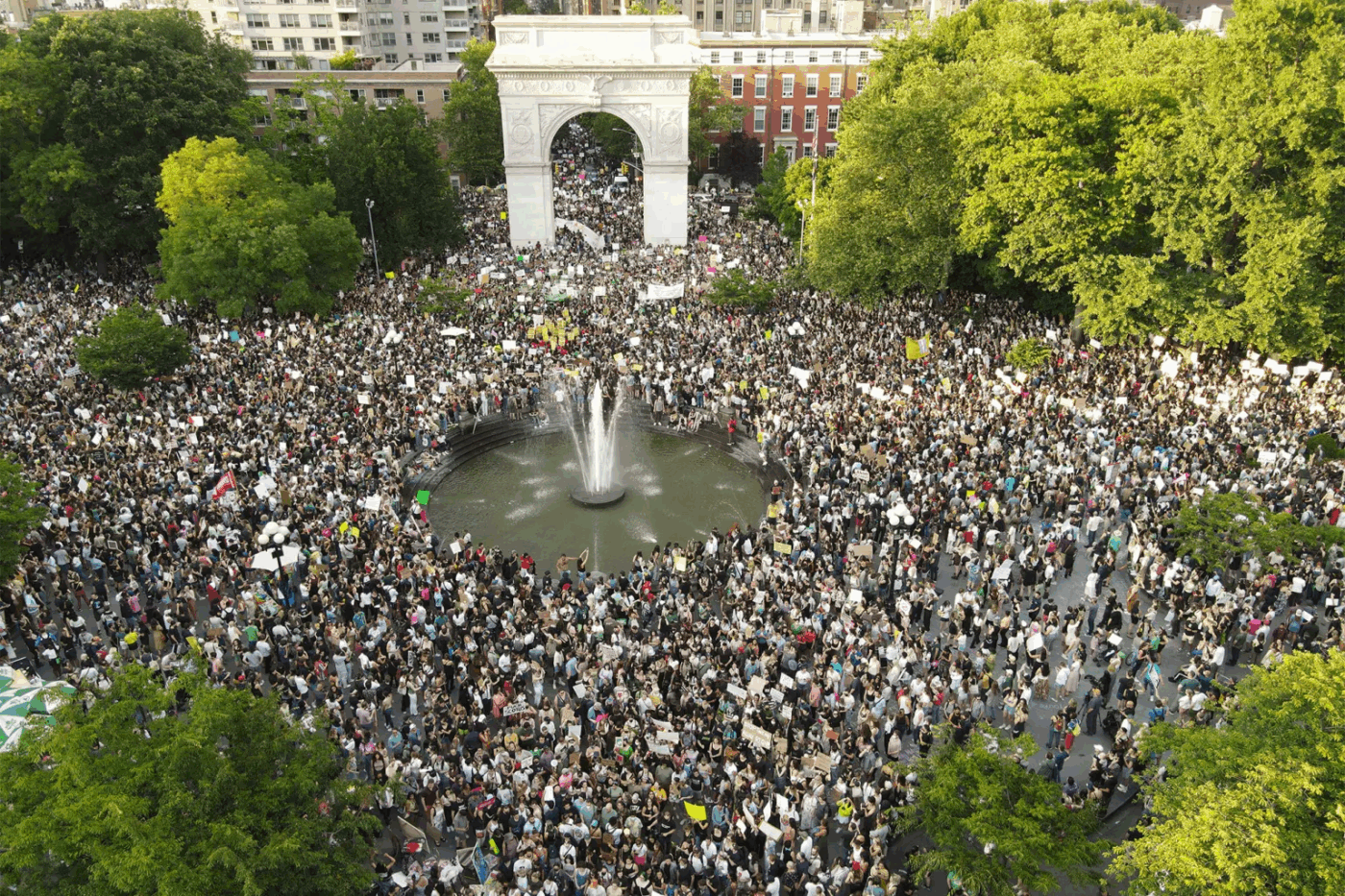
The park remains one of New York City’s great civic spaces, where public assembly and free expression continue to reinforce the democratic values embodied in the Constitution.
James Baldwin and the Village

The constitutional principles embodied in the 14th Amendment also found powerful expression through literature.
Few writers examined America’s failure to fulfill its promises more eloquently than James Baldwin, who lived for a time in Greenwich Village and drew inspiration from its diverse communities.
Baldwin’s essays and novels challenged readers to confront racism, inequality, and injustice—not only through law, but through culture, education, and human understanding. His work remains among the most profound examinations of what equal protection should mean in American life.
Village Preservation has documented Baldwin’s connections to the neighborhood through its Civil Rights and Social Justice Map and numerous blog posts highlighting his enduring legacy.
Preserving the Places Where History Happened
The struggle for civil rights did not occur only in Washington, D.C., Montgomery, or Selma.
It unfolded in office buildings on Fifth Avenue; in gathering halls at Cooper Union; in demonstrations through Washington Square Park; in publishing offices south of Union Square; in neighborhood churches, schools, bookstores, and meeting halls across Greenwich Village, the East Village, and NoHo.
Many of these places still stand today.
Village Preservation works to ensure they remain not only architecturally intact but historically understood. Through landmark advocacy, historical research, our Historic Image Archive, Oral History Project, interactive maps, and educational programming, we preserve the places where New Yorkers helped transform constitutional principles into lived experience.
Our Civil Rights and Social Justice Map, South of Union Square project, our Women’s Suffrage History Map, and countless other programs and resources allow visitors to explore these remarkable stories and discover how seemingly ordinary buildings became extraordinary sites of social change.
A Constitution That Lives Through Community and Its People
The 14th Amendment may have been ratified on July 28, 1868, but its story and its promise are far from over.
Every generation has been called upon to interpret its meaning and expand its reach. The neighborhoods Village Preservation works to protect have repeatedly answered that call, serving as places where Americans organized, debated, published, protested, educated, and advocated for a more inclusive democracy.
Preserving these places means preserving more than brick and stone. It means safeguarding the physical reminders of the people who challenged injustice and insisted that the Constitution live up to its highest ideals.
As we look back upon the adoption of the 14th Amendment, we’re reminded that the struggle for equal protection and civil rights is preserved not only in our nation’s founding documents, but in the streets, buildings, and public spaces where people fought to make those ideals a reality.
Those places need champions. By supporting Village Preservation, whether by exploring our resources, attending our programs, advocating for threatened historic sites, or becoming a member, YOU help ensure that these powerful stories are not forgotten. Together, we can protect the places where history was made and inspire future generations to continue building a more just and equitable society.