
The Brevoort Family – Greenwich Village Historic District & Beyond
The history of Greenwich Village and the City of New York reflects the waves of immigration that have served to give it a character different from any other city in the nation. Prior to becoming known as New York City, in the early-to-mid 17th century it was New Amsterdam, a Dutch colony that attracted numerous individuals and families from The Netherlands. One of these families would over the following centuries serve to shape the cultural and built environment of both Greenwich Village and New York City
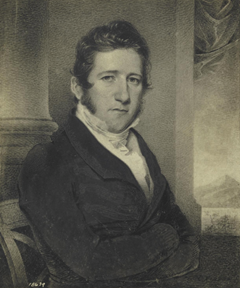
Figure 1 – Henry Brevoort, Jr., (American Aristocracy)
The Brevoort family were Dutch settlers who had a large land holding in Manhattan, which encompassed the area roughly bounded by the present-day 5th Avenue to the west, the Bowery to the east, 9th Street to the south and 18th Street to the north. Having originally settled in Bushwick, the family later moved to Manhattan where they became prominent members of society.
Henry Brevoort, Jr. was a successful businessman, explorer, and collector of rare books who had a notable impact on the development of Greenwich Village. This began with his construction of a mansion on the northwest corner of 5th Avenue and West 9th Street which served as an announcement that this thoroughfare had arrived as a fashionable address for the elite of New York City. Designed in the Greek Revival style, the stately residence would serve as a model for the design of the mansions that began to proliferate on 5th Avenue and surrounding areas as the city continued its development march northward.
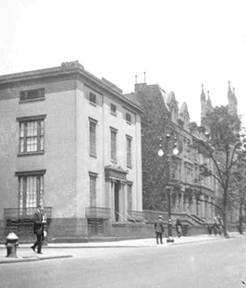
Figure 2 – View of the Breevort Mansion at the corner of 5th Avenue and West 9th Street, c. (Museum of the City of New York)
The mansion at 24 5th Avenue stood until its replacement in 1926 by a hotel that stands to this day (now an apartment building) and is reflective of the pattern of development along 5th Avenue that saw the replacement of single-family residences by larger apartment houses, hotels, and commercial buildings.
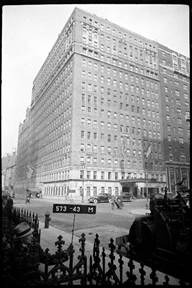
Figure 3 – 24 5th Avenue, c.1940 (NYC Municipal Archives)
In addition to his residence, the family was responsible for the construction of the Brevoort House on the east side of Fifth Avenue between 8th and 9th Streets, a hotel that would stand in various iterations on the site until its replacement by a mid-century apartment building in 1956. The Brevoort Hotel was a notable gathering spot for the elite of the city, nation, and world, and the apartment building that replaced it stills bears the Brevoort name, continuing the relationship of the family with Greenwich Village.
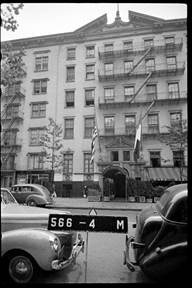
Figure 4 – Hotel Brevoort, c.1940 (NYC Municipal Archives)
In addition to the impact on 5th Avenue, Henry Brevoort’s influence can still be seen on the adjacent West 11th Street, where in 1845 he constructed a row of seven Greek Revival style houses to be used by his daughters. The houses are reflective of the rowhouse typology that would come to define Greenwich Village, and the changes that many of them have seen over the years are part of the story of the architectural evolution of the built environment of the neighborhood.
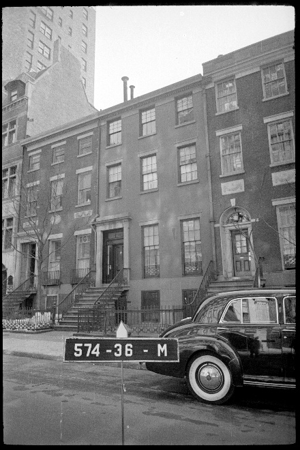
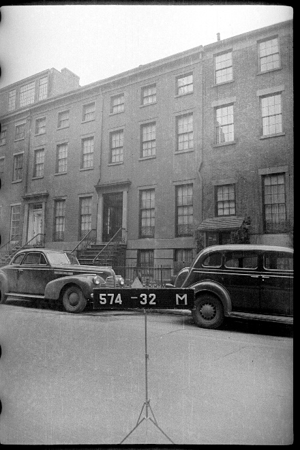
Figures 5 & 6 – 16 & 24 West 11th Street, c.1940 (NYC Municipal Archives)
The impact of the Brevoort family on the built environment of this section of Greenwich Village is evident on the Sanborn Map from 1895 showing the mansion at the corner of 5th Avenue and West 9th Street and the rowhouses on West 11th Street.
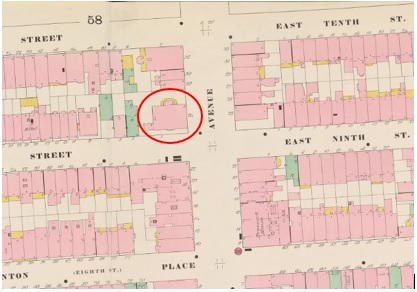
Figure 7 – Sanborn Map, 1895 (The New York Public Library)
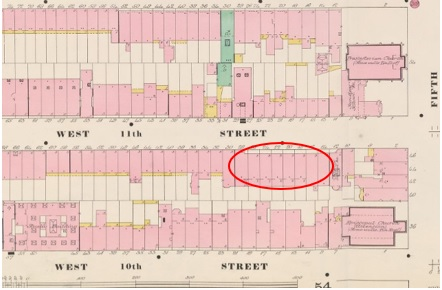
Figure 8 – Sanborn Map, 1895 (The New York Public Library)
The impact of the family on 5th Avenue also included the construction in 1848 of the buildings at 14-16 5th Avenue, whichconsisted of two Gothic Revival style houses. Village Preservation led the effort to preserve what had been two separate buildings at 14-16 5th Avenue that despite having been altered still contributed to the streetscape and character of the Greenwich Village Historic District and housed, over the years, some of the most important historical figures in New York City history. The New York City Landmarks Preservation Commission (LPC) approved the demolition of the two buildings in 2021 for the construction of an apartment building. Although the buildings were lost, Village Preservation successfully challenged the proposed height of the building and won changes to the design which resulted in a significant reduction to its massing and visual impact on the 5th Avenue corridor and a more harmonious relationship to the buildings around it.
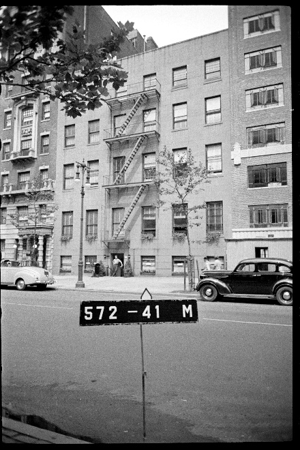
Figure 9 – 14-16 5th Avenue, c.1940 (NYC Municipal Archives)
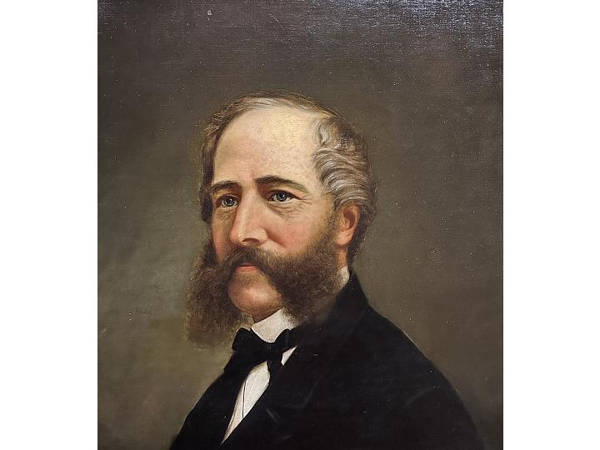
Figure 10 – James Carson Brevoort, 1874 (The Brooklyn Public Library)
Another notable member of the family was James Carson Brevoort, son of Henry Brevoort, who was born in Manhattan and later relocated to Brooklyn. He served the city in numerous roles, including on the Board of Education, and played a notable role in the history of the Astor Library as its superintendent and later as a trustee. His collection of rare books, the foundation of which began under his father, grew to some 10,000 volumes and was later donated to a variety of institutions. The Brevoort family name became part of the landscape of Brooklyn upon his marriage into the prominent Lefferts family, another family of Dutch background, in the Bedford neighborhood. The former Lefferts mansion was renamed Brevoort House, and was the residence of his family until the later part of the 19th century, when it was sold for development and James Carson Brevoort returned to live in Manhattan. The demolished Brevoort mansion in Brooklyn faced Brevoort Place, a name that remains to this day and is a reminder of the impact of the family on the city. That can also be seen on the nearby public housing development, the Breevort Houses and Breevort Playground in the present day Bedford-Stuyvesant neighborhood.
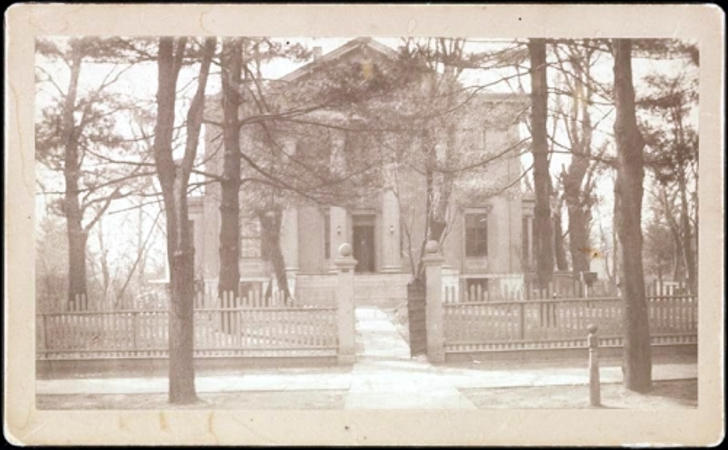
Figure 11 – Breevort House (Brooklyn), 1884 (Museum of the City of New York)
Learn more about the history of this notable family and its impact on Greenwich Village at:
Fourteenth Street and Fifth Avenue: A Window into the Development of the City – Village Preservation
Bret Harte and 14-16 Fifth Avenue – Village Preservation
Alexander Jackson Davis, Gothic and Greek Revival, and Greenwich Village – Village Preservation