
Women’s Suffrage in The Village
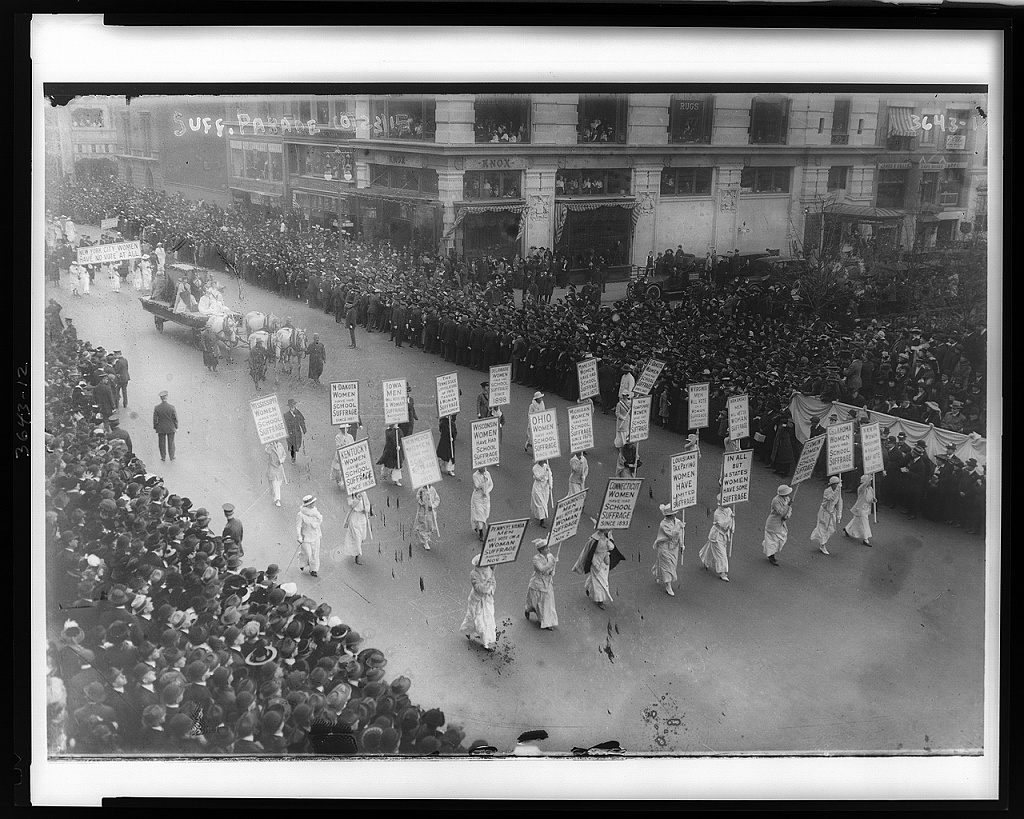
On October 23, 1915, suffragists gathered at Washington Square and moved north along Fifth Avenue in one of the largest demonstrations for women’s voting rights the city had ever seen. Some marched in white. Others carried banners, flowers, and ballot boxes. Approximately 25,000 people joined the procession, turning the avenue into a moving argument for political equality.
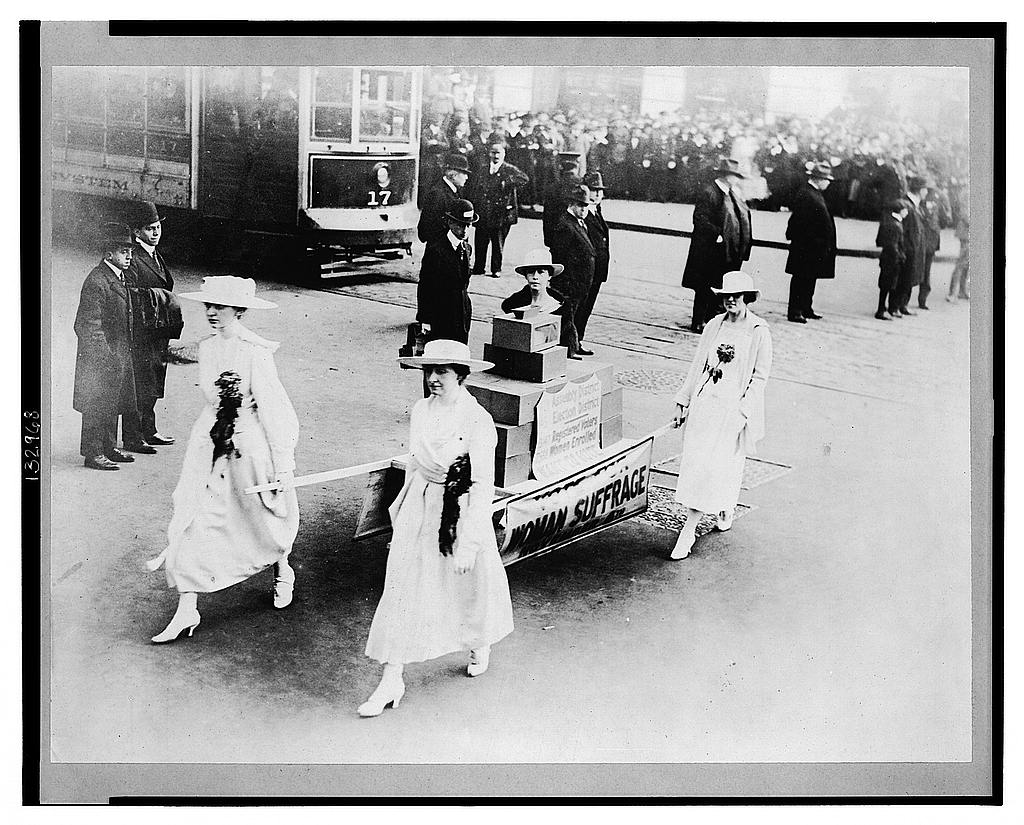
The spectacle was magnificent. The stakes were brutally practical.
Only days later, New York’s male voters would decide whether women should be allowed to vote. The proposal failed. According to the New York State Library, 553,348 men voted in favor and 748,332 voted against it. Two years later, after another vast campaign, the result reversed. On November 6, 1917, the suffrage amendment to the New York State Constitution passed with 703,120 votes in favor and 600,776 against.
That victory did not appear from nowhere. It was built in rooms, on picket lines, inside newspaper offices, and across the streets of many places within the state, but perhaps nowhere more so than in Greenwich Village, the East Village, and NoHo. The neighborhood was not merely home to a collection of prominent suffragists. It supplied the physical and social infrastructure of a movement.
A hall where ideas became action
Few spaces carried more of that history than the Great Hall at Cooper Union.
On May 10 and 11, 1860, the Tenth National Woman’s Rights Convention brought between 600 and 800 people to the hall, including Elizabeth Cady Stanton and Susan B. Anthony. Over the following decades, Cooper Union remained a stage for suffrage organizing, debate, defeat, and celebration.
Its importance reached beyond the ballot. On November 22, 1909, 23-year-old garment worker Clara Lemlich rose during a labor meeting at Cooper Union and called for a general strike. Her declaration helped ignite the Uprising of the 20,000, an eleven-week strike led largely by young immigrant women working in the shirtwaist industry.
Lemlich’s fight for labor rights became inseparable from her fight for voting rights. After employers blacklisted her for union organizing, she helped form the Wage Earners’ League for Woman Suffrage in 1911. The organization made the importance of the ballot concrete and tangible for working women. One of its flyers asked why women were paid less, worked in firetraps, and endured long hours. Its answer was plain: laws controlled working conditions, and women had no vote in making those laws.
The ballot was not an abstract emblem. It was a tool for surviving the workday.
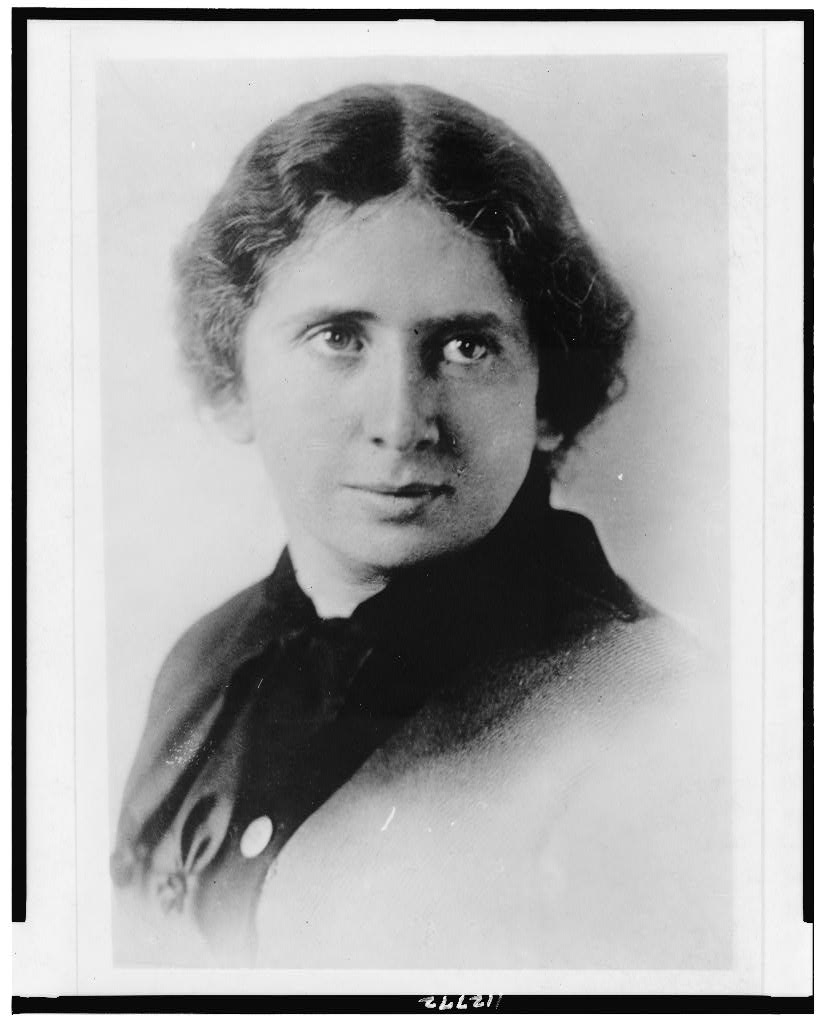
Rose Schneiderman, who lived at 57-59 Second Avenue, carried the same argument through the Women’s Trade Union League. She organized garment workers, supported the 1909 strike, and pressed the suffrage movement to address the lives of wage-earning women. At Cooper Union in 1912, she rejected the idea that voting would strip women of their femininity, observing that factory and laundry work had already demanded far more of them than placing a ballot in a box ever could.
The labor movement gave suffrage new muscle. Suffrage gave labor organizers a route toward changing the laws that governed wages, hours, and safety.
The street became the stage
The movement also understood the power of an image.
On May 4, 1912, about 10,000 suffragists marched from Washington Square up Fifth Avenue. Near the front rode 16-year-old Mabel Ping-Hua Lee, a Chinese student and advocate for women’s education and equality. Her presence made the parade’s promise visible, but it also exposed its limits.
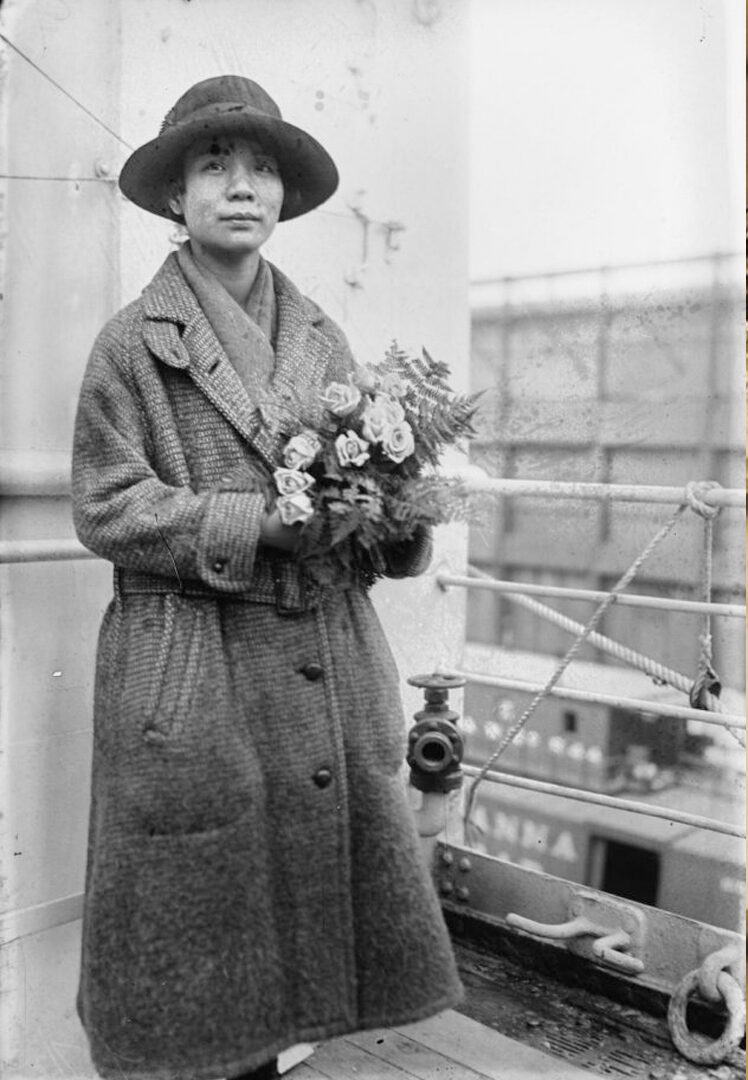
The Nineteenth Amendment would later prohibit voting discrimination on account of sex, but it did not erase restrictions based on citizenship and race. The Chinese Exclusion Act and related federal laws prevented most Chinese immigrants from becoming citizens. Lee continued to advocate for women’s rights, earned a doctorate in economics at Columbia, and became a leader in New York’s Chinese community. Surviving records do not establish whether she ever became a United States citizen or cast a ballot.
Another Villager, Inez Milholland, transformed suffrage pageantry into a national icon. Milholland lived at 9 East 9th Street, and was active in labor, children’s rights, journalism, and law. In 1913, she led the national suffrage procession in Washington, D.C., riding a white horse in a white cape. The image was carefully theatrical, but her politics were not costume. She continued speaking across the country until she collapsed during a 1916 suffrage tour, and died weeks later at age 30.
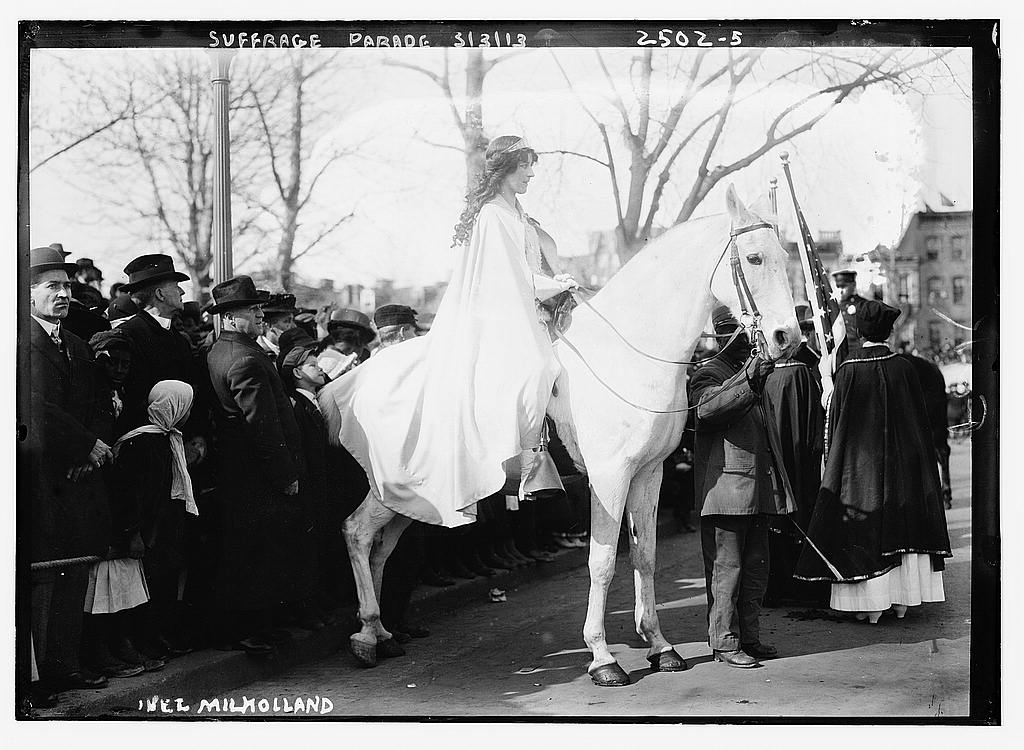
The parades worked because they seized public space. Washington Square and Fifth Avenue became printing presses without paper. The city itself carried the message.
Black suffragists widened the meaning of equality
The suffrage movement was never free of racism. Many Black women organized in separate clubs and institutions because many white-led suffrage organizations marginalized them or openly resisted their participation.
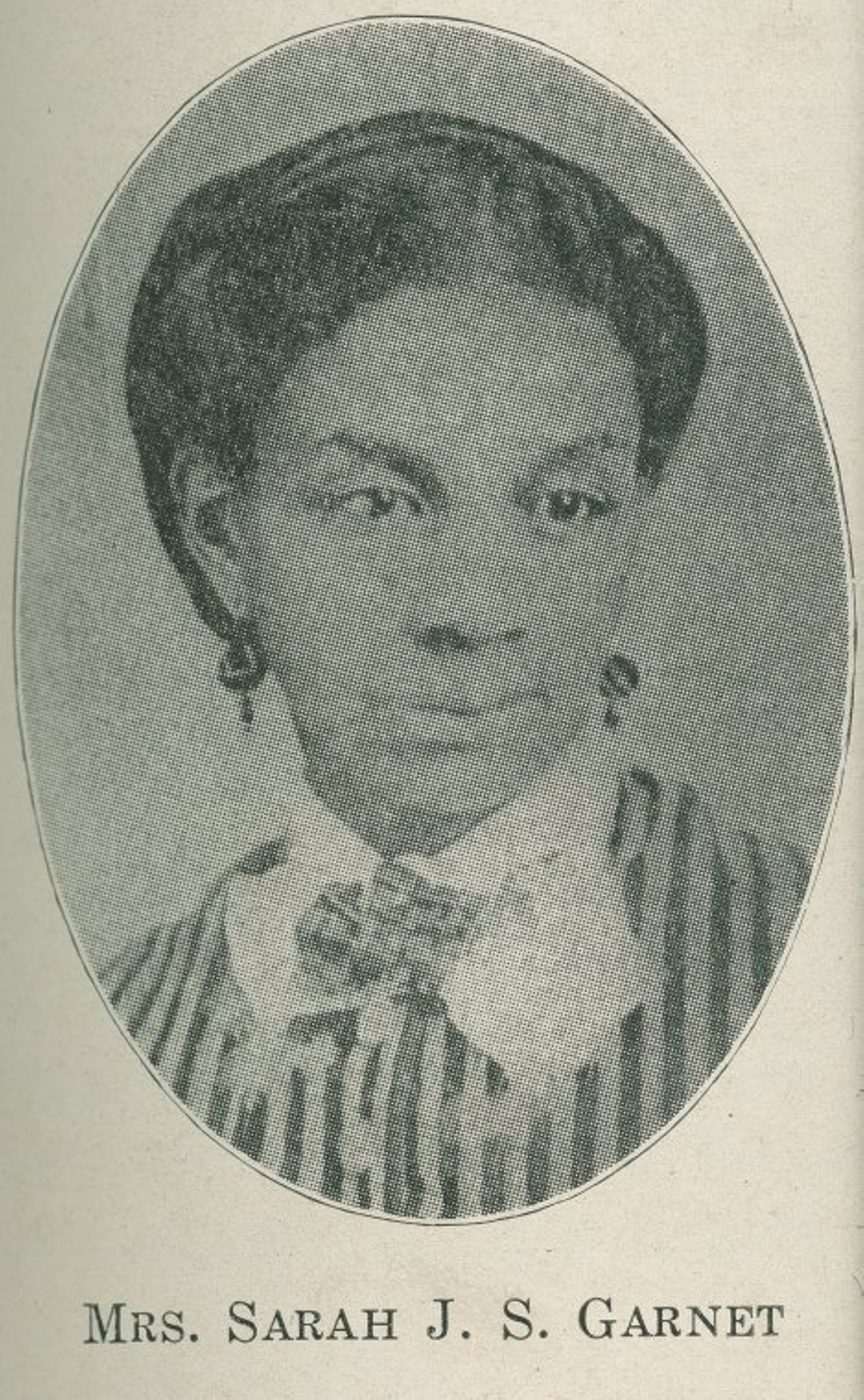
Sarah J. Smith Tompkins Garnet, who lived at 175 MacDougal Street from 1880 to 1883, joined the fight through education and Black women’s organizing. Garnet became one of the first Black woman to serve as a principal in New York City’s public school system. In the late 1880s, she founded the Equal Suffrage League in Kings County, and later organized through the National Association of Colored Women.
Her story places voting rights inside a broader struggle for education, professional authority, and racial justice. Garnet did not wait for the mainstream movement to make room. She built another room.
That work also entered the neighborhood through print. From 1914 to 1923, 70 Fifth Avenue housed the national office of the NAACP and its influential magazine, The Crisis, edited by W.E.B. Du Bois. In August 1915, The Crisis published “Votes for Women: A Symposium by Leading Thinkers of Colored America.” Contributors included Mary Church Terrell, Nannie Helen Burroughs, Mary Burnett Talbert, and other Black thinkers who confronted both sexism and racism.
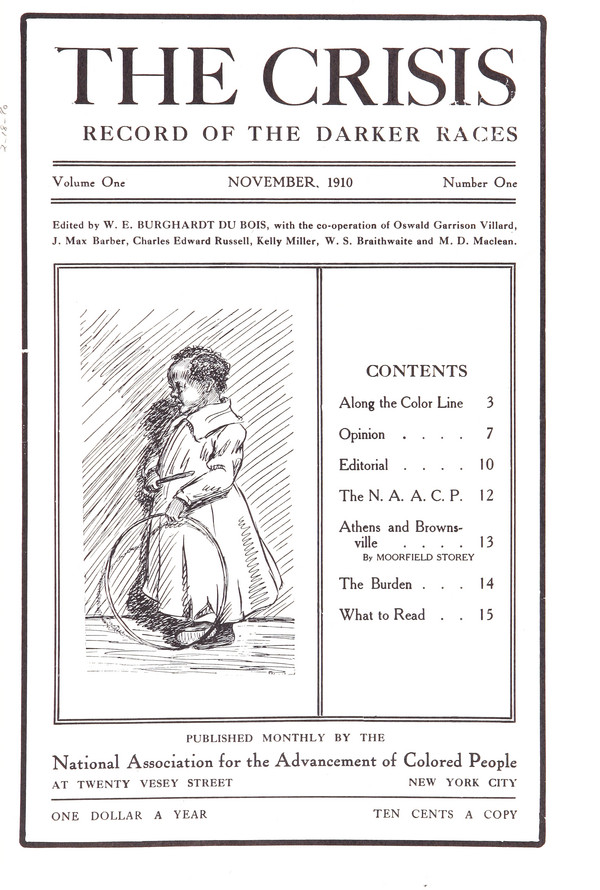
The magazine urged Black male voters in New York to support women’s suffrage while also documenting prejudice within the suffrage movement. The office at 70 Fifth Avenue therefore linked two unfinished democratic struggles, the enfranchisement of women and the protection of Black voting rights.
Following a campaign led by Village Preservation, the building was designated a New York City landmark in 2021, in recognition of its association with the NAACP and an extraordinary roster of progressive organizations. Its survival gives physical form to ideas that might otherwise remain trapped on a page.
Not every radical believed the ballot was enough
Greenwich Village also made space for women who challenged the boundaries of the suffrage movement itself.
At 137 MacDougal Street, the Heterodoxy Club gathered women whose politics stretched across suffrage, labor, sexuality, art, pacifism, and reproductive freedom. Founded in 1912 by Marie Jenney Howe, the club asked only that a member “not be orthodox in her opinion.” Its ranks included Crystal Eastman, Inez Milholland, Mabel Dodge Luhan, Rose Pastor Stokes, and other women who treated feminism as larger than a single constitutional reform.
Emma Goldman, who lived at 208 East 13th Street, pushed that challenge even further. She defended women’s social, sexual, and economic freedom, but remained skeptical that expanding the vote could repair the deeper violence of the state. Her presence complicates any clean account of neighborhood suffrage history. The women of the Village did not speak in one voice. They argued, fractured, organized, and forced one another to imagine more.
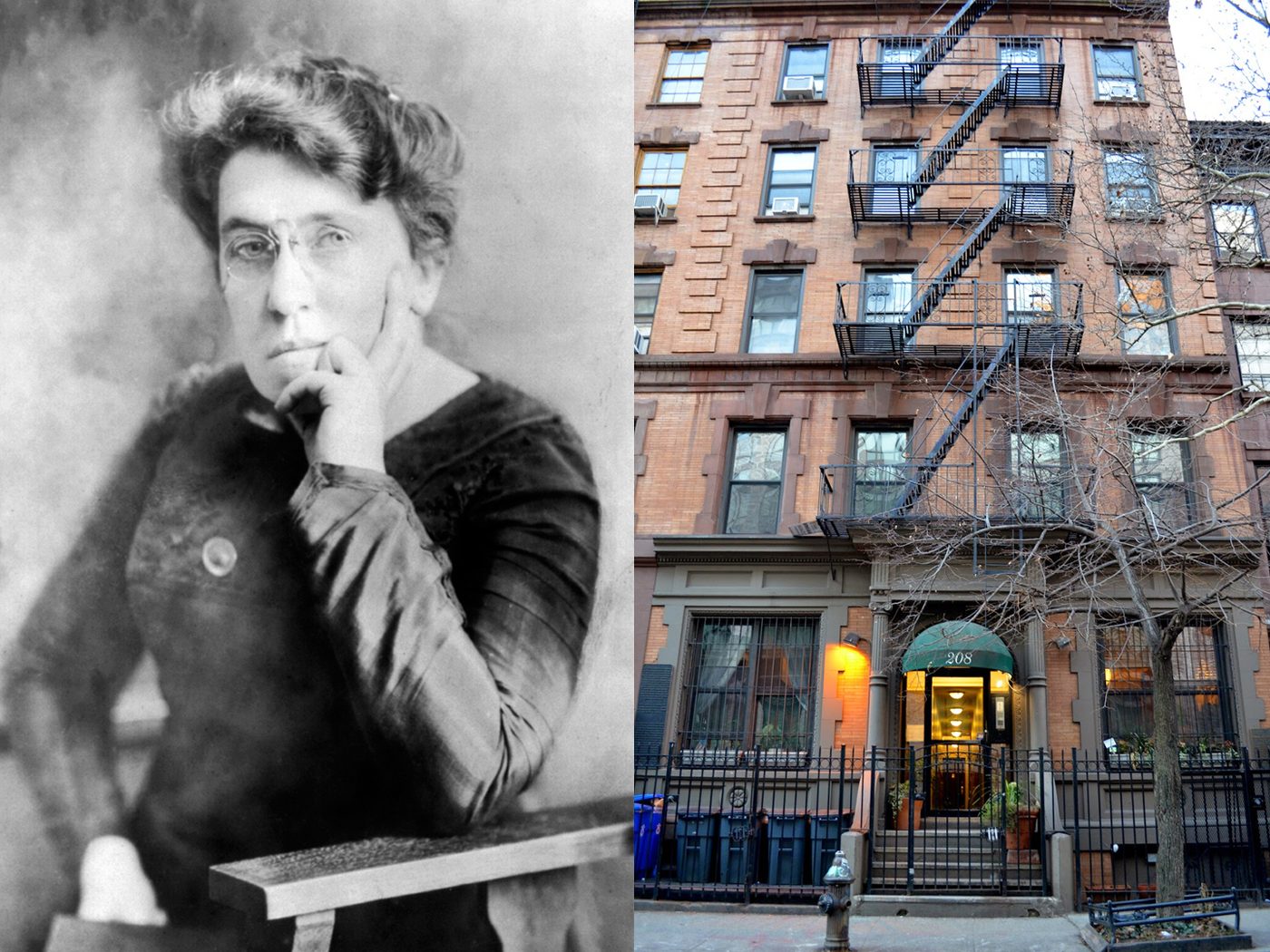
EMMA GOLDMAN: 208 East 13TH Street
The former Heterodoxy site, which had been subsumed into the Provincetown Playhouse, was demolished in 2008. That absence carries its own lesson. When a historic building disappears, the story attached to it becomes easier to flatten, forget, or replace.
Victory, with the door still only partly open
New York’s 1917 victory helped build national momentum. Congress approved the Nineteenth Amendment in 1919. Tennessee became the 36th state to ratify it on August 18, 1920, and Secretary of State Bainbridge Colby certified the ratification on August 26.
The amendment removed sex as a constitutional basis for denying the vote. It did not create universal access to the ballot.
Millions of women remained blocked by other laws and practices. Many Native American women lacked United States citizenship until 1924 and continued to face state barriers afterward. Asian immigrants were broadly barred from naturalization for decades. Black women, especially in the South, confronted poll taxes, literacy tests, intimidation, violence, and other methods of disenfranchisement until the Voting Rights Act of 1965 outlawed many of those practices.
The victory was real. So was the distance still left to travel.
A movement written into the neighborhood
Village Preservation’s Women’s Suffrage History Map reveals that the movement did not live in one headquarters or belong to one kind of reformer. It moved through Cooper Union, tenement apartments, churches, magazine offices, clubs, and crowded avenues. It drew strength from immigrant garment workers, Black educators, Chinese American students, lawyers, journalists, socialists, anarchists, and women who refused every narrow definition placed upon them.
Preserving these places does more than protect brick and stone. It keeps the machinery of change visible.
Walk the map. Stand where the marches began. Look up at the buildings that remain, and notice the spaces where others have vanished. The right to vote may be written into the Constitution, but the struggle that placed it there is written into these streets.