
Shaping the Gilded Age: Stanford White’s Architectural Legacy in Lower Manhattan
As a principal of the architecture firm McKim, Mead & White during the late 19th and early 20th centuries, few figures shaped the visual landscape of New York City as profoundly as Stanford White. White brought a lavish Gilded Age aesthetic to Lower Manhattan, blending European Renaissance elegance with American civic pride. Many of these architectural contributions still stand in Lower Manhattan, adding to the rich historic character preserved throughout our neighborhoods:
Judson Memorial Church
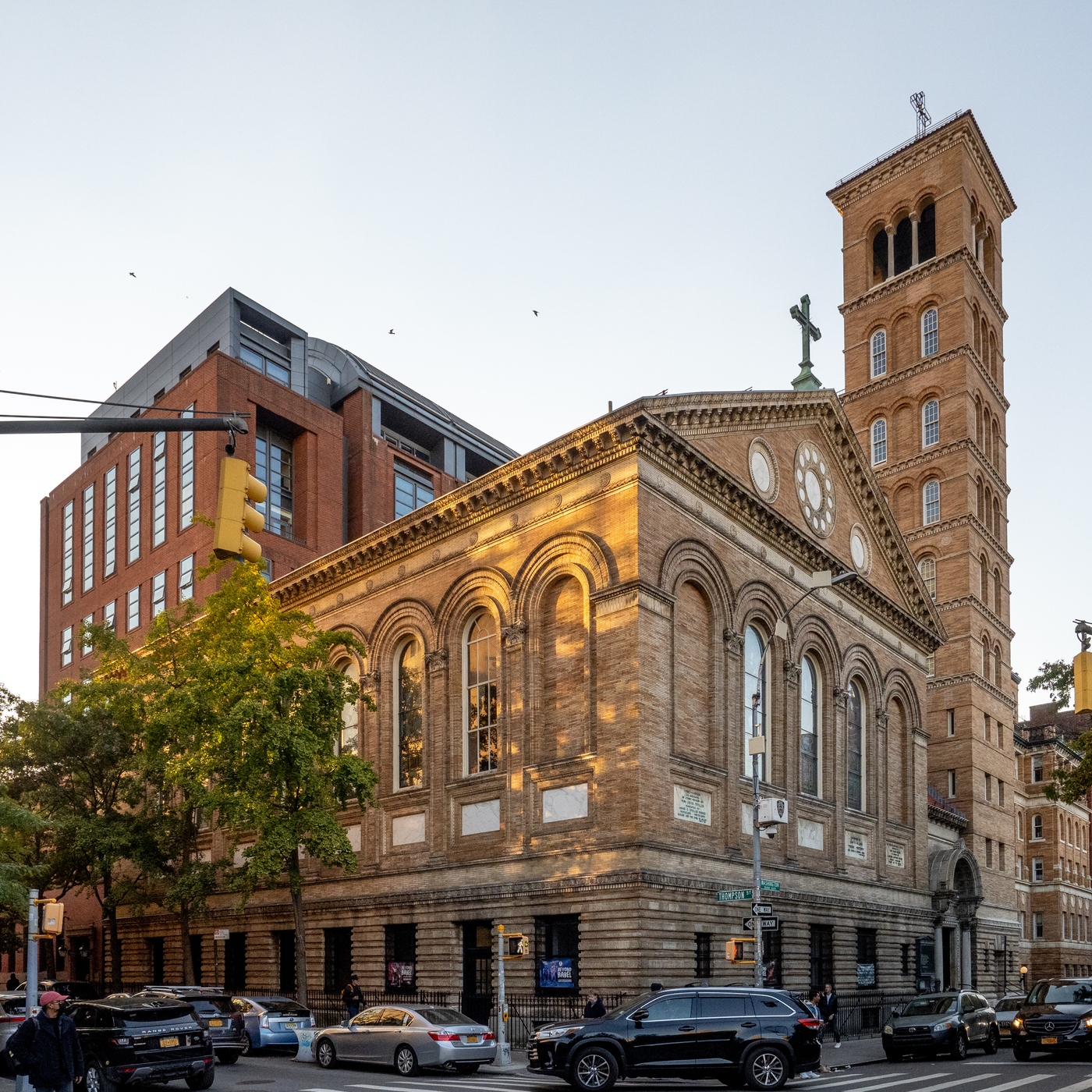
Judson Memorial was White’s first complete church design. Combining Romanesque Revival and Italian Renaissance elements, the church features warm yellow brick, detailed terracotta work, a prominent ten-story campanile tower, and magnificent stained-glass windows crafted by White’s close friend and collaborator, John La Farge. Read more here.
Washington Square Arch
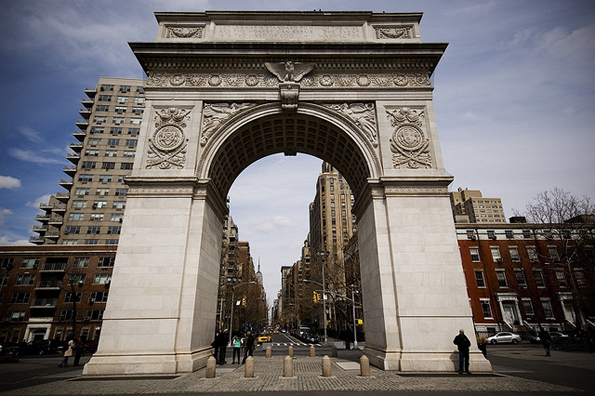
Few structures define NYC like the Washington Square Arch. Originally erected in 1889 as a temporary wooden structure to commemorate the centennial of George Washington’s inauguration, the arch was so popular with the public that White was commissioned to design a permanent version in Tuckahoe marble. Drawing inspiration from the Arch of Titus in Rome, White crafted a triumphal monument that anchors the southern end of Fifth Avenue. Read more here.
The Cable Building
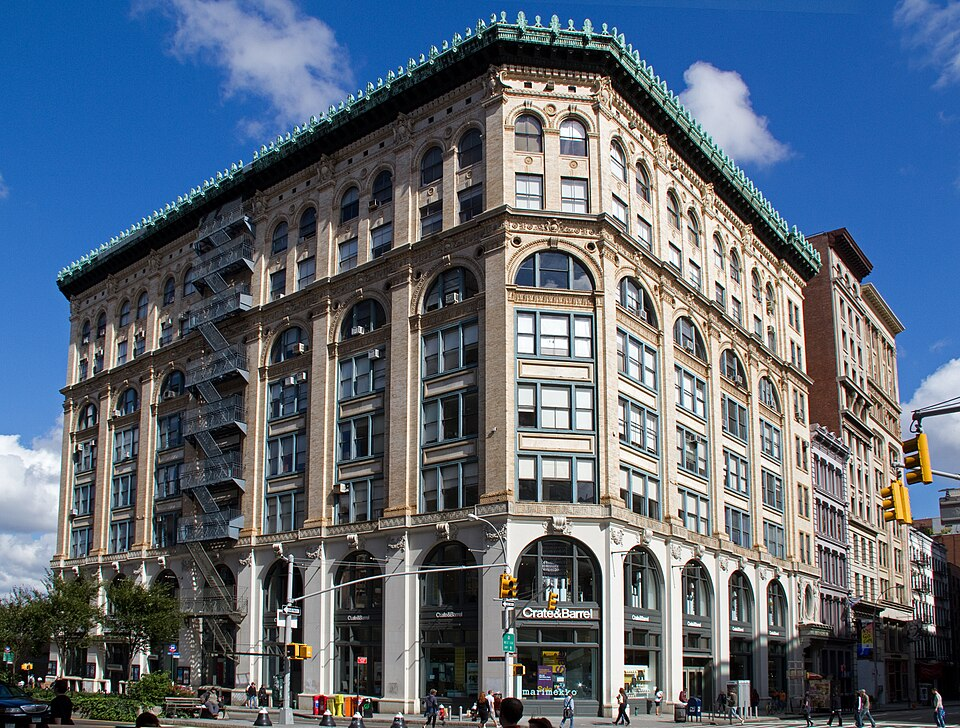
Built between 1892 and 1894 at Broadway and Houston Street, this nine-story commercial structure was designed to house the winding machinery for the city’s cable car system. White disguised the industrial infrastructure behind elegant limestone arcades and decorative terracotta ornamentation. Of the 29 American cities that built cable traction systems between 1870 and 1900, this is the only powerhouse that was built by an architect of such stature. Read more here.
Bowery Savings Bank
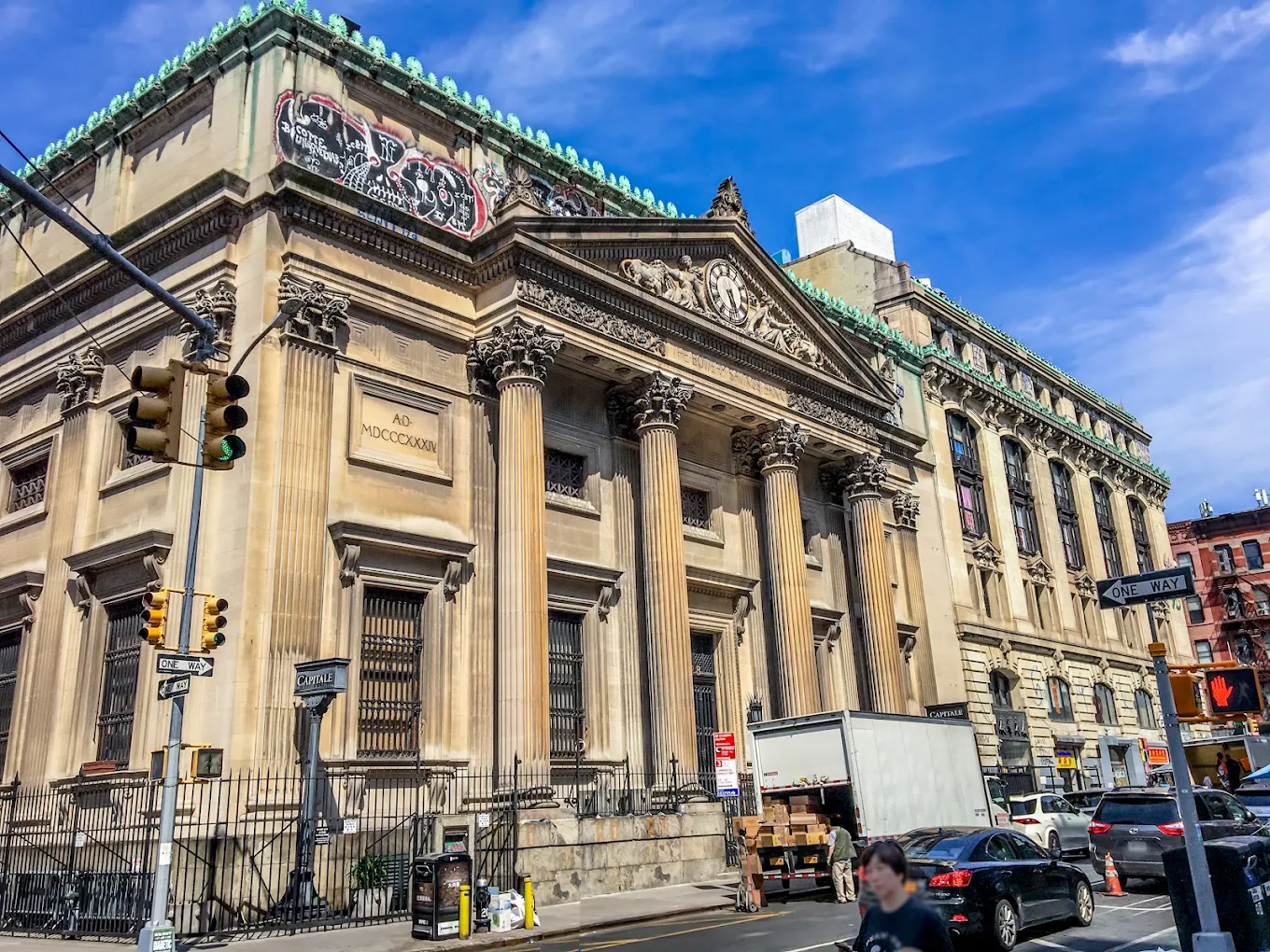
Slightly south of our neighborhoods, on Bowery and Grand Street, stands another amazing White design. The Bowery was a bustling commercial thoroughfare in the early 1890’s when the Bowery Savings Bank commissioned McKim, Mead & White to design a new headquarters at 130 Bowery. White responded with a monumental classical temple designed to project stability and grandeur. Completed in 1895, the building features an L-shaped layout with Corinthian columns flanking a grand limestone facade. Inside, White designed a breathtaking bank hall featuring coffered ceilings, ornate mosaic flooring, and multi-colored marble walls.
In addition to these landmarks, White also designed other notable NYC buildings such as the Players Club, the Metropolitan Club, Gould Memorial Library, and the original Penn Station. He also has some other local connections. He was raised at 118 East 10th Street in the East Village’s ‘Renwick Triangle’ in the St. Mark’s Historic District. In 1906 White was murdered at the second Madison Square Garden (which he also designed). The alleged killer was Harry Kendall Thaw. The motive for this murder was an event that took place about five years earlier, when the 47- year old White raped 16-year old actress, Evelyn Nesbit, after plying her with liquor through intermediaries.
The murder trial took place at the Jefferson Market Courthouse. The first trial ended in a hung jury mistrial. At the second trial, the killer Thaw pled and was found not guilty, on the ground of insanity at the time of the commission of his act. Read more about this here.