
Leonard Cohen and the Village Rooms That Held His Voice
On November 29, 1974, Leonard Cohen performed at the Bottom Line, at 15 West 4th Street, at the corner of Mercer Street. Photographer Bob Gruen was there, and his photographs give that evening a face. Cohen at the microphone. Cohen with journalist Larry “Ratso” Sloman. A date, a room, a man whose songs could make desire sound like a prayer with its collar undone.
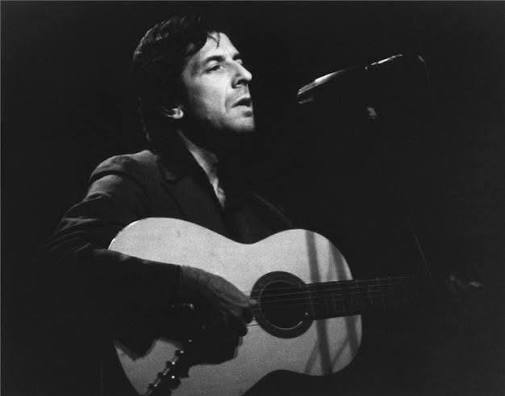
There is something intimate about tracing an artist through a neighborhood this way. The distances become walkable. Greenwich Village and the East Village held several chapters of Cohen’s life, including encounters with writers and musicians, and the difficult business of standing before an audience with something of yourself to give.
Seventeen years before that engagement, in 1957, Cohen attended a performance by Jack Kerouac at the Village Vanguard, at 178 Seventh Avenue South. Kerouac read poetry accompanied by improvised piano music, an encounter later described in the magazine Jazziz. Cohen was already a published poet. His first collection, Let Us Compare Mythologies, had appeared in 1956.
The Vanguard had opened on February 23, 1935, under Max Gordon. Before becoming primarily a jazz club, it had welcomed poetry, folk music, and comedy. That history matters here. In this basement, a writer could hear words finding their rhythm in another person’s playing. Cohen’s visit places him within a Village tradition in which literature and music shared a room, and an audience.
By 1966, Judy Collins, a central figure in the Village’s folk community, was helping bring Cohen’s songs to a wider public. She recorded Cohen’s songs “Suzanne” and “Dress Rehearsal Rag” on her album In My Life that year. In a later interview, she recalled Cohen’s uncertainty about his ability to sing and play guitar. Her response was to champion the songs and encourage him to perform them himself.
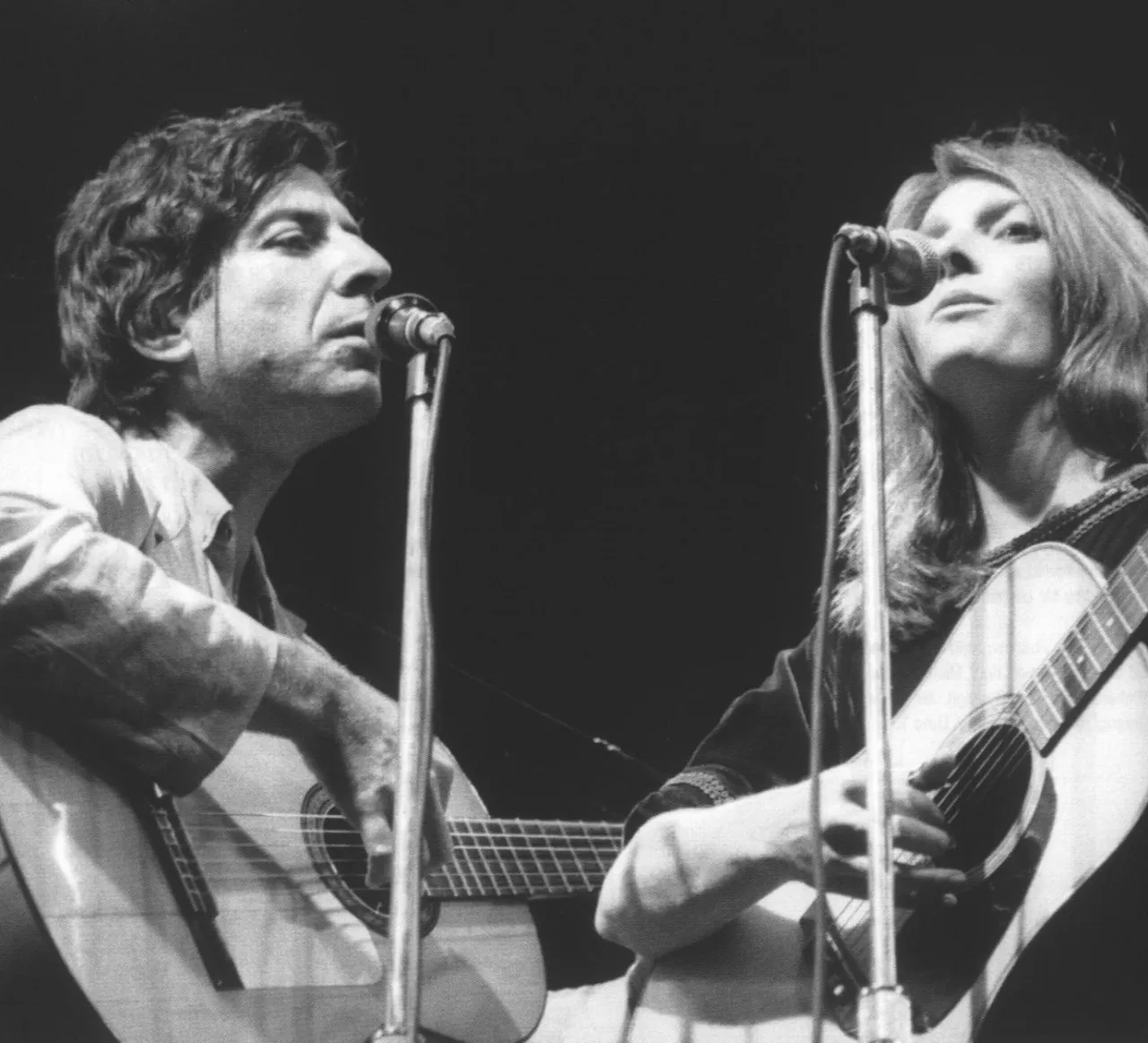
There is a kind of generosity in hearing what someone is trying to become before they can quite hear it themselves. Collins gave Cohen that encouragement. The story of his emergence as a singer has her voice in it, too.
One much-retold episode leads to the Village Theatre, at 105 Second Avenue, near East 6th Street. Biographer Sylvie Simmons places Cohen’s faltering early performance of “Suzanne” here on February 22, 1967, at a benefit for radio station WBAI. In the account, he stopped singing and left the stage, and Collins encouraged him to return. Published recollections differ about the date and venue of this episode, so its identification as his definitive debut remains disputed.
The uncertainty deserves to stay with the story. So does the tenderness of someone helping him finish. A song can be ready long before the person singing it feels ready to be heard.
The theater itself had already lived several lives. It opened in 1926 as a Yiddish theater and later became a movie house. In March 1968 it became the Fillmore East, continuing as a concert venue until June 1971, with many lives after that, including as the legendary gay disco, “The Saint.” The address connects Cohen’s early performance history, as Simmons recounts it, to a building with decades of entertainment behind its doors.
A 1969 encounter by Cohen with Bob Dylan, recounted in Bedford + Bowery, brings us back to Greenwich Village. Cohen was spending time at the Bitter End, at 147 Bleecker Street, when he was summoned to meet Dylan at the Kettle of Fish, then at 114 MacDougal Street.
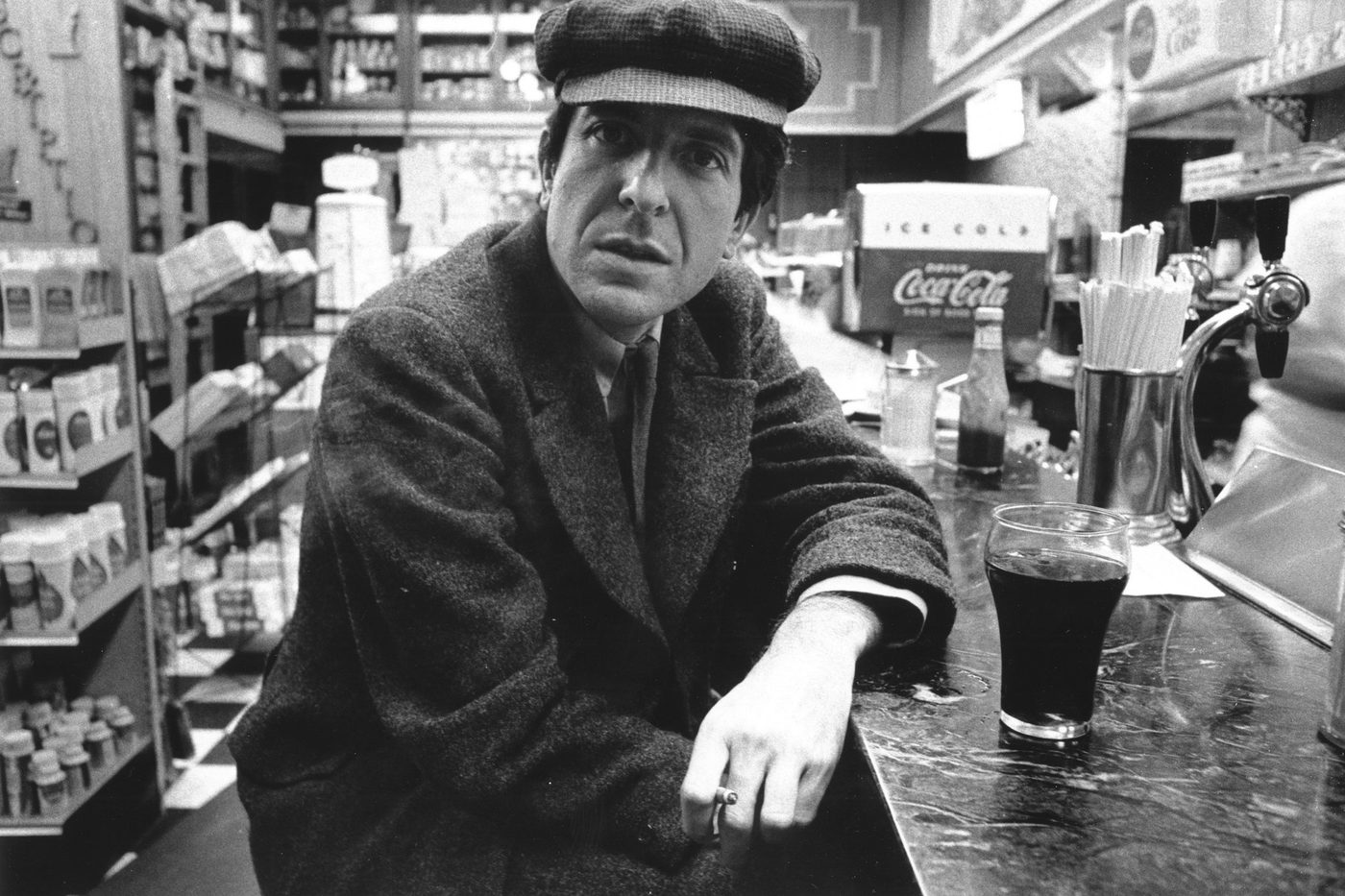
The Bitter End had opened in 1961 as a coffee shop. The Kettle occupied the ground floor of a tenement built in 1900. Village Preservation’s research confirms the bar’s presence at that address during 1969, and our advocacy for this and about 250 surrounding buildings landmarked in 2013 as part of the South Village Historic District. These were places where the distance between listening to someone’s music and meeting its maker could be a short walk around the corner.
By November 1974, Cohen was back before a Village audience. The Bottom Line’s own archive lists his engagement from November 29 through December 1. The club was still in its first year, having opened on February 12, 1974. Its founders, Allan Pepper and Stanley Snadowsky, had created a venue whose intimate setting put the performance at the center of the evening.
Sloman’s account brings us backstage after a set. Cohen retreated to the dressing room and admitted to his manager, “My knees were shaking.” Then he added, “But this is a good place to be nervous at.”
That is an unusually tender way to describe a nightclub. Even with an audience willing to listen, he still felt the risk of being heard. His remark gives the room a human importance that a list of famous performers cannot quite convey.
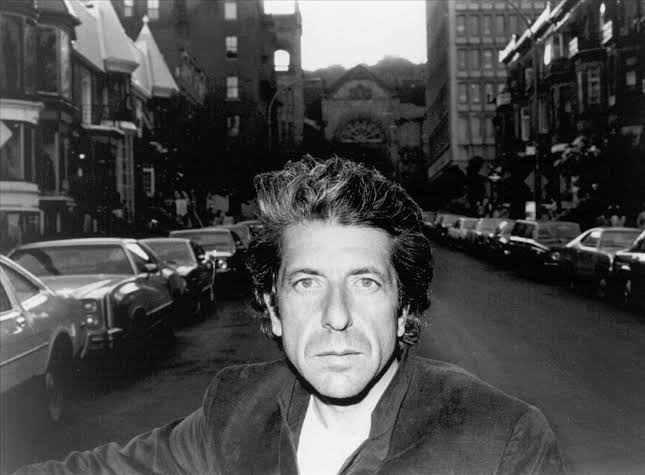
The Bottom Line closed in 2004. At 105 Second Avenue, the former theater’s street façade survived, while the rear auditorium was demolished in 1997. These places have changed, and parts of their history are now held in photographs and recollections. The addresses allow us to connect those records to the neighborhood beneath our feet.
This is part of why preserving a place matters even when its use changes. Knowing what happened at an address changes the way we look at it. Cohen’s Village connections let us remember the listener as well as the singer, and the uncertainty that could accompany him onto a stage.
We owe something to the rooms where people found the courage to be heard.
Bravo! Beautifully written!
Nicely researched article! My covering Leonard’s shows at the Bottom Line led to a friendship that lasted over forty years. Leonard was one of a kind and may his memory be a blessing!
I was at that 1974 Botom Line performance. I had met Leonard the year before on the Greek island of Hydra. We became friends there and I got to visit his house frequently that summer. I even got to sing with him and after that summer we kept in touch. After the Dec. 1st performance I went back stage to his dressing room to show him photographs I had taken of him and Marianne and other friends. Much later I wrote a book about those times and in 2021 it was published. The publisher insisted we call it “Leonard, Marianne and Me” my working title was Random Genuflections. It is still available. I last visited with Leonard in L.A. in 2009 and we kept in touch until he passed in 2016. He was an incredibly kind, generous and loving friend and a musical genius. He changed my life.