
Allen Ginsberg and the Village Inside Howl
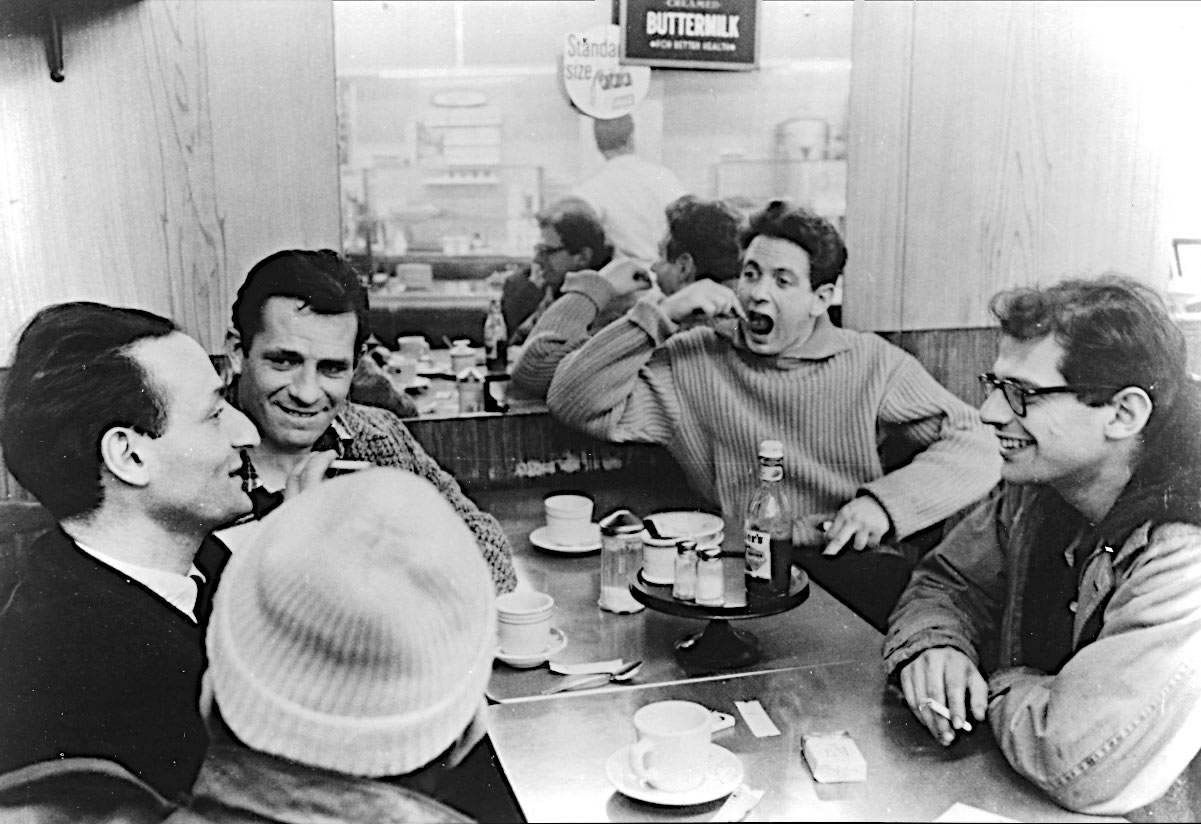
There is a Greenwich Village bar inside Howl.
Its name is Fugazzi’s. It stood at 305 Sixth Avenue, between West 3rd and Carmine Streets, and Allen Ginsberg placed it in the poem that helped define the Beat Generation. A vanished gathering place survives in a line of poetry.
That small detail offers a way into Allen Ginsberg’s relationship with the Village. We can follow the places where he found company, recognized another writer, and made a home. Through those addresses, the poet becomes less distant, and Howl becomes something we can encounter at street level.
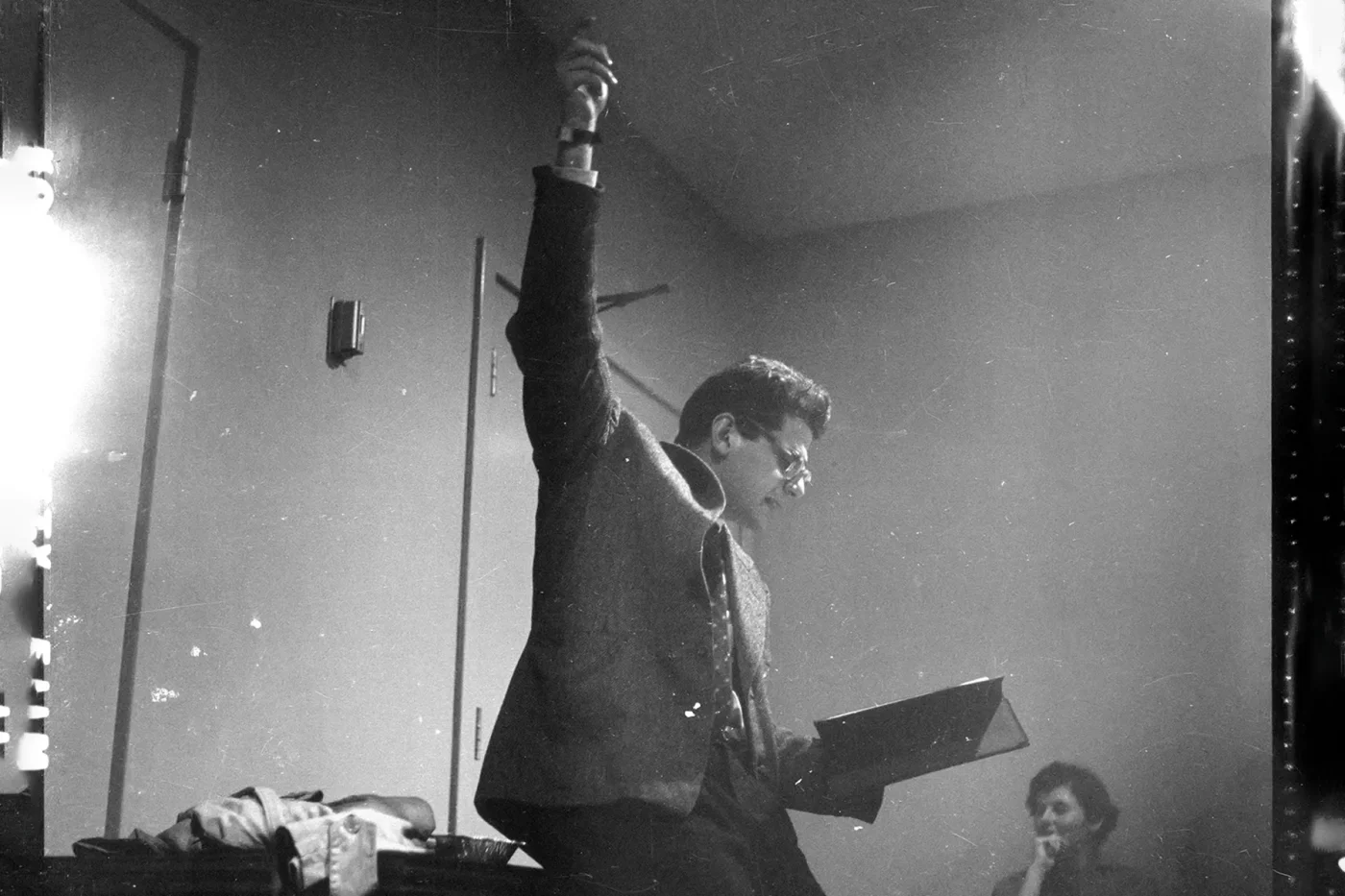
The writing history begins across the country. Ginsberg composed Part I of Howl at 1010 Montgomery Street in San Francisco in the summer of 1955. His own inscription on a photograph of the room identifies it as the place where he wrote that section. He first publicly read Part I at San Francisco’s Six Gallery on October 7, 1955. City Lights published Howl and Other Poems in 1956.
The poem’s Village connection lies in the downtown places and relationships that entered his life, with Fugazzi’s providing a direct connection in the text itself.
A bar preserved in a poem
In Part I, Ginsberg finds his companions in a “stale beer afternoon in desolate Fugazzi’s.” The scene carries exhaustion into the middle of the day. A jukebox becomes part of the poem’s anxious, apocalyptic sound.
Read through this local reference, Howl offers an uneasy portrait of bohemian life. Its people seek connection while living with hunger, addiction, and psychological distress. Ginsberg gives those lives room on the page, including desires that polite society preferred to keep hidden.
The poem’s personal history also reaches beyond the Village. Ginsberg dedicated it to Carl Solomon, a writer he met during his stay at the New York State Psychiatric Institute in 1949. Their friendship is another part of the poem’s New York story, rooted in the experience of psychiatric hospitalization.
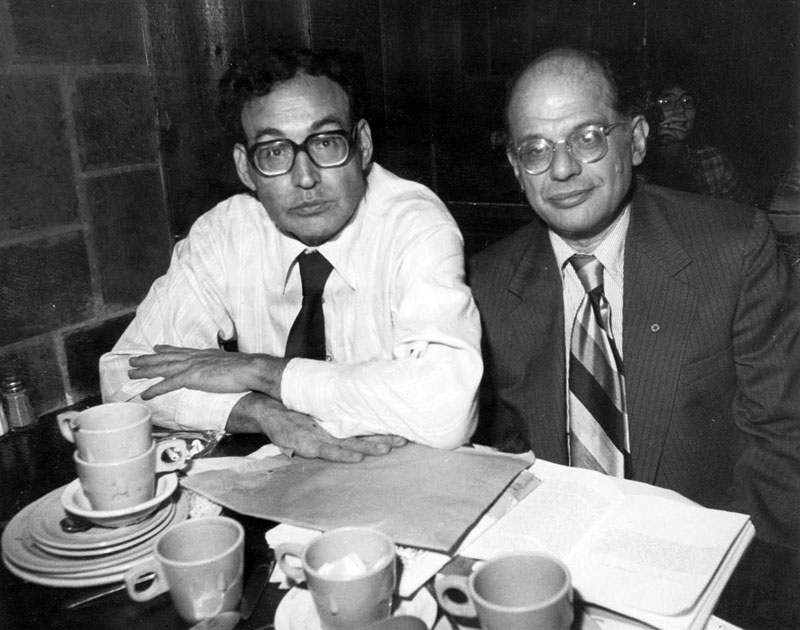
The obscenity case that followed the book’s publication makes that resistance concrete. On October 3, 1957, Judge Clayton W. Horn ruled in favor of publisher Lawrence Ferlinghetti, finding the poem had social importance. The battle concerned whether this language and these experiences could appear in print at all.
Fugazzi’s matters because it places part of that disputed world on an actual Village block. The address lets us read the poem with a neighborhood beneath our feet.
The people he found downtown
A short walk from Fugazzi’s stood the San Remo Café, at 189 Bleecker Street, also known as 93 MacDougal Street. In the late 1940s and 1950s, the Italian restaurant and bar became a gathering place for writers and artists. Ginsberg, Jack Kerouac, William S. Burroughs, and James Baldwin were among its patrons.
The San Remo brought Beat and gay social circles into the same room. Its atmosphere was complicated. The NYC LGBTQ Historic Sites Project describes it as an establishment that was not especially welcoming, even as it attracted a substantial gay clientele. That tension helps keep our picture of the Village honest. Creative company did not guarantee acceptance.
Another important encounter took place at the Pony Stable Inn, a lesbian bar at 150 West 4th Street. Around 1950, Ginsberg met Gregory Corso there. Corso showed him his poems. Ginsberg took an interest in his writing and introduced him to Kerouac and Burroughs.
This is one of the Village’s quieter contributions to literary history: a place where a writer could put his work into another writer’s hands. Years before Howl, Ginsberg was helping another poet find his company.
An East Village apartment before Howl
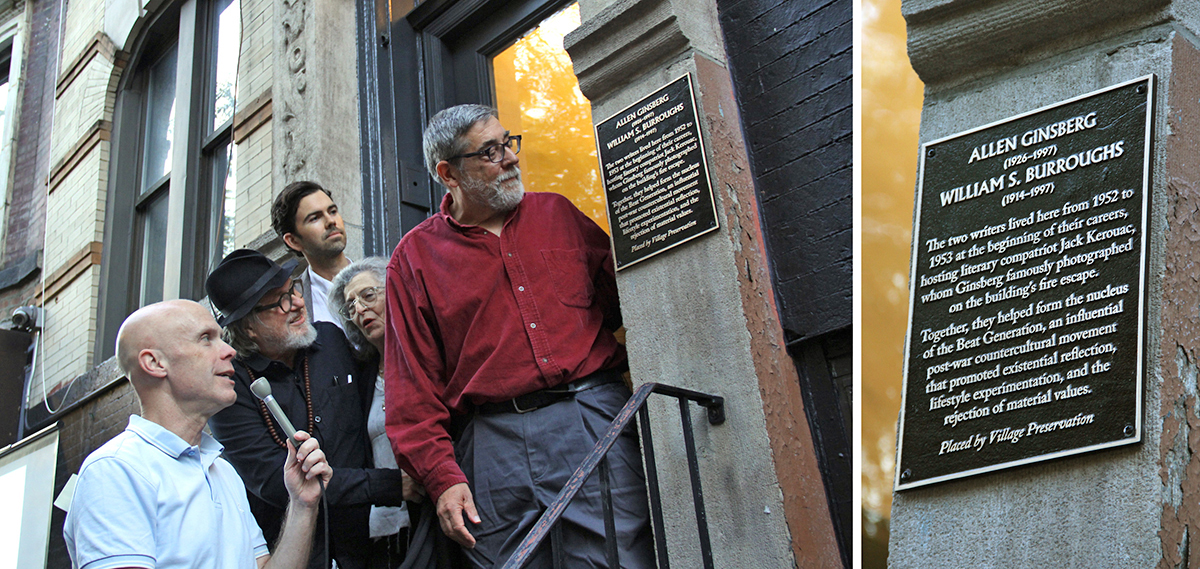
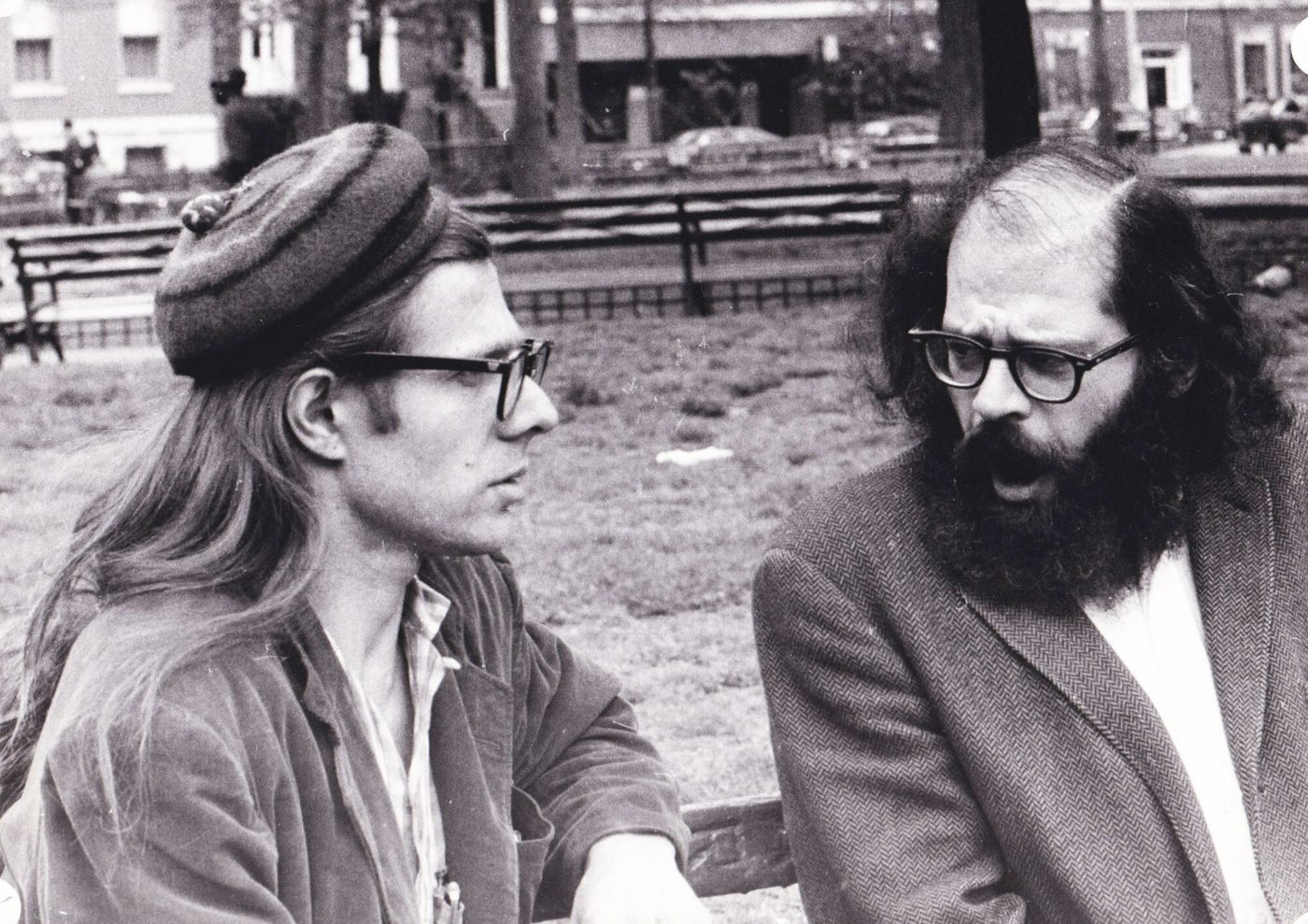
From 1952 to 1953, Ginsberg lived at 206 East 7th Street, between Avenues B and C. Burroughs stayed with him there in 1953, and Kerouac visited. Village Preservation has commemorated the building’s association with Ginsberg, Burroughs, and the Beats with a historic plaque.
Ginsberg’s photograph of Kerouac at the apartment window in the fall of 1953 records books on the sill and sunlight on the tenement’s wallpaper. The photograph gives literary history the scale of a rented room.
His photographs suggest a useful parallel with Howl: both preserve a social world through particular people and the spaces around them. In each, a friend can become the subject, and an ordinary room can carry the weight of a life.
Ginsberg’s downtown life crossed neighborhood boundaries. His Greenwich Village gathering places lay west of the tenements he called home in what was then considered the Lower East Side, now the East Village.
The Village after the first howl
Ginsberg’s local story continued after the poem made him famous. In August 1958, he and his partner, the poet Peter Orlovsky, moved into apartment 16 at 170 East 2nd Street. They lived there until March 1961. In that apartment, Ginsberg wrote much of Kaddish in 1959, his long poem mourning his mother, Naomi.
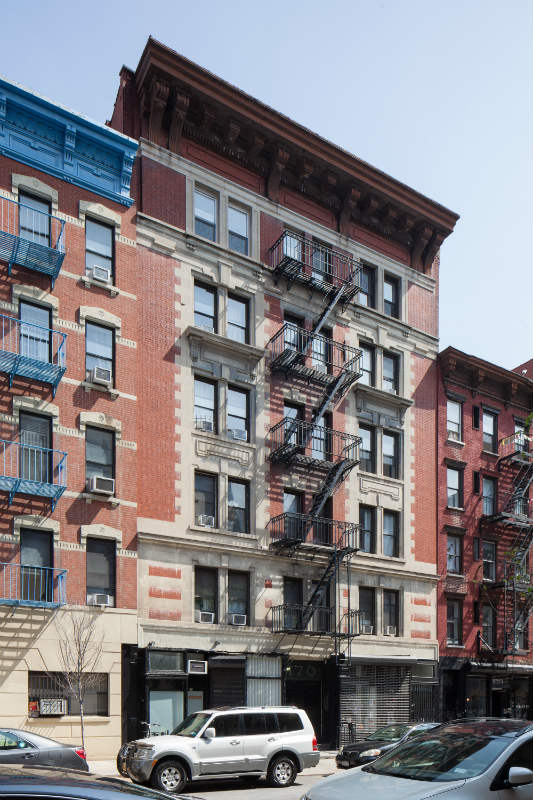
At East 2nd Street, Ginsberg gave sustained attention to an intimate loss. The address gives us a place where a son’s grief became poetry.
Meanwhile, the Gaslight Café at 116 MacDougal Street, which opened in 1958, offered readings by Ginsberg and other Beat writers. It belongs to the period after Howl’s creation, when his poetry circulated through the Village’s performance spaces.
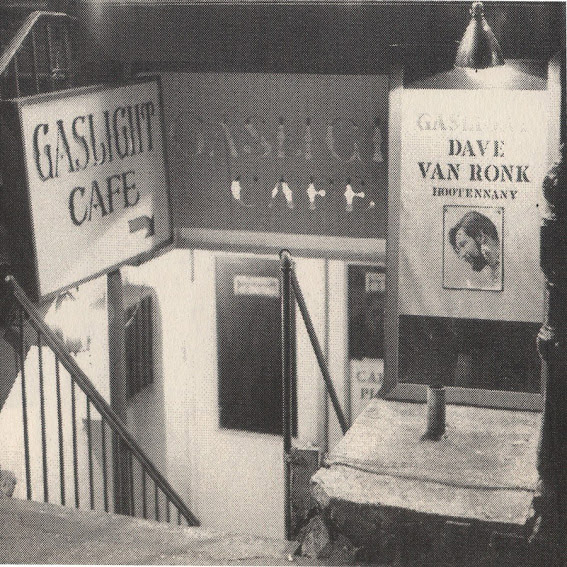
Ginsberg’s commitment to the East Village also extended far beyond the early Beat years. He and Orlovsky lived at 437 East 12th Street from 1975 to 1996, one of several neighborhood homes they shared over the decades.
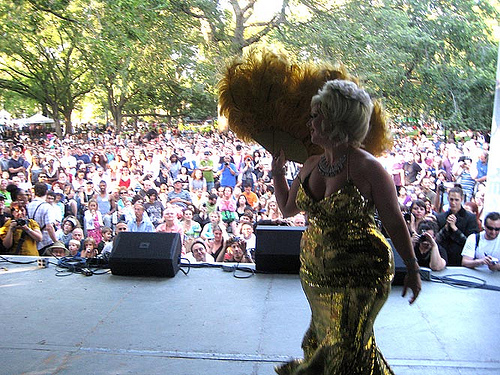
The poem eventually became part of the neighborhood’s own vocabulary. Founded in 2003 and inspired by Ginsberg’s work, the HOWL! Festival brought art and performance to Tompkins Square Park in celebration of the East Village and Lower East Side’s cultural life. A poem once disputed in court became the name of a neighborhood celebration.
What these addresses ask us to remember
Seen through these places, Ginsberg’s story raises a question that belongs to preservation: where can a person find enough room to become an artist?
The San Remo offered company. The Pony Stable Inn made an introduction possible. East 7th Street held friendships before their occupants became famous. East 2nd Street provided a home in which a son could write about his mother.
These associations help explain why ordinary buildings deserve our attention. Their histories include the exchanges and private acts of work that eventually reach far beyond the rooms where they happened. Remembering those histories should also sharpen our concern for the people trying to make a creative life in these neighborhoods today.
Fugazzi’s is gone, but its name remains in Howl. Ginsberg wrote that section of the poem in California. One of its doors still opens onto Sixth Avenue.
Explore Ginsberg’s neighborhood and the people who shaped it through Village Preservation’s Historic Image Archive.